The Bay spoke to Chinese studies expert Pan Wang about the trend’s popularity and its role in strengthening Chinese soft power

Article by:
PUBLISHED:
While the online trend of “Chinamaxxing” – the adoption of Chinese aesthetics and habits by Western Gen Z – is no longer a novelty, the debate around its impact on China’s global image is just heating up.
This viral cultural exchange, which sees influencers sharing everything from the Chinese habit of drinking hot water to practicing tai chi, is fostering cross-cultural engagement and presenting a more relatable face of China than official messaging. Yet, it also highlights a critical issue: despite China’s rising cultural appeal, questions of stereotyping and cultural appropriation persist, complicating its soft power gains.
A play on the internet slang term “maxxing,” which refers to an area in life that a person wants to enhance to the fullest, Chinamaxxing is all about embracing and promoting Chinese cultural practices, traditions, fashion and aesthetics. Chinese-American Sherry Zhu was among one of the first and most prominent influencers involved in this phenomenon, regularly posting Tik Tok videos on Chinese health and cultural habits to her Chinese lifestyle adopters – also known as “Chinese baddies.”
Many other non-Chinese content creators have also jumped on this trend of “becoming Chinese” or having “a very Chinese time in my life” by shooting videos of themselves engaged in various stereotypical Chinese norms such as drinking fruit tea, wearing slippers indoors and cooking rice.
According to Pan Wang, associate professor of Chinese and Asian Studies at the University of New South Wales (UNSW), Chinamaxxing “emerged against the background of China’s growing global economic and cultural influence, and also its expanding soft power in recent years.”
Indeed, Chinese cultural exports have been making waves around the world over the last several years, as illustrated by the Labubu dolls, the Black Myth: Wukong video game, the animated film Nezha 2 and beverage brand Luckin Coffee.
Outside the private sector, the Chinese state has sought to build up the country’s soft power and global image through various means. Prominent examples include government-owned news outlets like CGTV and China Daily, aggressive R&D investment, and the Belt and Road Initiative – a series of worldwide infrastructure projects aimed at expanding China’s economic and cultural connections across multiple continents.
Against this backdrop of China’s rising influence, Wang says Chinamaxxing is being propped up by a number of key factors, including “the rise of influencer culture and the global reach of Chinese platforms like WeChat.”
At the same time, the UNSW professor points out that some Western audiences have become more receptive to alternative views and ways of engaging with China due to disillusionment over their own governments, as exemplified by the recent No Kings protests against the Trump administration in the US.
Wang adds that the desire to seek out a more “authentic” Chinese narrative has also been fuelled by the exposure that Western audiences have had to pro-Chinese social media content and Chinese social media users. Of particular note is the US government’s brief ban of TikTok in January 2025, which resulted in a wave of American TikTok users migrating to the Chinese social media app RedNote.
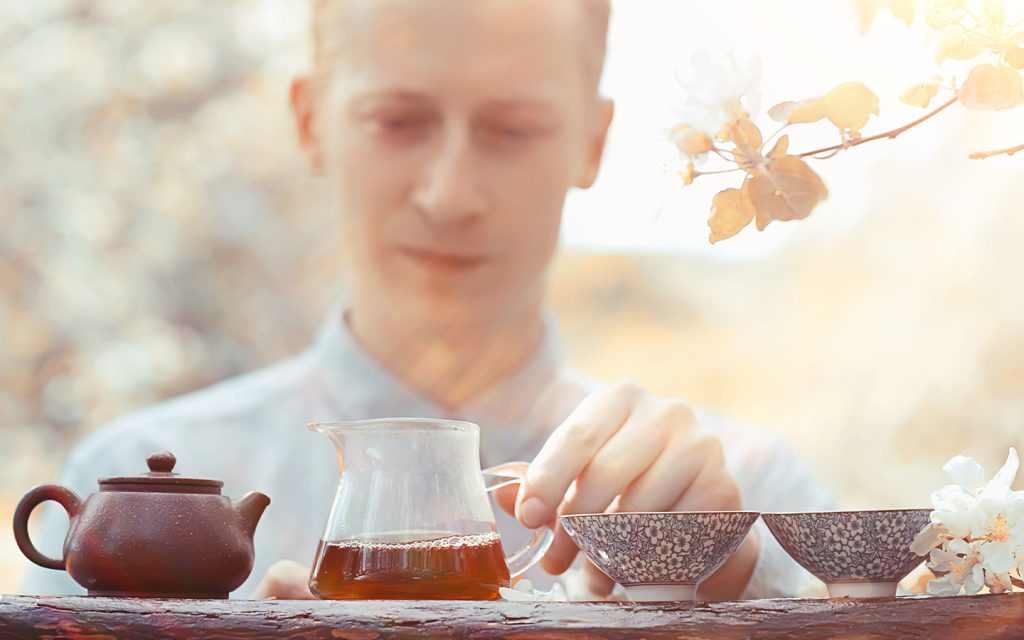
Questions of stereotyping and cultural appropriation have understandably emerged alongside Chinamaxxing, but Wang argues that while the trend may involve performing certain Chinese stereotypes for “algorithmic incentives,” she also says the phenomenon has been “largely positive,” as far as Chinese soft power is concerned.
“It can foster cross-cultural engagement and enhance global understanding of China,” the UNSW academic notes.
Indeed, many of those engaged in Chinamaxxing are ethnic Chinese living in the West who are keen to share their heritage and family stories. For instance, one Chinese accountant living in London who goes by the name of airic.z on TikTok used Chinamaxxing as a springboard to discuss China’s money culture, mixing it with his own personal experience of fighting over who pays for the bill at family meals.
For other ethnic Chinese influencers, Chinamaxxing can evoke complex and ambivalent feelings, as illustrated by one Canadian-Chinese Tiktoker named thirdirisdnb who pointed out that the trend was a “little triggering to watch,” as it brought back childhood memories of being teased due to her Chinese habits.
Meanwhile, reception to Chinamaxxing has been mixed within China, with Wang pointing out that whereas some individuals are keen to support the trend, others in the country may voice criticism and scepticism, questioning the intentions behind it.
In the long run, the academic believes that the act of “becoming Chinese” will most likely experience a decline, as newer trends and hashtags take over. However, the academic maintains that “the impact will not disappear for good because it opened up new pathways for people to engage with Chinese culture in a way that is personal and accessible.”
If anything, Chinamaxxing has demonstrated the important role that Chinese and non-Chinese influencers can play in showcasing the country to the world. Wang describes them as “the grassroots ambassadors of China’s image,” who present easy-to-digest content relating to everyday life in China such as food, travel, language and urban modernities.
“They make China appear [more] relatable and accessible than official state messaging,” she notes. “In that sense, they actually help generate a more effective and bottom-up form of soft power.”
One case in point is the US influencer IShowSpeed, who made international headlines when he embarked on his first China tour last year. His high-profile visit was livestreamed to millions of viewers in the west, presenting them with an unfiltered portrait of China, including its technological advancements, traditional culture, people and food.
The impact of IShowSpeed’s visit was such that the Economist declared the influencer had “in one visit done more for China’s image abroad than any amount of turgid party propaganda.”
For all its successes in bolstering China’s soft power, Beijing has also faced setbacks, as illustrated by the Confucius Institutes – a brand of state-backed educational organisations aimed at promoting Chinese language and culture at overseas partner universities.
First launched in 2004, the Confucius Institutes have been the source of controversy Western countries, which have sought to ban their operations due to concerns over the brand’s affiliation with the Chinese government.
“Basically there is a gap between cultural attraction and political trust,” Wang observes.
As a result, the UNSW academic argues that China’s “soft power gains are often uneven and tend to be questioned by some of these Western countries.”
Still, Wang points out that “China is now clearly a major soft power actor in the world,” as illustrated by the Brand Finance Global Soft Power Index 2025, where the country earned a second place score of 72.8 out of 100, behind the US’s 79.5 points and ahead of the UK and Japan’s 72.4 points and 71.1 points respectively.
Moving forward, Wang says China is poised to surpass the US in certain areas of soft power, including technology and platform-mediated visibility. However, she acknowledges that because each country’s soft power strength is derived from different pillars, it is difficult to simply conclude that one country’s soft power is stronger than another.
Regardless, the associate professor sees China’s rising soft power as a gain for the world, as it will mean “the international symbolic landscape would become less dominated by Western narratives,” allowing “more room for Chinese platforms, values, aesthetics and everyday cultural references.” On the flip side, she admits that tensions could also arise as China and the dominant Western powers seek for control “over those narratives that shape global perceptions.”
UPDATED: 10 May 2026, 10:38 am