The supply chain veteran tells The Bay how the US tariffs have given buyers the advantage and why he thinks the US market is fading
Sourcing from China in 2026 with IMEX Sourcing’s Ash Monga
Article by:
PUBLISHED:
Chinese customs data indicates that trade with the US saw a decline in the first seven months of this year, dropping by 1.6 percent year-on-year in yuan terms. While trade with ASEAN and the EU grew by 20 percent and 9.5 percent respectively, buyers sourcing from Chinese factories still carry more bargaining power in 2026 than they have in years.
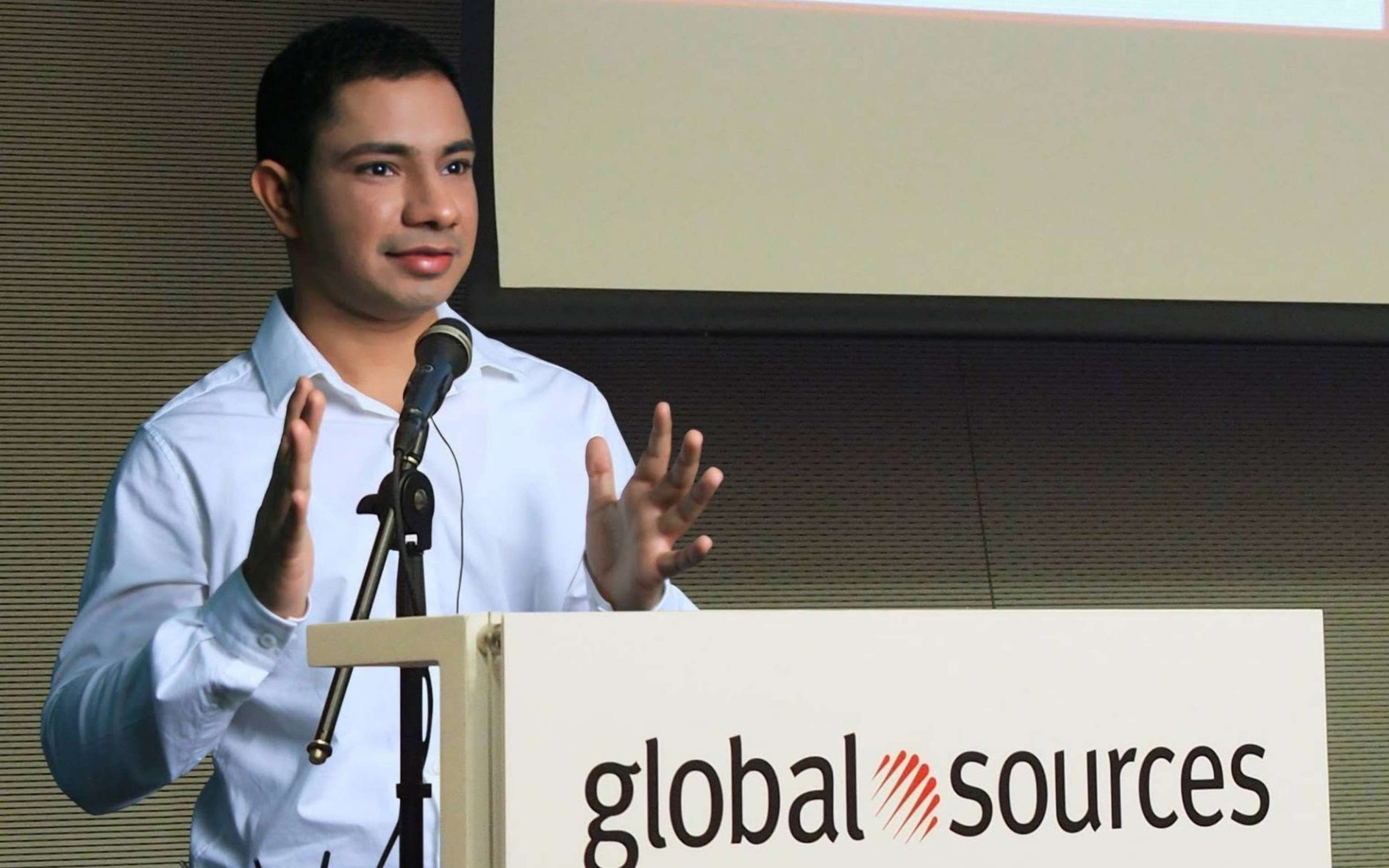
That’s according to IMEX Sourcing Services founder Ashish “Ash” Monga (孟艾希), whose forays into the world of global trade are a far cry from his early days as a New Delhi schoolboy making his first profit selling collectible cricket cards.
Monga established his first real business when he was still at university in the UK, importing fashion jewellery from China and India. It ended up kickstarting a relationship with China that has persisted to this day. He visited Beijing to meet some of his suppliers. “I just fell in love with it, never went back, and stayed forever,” he says
[See more: Morgan O’Hara: from study tour student to cultural entrepreneur]
Initially, Monga was based in the Chinese capital, but he eventually moved south to Guangzhou after realising that “Beijing was the wrong place for international trade.” From searching for suppliers to gathering leads via the Canton Fair, he found that China’s international trade infrastructure was largely concentrated around the Guangzhou-Shenzhen belt.
In 2011, Monga established Guangzhou’s IMEX Sourcing Services, which has now developed into a supply chain management company that helps e-commerce sellers, retail chains and governments to manage the production flow of Chinese-made goods, with the focus mainly on consumer products.
The entrepreneur’s most recent ventures are TariffHelp.org, a platform to help US importers navigate tariffs, and Curated East, a supply chain business for clients such as interior designers, developers and homeowners buying interior products like furniture, lighting and stone.
The Bay spoke with the entrepreneur for his insight into China’s supply chain industry, sourcing, and doing business in the Greater Bay Area (GBA).
The Bay has edited this interview for brevity and clarity
Comparing your work now in August 2026 with when you started in 2011, what do you think have been the biggest changes?
I think there’s definitely more transparency, especially with all the tools. Language barriers are being knocked down all the time. There’s translation in every app, every tool. There’s more knowledge, especially with AI. I think the beautiful thing about technology is that it promotes transparency, and that’s been the biggest change.
In international trade, that’s huge because a majority of the issues that happen are because of lack of transparency or because people are trying to hide something to protect a competitive advantage.
Also, the knowledge of the products has improved because when a factory says this is not feasible, you can go to an AI and say, “Does that make sense on a technical level?” You don’t need that technical knowledge. AI has all the knowledge, so in a way, it promotes understanding and it gives you an edge when someone is not being fully honest.
Where do your clients typically come from?
Initially, it was a lot of the UK. When e-commerce really took off, it pivoted to the US and then in the last five years again, it pivoted to more Middle East and Europe. Now the Middle East and Europe are our biggest markets. We still do a bit of US and other markets as well.
Which products do Chinese factories export most to e-commerce sellers?
Products that are trending change a lot because a lot of the e-commerce sales are trend-based. Over time, we’ve seen a lot of trends. There was a phase when hoverboards were by far a bigger product, and then you had little things like fidget spinners and air fryers.
But when you’re working with governments, all the products tend to be more stable. It’s the same year after year.
Consumer electronics is a big one for us. We also do quite a bit of high-end textiles now, where the fabric is imported from Japan and Korea, but processed in China. We also do a lot of home and kitchen. That’s a big category for e-commerce.
Given the current economic conditions, who currently has more leverage – the buyers or the factories?
I think it varies depending on the specific product. But by and large, it’s definitely a buyer’s market at the moment because what’s happened is a lot of the imports from the US are down, and China is obviously very keen to replace those with alternative markets.
[See more: GBA Voices: How Hong Kong entrepreneur Ashley Dudarenok learned to decode China]
I think in China, there is a strong sense that the US is not coming back, and they are tired of the tariffs coming in and out, and all the issues. The government has decided, and most of the factories have decided, that they want to focus on non-US markets. They are very willing to go out of their way to accommodate those markets, and so the buyers are in a very strong position there, especially with factories that were more US dependent.
Why do supply chain companies base themselves in the GBA?
I think the number one thing is access. The whole infrastructure is so developed, and you can build anything you want here. For example, if you want to develop a product from scratch, you need components – Shenzhen offers that. You need prototyping – there are factories that can do that very fast. The trade finance facilities are there.
I think the one good thing that’s happening is with the connectivity that’s been developing over the last few years between Hong Kong, Macao, Guangzhou, Shenzhen and the rest of the GBA. That connectivity speeds everything up, but I think it’s more than that. You can find any kind of talent, you can find any kind of factory and the support services are built around that, with the end goal being to support international trade.
I think the one big change over the last few years has been outside of Shenzhen. Shenzhen was always very tech-heavy, but also like in other parts of the region like Guangzhou, we’ve seen a lot of new tech and new age industries coming, with robotics and drones.
What’s the most difficult order that IMEX has ever taken on?
I would say the hoverboards. About ten years ago, hoverboards were one of the biggest trends. This thing exploded and most of the products didn’t meet the EU certification requirements and the demand was just insane. I remember one of my teammates had to literally stand on the production line, and she had to fight with other people there to get priority to the stock.
A lot of [hoverboard] factories came up, and there were a few accidents where the battery blew up, and the EU governments got very strict. They started enforcing the compliance requirements. We had to do a lot of work because none of the factories in China were compliant. We had to work with the factory to get them to compliance standards.
[See more: GBA Voices: Macao architect Christine Choi on doing business in the Greater Bay Area]
Our client was at one point the only seller on Amazon UK who had all the certificates, so they enjoyed a nice monopoly for three to four months while the product was still hot, and that was very profitable for them. It was also a huge learning curve for us in terms of consumer electronics and all the hidden challenges with compliance.
What are some of the biggest misunderstandings that overseas importers have when sourcing in China?
I think even compared to 10 years ago, people now understand China way more than they did. Regarding misunderstandings, generally, I lay them down to individual experiences because we base a lot of our experiences on one story we heard somewhere and that story could be an aberration.
Anecdote is not data. What happens is most people have heard anecdotes of their experience or something happened at a factory or there was a case of fraud, and they think a majority of the factories are like that. But the fact is, the majority of the factories are good. The quality issues that happen in China are less about intent – and sometimes factories do take shortcuts – but in most cases, it’s about a lack of process or cultural differences in terms of how things are done and what’s acceptable.
Is guanxi [connection] very important in the sourcing industry in the GBA or are people exaggerating its importance?
It’s an important cultural nuance and there are many of them. Of course, the more you can educate yourself about the culture, the more of an edge you have in communications, but it’s not a silver bullet that will solve a lack of a process that will get you a price you might not otherwise get.
[See more: GBA Voices: Talking Dongguan with entrepreneur and racer Moritz Berrenberg]
I find Chinese businesses are extremely practical. The economics of the transaction still need to make sense for everyone. If you’re building a win-win relationship, if you’re doing the basics right – showing respect for the other party – that goes a long way.
The understanding of guanxi, which has many different definitions – but essentially helping them to save face, spending more time building the relationship outside of talking about business – all those things help a little bit. It’s relationship building and would work in any other culture, but I think as a concept, it’s become a bit of a buzzword. It’s a little bit overblown.
Your new interior sourcing venture, Curated East, seeks to leverage China’s cost-effectiveness against Europe. Do the savings come from labour, scale, raw material or margin structure?
I think it’s a combination. Number one is the availability of materials – everything is available in China. In China, you can come to Guangzhou and Foshan, and you can pretty much get everything – your lighting, your chandeliers, all those things from one place.
Coming onto the product itself, definitely, the labour cost in China is a lot cheaper than in Europe.
A lot of people, especially in Europe, don’t realise the quality that China is producing now. They’re producing really high-end premium furniture, and the average user might not be able to tell the difference.
[See more: GBA Voices: Meet David McCann, the CEO of AOP Capital]
The third big difference is you can customise everything in China and they’re very willing to customise. In Europe, that’s a lot harder. The moment you start customising, the cost can just blow up because it’s very labour-intensive. Customisation is not something you can mass produce and it’s harder to automate. That’s a huge factor.
The logistics in China are also very optimised, so that cost is lower compared to Europe as well. All these things add up to create that total cost advantage.
Are there any areas where Chinese manufacturers continue to lag behind their European counterparts?
I think less in furniture, but more I would say, for example, in appliances. I would still buy a Bosch oven or electrical appliances from German brands or even some of the more complex kitchen appliances. In those areas, you still trust German brands. That’s where they have a big advantage.
I think in furniture, the advantage is almost closed and in lighting, I would even say that China has the upper hand now.
Any final tip for those looking to source products in China?
The most important thing is understanding your product. It doesn’t matter what the product is or what the industry is. Having a deep knowledge of the product and being very clear on what you want makes a huge difference.
The fundamental error that most importers make is they go on a platform, they say “I want this product,” they look at the cheapest three factories and they negotiate further. That’s the worst sourcing strategy because they’ve already eliminated the good factories.
Instead, go in saying, “Hey, this is what I want” and you talk to the factories. The factories that are most transparent, they’re quoting you for that exact spec, they’re good at communication – those are the three that go into your shortlist. Then you talk about pricing further with them.
That kind of flips the whole process. But most people I talk to are still doing that first process, which is at the core majority of quality issues.