Rising industrial demand is pushing robot sales forecasts higher as new IPOs are locking in fresh capital.
Robots are already part of the GBA. What happens next?
Article by:
PUBLISHED:
The fantasy of a robotic butler has long been confined to science fiction. But as the underlying technologies improve alongside growing familiarity with humanoid robots, the idea of a mechanical android inside our home is moving closer to reality, leaving commercial viability as the next major hurdle before mass adoption finally takes place, experts say.
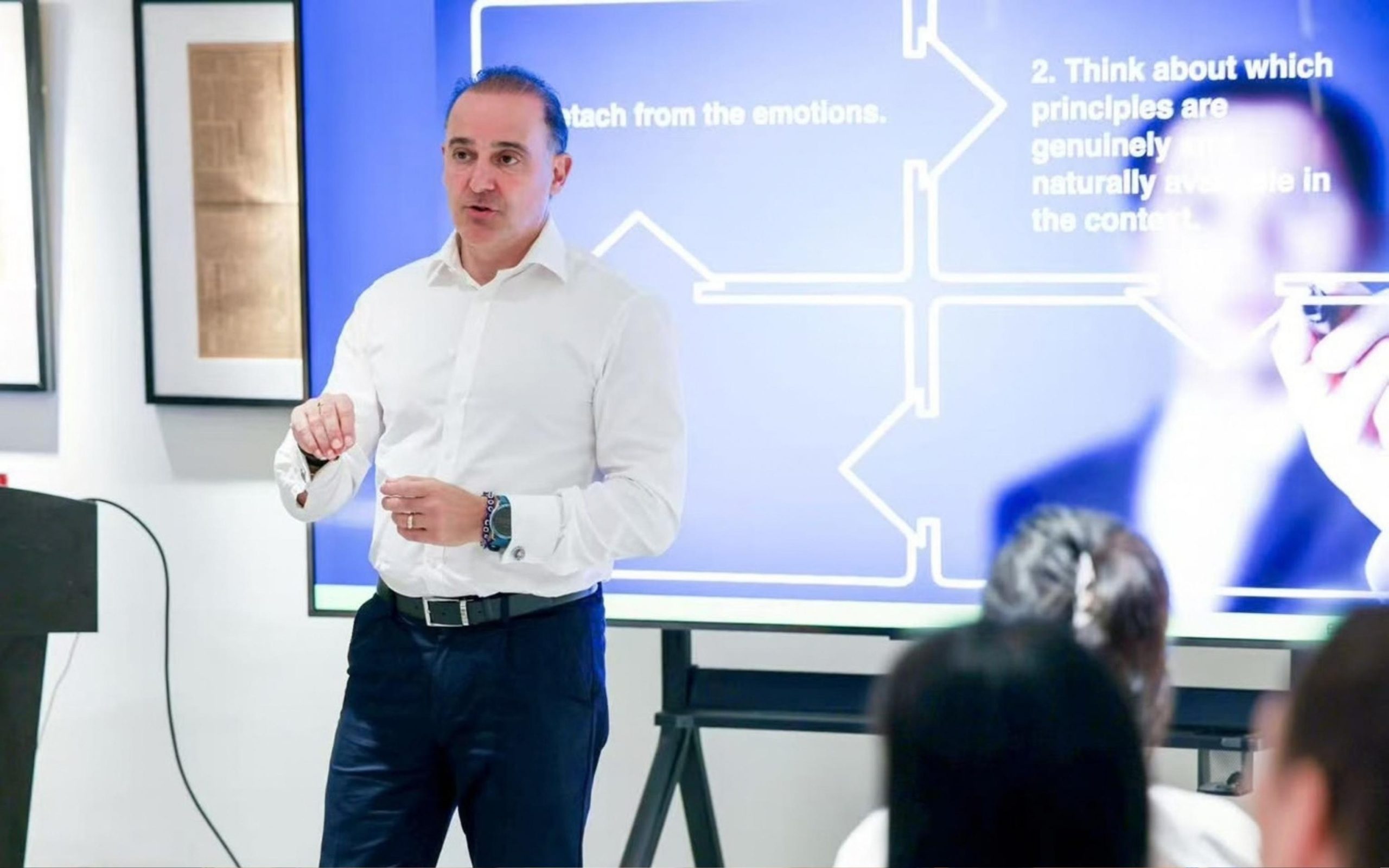
From robotic traffic officers in downtown Shenzhen to food delivery bots inside Hong Kong’s popular restaurants, there is no shortage of autonomous systems deployed across China’s Greater Bay Area (GBA), says Charles Hugentobler, an engineer trained at the University of Cambridge and the University of Pennsylvania, who runs the Macau Artificial Intelligence Education Center.
Several forces are converging at once, he tells The Bay. The disruption promised by artificial intelligence is pulling younger minds towards the hard sciences, with students and parents alike driving demand for courses in STEM (science, technology, engineering, and mathematics) and AIRO (artificial intelligence, robotics)
[See more: Shenzhen’s humanoid edge: how the city is leading the robot world]
“There’s an overwhelming consensus that these skills don’t stop at the classroom door,” Hugentobler remarks. “They stay with you, and they turn up again in whatever job you end up doing.”
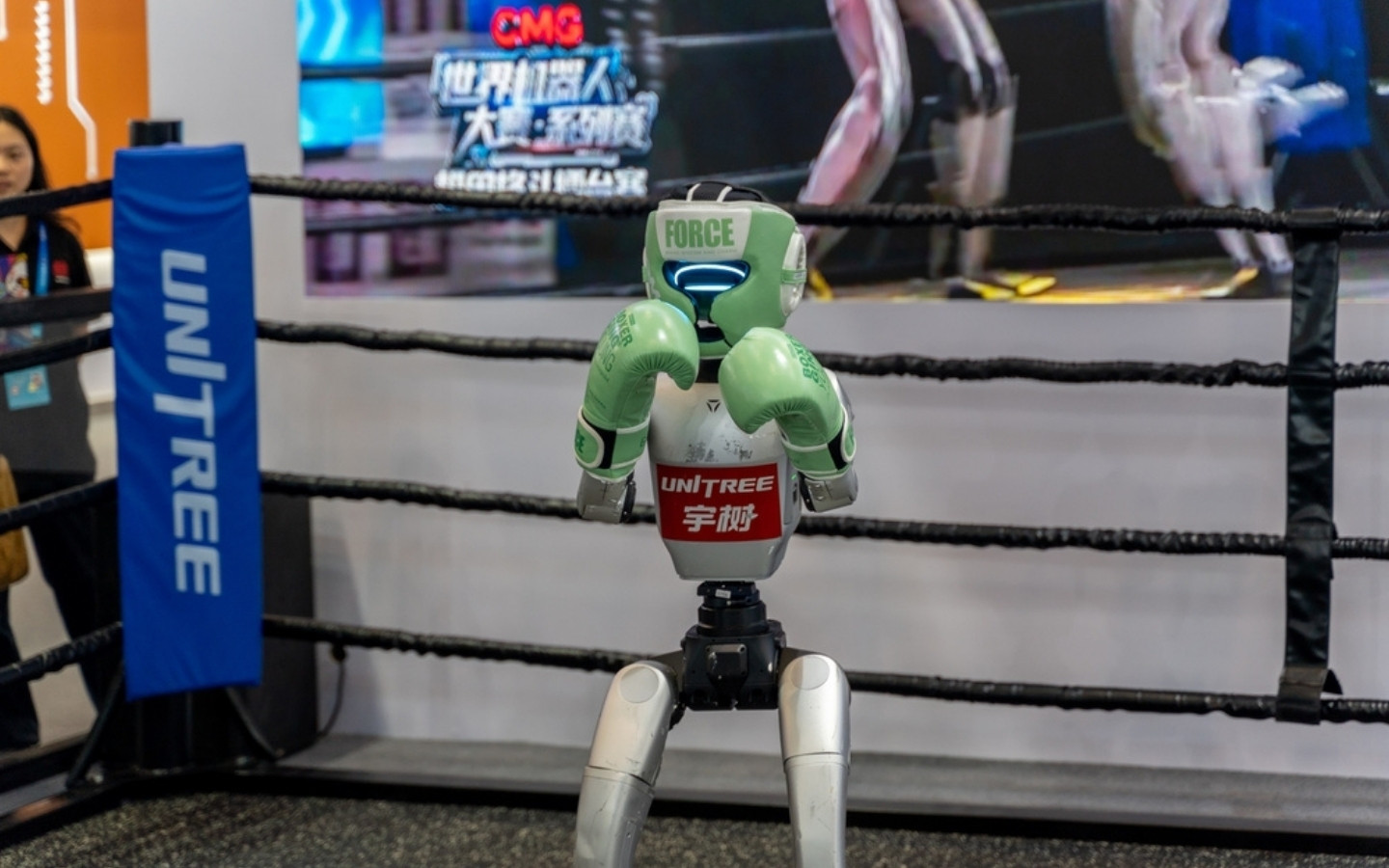
Then there is the visible attention. Acrobatic humanoids are emerging as popular acts, executing complex manoeuvres with human-like dexterity. Others are a bit cruder, wearing boxing gloves to throw punches at each other inside cage matches. Dancing robots are even prominently featured in Zhang Yimou’s MGM residency show, Macau 2049, whose digital billboard is only a few blocks away from where Hugentobler holds his classes.
The robots sector: business-led
But as the entertainment novelty begins to wear off, commercial practicality takes precedence. Corporate buyers are expected to drive market demand that was previously led by state-related labs and educational buyers.This is set to be a transformative year for humanoid sales, predicts investment house Morgan Stanley, which recently upgraded its 2026 industry outlook to US$7.5 trillion by 2050, from an earlier projection of US$5 trillion.
The bank expects China to supply the orders, revising this year’s shipments forecast to 50,000 units from 28,000 as falling production costs support wider adoption for an industry identified as a strategic sector in the nation’s current Five-Year Plan. Industrial demand would also address domestic labour force concerns, with the working population peaking at 800 million in 2015 and projected to fall by 300 million by 2100.
While half-size humanoid robots currently account for the bulk of sales, full-sized iterations are forecast to represent 70 percent of the market by 2028 with total shipments reaching 446,000 by 2030. The projection implies a compound annual growth rate (CAGR) of 106 percent, faster than the previous CAGR of 85 percent that underscored the prior baseline.
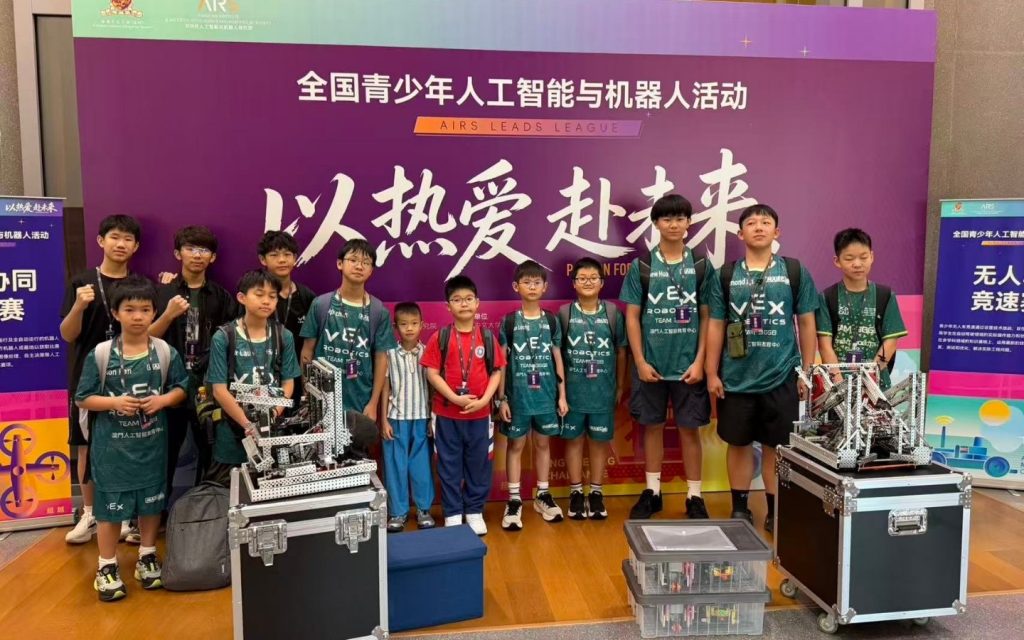
Students from the Macau Artificial Intelligence Education Center – Photo by Charles Hugentobler
Fresh capital for robots
Amid this backdrop, the upcoming initial public offering (IPO) of UniTree Robotics on the Shanghai Star 50 becomes an investor litmus test, demonstrating whether the current industry exists as a business model that can power economic growth.
Much like its acrobatic robots, the listing of the world’s largest humanoid maker has attracted noticeable attention. The retail tranche of UniTree’s IPO has been reportedly oversubscribed more than 5,500 times.
At an equity valuation of US$9 billion, UniTree Robotics’ investment appeal lies in its profitability, market insiders say, bucking a trend of AI start-ups going public while still loss-making. According to its prospectus, the company generated 1.7 billion yuan (US$252 million)in revenues in 2025, making a net profit of 600 million yuan.
[See more: Beijing to host second World Humanoid Robot Games]
But despite its profitability, the listing also comes amid revised investment and trade curbs between Beijing and Washington, where competition to dominate the future landscape of artificial intelligence is intensifying. With leaders from the US and China set to meet next month, the frontier technology has eclipsed traditional trade tariffs previously focused on hardware containment, permeating into software ecosystems, model developments, and intelligence security.
Markets, however, remain optimistic. The Shanghai STAR 50 index is up nearly a third ahead of UniTree Robotics’ listing, fuelled by a rally in AI hardware stocks. The surge signals that geopolitics and supply chain tensions have yet to demand a broader market discount.
Closer to the ground
Despite the technological advancements and fresh capital, a future with robotic butlers still needs to address data bottlenecks, analysts say, noting that companies are continuously seeking innovation efficiencies as humanoid intelligence is far from performing all general tasks. However, their presence is already impacting how some industries operate.
Speaking at G2E Asia earlier this year, Sungwoo Choi, an assistant professor at the Chinese University of Hong Kong, found traveller interactions with non-human robots increased cross-selling and add-on services, adding that a younger generation is without any hesitation providing both candid and negative feedback to artificial intelligence. The findings, he says, reinforces a pivot that holds significant future implications, particularly for hospitality’s customer-facing services.
[See more: Shenzhen’s humanoid edge: how the city is leading the robot world]
“Sharing an opinion free of any emotional attachment strikes a meaningful chord, particularly from an Asian cultural perspective given the importance of saving face,” he says, suggesting that artificial intelligence might have an advantage in gathering deeper insights compared to a human.
At the Macau Artificial Intelligence Education Center, students are learning the hardware and the software that sit inside any robot worth building, from tabletop kits to full-size humanoids. But not everyone, Hugentobler concedes, is ready for robots, or amused by them.
Back in May, a confrontation between a half-size humanoid and a bystander drew attention on social media, with police eventually taking the robot away. The machine was following standard protocol, Hugentobler explains. Someone had blocked its path, so it stopped. On camera, that read as aggression.
Protocols, Hugentobler points out, are written for what the situations engineers can anticipate, and a crowded street supplies plenty they cannot. Comical as the episode was, it previews the social friction that humanoids can generate.
“Everyone is discussing the chip shortage, and now the memory shortage behind it,” Hugentobler says. “What nobody discusses is the shortage of people, the engineers and teachers who can help both generations, younger and older, adapt to what is coming. Ironically, the scarcest component in this industry is still human.”