The University of Hong Kong’s medical faculty completes 48 successful robot-assisted microsurgeries, including a world-first liver transplant
HKU surgeons perform robot-assisted liver transplant with zero complications
Article by:
PUBLISHED:
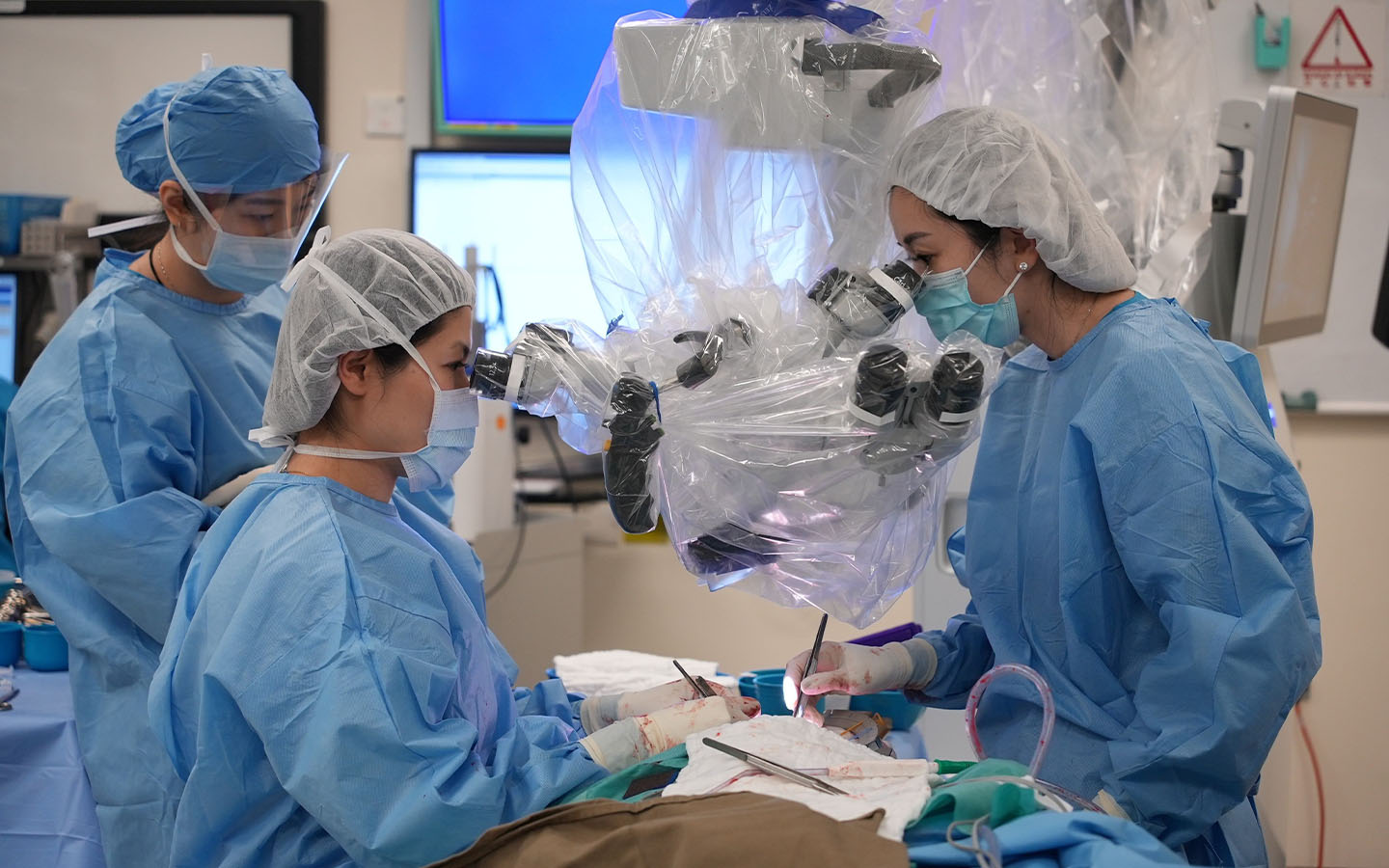
A surgical team at the University of Hong Kong has completed 48 robot-assisted microsurgeries with no complications recorded, including two global firsts – the world’s first robot-assisted living donor liver transplantation and the first robot-assisted trans-hairline microvascular surgery for head and neck cancer patients.
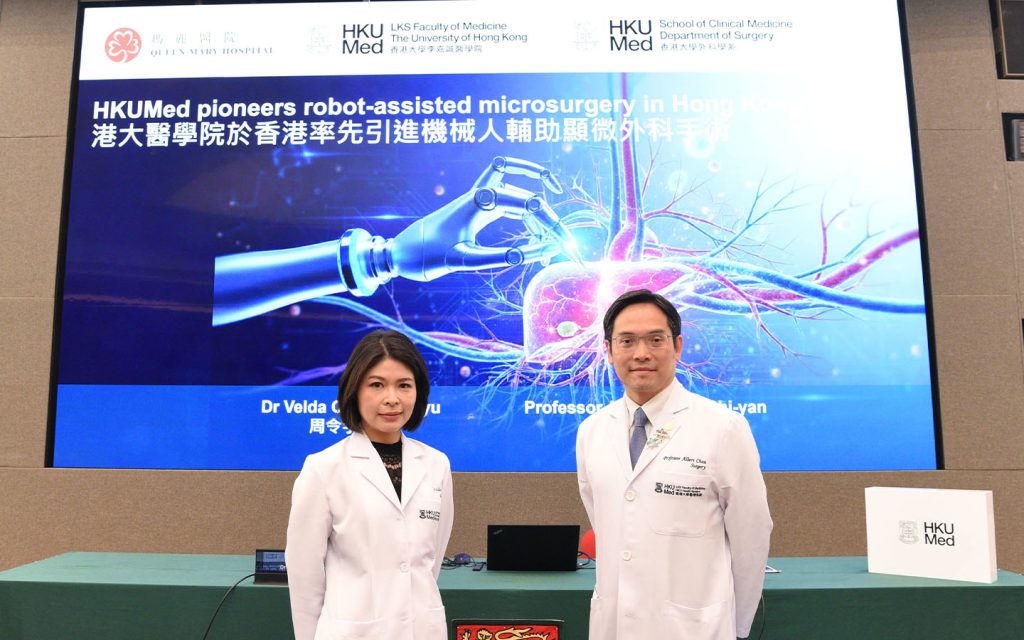
The programme, led by Dr Velda Chow Ling-yu and Professor Albert Chan Chi-yan from HKUMed’s Department of Surgery, began in June 2025 and is based at Queen Mary Hospital.
The robotic platform addresses one of surgery’s most persistent challenges – human hand tremor. Operating on structures as fine as 0.1mm under high-powered magnification, conventional microsurgeons face fatigue, ergonomic strain and physical limitations that restrict both performance and the number of surgeons capable of performing these procedures.
The robot filters tremors, scales motion and provides enhanced visualisation, while its special arms allow access to confined spaces that would otherwise be unreachable by human hand.
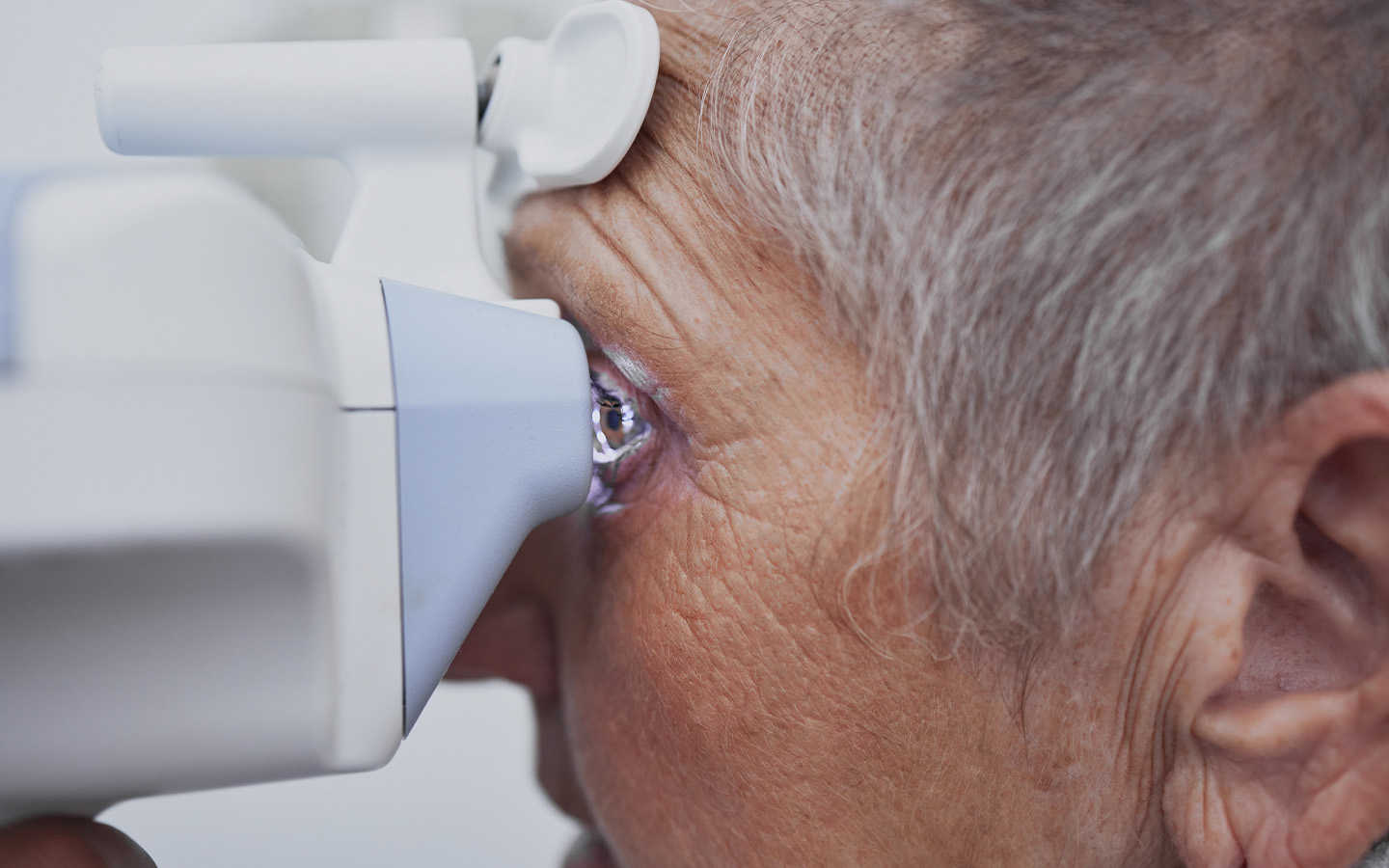
[See more: Could a Hong Kong discovery reverse glaucoma blindness? Early study restores 70 percent of vision in mice]
In liver transplantation, the hepatic artery – short and small in calibre – must be precisely joined deep within the abdomen, compounded by cardiac pulsation and the physical pressure of the donor graft. Historically, only a handful of surgeons in the world could perform this independently. The robotic platform now makes it reproducible.
For head and neck cancer patients, the robot enables surgeons to perform reconstruction through an incision hidden within the hairline rather than the traditional visible scar on the front of the neck – reducing disfigurement and aiding recovery of speech and swallowing.
Professor Chan described the liver transplant breakthrough as setting a new benchmark in the field. Dr Chow added that the platform’s structured learning curve means more surgeons can reach competency faster, ultimately reducing patient waiting times.