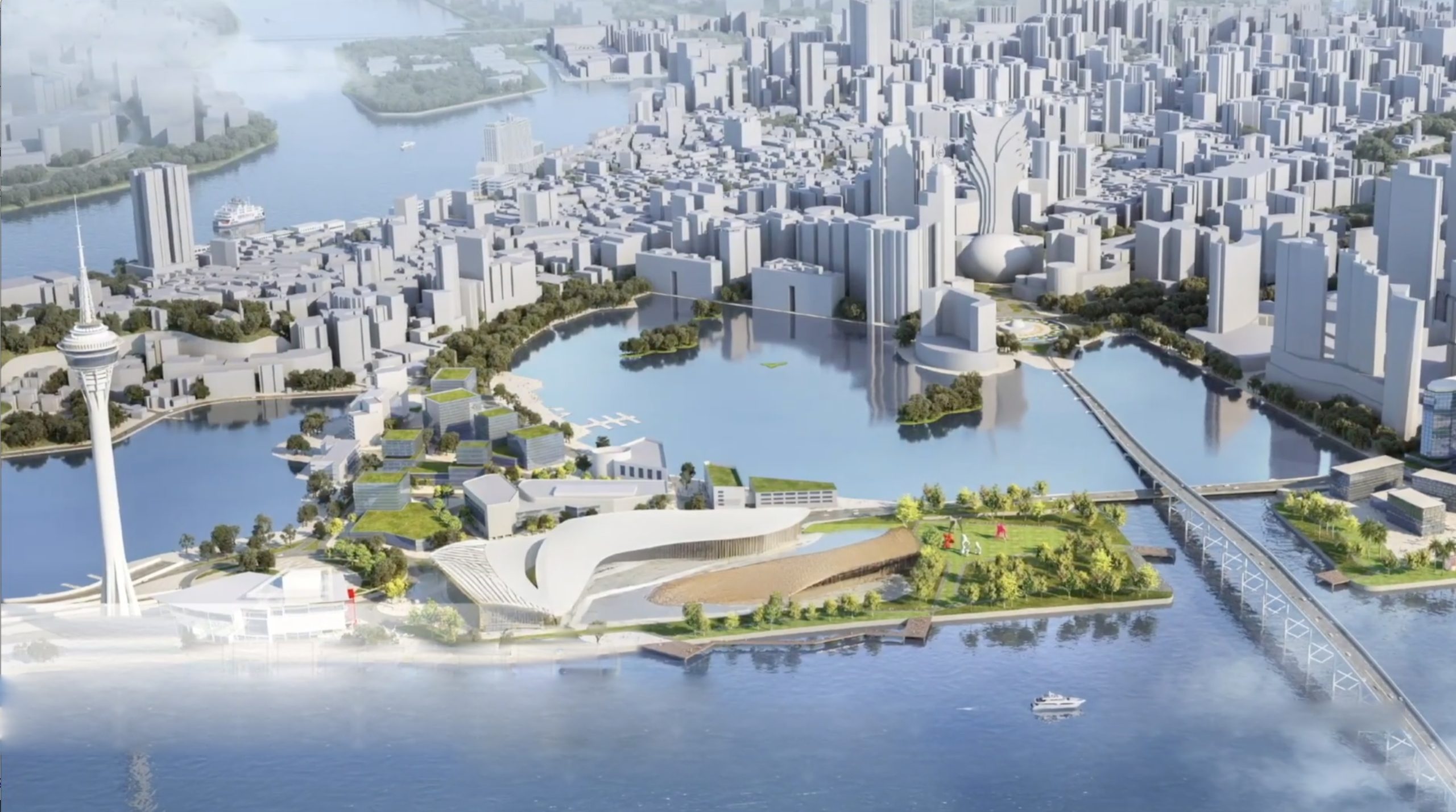
The GBA's nine mainland cities and two Special Administrative Regions are investing heavily in art and culture.
Here are some of the best art museums in China’s Greater Bay Area
Article by:
PUBLISHED:
China’s Greater Bay Area (GBA) can often seem to be all about business. While it is true the region has largely made its name as an economic powerhouse, it is also quickly establishing itself as a major arts and cultural hub.
Underpinning the GBA’s rise as a centre for artistic endeavour are its nine mainland cities and two Special Administrative Regions, many of which are investing heavily in art and culture.
For instance, Macao is attempting to transform into a “City of Performing Arts,” while Hong Kong has long been seen as an East-meets-West centre for international cultural exchange. Similarly, Guangzhou and Shenzhen have been pushing out policy measures and events to support their cultural industries.
The key pillars of the artistic ambitions of the various GBA cities are their art museums. As of 2025, Guangdong had 31 registered art museums and many more private ones, a large proportion of which can be found in the GBA.
With so many to choose from, it can be difficult to decide which ones to visit. To help out, we’ve compiled a list of some of the best art museums in the GBA, with Michael Whittle, associate professor at the University of Macau’s (UM) Department of Arts and Design, sharing his thoughts on each.
M+ (Hong Kong)
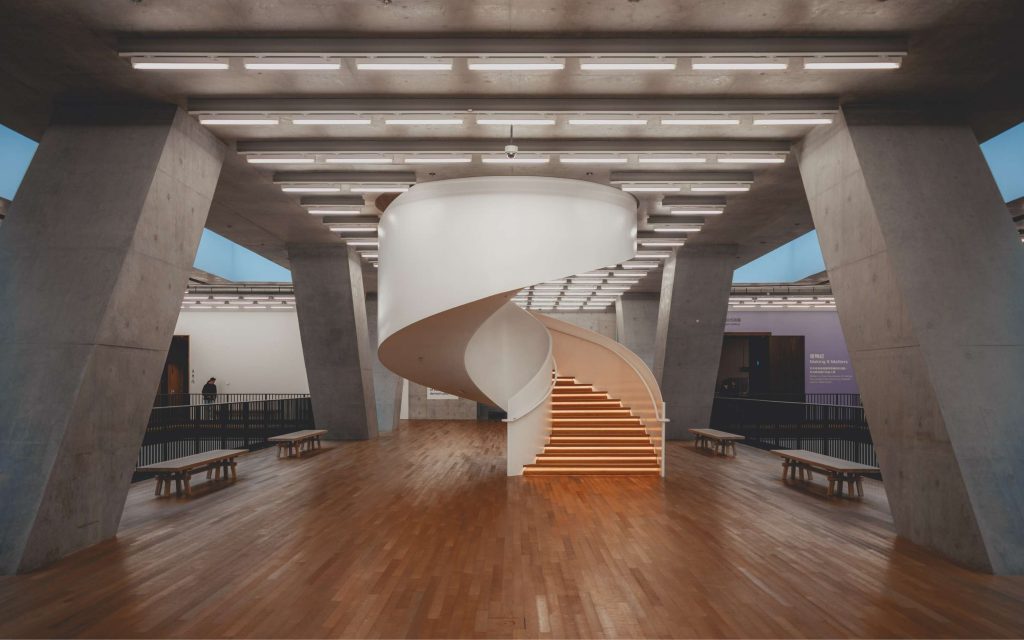
Inaugurated in November 2021, M+ is a contemporary art museum whose goal is to showcase the very best of 20th- and 21st-century visual art, architecture, design and moving images from Hong Kong, Greater China and other parts of the world.
The museum, whose name is intended to convey the concept of “museum plus more,” is one of the largest venues of its type in Asia, with 33 galleries spread across an exhibition space of 17,000 square metres.
One of the more unusual exhibition areas is the subterranean “Found Space” gallery in the basement, which was created by excavating the Airport Express railway tunnels. Whittle notes that the space “hosts large-scale site-specific installations, offering an unexpectedly intimate encounter with monumental art.”
[See more: An oasis of sound: How Shenzhen’s Oil Club is fuelling China’s underground club scene]
Complementing the museum’s galleries are various facilities that include three cinema houses, a multifunctional space known as the Mediatheque, a learning hub and a rooftop garden.
The museum building, which was designed by Swiss firm Herzog & de Meuron in collaboration with TFP Farrells and Arup, can also be considered an artwork in its own right.
As Whittle notes, “a standout feature is [the museum’s] iconic LED facade, one of the world’s largest media walls, which transforms the building into a dynamic public artwork visible across Victoria Harbour, proving especially striking at night.”
Location: West Kowloon Cultural District, 38 Museum Drive, Kowloon
Opening hours: Tue-Thu, Sat-Sun (10 am to 6 pm), Fri (10 am to 10 pm), Mon (Closed)
Price: HK$190 (standard ticket), HK$100 (concessions)
Website: Click here
Hong Kong Palace Museum (香港故宮博物館)
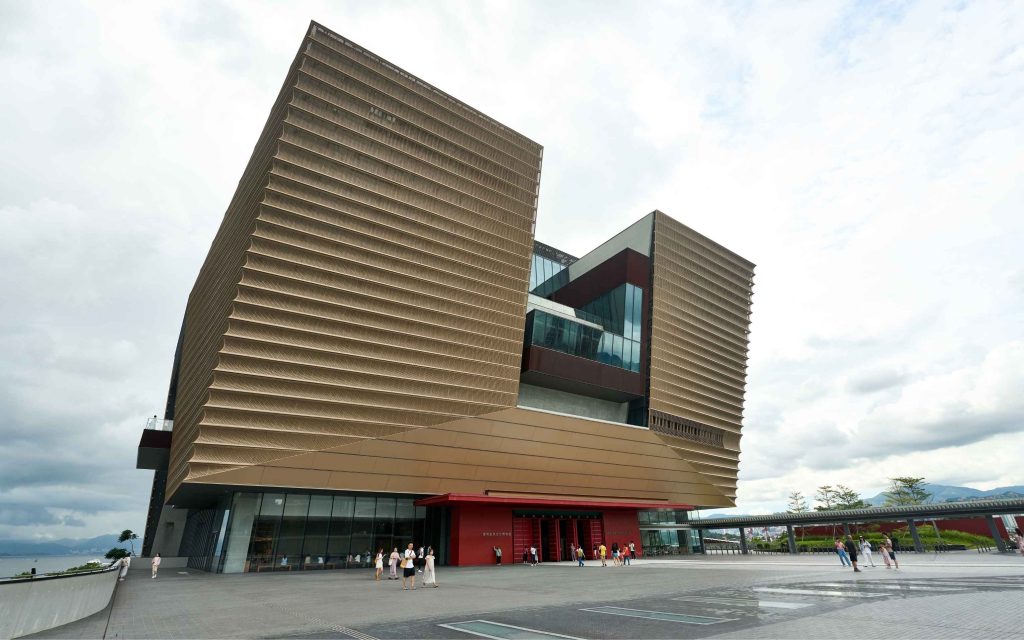
Unable to visit the Palace Museum in the Forbidden City in Beijing? Fret not because the museum has a Hong Kong branch which showcases over 900 imperial artefacts from the Beijing museum’s vast collection of more than 1.8 million items.
Opened in 2022, the seven-storey Hong Kong Palace Museum features 9 exhibition galleries that occupy 7,800 square metres. Here you’ll find a range of thematic exhibitions displaying imperial treasures such as paintings, documents, books, porcelain and jewellery. According to Whittle, they include “rare loans of national first-grade relics and masterpieces seldom seen outside mainland China.”
For instance, Heavenly Horses, an ongoing exhibition on horse paintings, features Giuseppe Castiglione’s 1742 masterpiece, The Qianlong Emperor Holding an Arrow.
China’s national artefacts are not the only items on display, as the Hong Kong Palace Museum also stages special events that look beyond the nation’s borders. As of writing, the venue is hosting an ancient Egypt exhibition, which showcases 250 pieces from seven Egyptian museums and the Saqqara archaeological site, including mummy coffins, animal mummies and statues.
In order to make the exhibitions an interactive and memorable experience, the curatorial team has taken the initiative to blend digital elements. Whittle points to AR-enhanced porcelain displays “that make ancient artifacts feel vividly alive and accessible to contemporary audiences.”
Architecturally, the academic says the museum “thoughtfully echoes the spatial axis of the Forbidden City, while offering fantastic panoramic views of Victoria Harbour from upper-level platforms.”
Location: West Kowloon Cultural District, 8 Museum Drive, Kowloon
Opening hours: Mon, Wed, Thu, Sun (10 am to 6 pm), Fri, Sat and public holiday (10 am to 8 pm), Tue (Closed)
Price: HK$70 (General admission), HK$250 (Full access)
Website: Click here
Guangzhou Museum of Art (廣州藝術博物院)
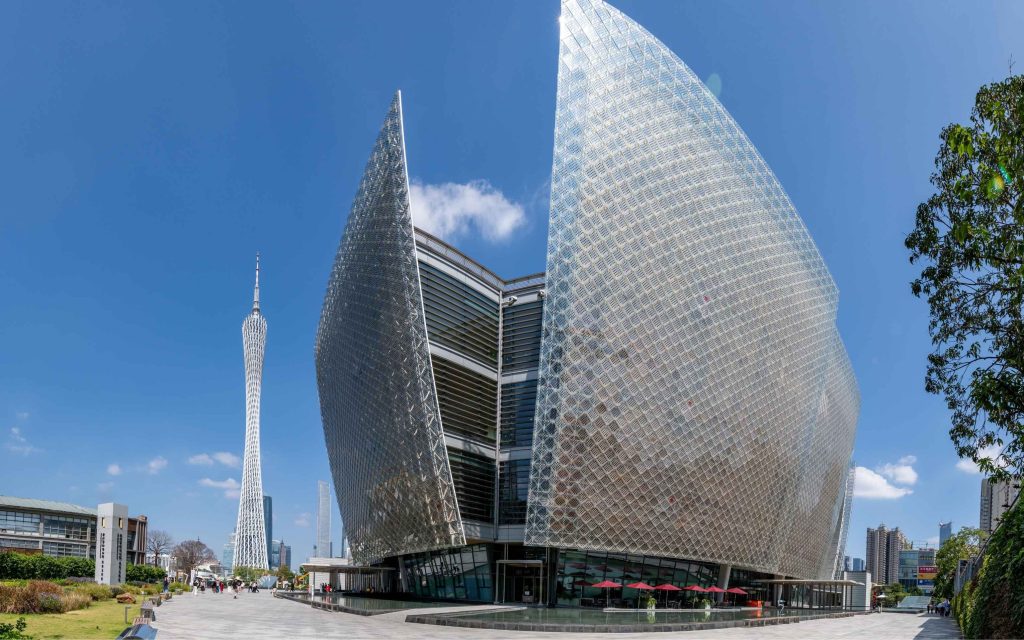
Located across from the iconic Canton Tower, the current Guangzhou Museum of Art opened its doors in 2023, replacing the original site in Yuexiu District, which had been in operation since 2000.
As one of China’s leading institutions for traditional and modern Chinese art, the museum is unsurprisingly massive, with a floor area of roughly 30,000 square metres and a site area of approximately 80,000 square metres. The building itself consists of seven floors and 21 exhibition halls that cover 19,000 square metres, showcasing over 1,300 art pieces.
[See more: The four Pop Mart characters surging as Labubu cools]
Altogether, the museum boasts a collection of more than 33,000 items, with Whittle noting that it “highlights regional innovations that fused Western techniques with Chinese traditions, providing a unique window into Guangdong’s artistic identity at a historical cultural crossroads.”
According to the expert, some of the venue’s highlights include its “exceptional” Lingnan School paintings collection, as well as works by Qi Baishi and other twentieth-century masters.
The museum building’s unique architecture – inspired by the idea of a “blooming kapok in water” – is also artistic in every sense of the word. Made up of around 21,000 photovoltaic glass scales, the structure emits a warm yellow glow that complements the vibrantly illuminated Canton Tower.
Location: No. 198 Yiyuan Road, Haizhu District, Guangzhou
Opening hours: Tue to Sun (9 am to 5:30 pm), Mon (Closed)
Price: Free (Special exhibitions require ticket purchase)
Website: Click here
Shenzhen Art Museum (深圳美術館)
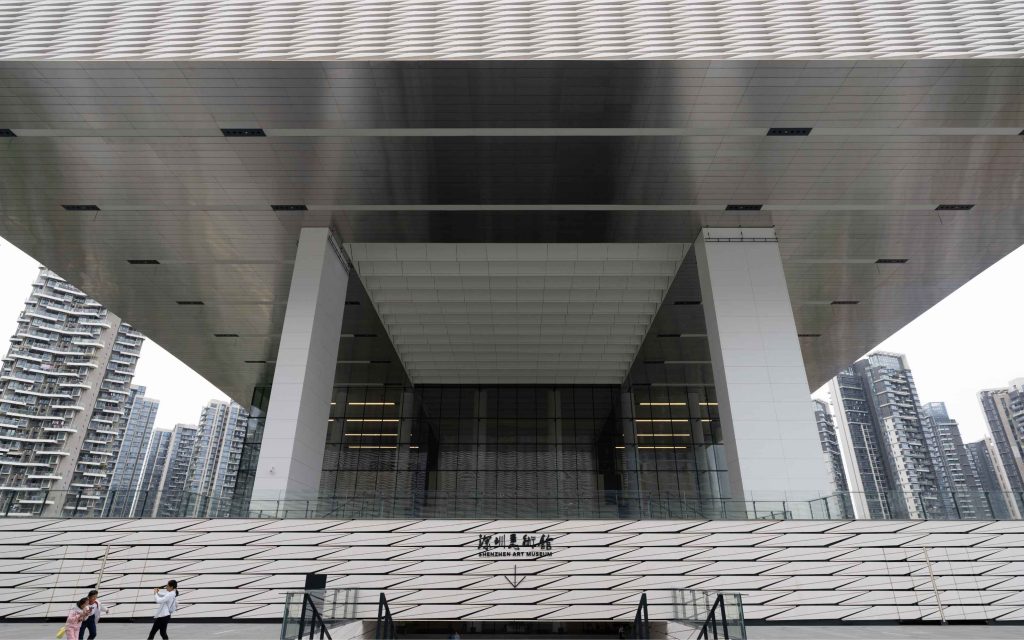
Established in 1976, the Shenzhen Art Museum is one of the oldest art exhibition institutions in the city. When the museum was first founded, it was originally known as the Shenzhen Exhibition Hall before adopting its present name in 1987.
Despite its five decades of history, the present building where the Shenzhen Art Museum stands is relatively new, opening to the public in late 2023. The current venue has a site area of 66,000 square metres, boasting 18 halls spread across an exhibition area of 16,000 square metres. Inside, guests will find an array of artworks such as calligraphy, Chinese painting, oil painting, photography, sculptures and prints.
[See more: Amanda from thetiredeyes on R&B, confidence and a debut album in the works]
Whittle says the museum’s collection emphasises “the city’s pioneering spirit, bridging historical Chinese art with forward-looking contemporary dialogues that reflect Shenzhen’s position as a regional epicentre of innovation and reform.”
He adds that the venue possesses a considerable collection of regional works, as well “rotating exhibitions that trace Shenzhen’s rapid cultural evolution.”
Special mention goes to the museum building, which is every bit as striking as the art pieces that it houses, with a stunning glass facade and soothing natural stone and mineral surfaces. Another notable feature is the museum’s projecting roof, which represents “a door to the world of knowledge, art, and the culture,” according to KSP Engel, the German architectural firm behind the design.
Location: Building 1, No. 30, Tenglong Road, Daling Community, Minzhi Sub-District, Longhua District, Shenzhen
Opening hours: Tue-Sun (10 am to 6 pm), Mon (Closed)
Price: Free
Website: Click here
Shenzhen International Museum of Art (深圳國際美術館)
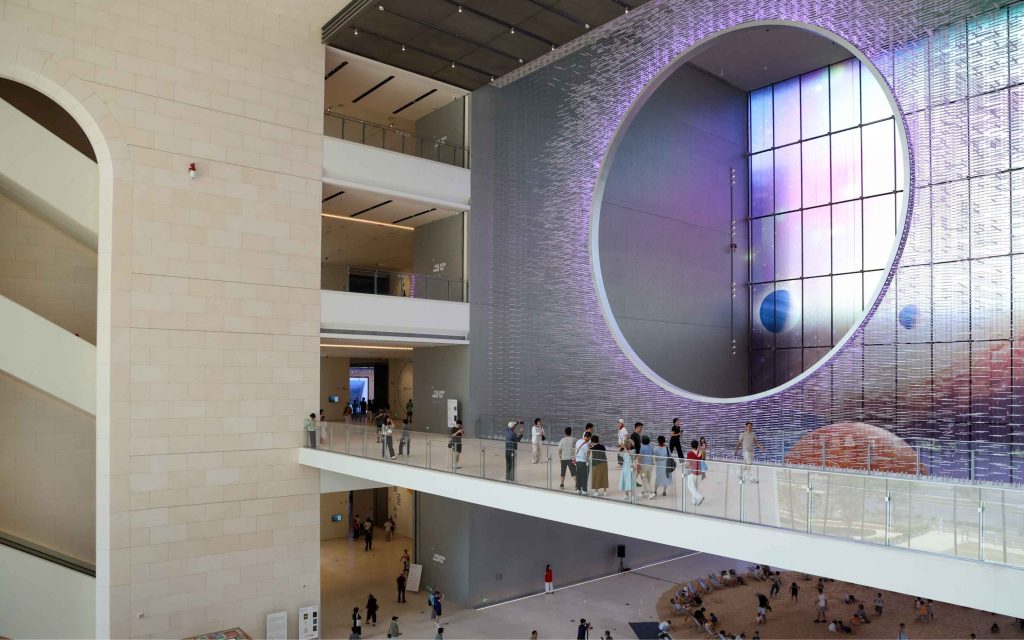
The Shenzhen International Museum of Art (SIMoA) is one of the newest additions to the GBA’s art scene, opening its doors to the public in May 2026. Along with the Shenzhen Art Museum’s new venue, it is one of ten cultural facilities that the Shenzhen government is building to bolster the city’s cultural credentials.
Located within Guangming Science City, the SIMoA certainly doesn’t disappoint as a cultural landmark. Its nine-floor building boasts a vast number of facilities, including 15 international-level galleries across an exhibition space of over 48,000 square metres, a 12,000 square metre professional collection storage facility, a 700-seat indoor theatre and a 200-seat lecture hall.
Says Whittle, “Early highlights included reunions of Yuanmingyuan bronze animal heads alongside major international loans, promising compelling cross-cultural dialogues and establishing it as a major new venue in the region’s cultural landscape.”
[See more: For the love of ink: Meet Zhuhai tattoo artists Beibei and Qiqi]
This cross-cultural positioning is well reflected in the SIMoA’s current round of exhibitions, which include Old Master to Impressionist paintings from Budapest, Chinese abstract art and over 100 art pieces from an international group of artists exploring the interaction between art and technology.
The museum’s goal of fostering East-West interaction is also echoed via the ark-like design of its two wings, which are meant to symbolise the convergence of the two cultures.
Location: No. 16 Guanghui Avenue, Guangming District, Shenzhen
Opening hours: Tue-Sun (10 am to 6 pm), Mon (Closed)
Price: 90 yuan (Adult), 72 yuan (Concession), Parent and child ticket combo (138 yuan), Family ticket (2 adults and 1 child, 215 yuan)
Website: Click here
He Xiangning Art Museum (Shenzhen) 何香凝美術館
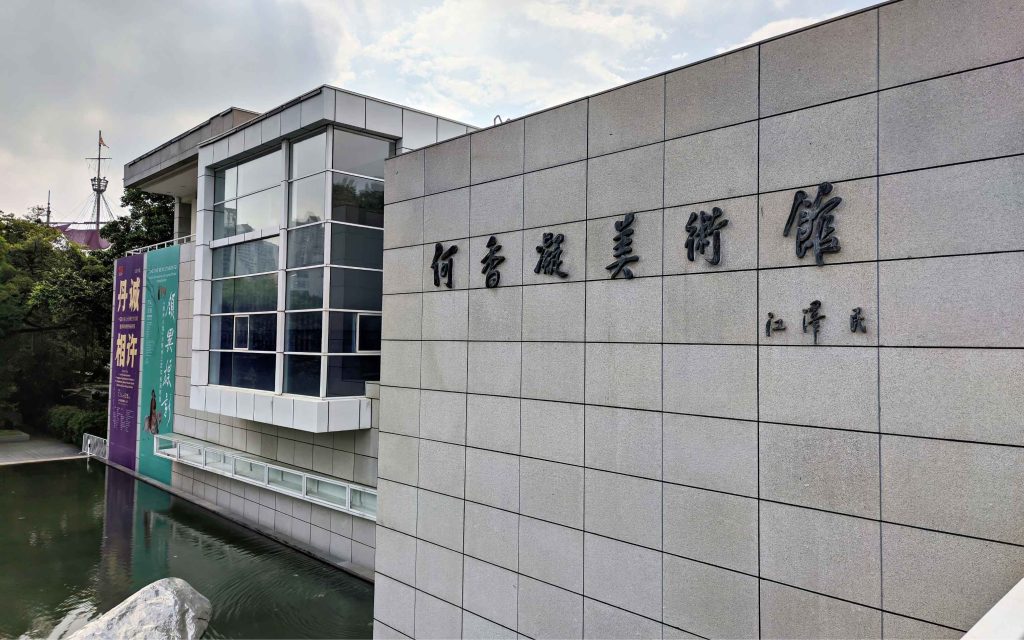
Inaugurated in 1997 and named after He Xiangning (1878-1972), a pioneering painter, revolutionary and feminist, the He Xiangning Art Museum holds the distinction of being the first national art museum in China to bear the name of a person.
In keeping with its namesake, Whittle says the museum “maintains a core collection of her ink paintings alongside strong holdings in overseas Chinese and female artists.”
He describes the museum as a “thoughtful space for exploring identity, history, and modern Chinese narratives,” pointing out that its programming includes “historically underrepresented voices,” “influential contemporary sculpture exhibitions” and “cross-strait exchanges.”
Aside from showcasing artworks, the museum, which covers a floor space of more than 5,000 square metres, is also dedicated to collecting and researching the works of He. Its three floors house a range of facilities, including a main and secondary exhibition hall, storerooms, library, auditorium, cafe and book bar.
The museum’s simple design, as well as grey and white colour scheme are worth mentioning as well, as they are intended to reflect He’s character and evoke the idea of modernity emerging from tradition.
Location: No. 9013, Shennan Boulevard, Overseas Chinese Town, Nanshan District, Shenzhen
Opening hours: Tue to Sun (9:30 am to 5 pm), Mon (Closed)
Price: Free
Website: Click here
Aranya Art Center (Guangzhou) 阿那亞藝術中心廣州館
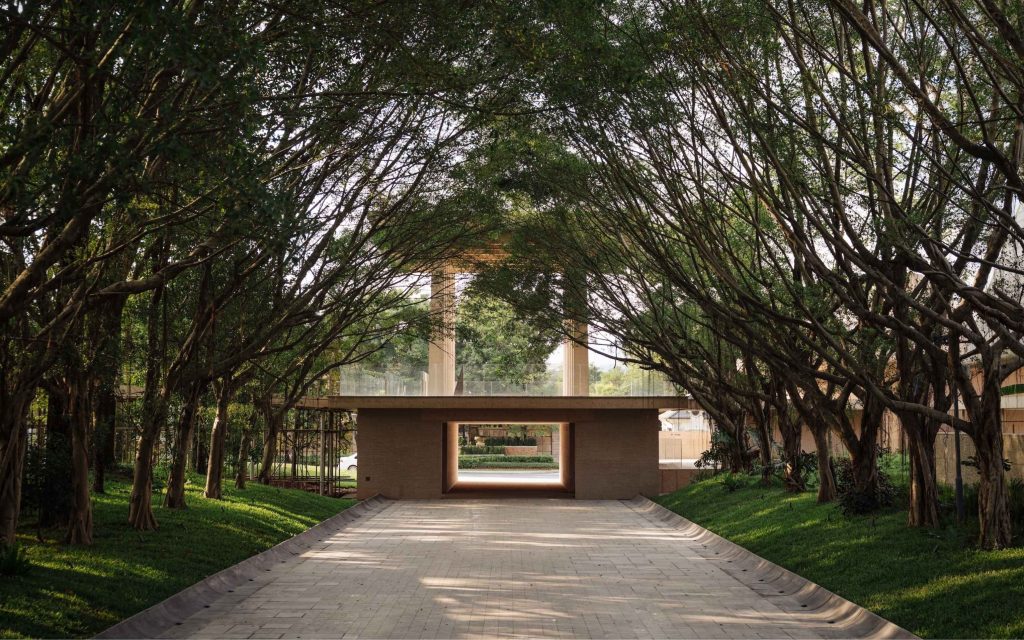
Guangzhou’s Aranya Art Center is owned and operated by the Aranya Group – a Chinese lifestyle and real estate development brand behind various cultural and tourism projects in the country.
Established in 2025, the Aranya Art Center Guangzhou is the company’s first urban branch, with the other two institutions situated in Hebei province.
With a floor space of nearly 2,900 square metres, the art centre houses contemporary works from both domestic and overseas talents. As of writing, the facility was staging Beirut-based artist Haig Aivazian’s first solo exhibition in China, which features various video installations, as well as a group exhibition showcasing over 70 works from 28 artists across regions such as West Asia, South Asia and Africa.
[See more: 5 futuristic buildings in the Greater Bay Area that don’t look real]
One particularly striking element of the art centre is its architecture, which originated from architect Dong Gong. According to Whittle, Dong “integrates art seamlessly with nature through a cluster of galleries linked by paths around preserved ancient banyan trees, creating a serene, immersive Lingnan utopia.”
The art expert adds that the centre also has a 50-metre long avenue shaded by banyan trees that “doubles as an open-air exhibition space, blending architecture and landscape in a way that invites contemplative wandering and blurs the boundary between indoor galleries and the outdoors.”
Location: Aranya Jiulonghu Community, Huadong Town, Huadu District, Guangzhou
Opening hours: Tue-Sun (10 am to 6 pm), Mon (Closed)
Price: 50 yuan (Standard ticket), 30 yuan (Concession)
Website: Click here
Macao Museum of Art (澳門藝術博物館)
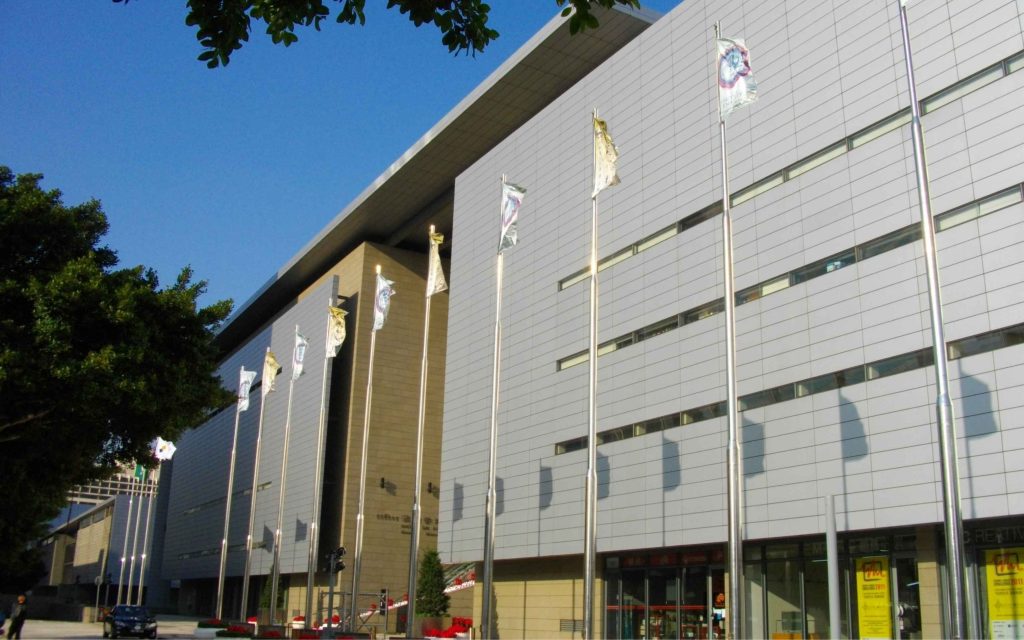
Macao is home to numerous art galleries and spaces, but the Macao Museum of Art (MAM) remains the nerve centre of the local art scene. Founded in 1999, the five-storey MAM features an exhibition area of more than 4,000 square metres, making it the largest art museum in Macao.
According to Whittle, the museum has over 16,000 works in its collection, excelling in “Chinese calligraphy and painting, [and] historical views of Macao by Western artists like George Chinnery and Shiwan stoneware.” The academic adds that the institution also has a strong collection of 19th-century export art, which he says “vividly captures the city’s layered history as a maritime crossroads and a unique locus of East-West fusion.”
In addition, the museum is known to support contemporary talents who have local and Portuguese connections.
[See more: Meet the artists representing Hong Kong and Macao at the Venice Biennale]
The ground floor serves as a public space, while the first floor features a lobby exhibition area. A special gallery displaying modern and contemporary western art is located on the second floor. The third floor showcases local artworks and those from the MAM collection, while the fourth floor showcases Chinese calligraphy, paintings and artefacts.
Location: Avenida Xian Xing Hai, Macao
Opening hours: Tue-Sun (10 am to 7 pm), Mon (Closed)
Price: Free
Website: Click here
UPDATED: 29 Jul 2026, 12:07 pm