The province recorded a trade value of 6.49 trillion yuan (US$962.35 billion) on the back of strong imports and exports of electrical and computing products
Guangdong’s foreign trade rose 20.5 percent in the first seven months of 2026
Article by:
PUBLISHED:
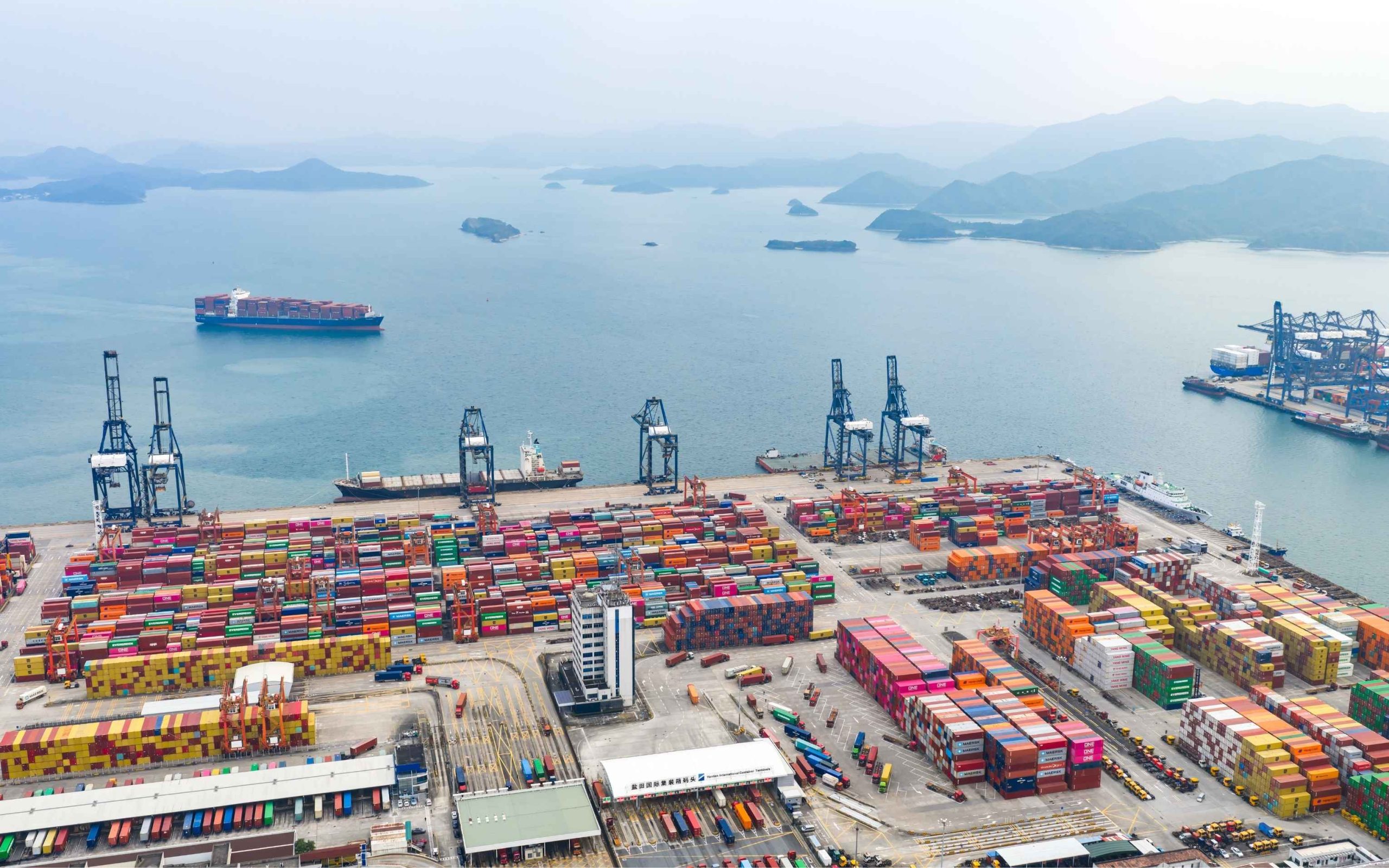
Foreign trade in Guangdong province reached a value of around 6.49 trillion yuan (US$962.35 billion) between January and July of 2026, up 20.5 percent year-on-year. The sum represented 21.6 percent of the total foreign trade in China over the same period, according to Guangdong Customs data cited by Global Times and Nanfang Daily.
The province’s contribution to national foreign trade growth amounted to 24.9 percent, with its trade volume continuing to lead the country.
Both exports and imports experienced robust double-digit growth. Exports totalled 3.8 trillion yuan (US$563.47 billion), up 10.8 percent year-on-year. Similarly, imports grew by a sizable 37.4 percent to 2.69 trillion yuan (US$398.88 billion). The trade surplus stood at 1.11 trillion yuan (US$164.6 billion), narrowing by 24.5 percent.
For the month of July, Guangdong’s foreign trade amounted to 1.01 trillion yuan (US$149.76 billion), surging 19 percent year-on-year.
Who were Guangdong’s main trading partners?
Association of Southeast Asian Nations (ASEAN) member countries remained Guangdong’s largest trading partners in the first seven months of 2026. The province’s trade with the regional bloc reached a value of 1.02 trillion yuan (US$151.24 billion, +14.2 percent).
Trade with Hong Kong was also significant, hitting 990.1 billion yuan (US$146.81 billion, +47.4 percent). The same applies to trade with the EU (676.93 billion yuan, US$100.37 billion), the US (582.5 billion yuan, US$86.37 billion) and Taiwan (533.05 billion yuan, US$79.04 billion), which rose by 5.2 percent, 3.8 percent and 8.7 percent respectively.
Significant trade growth was also recorded with South Korea (+44.3 percent), Africa (+19.8 percent), India (+16.5 percent) and Australia (+33.2 percent).
Which industries helped to drive Guangdong’s growth?
One of the main drivers of Guangdong’s foreign trade growth in the first seven months of 2026 was the export of machinery and electrical products, which reached a value of 2.68 trillion yuan (US$397.39 billion, +15.1 percent). This sector accounted for 70.5 percent of the province’s entire exports in the initial seven months, a rise of 2.6 percentage points year-on-year.
The export of AI-related products was particularly strong, with the sale of integrated circuits hitting 320.1 billion yuan (US$47.46 billion, +58 percent). This was also the case for electrical equipment, which had an export value of 306.08 billion yuan (US$45.38 billion), an increase of 24.9 percent.
Another key factor of growth was Guangdong’s import of hardware and metals. In order to cope with AI demand, Guangdong imported 1.07 trillion yuan (US$158.66 billion) in of integrated circuits (+48.6 percent) in the first seven months. Similarly, the import of computers and other related parts totalled 391.22 billion yuan (US$58.01 billion, +77.9 percent), while the import of copper – a key raw material to AI data centres – reached 39.89 billion yuan (US$5.91 billion, +36.5 percent).
How did the Greater Bay Area perform in foreign trade?
The nine mainland cities of Guangdong’s Greater Bay Area (GBA) made up the bulk of Guangdong’s overall trade volume in the first seven months of 2026. Collectively, they reported a foreign trade value of 6.27 trillion yuan (US$929.73 billion), up 20.7 percent year-on-year, according to Guangdong Customs data quoted by CCTV.
This growth rate outpaces the national average by 3.4 percentage points. It also accounts for 20.8 percent of the total trade in China between January and July 2026, up 0.6 percentage points in comparison to the same period in 2025. In addition, the GBA’s contribution to China’s foreign trade growth reached 24.2 percent.
[See more: Which sectors drove Guangdong’s economic growth in the first half of 2026?]
By trade components, exports totalled 3.68 trillion yuan (US$545.68 billion, +10.8 percent), while imports hit 2.59 trillion yuan (US$384.05 billion, +38.1 percent).
Notably, Hong Kong surpassed ASEAN to become the largest trading partner of the nine mainland GBA cities during the first seven months of 2026. Trade between Hong Kong and the mainland GBA surged 48.2 percent to 976.5 billion yuan (US$144.79 billion).