Hong Kong muralist Kristopher Ho on designing FC Bayern's Kai Tak jersey print, rejecting cliché, and a career built on folklore and beasts
Meet Kristopher Ho, the Hong Kong artist behind FC Bayern’s Kai Tak jersey
Article by:
PUBLISHED:
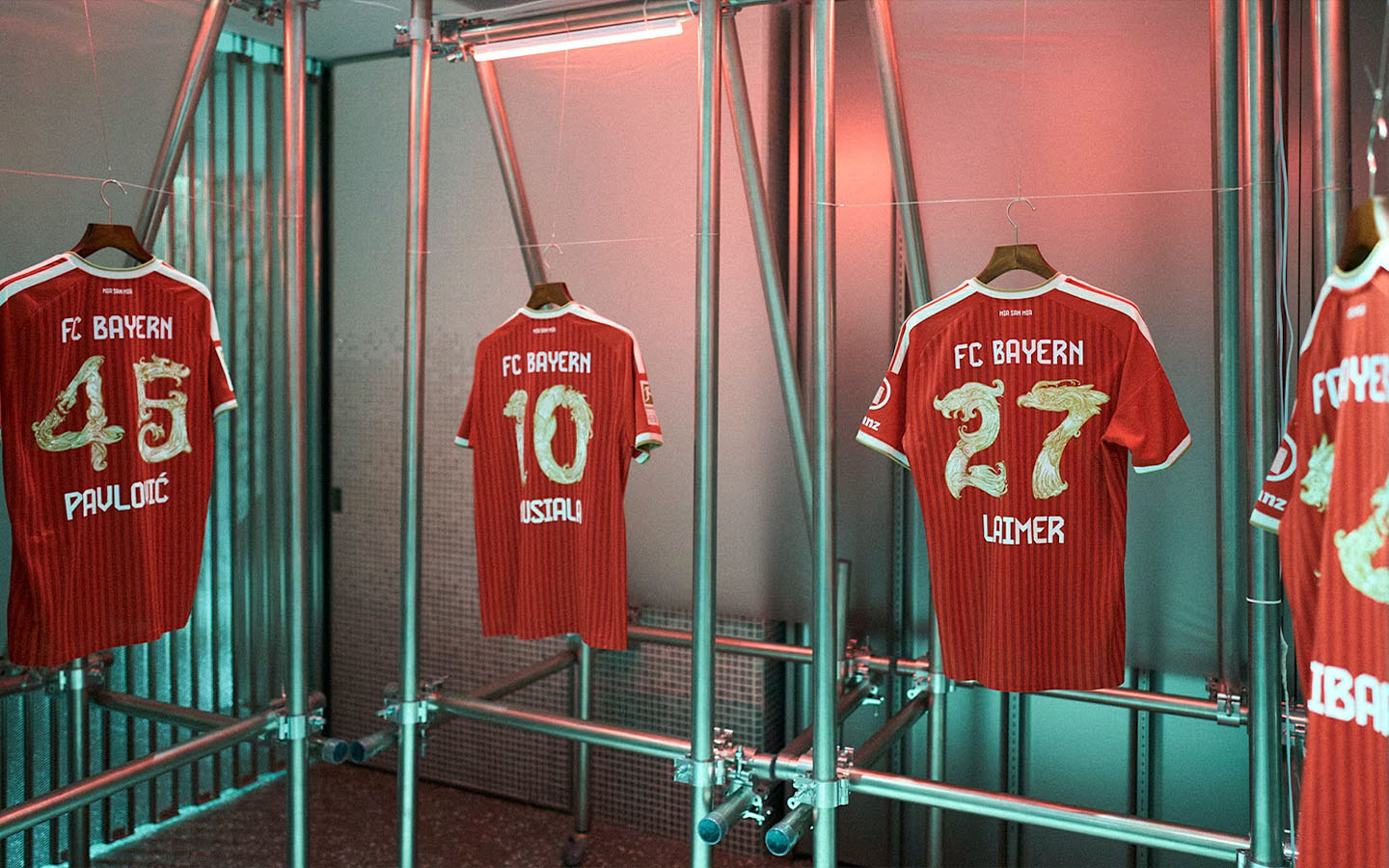
Hong Kong illustrator Kristopher Ho designed the gold, dragon-motif number font FC Bayern Munich wore for their Audi Summer Tour friendly at Kai Tak Stadium on 7 August, according to the club’s official announcement. It’s a Hong Kong-influenced jersey print built on traditional Chinese charms rather than the city’s usual postcard imagery.
[See more: A Macao art exhibition explores the themes of AI and romance]
For Ho, it’s a rule he’s pushed on projects far smaller than this one, for years, and the Bayern jersey just gave him a much bigger audience to make the point to.
Designing the Bayern jersey
Ho puts the timeline at around June, two months before the match. The connection ran through Hypebeast, who he’d already worked with on a mural for NBA Hong Kong and Tissot.
When Bayern wanted a Hong Kong artist for their Asia tour, Hypebeast tested his interest, and it went from there. “It was totally random,” Ho says. “I met the Bayern team properly during the first meeting.”
Ho understood the brief simply to make it Hong Kong-influenced. He didn’t want another version of the Hong Kong that people had already drawn a thousand times.
“Every project in Hong Kong ends up leaning on the same things: the IFC, the Star Ferry,” he says. “It’s been exploited to a point where it’s just stereotypical. I didn’t want to do that again.”
Instead, he went further back, to traditional Chinese religious charms and amulets, and the flat, pre-perspective illustration style used to draw them centuries ago. “A hundred, a thousand years ago, the way people illustrated things was completely different from now: there’s no concept of perspective, everything’s two-dimensional,” he says. “I found that really interesting, and I wanted to bring it into something modern.”
[See more: Here are some of the best art museums in China’s Greater Bay Area]
According to FC Bayern’s own statement on the project, Ho deliberately avoided landmarks and neon in favour of something “very local that’s often overlooked.” The design draws on the twelve animals of the Chinese zodiac alongside mythical figures like dragons and phoenixes, reworked into a large-scale, detail-heavy print meant to function almost like a lucky charm.
Part of the rollout put Ho face-to-face with Bayern defender Jonathan Tah, talking through the design on camera in front of Hong Kong fans. “It was very natural. He was just a regular guy, really down to earth,” Ho says.
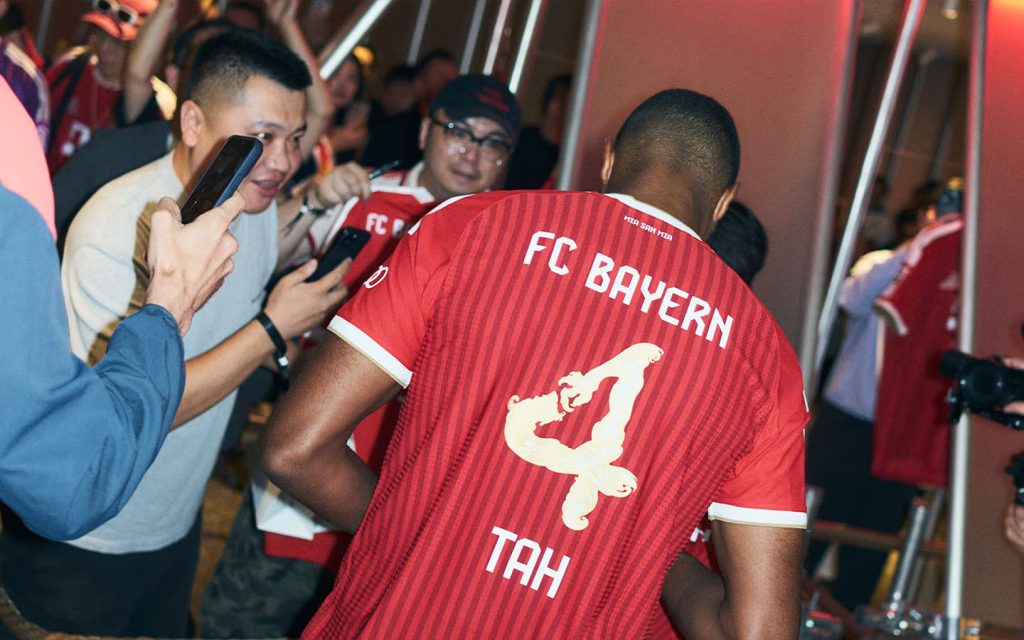
The two talked through the design and Tah’s first trip to Hong Kong, cut short by a schedule too packed for him to see much of the city. What stuck with Ho was that the interest felt real. “He showed genuine interest in the actual design, not just the brand side of it,” he says.
Designing for a jersey worn on television, rather than a wall people walk past, forced a different set of rules. “It’s about readability,” Ho says. “People need to be able to see it from a distance. It can’t be too complex.”
His usual style leans toward heavy detail, so the challenge was creating a version simple enough that fans could still read it from a distance, even scaled down for a jersey, without losing what makes it recognisably his.
He’s also used to working with independent brands and smaller partners, so the scrutiny that comes with a club the size of Bayern raised the stakes. “Everyone’s watching them. So yes, it was stressful, trying to keep my own style intact while making sure it actually worked as a functional jersey design.”
From marine biology to Hong Kong’s walls
Ho grew up drawing constantly (comics, Japanese manga), but taking it seriously came down to one decision, made while at boarding school in the UK: marine biology, or art.
What tipped it, he says, was his art teacher. “She told me: you’re going to spend three or four years doing this, so it might as well be something you actually love.” He picked art, enrolled at Central Saint Martins in London, and has stuck with it since.
Around 2014, Ho was still working purely as an illustrator and struggling to find work when he landed an almost accidental mural commission in Shanghai for a sports brand, despite having no idea how to paint at scale.
[See more: For the love of ink: Meet Zhuhai tattoo artists Beibei and Qiqi]
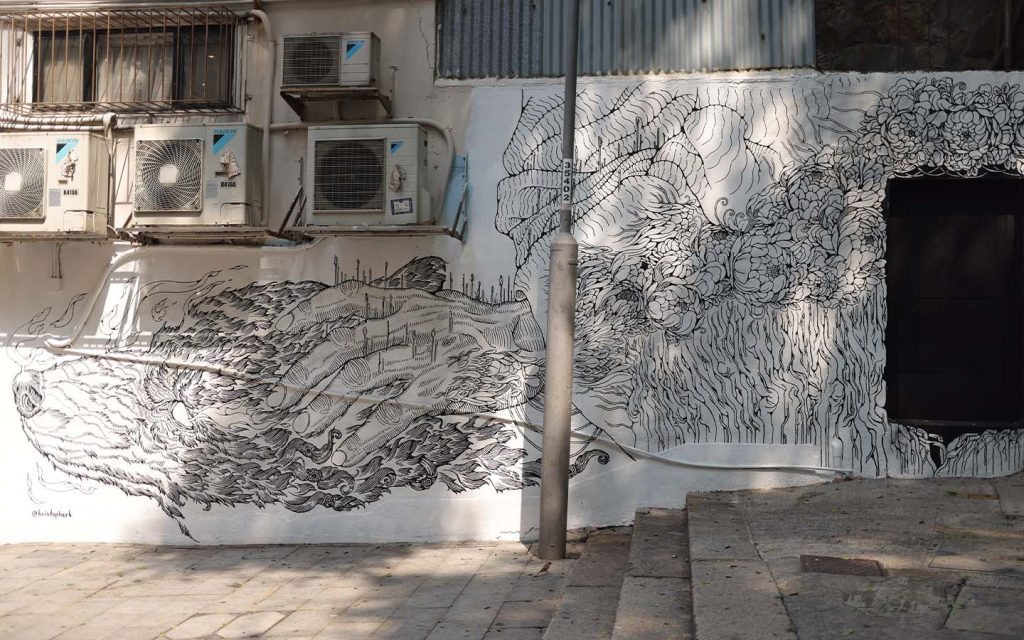
Most of Hong Kong’s small street art scene at the time worked in spray paint, a technique he’d never used, so he adapted, using paint markers instead of cans to keep the same linework he was used to. “I’d never thought about doing something big before. A piece of paper can only be so large,” he says.
“But once I did it, I loved that feeling of being surrounded by your own work. I couldn’t stop.”
Around 2015, at the Clockenflap music festival, he met Jason Dembski and Maria Wong, the founders of HKwalls. The following year, in 2016, they invited him to join as one of the festival’s artists. Ho marks that as the real start of his mural career.
A style that doesn’t change for the client
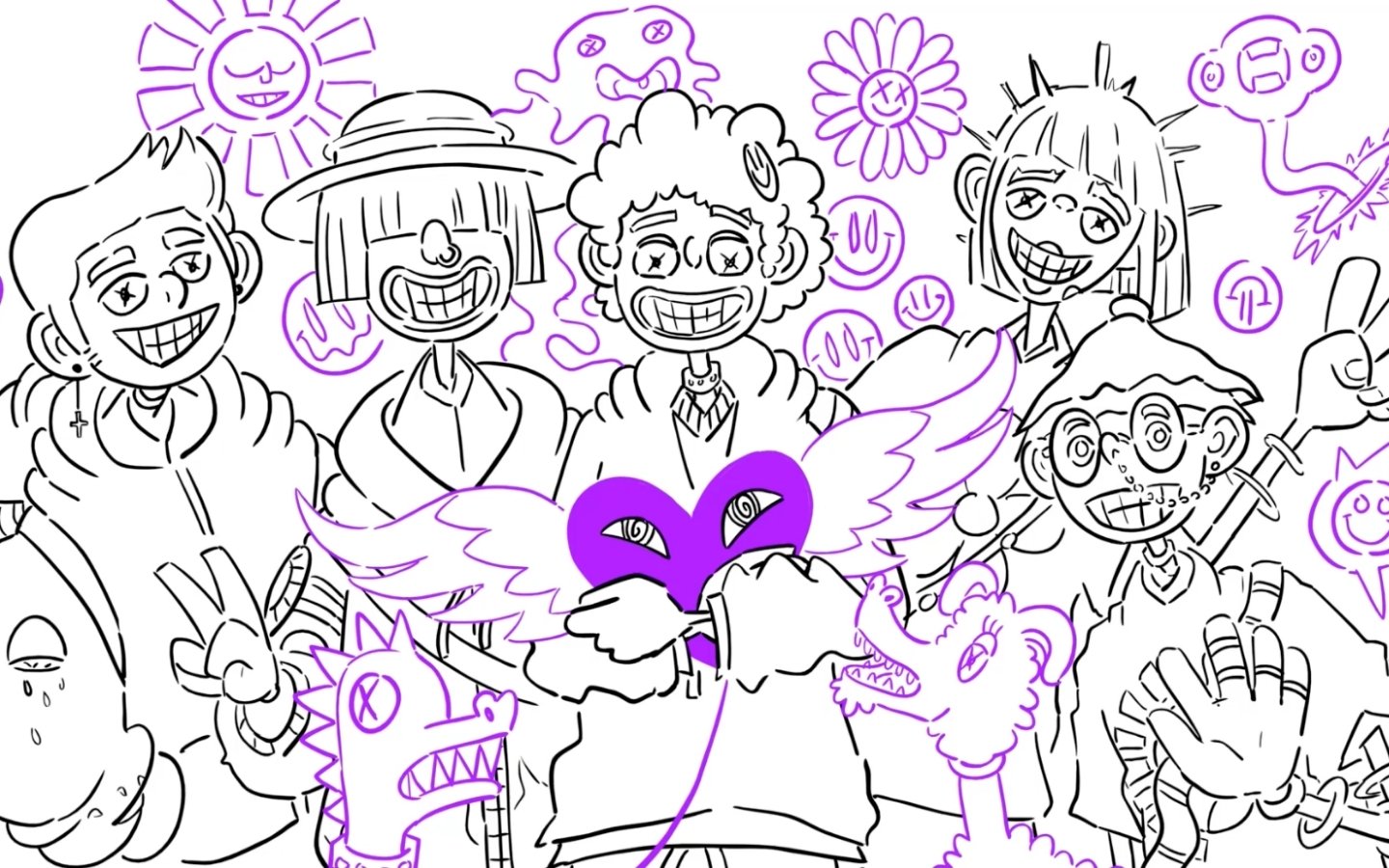
Since then, Ho has worked with Nike, Audi, Starbucks and HSBC, and he credits a lot of that ease to sticking with one recognisable visual language: dense, black-and-white detail work. “If you walk into a restaurant that only serves curry, you don’t ask for sushi,” he says.
“That’s me. Clients already know what they’re getting when they come to me, so there’s no guesswork on their end.”
He pushes back just as readily as he accommodates. “I’m not just a pair of hands there to carry out someone’s idea for them,” he says. “If I think something’s not working, I’ll say so. That’s the job: bringing something to the table, not just filling an order.”
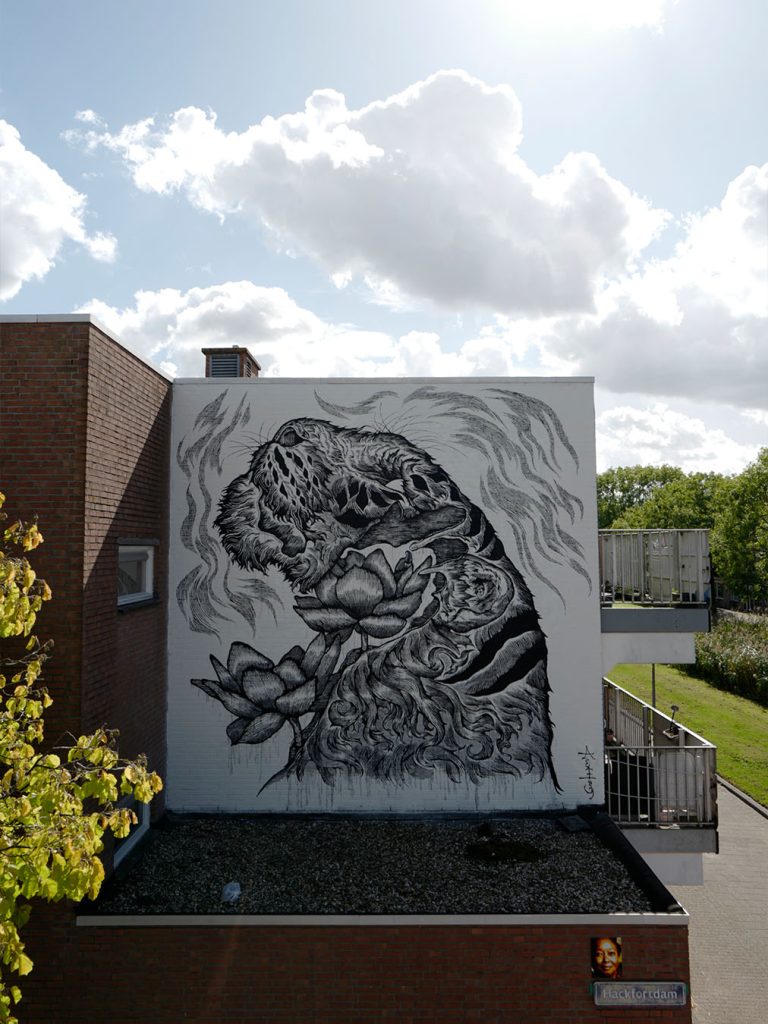
Ho’s recurring pull toward mythology and animal imagery (pieces like The Hollow Beast among them) traces back to a lifelong fascination with nature, going back to childhood drawings of robots that gradually gave way to animals and creatures instead.
[See more: Hong Kong to open 2027 SVNS World Championship]
He’s drawn to religious symbolism in particular, despite not being religious himself. “The moment you look at a symbol like that, you connect it to somebody’s personal belief,” he says. “There’s no objective truth to it. It’s something people create for themselves. I find that interaction really interesting, so I keep coming back to it.”
“Each one just represents a certain stage of my life, a certain point in my career,” Ho says when asked to name a favourite piece.
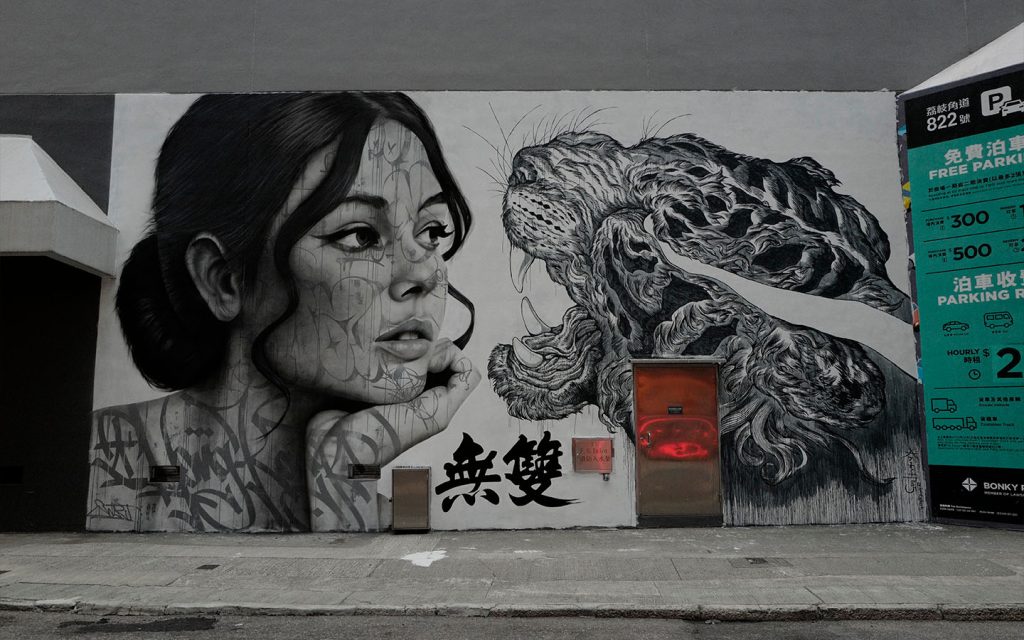
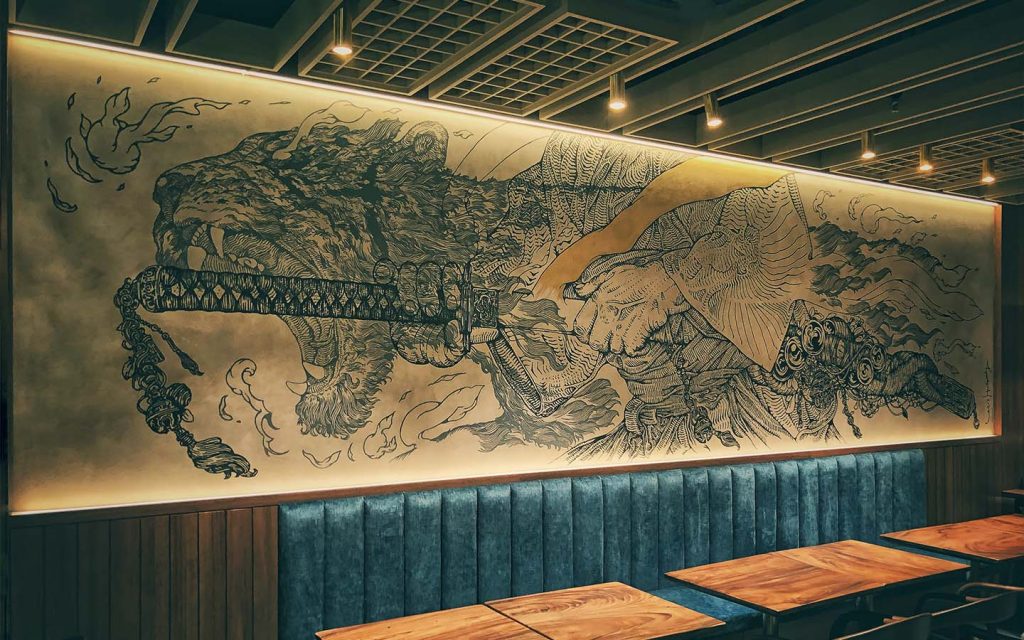
Two do stand out as turning points, though: a mural called The Ultimate, a samurai figure over a tiger painted for a Japanese restaurant in Hong Kong, which was the first time he worked with two overlapping layers rather than his usual single-layer style. And more recently, a mural for MOS Burger at D2 Place, Hong Kong: his first mural painted entirely with a brush rather than paint markers.
4.0, and what’s next
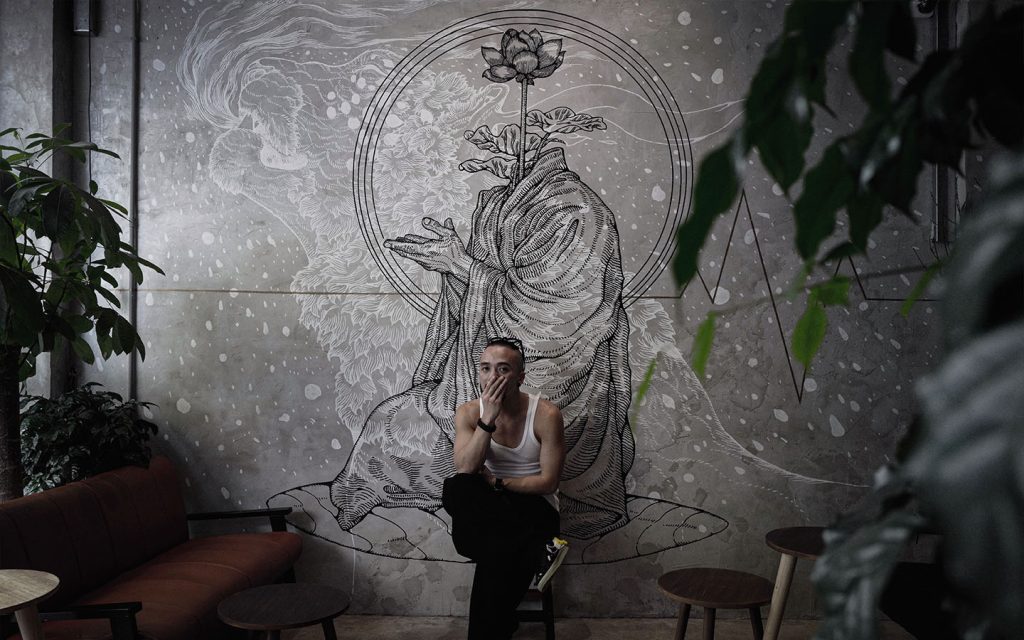
Ho’s other project, the run crew 4.0, grew out of his relationship with Nike, who encouraged him to take up a sport alongside his art practice back in 2014. Basketball came first; running took over once Hong Kong’s basketball courts shut during COVID-19.
After a few failed attempts at building a running team within Nike’s structure, he started 4.0 on his own terms: the name marks its fourth iteration, and it’s open to anyone from the creative industry, regardless of pace. “I didn’t care about speed or personal bests,” he says. “I just wanted people to show up and run.”
[See more: Inside Mius, the bar where Shelley Tai is quietly rewriting Hong Kong hospitality]
With the Bayern jersey now out in the world, Ho is turning back toward studio work, preparing pieces for his first solo exhibition since 2013, and looking to keep painting murals internationally. “I just want to keep doing interesting projects,” he says.
“And hopefully people start to understand the value of trying something new, instead of holding onto the same old stuff. People should be braver, and less afraid of new ideas.”
UPDATED: 20 Aug 2026, 1:56 pm