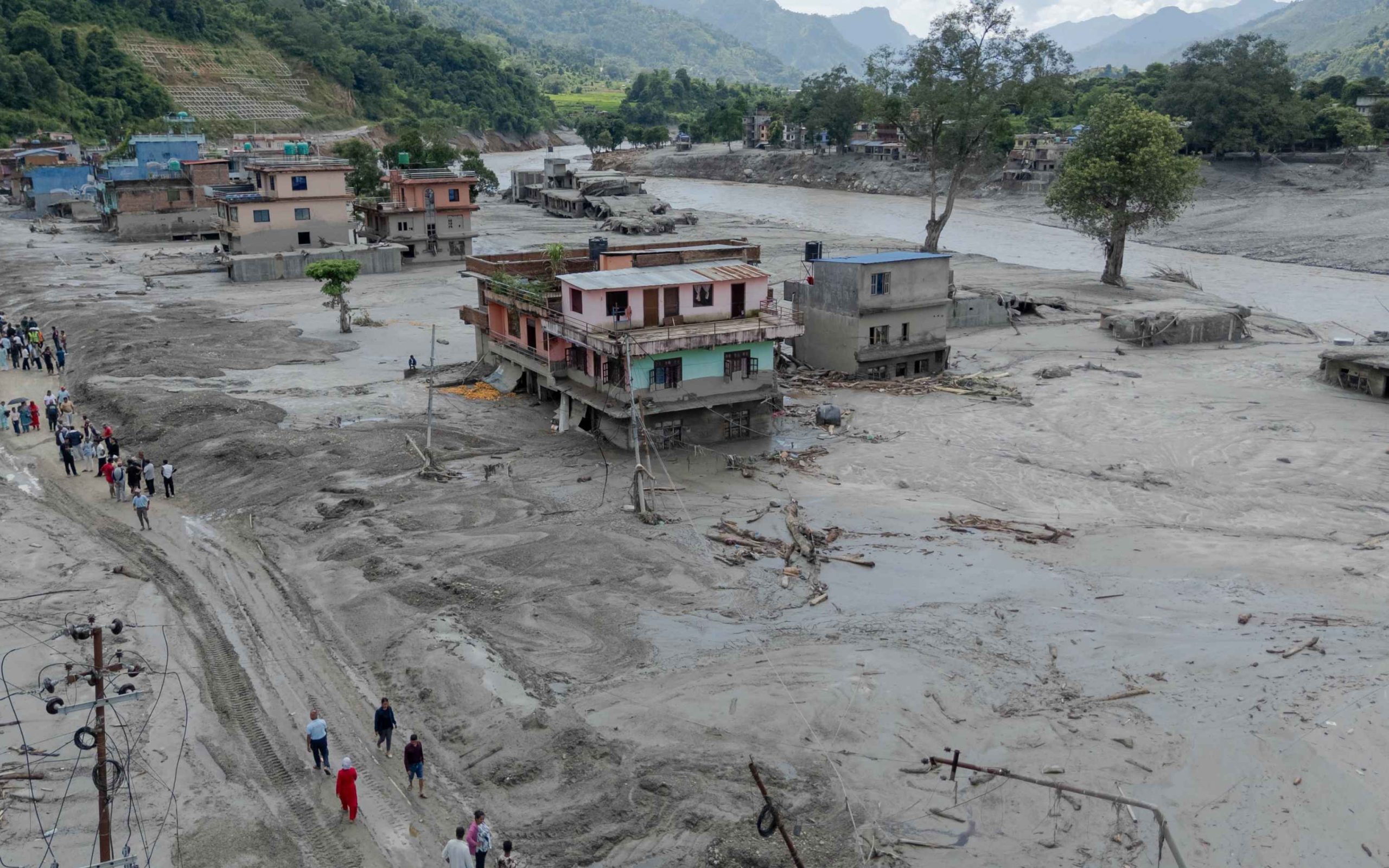
The Tibet-Nepal flood disaster hit the region on 26 August and is believed to have been the result of a glacier collapse

Article by:
PUBLISHED:
The flash flood disaster that struck the border areas of China’s Tibet Autonomous Region and Nepal’s Rasuwa district on the morning of 26 August 2026 has killed at least 475 people in Nepal and 3 people in Tibet, according to figures shared by the Nepal Police on 28 August 2026, and the Chinese state media on 27 August 2026.
Over 1,400 people have also been declared missing, with the Chinese authorities reporting 558 missing persons, including 260 foreigners, in the Tibetan county of Gyirong. Meanwhile, the Nepalese government said that 910 people, including 596 foreigners, were missing in the country after the floods.
[See more: Tibet-Nepal flood disaster: at least 180 dead and over 1,300 missing]
Foreign nationals make up a large proportion of those missing as the border area is frequently used by tourists for passing between China and Nepal, serving as a popular route for visiting pilgrimage sites in Nepal.
Among the missing tourists in Nepal, at least 167 are from India, with around 100 Chinese nationals and at least 66 US citizens deemed missing, according to Nepal’s Ministry of Foreign Affairs.
Other countries with missing nationals include Ukraine (53 people), Malaysia (51), Australia (35), UK (33), Canada (25), Singapore (9) and Russia (6).
Neither Hong Kong nor Macao have received any reports of residents requiring assistance in the impacted areas so far.
Currently, it remains unclear if there is any overlap between the data cited by the Chinese and Nepalese authorities.
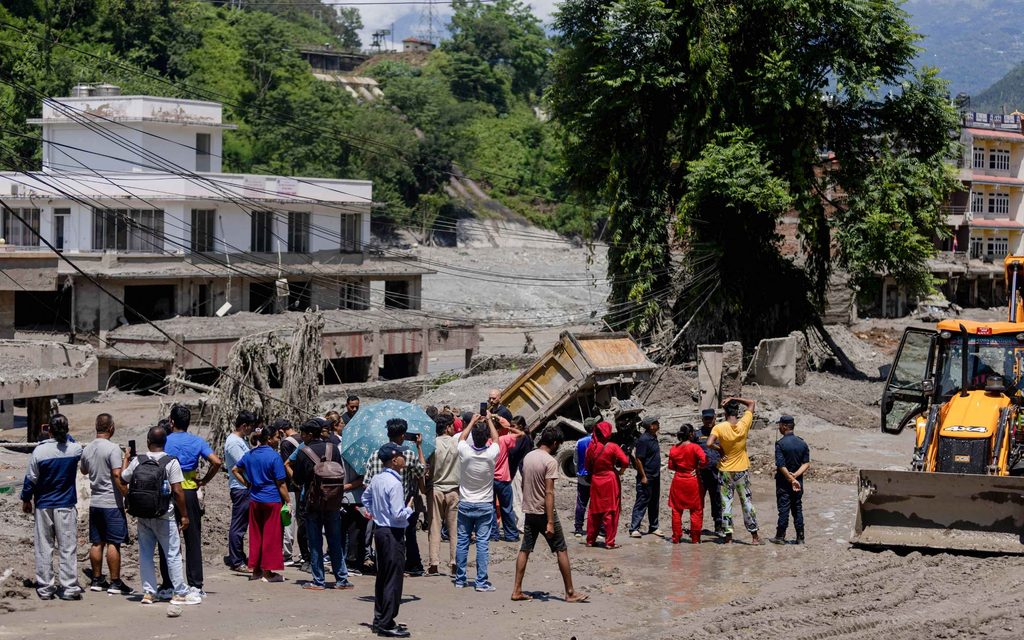
As of 27 August 2026, the Chinese authorities had rescued two villagers impacted by the enormous landslide that swept Gyirong Port in Tibet. In Nepal, the army saved over 800 people from flood zones.
Search and rescue operations are still being conducted on both sides of the border. The first batch of rescue workers from China’s Ministry of Emergency Management arrived at the Gyirong border port yesterday, along with 111 members from the China Search and Rescue team.
Other parts of the country are also offering their support. Hundreds of disaster relief personnel from Lhasa, Chengdu and Chongqing have been dispatched to the border with Nepal, while a 310-strong rescue team from the China Anneng Construction Group is being mobilised to the area, equipped with tools to help find those trapped by the debris.
Meanwhile, Chinese Premier Li Qiang has made his way to the affected area to oversee the rescue operation.
Concerns over additional floods along the China-Nepal border have hampered the ongoing rescue efforts. According to a CCTV report published on 28 August 2026, emergency workers were ordered to temporarily suspend their operations due to concerns of renewed flash flooding from a barrier lake that has formed behind the debris. Chinese media later reported that the overflow had stopped, with rescue operations now resuming as normal.
Speaking to the BBC, David Fisher, the head of delegation of the International Federation of Red Cross and Red Crescent Societies in Nepal, said people were “very much on edge” due to secondary flood warnings. He noted these alerts have resulted in the Red Cross entering the disaster zone “truck by truck.”
“What we’re most worried about is the danger to the lives of people who are still in the path of this potential future flood,” he noted.
The US Geological Survey believes that the natural disaster was the result of a “glacial collapse” that resulted in a tremendous ice and rock landslide and flooding.
Glacial experts, including Levan Tielidze, a research fellow at Monash University, believe that climate change could have played a role, as it is melting and weakening the steep icy slopes of the Himalayas, potentially resulting in a deadly flow of debris.
Countries and organisations around the world are supporting the relief effort by offering financial assistance and manpower. The US State Department said it would provide Nepal with US$500,000 in emergency funds, while European Commission president Ursula von der Leyen said the EU was preparing to “mobilise further European assistance.”
International organisations such as the United Nations and the World Health Organisation have also announced the issuing of funds and emergency medical supplies to the disaster-stricken area.