From a mother raising a child with autism to a documentary filmmaker and a designer, TEDxTinHau Women 2026 speakers Mary Schaus, Joanna Bowers and Nance Lokos explore what it means to see, understand and design for difference.
Invisible doesn’t mean nonexistent: Who is Hong Kong designed for?
Article by:
PUBLISHED:

Hong Kong’s pace is built into the city itself: MTR trains run frequently and on time, escalators move faster (and lift doors close quicker) than in many other cities, while everyday actions have been refined into sequences that barely require a second thought. It is a city made for speed.
But who is that speed designed for? When systems are built around the assumed reaction time of the “average person”, how do we account for those who process differently, have different sensory needs, or live with different physical conditions?
For many people, “disability” still brings to mind a wheelchair symbol or a white cane. Yet a much larger range of experiences remains hidden in neurodiversity and invisible disabilities.
The Bay spoke to three women who approach the question differently. Mary Schaus pushes society to learn to see overlooked differences. Joanna Bowers uses documentary filmmaking to help us understand the real lives behind those differences, rather than reducing them to a label. Nance Lokos asks why products and spaces are designed around a “default user” who does not actually exist.
All three will be on stage at TEDxTinHau Women on Friday 2 October 2026, when the Hong Kong event marks its tenth edition at the Xiqu Centre in West Kowloon under the theme “Uncharted”. Tickets are available through Cityline.
Mary Schaus: Learning to see difference
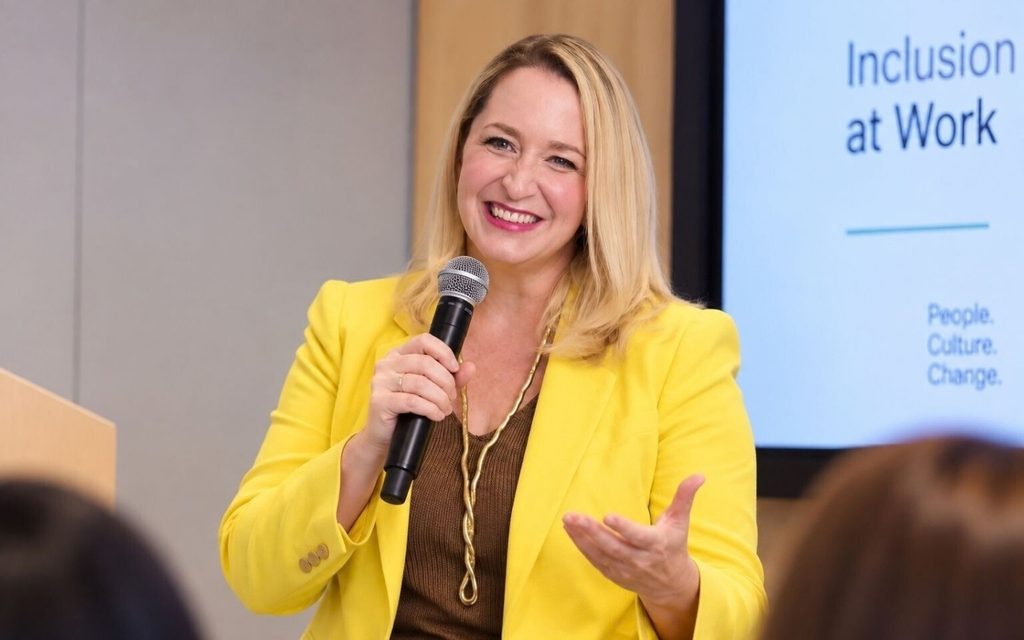
Mary Schaus has lived in Hong Kong for more than 20 years. When her son Alex was diagnosed with autism at the age of three, she went into “mom mode”, trying to get him all the help he needed. She quickly learned that insurance would not cover the therapy his doctor recommended, while finding a school proved almost impossible. Alex also faced mistreatment, bias and judgment.
When other parents told her, “that’s just the way it is,” she knew things did not have to be this way. “Hong Kong is such a great place – when we want to get things done, we make it happen. And I knew that we could,” Schaus tells The Bay.
For Schaus, much of the problem comes down to education and awareness. Disability is often understood through visible signs, while neurodiversity and invisible disabilities can go unnoticed. Whole generations may not realise they are autistic or neurodivergent, or have access to diagnostic tools. They learn to “mask” at work and in their personal lives, which can have a tremendous impact on mental health.
Healthcare presents another set of challenges. Adult diagnosis can be difficult to access, while many insurance companies do not currently cover therapies and care for neurodivergent people – “you have to fight for it”, Schaus says.
But creating a more inclusive environment does not always require significant resources. Sharing agendas and materials before meetings can help people who need more time to prepare, while allowing employees to wear headphones or adjust their lighting can help with sensory needs and benefit many people beyond neurodivergent employees.
“And the last point: 15 to 20 percent of your workforce is likely already neurodivergent,” Schaus tells The Bay. “So it’s worth learning a bit more about it.”
“We don’t tend to accommodate people who are different, we accommodate the mainstream. That needs to change,” Schaus says. Through Talos Foundation, Schaus hopes to raise awareness through education and workplace training. The foundation distributes free lanyards and badges to help people recognise neurodiversity and works with businesses on creating more inclusive workplaces.
She recalls seeing Alex tapping, humming and swaying on a subway in Greece as he tried to keep himself regulated. A young man who did not speak English noticed him, got up and gestured for Alex to sit down.
“I want people in Hong Kong to do what that man on the subway did,” Schaus says to The Bay. “You don’t have to change your life, just get it, understand, and be kind.”
Joanna Bowers: Replacing assumptions with stories
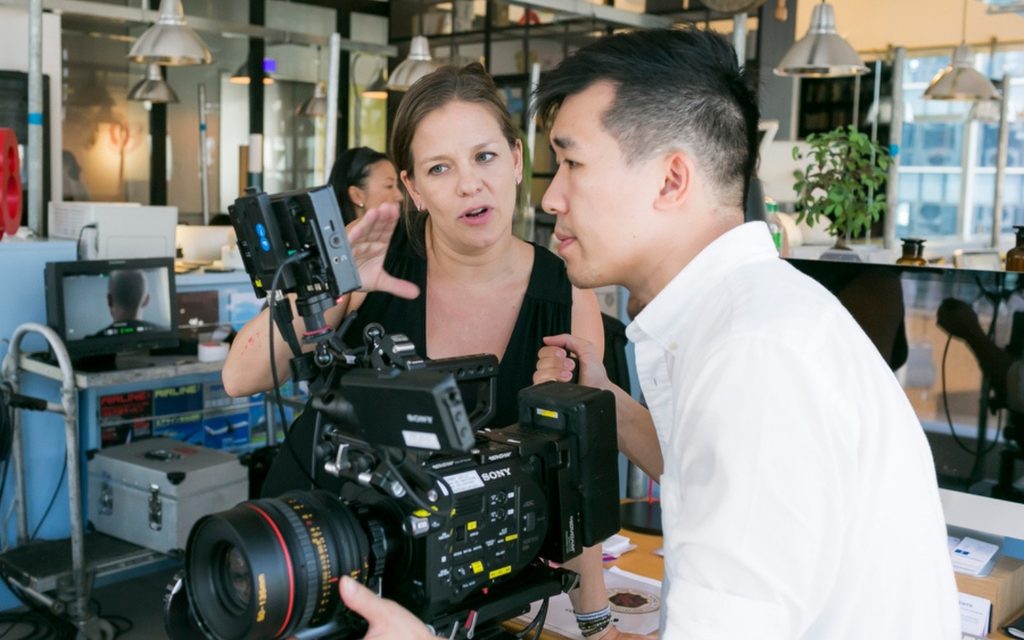
If Schaus’s work is about making overlooked differences visible, Joanna Bowers uses camera to challenge assumptions and allow people to speak for themselves.
Her first film, The Helper, explored maternal sacrifice among migrant domestic workers in Hong Kong, made about ten years ago when she was pregnant with her daughter Jemima. Her second documentary, reFashioned, turned to sustainability and the environment, asking what kind of world her child would inherit. By the time Jemima was in primary school, more and more of Bowers’s friends in Hong Kong and overseas had received neurodivergent diagnoses. She watched many of them struggle with stigma and a lack of awareness, understanding and empathy – experiences that eventually led to her latest film, Invisible Differences.
What stayed with her most from The Helper was the parallel between two groups of mothers. Working mums in Hong Kong often employ migrant domestic workers so they can return to work and build a better life for their families. Migrant domestic workers come to Hong Kong for much the same reason: to earn money for their families back home in the Philippines, Indonesia or elsewhere. Becoming a mother herself made Bowers realise how much these women had in common. The guilt Hong Kong mums feel about leaving their children as they head to the office echoes what migrant domestic workers experience when they leave their own children behind – although the case of the latter, the feelings are much more intense as the women must travel to another country.
For Bowers, one of the most powerful things about the documentary is its ability to “walk in someone else’s shoes, to step into someone else’s life and see circumstances from their perspective.” That became central to Invisible Differences. Because she is neurotypical herself, she realised early on that a documentary approach would allow community members to speak for themselves, rather than having her write a voiceover script on their behalf.
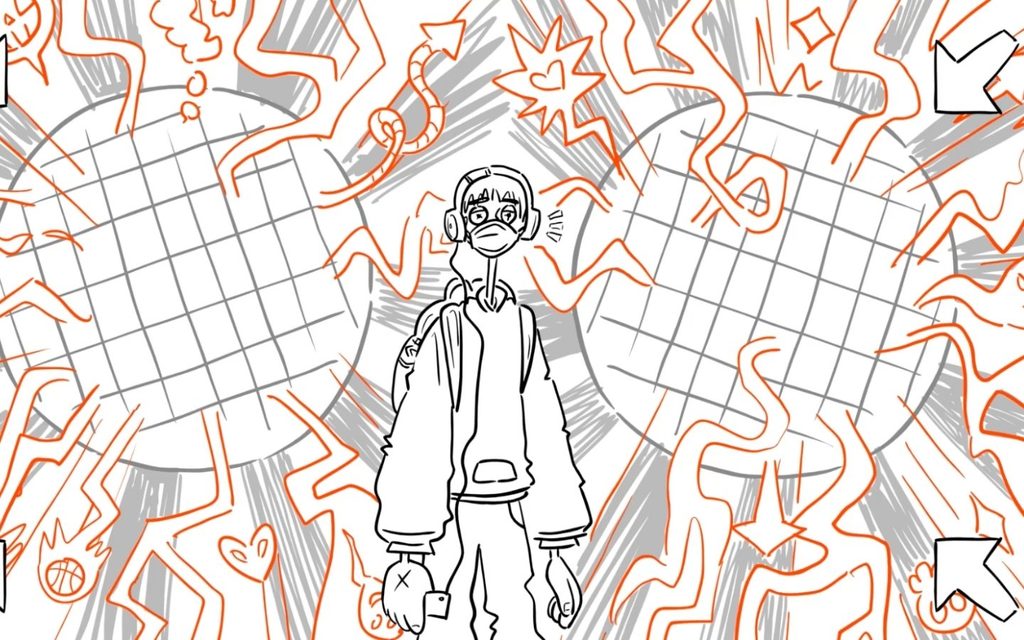
Through the Talos community, she recruited people of different ages, genders, diagnoses and language abilities. She also made sure neurodivergent professionals were represented in the production team. The same approach carried through the production, including the animation’s colour palette, which was specifically chosen to avoid being overwhelming for neurodivergent viewers.
The ten-minute animated short is due to be completed in February next year, before wider screenings.
Nance Lokos: Turning understanding into design
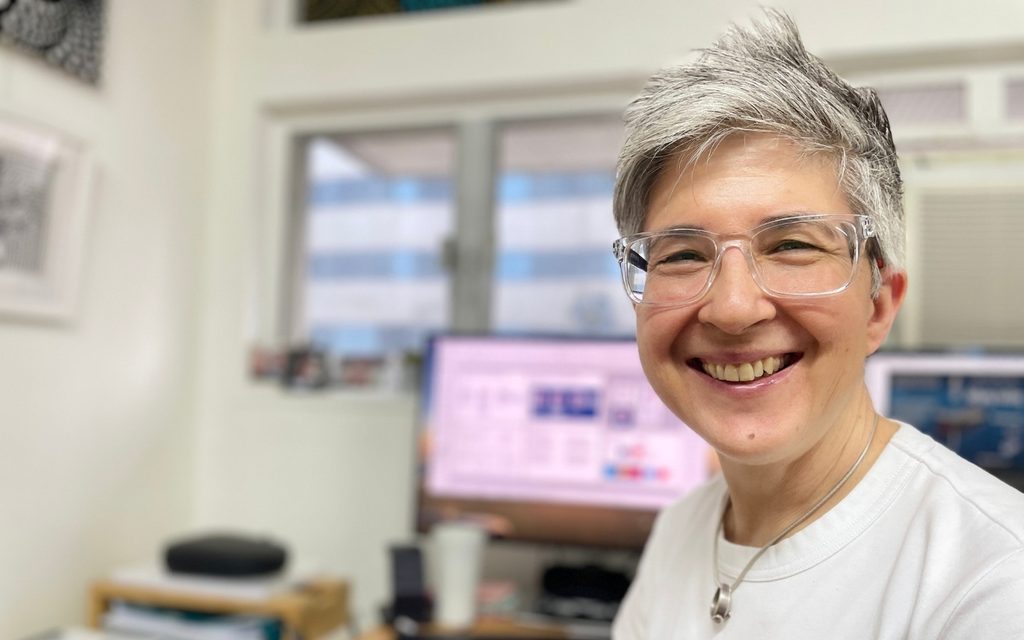
If Bowers is concerned with helping people understand difference, designer and artist Nance Lokos asks how that understanding can be brought into the spaces and products we use every day.
“Honestly, we all get excluded at some point, because there’s no such thing as an ideal persona, we’re all different in different ways.” Lokos tells The Bay. She believes that disability is not a fixed identity, but a spectrum that most of us may move into at some point in our lives, through age, accidents, changes in health or even environmental conditions. When creators design by mirroring themselves – based on their own eyesight, hearing and dexterity – they risk excluding anyone who needs to access information differently.
This became more tangible for Lokos in her early 50s, when changes in her eyesight led her to switch to bifocal lenses. She found that many digital products did not lack accessibility features so much as make them difficult to find. Scanning a QR code menu might be simple, but the experience can quickly break down when the font is tiny and grey, or accessibility features are buried in submenus.
“Discoverability matters just as much as the feature itself,” Lokos tells The Bay. These experiences showed her that design is not just about aesthetics, but about enabling someone to achieve their goal simply, clearly and independently.
That principle runs through her design work. She considers colour contrast in visual identity projects, guiding clients towards combinations that are accessible rather than simply attractive. As someone with a background in art direction, graphic design and UX design, as well as an artist, she understands why aesthetics matter. But when design conveys information, accessibility needs to come first. “If you have a wonderful message and important information, but people can’t access it, the design has failed – it’s functionless.”
Lokos believes inclusive design is not only for people with disabilities. Disability can be permanent, temporary or situational, from a broken arm to bright sunlight making a screen difficult to read. Designing for inclusion is therefore about building flexibility into products so people can access information in different ways depending on their needs.
For Hong Kong’s development as a smart city, Lokos hopes accessibility will be considered from the beginning, with real users involved in testing. It is not just the responsibility of developers, but also designers, content creators, marketing and sales teams, and business owners. Trying to fix it at the end, Lokos says, is like trying to make a carrot cake by grating carrots onto the top after it has come out of the oven: accessibility needs to be built in from the beginning of a project.
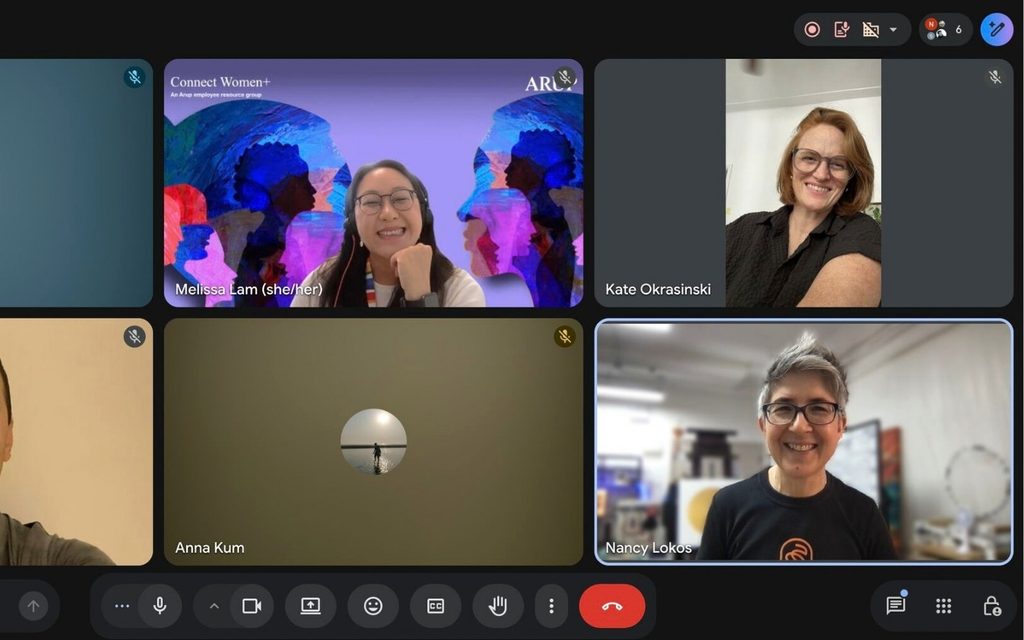
Lokos currently runs a free weekly webinar helping content creators and small businesses understand accessibility and build it into their products and websites. For Lokos, sharing this knowledge is essential to driving change.
Who is a city designed for?
What these three women discuss may seem like different things: how to see difference, understand it, and build that understanding into the spaces and products we use every day. But ultimately, they point to the same question: who is Hong Kong designed for?
When the “ideal user” is no longer imagined as a person with a single set of physical, sensory and cognitive conditions, urban design becomes more than adding accessibility features. It begins by recognising that people are inherently different, and that anyone can find themselves on the spectrum of disability at different points in life, whether temporarily or permanently. A good city should be able to accommodate these differences.
This may offer Hong Kong a starting point for wider reflection across the Greater Bay Area. As people move more frequently between cities, what allows them to live comfortably is not simply how “smart” a city is, but whether their needs are built into its design from the start.
UPDATED: 01 Oct 2026, 9:50 am