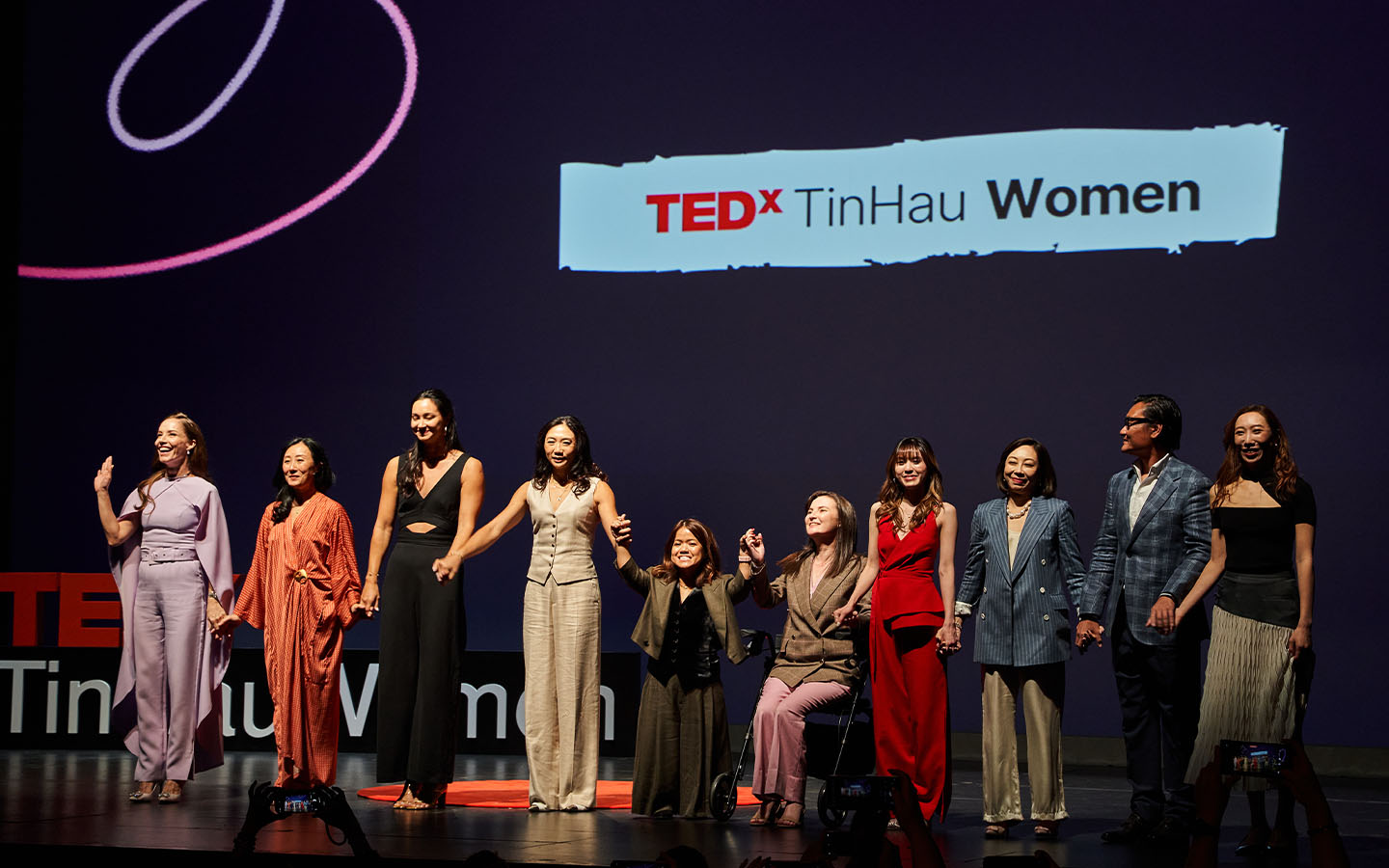
TEDxTinHau Women 2026 speaker Gina Li explores how minerals, geology and water’s journey shape what we taste, from the water we drink to the tea and coffee we brew, and why we should pay closer attention to what’s in our glass.
What are we drinking? A Hong Kong water sommelier explains the science behind water flavour
Article by:
PUBLISHED:
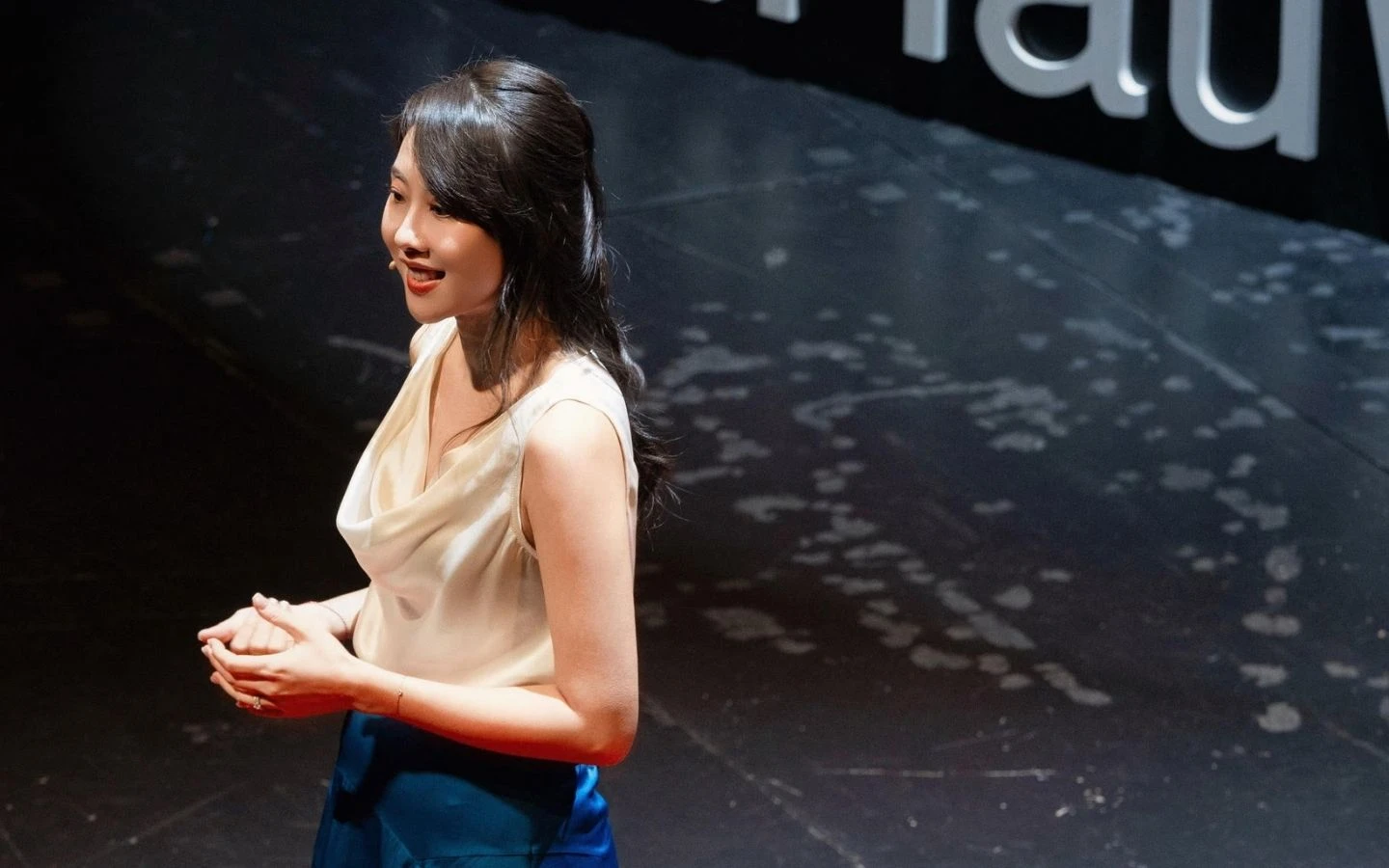
Speaking at TEDxTinHau Women on 2 October, Hong Kong water sommelier Gina Li turned the spotlight on an ingredient we often overlook: water.
We spend hours debating coffee beans, tea leaves and wine, even whether a cup’s material and thickness change the drinking experience. Yet we rarely think of the ingredient that often makes up more than 90 percent of a cup of tea or coffee: water.
Water is not a neutral base. Its minerals, hardness, pH, source and treatment can all shape the flavour of tea, coffee, and even alcoholic drinks. Does tap water really taste different across the Greater Bay Area? If so, why? And can our palates tell?
Just as a wine sommelier reads a glass through aroma, texture and terroir, a water sommelier assesses water by its minerals, mouthfeel and flavour and suggests pairings for food and drinks. Gina Li earned her certification from Domens Academy in Germany in November 2024. Today she teaches water-tasting classes in Hong Kong and works with coffee shops and restaurants.
Does water really have no taste?
Li wants people to slow down when they drink. “When you drink water, you are literally tasting a specific landscape or a water journey,” she tells The Bay. Li wants to turn a basic biological necessity into “an intentional sensory experience.”
The biggest misconception, she says, is that pure water tastes like nothing. “Water is actually the most underrated element in our life.” Distilled, tap and mineral water all taste different because of the minerals in them. “People just aren’t aware of the background or history of that water, because they’re not thinking about it,” Li says.
Another myth is that all water is the same. Some parts of Europe have hard water, while others, such as Austria and Switzerland, have softer water. Much of Asia has soft water. “It all comes down to geological position and the water’s journey history.”
Where does the taste of water come from?
Li says water can be tasted through mouthfeel and mineral character. The usual measure of mineral content is total dissolved solids (TDS). “The higher the TDS, the more minerals in the water; the lower the TDS, the lighter the water feels,” she tells The Bay.
Calcium and magnesium set a water’s hardness. “Calcium gives a creamy texture, but at very high levels it produces a dry aftertaste,” she says. Magnesium tastes sweet in moderate amounts and bitter when too concentrated. Sodium adds a savoury note, and bicarbonate acts as a buffer that gives the water “more roundness”.
Temperature counts too. Li suggests tasting at 14 to 16°C, “not too chilled and not too warm”. In other words, no single factor decides how a glass of water tastes.
How much of water’s character is set before the tap?
Environment and infrastructure account for “about 90 percent of the water’s character”, Li estimates. Geology comes first. “This basically determines whether the water is hard or soft,” she tells The Bay. Most of Iceland’s drinking water is groundwater, for example, but the rock there is largely basalt, so the water picks up few minerals. Deep groundwater elsewhere usually carries more calcium or magnesium and is “denser and smoother”.
Hong Kong’s tap water is mostly surface water from the Dongjiang and local reservoirs. Li believes filtering can remove minerals along with impurities, flattening the water’s profile, and the chlorine used to disinfect it can leave a faint chemical taste. Ageing pipes can add metallic notes, rust or sediment, “which is why we install filters at home.”
Does Hong Kong’s water taste different from Macao’s?
Water also tastes different depending on which SAR you’re in, Li says. Both cities rely on the mainland for water, but from different rivers.
Hong Kong’s supply comes mainly from the Dongjiang and local reservoirs. Li describes the water as “crisp, neutral, soft, and often a bit flat.” Macao’s arrives via Zhuhai from the lower Xijiang, which has historically faced seasonal salinity. That, she tells The Bay, leaves the water with “slightly higher minerality and sometimes a hint of saltiness.”
She gives reference ranges of around 40-70 mg/L of TDS for Hong Kong and 130-180 mg/L for Macao, with the difference varying by location but generally ranging from 50-100 mg/L.
Can most people taste the difference? With practice, Li says. “Most of us are not born with a ‘golden palate’”, she points out. “Most of us drink mindlessly, so we don’t notice the differences. If we slow down and drink mindfully, we can at least tell which water we like or don’t like.”
What happens when you brew with different water?
Water is the solvent that “extracts flavour and mouthfeel from the tea or coffee,” Li tells The Bay. A cup of filter coffee is about 98% water.
Coffee needs some minerals to bring out its aroma. The Specialty Coffee Association recommends brewing water with TDS of about 150 mg/L. Li thinks Hong Kong’s water is too soft for coffee, which is why baristas usually filter it “not just to remove impurities, but sometimes to add minerals back in.”
Tea is different. “Tea brewing needs a much lower TDS, because high TDS gives the tea a rough texture.” Some people even transport water from a tea’s home region, such as Chaozhou, “since that’s the water the tea plant grew with.”
For cocktails, water “matters less, apart from the ice cubes.”
Should restaurants treat water like wine?
“Water should absolutely earn the same level of attention as other ingredients,” Li tells The Bay. She says the most common mistake is assuming “one filter fits all”, when tea, coffee, ice and food each need different mineral levels.
Menus usually offer still, sparkling, and tap. Some restaurants treat and remineralise their tap water carefully but rarely say so. “A lot of treatment goes into producing the glass of water that ends up on your table, and that story is worth telling.”
Li has worked with Nodi Coffee and local water brand In Lieu to run a workshop on the role of water in coffee brewing. She thinks attitudes towards water in the dining scene are changing, but slowly. “People still tend to feel that water isn’t something they should pay extra for,” she says.
Could water become part of the dining experience?
Li hopes so. “It can absolutely become part of a fine dining experience, as it already has in parts of Europe,” she tells The Bay. For context, CNN reported that La Popote in Cheshire launched what is billed as the UK’s first water menu in August 2025, with bottles from £5 to £19.
People think of water as “sparkling or still”, she says, “but there’s much more nuance than that, even within those two categories.” Sparkling water suits oily food or steak because it “cuts through the oiliness”, while still water with a hint of natural sweetness goes well with dessert. “You wouldn’t want a creamy chocolate cake paired with sparkling water, as it would clash with the palate.”
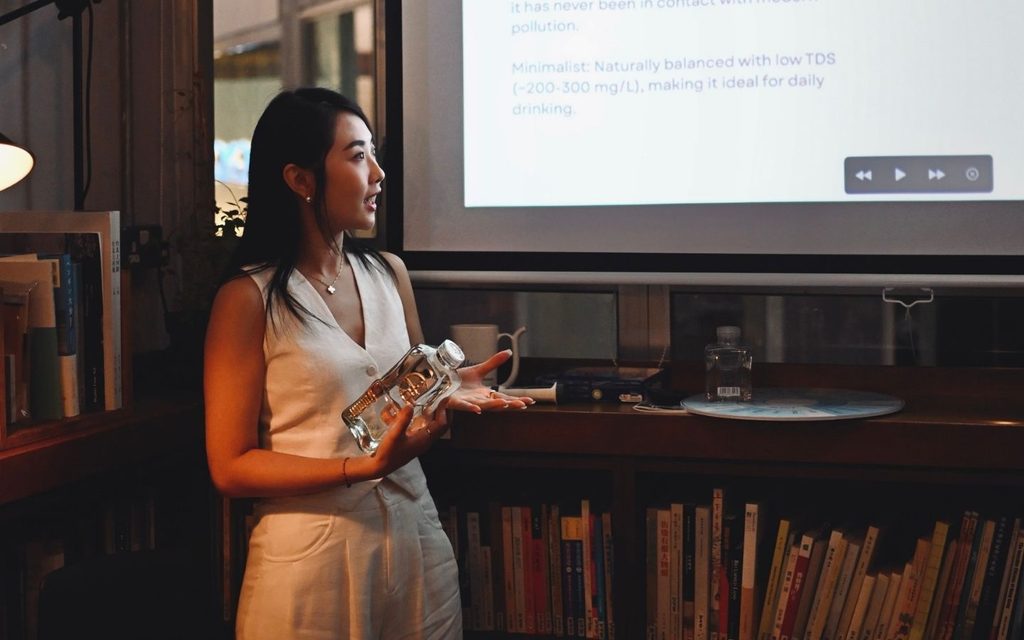
Embracing fluidity as a strength
Water has no fixed shape, which may be the first thing Li learned from it.
To others, her path through journalism, banking, tea and then water looks “very jumpy and unconventional”. “I used to think the same, and honestly didn’t always know what I was doing at the time,” Li tells The Bay. “Every water carries its own history and geological footprint, just like my career. What I did in the past shapes who I am today.”
Li started a tea business in 2020, and began using Austrian water technology in 2022, which she says changed how her tea tasted. In August 2024 a friend asked whether she was interested in a water sommelier course. She enrolled within about ten minutes and went to Germany that November.
She closed the business on her return. The course, she says, had shown her that “the world is much bigger than one stressful situation”. She recorded a reel about what she had learned, and it went viral. She felt “a real sense of mission to spread the word about how water influences everyone’s life.”
The saying 上善若水, “the highest good is like water”, comes from the Tao Te Ching. Li takes it to mean that water adapts to its surroundings without losing its identity: as ice or vapour, it is still water. “I’m still me, even as I move between very different jobs and different stages of life.” Li once thought of herself as very jumpy; now she embraces that fluidity as a strength.
To start, Li suggests a blind tasting at home: mineral, tap and distilled water in three glasses, slightly chilled. “You don’t need any fancy equipment to do it,” she says. It is “a fun game to play with your family members.”
Water has no fixed shape, but every sip has a history. Next time you pour a glass, slow down.