The inaugural summit’s 25 speakers discussed topics such as living longer and the GBA’s life sciences and health industry
Macao hosts first Greater Bay Area Health and Longevity Summit
Article by:
PUBLISHED:
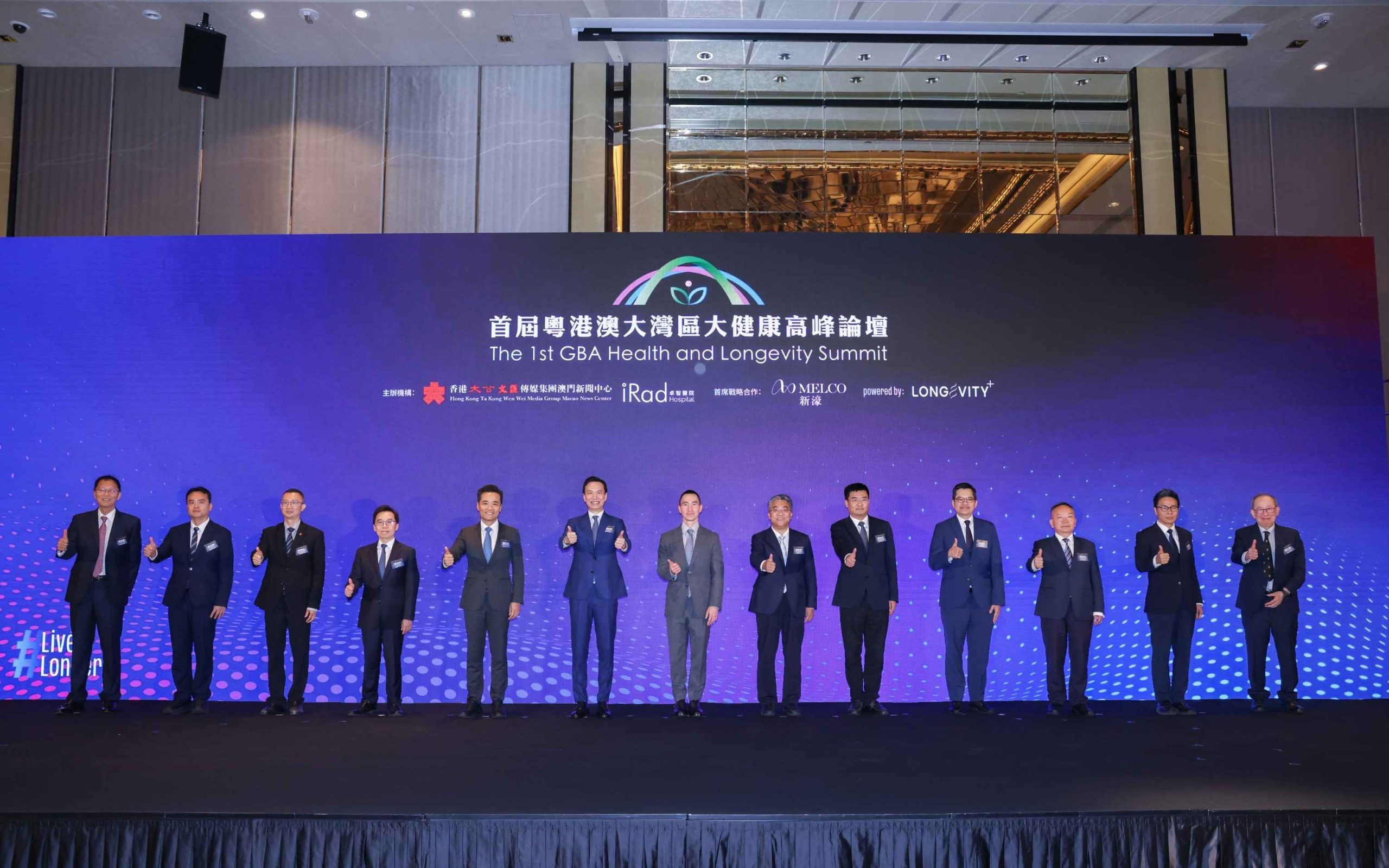
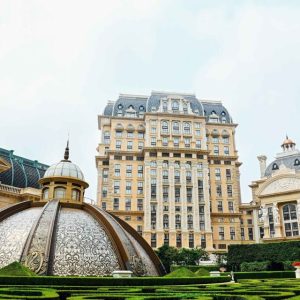
The first Greater Bay Area (GBA) Health and Longevity Summit opened at Studio City, Macao on 5 November 2026, bringing together over 360 government and industry representatives.
Featuring 25 speakers from 10 regions, the summit kicked off with an opening speech by Dennis Tam, the president and CEO of Black Spade and honorary chairman of the event’s co-organiser, iRad Hospital. Tam explained that health and longevity are interconnected, with the latter being “a trend” that “doesn’t start in a lab” but rather “with a question: do you want to live longer and live better?”
Lawrence Ho, the chairman and CEO of the event’s strategic sponsor, Melco Resorts and Entertainment, also addressed the audience. He noted that humanity was undergoing a “profound shift” in which “healthcare is moving beyond treating illnesses towards proactive wellness, vitality and the science of longevity.” The CEO expressed optimism for the GBA’s health sector, noting that the region “has the talent and the scale to become a global powerhouse.”
Ho was joined by the director of Macao’s Health Bureau, Lo Iek Long, who highlighted Macao’s advantages in the life sciences and healthcare sector, including its significant visitor arrival numbers, which provide a solid foundation for the medical tourism in the city.
Dean Felsher: MYC gene as a cancer and ageing switch
The opening speeches of the first Greater Bay Area Health and Longevity Summit were followed by three keynote addresses, the first of which was delivered by Stanford University professor Dean Felsher. According to the academic, studying the treatment and reversal of cancer can inform humanity’s understanding of longevity.
He noted that there are certain cancer cell genes that are similar to a light switch in the sense that if the switch for a particular cancer gene is switched off, “the cancer’s light goes out.”
Felsher mentioned that the gene known as MYC is key to both cancer and ageing, and that the malfunctioning of this “switch” can result in cancer and other diseases such as heart problems and Alzheimer’s disease.
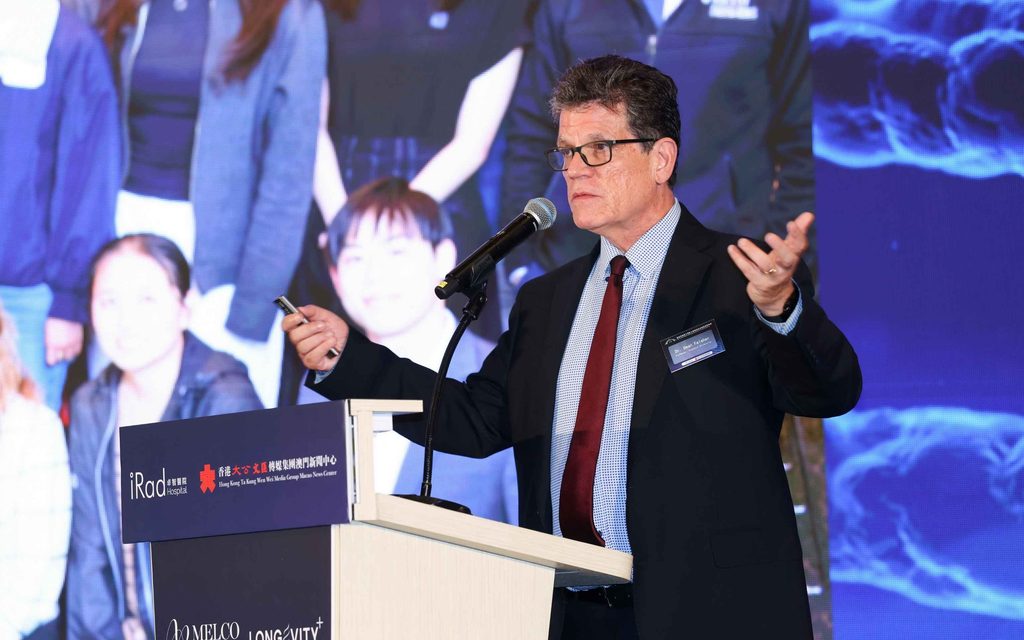
“What we discovered is when you turn this switch off in a cancer, it allows a cancer cell to behave like a normal cell, and doing that, it loses all of its cancer properties, sometimes completely and permanently,” he said.
The professor noted that these cancer “switches” are linked to ageing, with metabolism playing a key role in this process.
On how MYC can be used to extend human life, Felsher said that therapies, including ones that involve small molecules rewiring MYC activity, were being developed in conjunction with companies such as Quantum Life in the GBA.
Bryan Johnson and Kate Tolo: Longevity and youth tips
Felsher’s talk was followed by a pre-recorded second keynote courtesy of Bryan Johnson and Kate Tolo, the founders of Blueprint and Immortals, two brands that promote longevity. The pair answered a number of questions from the audience, including the reason for Johnson’s plasma exchange with his 17-year-old son and 70-year-old father in 2023.
“There was some early evidence that showed that people who had Alzheimer’s or Parkinson’s could be helped with these plasma exchanges,” Johnson said, adding that he wanted to help his father who was exhibiting symptoms of cognitive decline. Later on, his son agreed to his idea of a tri-generational plasma exchange.
Johnson explained that the one-litre of plasma exchange into his father dramatically reduced the speed his parent’s ageing by the equivalent of 25 years, although he did not experience the same benefits when he received his son’s plasma, as his biomarkers were already similar to that of an 18 year old.
[See more: Ageing and the scientific quest: a medical mission for Macao?]
On effective longevity methods, Johnson said that most methods did not work, although the main habits of nutrition, sleep and exercise were “worth mastering.” He also mentioned the benefits of red light therapy and dry sauna, which he said enhanced his fertility, reducing microplastics in his semen.
Tolo also spoke about ways she managed to make her skin have the age of a 21-year-old, even though she is chronologically 30. She explained that she avoided UV damage, and employed lasers, injections and red light therapy, combining this with sleep, diet and exercise.
Tolo also gave her tips on staying young and vibrant, noting that “I would highly suggest that you focus on sleep” rather than chasing “magic interventions” such as injections.
“The thing that will actually make you feel on top of the world and more in control of your own life is sleep, and particularly sticking to the same bedtime every night,” she said.
René Redzepi and Peter Kreiner: Healthy eating with delicious and innovative food
René Redzepi and Peter Kreiner, the founders of award-winning Danish restaurant and innovation lab Noma, were the speakers of the third and final keynote, which also delved into the future of longevity. The two speakers discussed the role that food plays in people’s daily lives, health and happiness.
“Often when you start eating like the longevity experts tell you, it’s often very boring,” Redzepi said. “That’s little flavour, and there’s a little diversity.”
He noted that he believed that deliciousness and the implementation of new flavours in food can help to foster behavioural changes and encourage people to eat healthy.
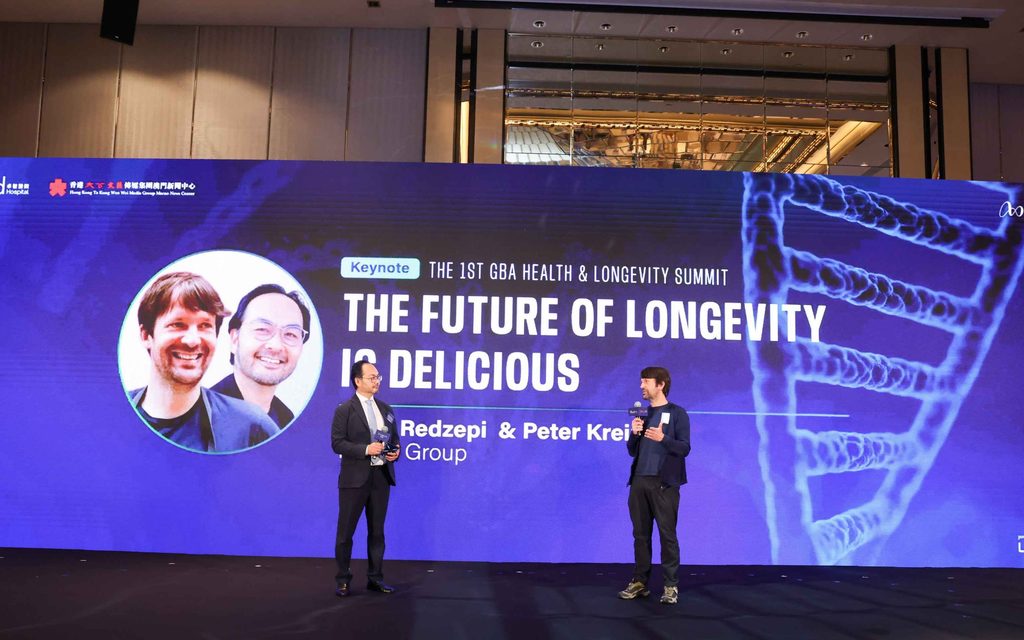
One method he mentioned was the process of fermentation, which can be used to develop seasoning in a laboratory that “can make a bowl of spinach taste as delicious as steak.”
Redzepi also mentioned the evolution of his restaurant from being “the best restaurant 10 years ago to today, wanting to be the best food innovation company in the world.”
When asked by Kreiner about his decision to serve ants to guests, the chef mentioned he was inspired by a book about the practice of people having ants spray formic acid on their sandwiches to imbue their food with different flavours reminiscent of orange and lemon.
“At first in Scandinavia, where the main diet is bread and licorice, when you put ants on the menu, it’s a shock to people,” he said. “But today, it’s become an implemented natural part of the diet,” Redzepi said.
The food innovator ended his talk by explaining that food innovation in the world has long been “stagnant” due to corporate interests and that it was high time for the “best people who work in food” to drive the change.
First Greatre Bay Area Health and Longevity Summit awards ceremony
The first Greater Bay Area Health and Longevity Summit wrapped up with a ceremony that saw awards being handed down to 17 individuals and organisations for their work in medical innovation and healthcare development.
The winner of the GBA Health Excellent Enterprise Award (Medical) went to Cheong Kun Pain Reliever Oil (Macau) Limited, while the GBA Health Outstanding Leader Award (Medical) was handed down to Du Jialin, president of the Hong Kong Association of Homeopathy.
Meanwhile, the GBA Health Innovative Enterprise Award (Innovative Technology) and the GBA Health Excellent Enterprise Award (Medical) went to Macau Herbal Golden Prescription Health Technology and Zhuhai Yuanmiao Medical Technology respectively.