The Chinese LGBTQ+ advocate hopes to enhance the representation of same-sex couples through her new 5-episode YouTube show
Article by:
PUBLISHED:
Homosexuality in China has had a long and checkered history spanning thousands of years, with alternating periods of support and opposition for same-sex couples. In modern times, the official attitude towards China’s LGBTQ+ community can be characterised as ambiguous.
Despite decriminalising homosexuality in 1997 and removing same-sex orientation from its list of psychiatric disorders in 2001, the mainland government continues to adopt a policy of “Three Nos” toward China’s LGBTQ+ community: no approval, no disapproval and no promotion.
While the Chinese public’s tolerance towards its LGBTQ+ members has improved in recent years, reports suggest they continue to face discrimination and underrepresentation in the media.
Enter Ashley Jiang – a queer Shanghai-born filmmaker who has been attempting to provide a voice to China’s LGBTQ+ community through her non-profit multimedia storytelling platform OutChina.
Jiang, who spent the first two decades of her life in Shanghai before moving to the US and Canada, says she launched OutChina in 2016 as a postgraduate student. At the time, she was volunteering at the Los Angeles LGBT Center and was motivated to create the project after being exposed to the facility’s support for Chinese queer activists.
“Over the past ten years, I have been doing short documentaries, explainer videos and a podcast,” she says. “I also have a docuseries called Hovering, which is a seven-episode docuseries about mums of Chinese LGBTQ Kids.”
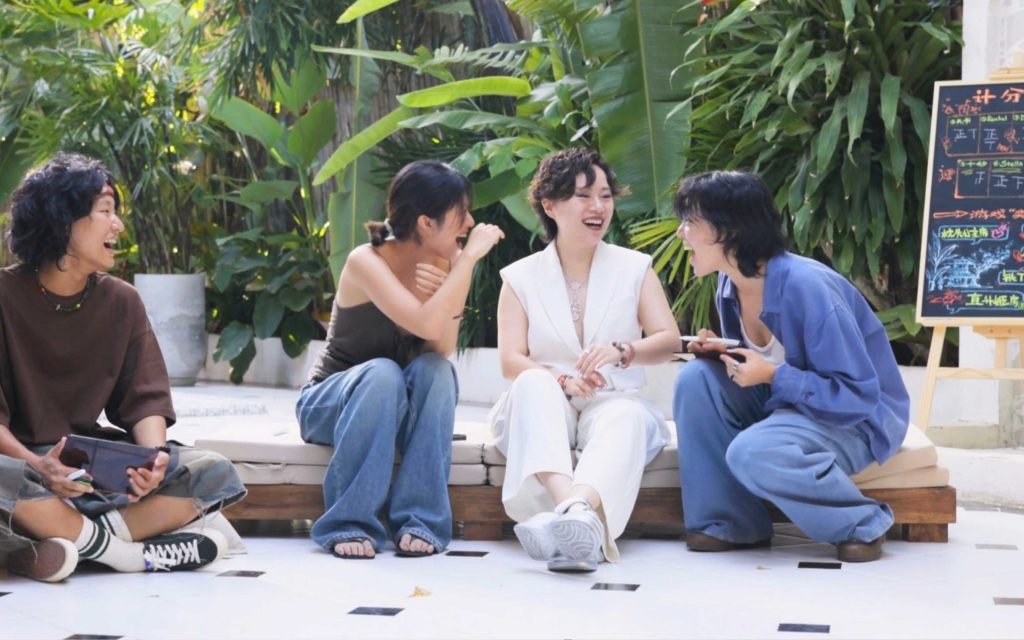
Jiang’s latest project is LeLaLes: Fluid Love, (愛的流動態) which OutChina describes as “a bold, first-of-its kind queer women dating show,” entirely unscripted and filmed in a documentary style.
Production of the show proved to be a rollercoaster of a ride for Jiang, who was directing her first-ever dating show after spending years as a documentarian. Unexpectedly, she also found herself at the centre of controversy when she and one of the show’s eight participants fell in love in front of the cameras.
Continue reading to find out more about the show, its production and Jiang’s views on China’s LGBTQ+ community and the issues it faces.
Note: This interview has been edited for clarity and brevity.
I had never done a dating show before, but I had been watching some queer dating shows, especially Asian queer ones, which really inspired me. My main source of inspiration was the gay Japanese dating show The Boyfriend. Last year, there was a Korean lesbian dating show called ToGetHer. It was also a huge inspiration.
These two shows really inspired me and I was like, ‘Why can’t we Chinese queer women have a show for ourselves?’ That idea started and I felt there was also no way we could find a major platform or secure a network deal or anything like that. That’s why I decided to do crowdfunding to support this whole project.
It was very challenging because when I started, I didn’t know if it was ever going to be possible. We used the platform Kickstarter and it is all or nothing. If we didn’t hit the goal, then we wouldn’t have anything.
We also wanted as many people to see the crowdfunding project as possible, but when we promoted it in China, the censors caught this show pretty fast and put it on the blacklist, so there’s no way for us to keep promoting it on Chinese social media.
[See more: For the love of ink: Meet Zhuhai tattoo artists Beibei and Qiqi]
Luckily, largely thanks to my decade of work with OutChina, I have followers, friends and supporters from around the world and we managed to get the word out. Eventually, we raised over US$56,000 from 251 supporters from around the world, which was really a huge blessing.
The whole expense of the production is 1.1 million yuan, so that amounts to around US$160,000. To have that kind of budget, crowdfunding is not enough. Besides crowdfunding, we also had two sponsors – one is a sex toy brand called Popocat and the other one is a lesbian dating app, LesPark.
Only these kinds of sponsors are willing to support a show like ours because other platforms and other brands in China, don’t dare to touch a show like ours. We have some private investors and I also took some money from my own pockets, so we had four sources of revenue to support the whole production.
Mainly because last year I spent a month in Chiang Mai. I was just hanging out with my friends and also 2025 was the year when Thailand legalised same-sex marriage. For Chinese citizens, we don’t need visas. There are direct flights between Shanghai and Chiang Mai.
Personally I had a great time over there, and I think the food is great, the weather is nice, the people are chill, and it’s more budget-friendly. It’s almost a no-brainer after Shanghai was out of the choice [due to censorship].
We have had a lot of love and support from the international community because I feel like for a lot of non-Chinese speakers, they’ve never seen a Chinese lesbian dating show or quality Chinese queer content ever.
We also have a lot of controversies because, first of all, we broke the fourth wall – me [the director] and a contestant formed a relationship. That’s very unorthodox and that can be very challenging to some of the audience.
In episode three, there’s a contestant who was dating her AI. We didn’t really expect people to really not like the AI psychosis or this kind of AI-human relationship setting. But I feel like once we release the show, the show has a life of its own, and the love and hate are both inevitable.
I think the biggest challenge is its low budget. We had a lot of volunteers on set and because of that, it’s very hard to manage the whole crew. Some of them were professionals, some of them were volunteers, but we still needed to work on the professional kind of yardstick and not everyone could keep pace with it.
[See more: Dear You sets new box office record for Guangdong-produced film]
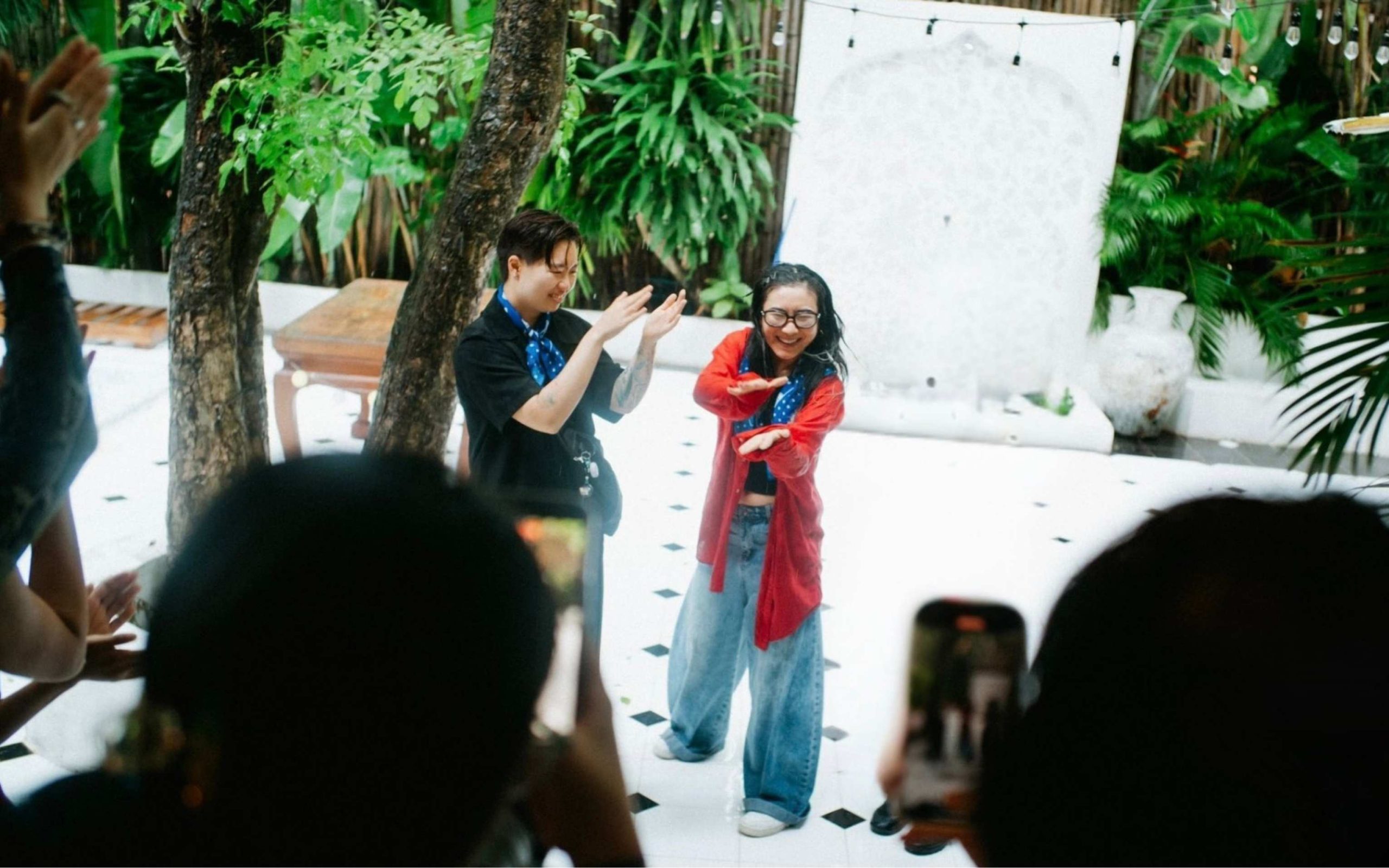
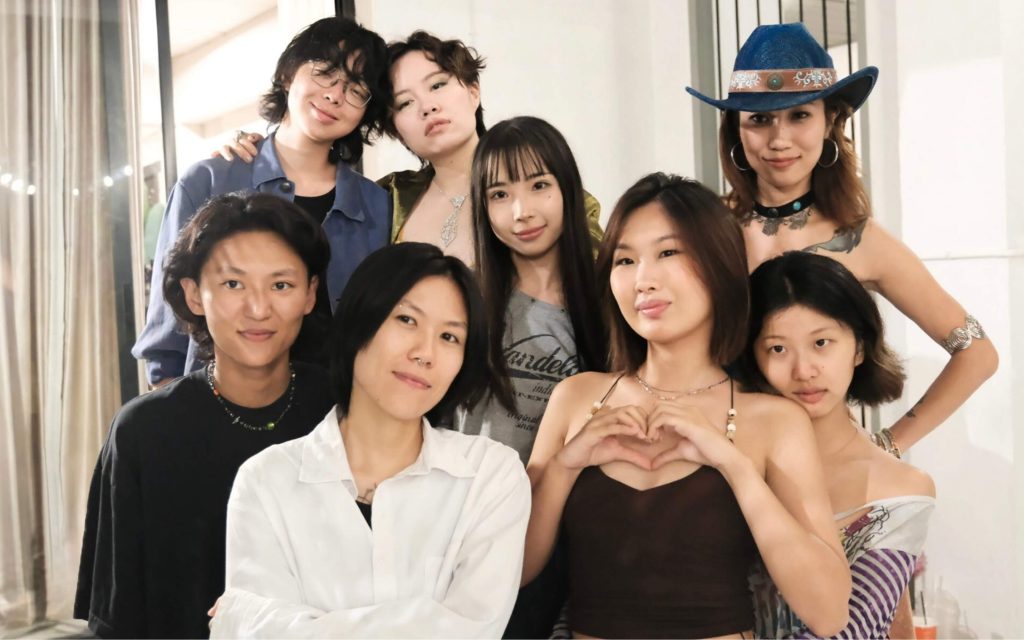
We also had eight contestants who are Chinese lesbians and 15 crew members who are Chinese lesbians, so we had in total 23 Chinese lesbians living under the same roof. There were a lot of feelings and emotions – myself included.
The boundary was very blurred and our set was not like a professional film setting. We didn’t have a very clear hierarchy – everything was super flat and that’s beautiful in its own way because people felt close to each other. It was a very friendly summer camp vibe, but it also brought a lot of managerial challenges.
Also, this was my first time doing a project like this. I’ve learned a lot through this whole process. Definitely managing this whole setting was like mission impossible, but we managed to make it happen.
I don’t have a problem with it. Within the queer community, it’s all about fluidity. It’s all about the openness and freedom to choose whatever you want to do, as long as you don’t hurt other people. Whether it’s dating AI or dating multiple people at the same time or dating nobody, being asexual, aromantic, or whatever, I think representation makes better art, so everybody can do whatever they want to do, and that’s exactly what I want to show with this show.
When I first came out at the age of 18, I felt like the regulation was a little more lax because back then, I volunteered at Shanghai Pride, which was the longest-running LGBTQ+ event in Shanghai before it got shut down after the lockdown in Shanghai.
After the Covid, the change was very palpable. You felt like a lot of people had to willingly or unwillingly leave the city. Yes, there are new queer bars and new queer venues, but people are super, super underground these days.
[See more: Macao produced film The Violin Case holds local premiere]
Maybe those restraints make you more creative. [For example], some of my friends are drag kings and they want to throw a drag king party, but they got shut down so many times. They managed to come up with other ways like “we are going to do a birthday party,” but in actuality, they did it like a drag king showcase. There is still this underground culture and people are still trying all sorts of ways to connect with each other.
I don’t think people are necessarily homophobic. They’re just ignorant. Growing up in China, there is no sex education about LGBTQ+ issues and on social media, there are queer couples [who] share their contents like vlogs and different kinds of entertainment online, but you can’t talk about anything serious, at least from my perspective.
[See more: I Ask, You Answer with Macao artist Alley Leong]
This kind of ignorance leads to misunderstanding and I think people are naturally afraid of or people are naturally uncomfortable with something they’re not familiar with or something they’ve never seen.
My recent favourite one is this Thai gay TV show called GelBoys. It’s a super cool Gen Z TV show and I feel like Thailand has really been a source of inspiration for me, especially in the past two years, because it’s really close to China and there are some kinds of cultural similarities. I feel like they’re very progressive when it comes to LGBTQ rights.
These films are directed by female directors who are young, up-and-coming, super-talented directors. Those films talk about feminism and also insinuate queer couples, which is super refreshing. That gives me hope.
I feel like in China, even though policy-wise and on a larger level, it hasn’t changed dramatically, but I feel like the overall environment is becoming more accepting and people want more equal representation and diverse storytelling.
I love to watch ASMR videos. That’s my secret.
Not really because I think doing independent filmmaking can take years of your life. It’s a little bit too challenging, so I highly doubt if I can do anything like this again because I want to protect my mental health and I want to do it more sustainably.
I will keep doing queer storytelling, maybe not necessarily the dating show format, but other unscripted content. I feel I need to recover from all this craziness and just take a rest, a summer vacation and think about my next step.
UPDATED: 16 Jul 2026, 11:04 am