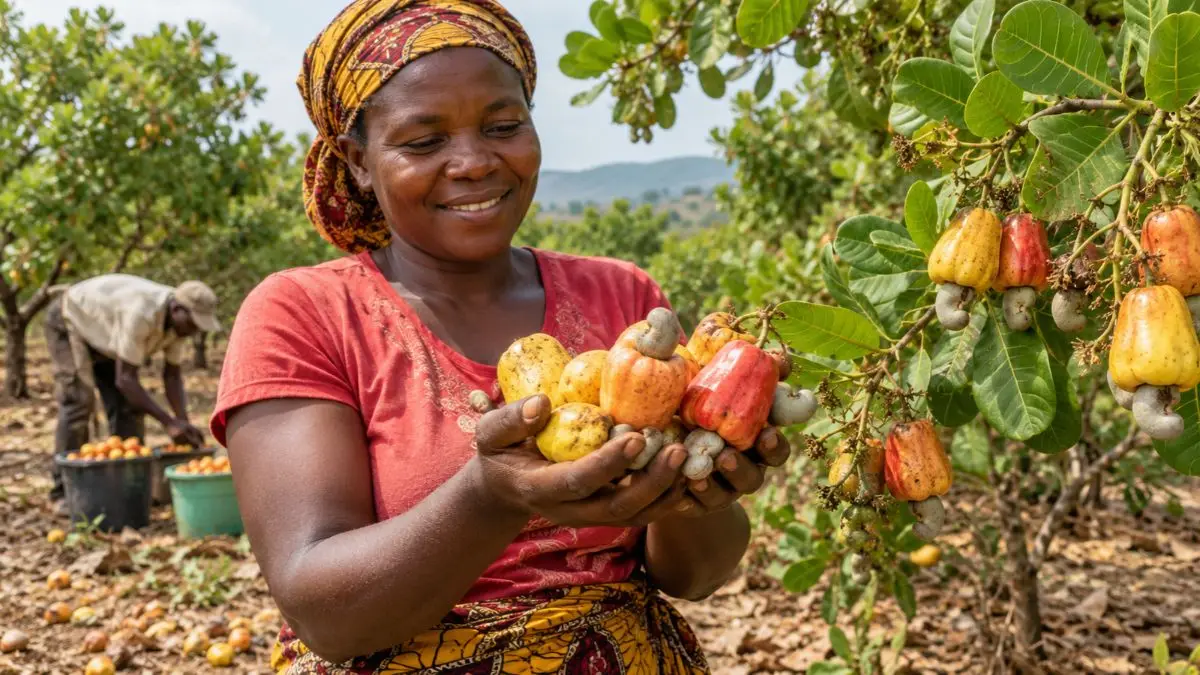
Despite a slight drop in revenue and trade volumes during the first half of the year, raw cashew nuts continue to anchor Mozambique's agricultural sector.

Article by:
PUBLISHED:
Mozambique raw cashew exports generated US$82.9 million during the first half of 2026. This performance allowed the commodity to remain the country’s leading agricultural export, even in the face of a 17.7 percent year-on-year decline, according to figures cited in a local media report.
Vietnam and India remained the primary destinations for the shipments, while South Africa secured its place as Mozambique’s third-largest export market for cashew nuts. Overall export revenue for cashews fell from US$100.7 million recorded in the first half of 2025. Trade volumes experienced a corresponding minor reduction, shifting downward from 74,664 tonnes to 73,391 tonnes.
[See more: Mozambique cassava exports to China set to boost farming]
Despite the contraction in the cashew sector, total agricultural exports across the country rose 5 percent to reach US$108.5 million. This compares favourably with the US$103.2 million recorded during the same period a year earlier, with raw cashew alone accounting for more than three-quarters of those total earnings.
Geographically, Nampula stands out as Mozambique’s leading cashew-producing province. Other important cultivation regions include Cabo Delgado and Zambézia to the north, as well as Inhambane and Gaza located further south.
The industry possesses a rich historical background. According to data cited by the Portuguese news agency Lusa, Mozambique was once the world’s second-largest cashew producer back in 1973, trailing only India and processing approximately 210,000 tonnes that year.
Following independence in 1975, annual production plummeted to between 15,000 and 20,000 tonnes before initiating a gradual recovery. More recently, cashew marketing volumes reached roughly 195,400 tonnes throughout the 2024/2025 season, bringing production close to historic highs according to ministry metrics.
[See more: Mozambique ruby production surges in first half of 2026]
To bolster the sector further, the government approved regulations in August implementing the Cashew Act of 2023. These rules govern production, processing, and trade to enhance overall competitiveness.
Additionally, a separate US$374 million development programme spanning from 2025 through 2034 aims to elevate annual production from a baseline of 158,000 tonnes to upwards of 689,000 tonnes while expanding domestic processing capabilities.