The world’s largest dynamic-positioning pile-driving vessel has set sail from China to support the construction of a major bridge in Brazil.
Article by:
PUBLISHED:
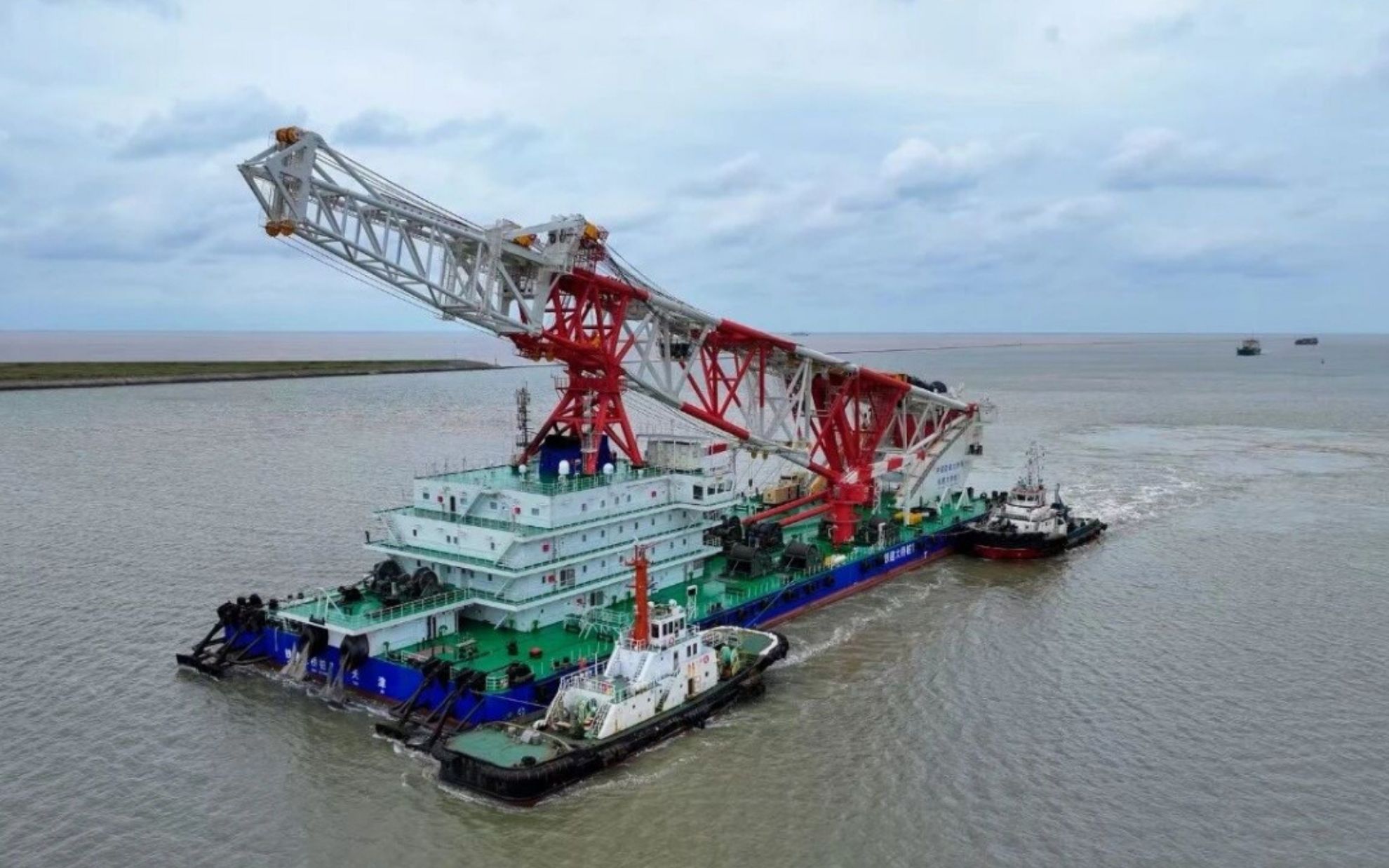
The CRCC Bridge Piling No. 1, described as the world’s largest dynamic-positioning pile-driving vessel, departed on Sunday from Lüsi port in Jiangsu Province for Brazil. Its primary mission is to support the construction of the Salvador-Itaparica Bridge, which spans the Bay of All Saints in Bahia state.
Invested in and built by the China Railway Construction Corporation (CRCC), the vessel measures 130.5 metres in length, 40.8 metres in width and 8.4 metres in depth, the Global Times reports. Marking its first overseas deployment since its delivery in March, the vessel is scheduled to travel 11,300 nautical miles across the Strait of Malacca and the Cape of Good Hope before entering the South Atlantic Ocean, with the voyage expected to take roughly 45 days.
Construction on the Salvador-Itaparica Bridge officially commenced on 1 July, 2026. Standing as one of Brazil’s largest infrastructure ventures, the project involves an investment estimated at 15.8 billion reais (US$3.05 billion). It is being developed by a Chinese consortium comprising the China Railway 20th Bureau Group Corporation, CCCC South America Regional Company, and China Communications Construction Company Limited.
The comprehensive road and bridge system will extend for 46.8 kilometres, featuring a 30.2-kilometre road network situated on Itaparica Island, the Global Times says.
[See more: Chinese e-commerce platforms set to benefit from Brazil import tax exemption]
Designed to allow large vessels and cruise ships to pass safely, the project will involve pile-foundation work in waters up to 64 metres deep under complex marine geological conditions. In Brazil, the newly arrived vessel will be utilised to construct what CRCC states will be the world’s deepest pile foundations for a bridge project.
Once fully operational, the Salvador-Itaparica Bridge is anticipated to handle approximately 28,000 vehicles daily. According to the Global Times, it will dramatically cut travel time between Salvador and Vera Cruz from an hour by ferry to around 15 minutes, while shortening transport routes for regional goods by about 200 kilometres and boosting local commerce and tourism.