Prosecutors from nine lusophone countries are meeting in Macao to discuss cybercrime, organised crime and asset recovery
Macao conference deepens legal cooperation with lusophone world
Article by:
PUBLISHED:
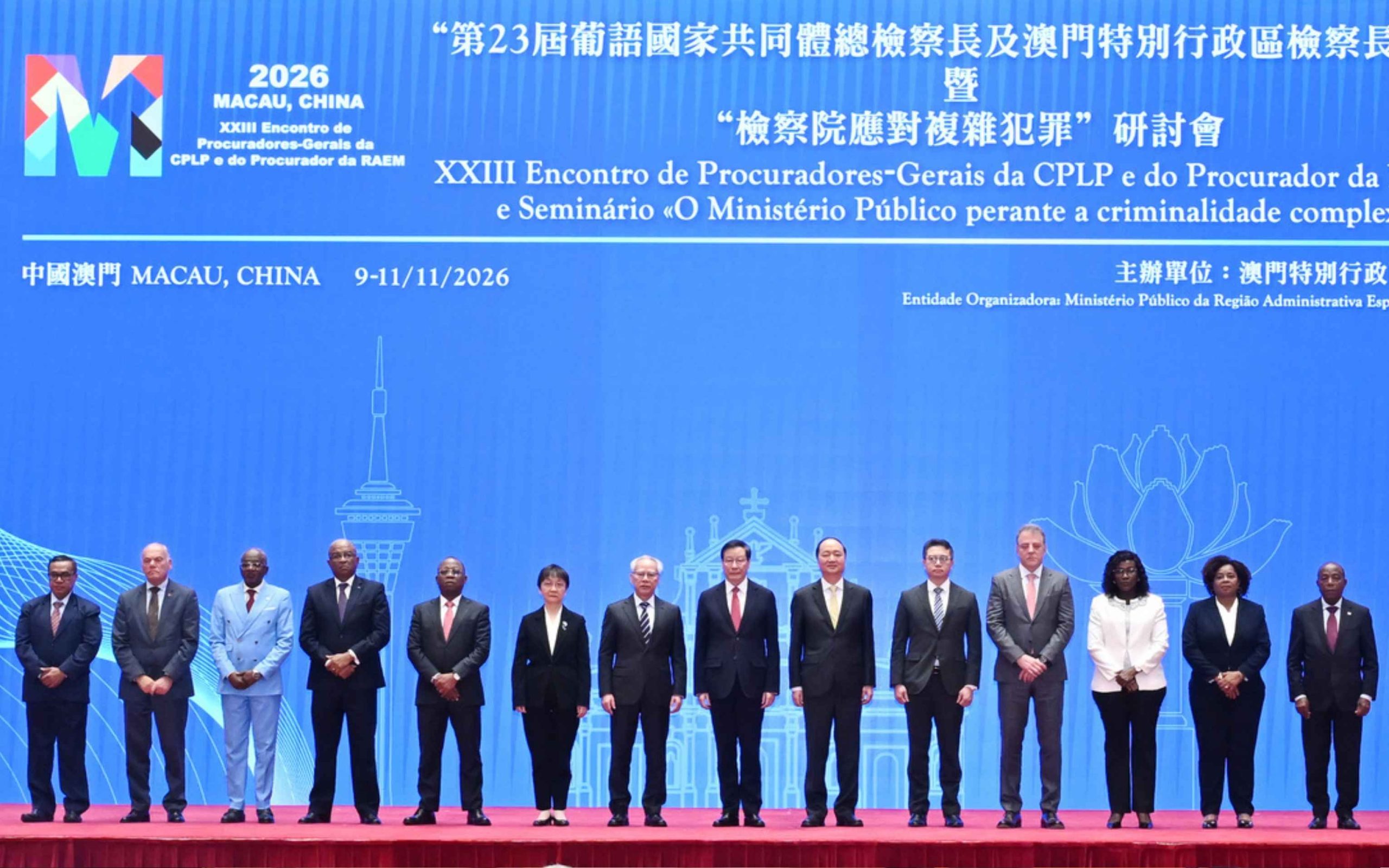
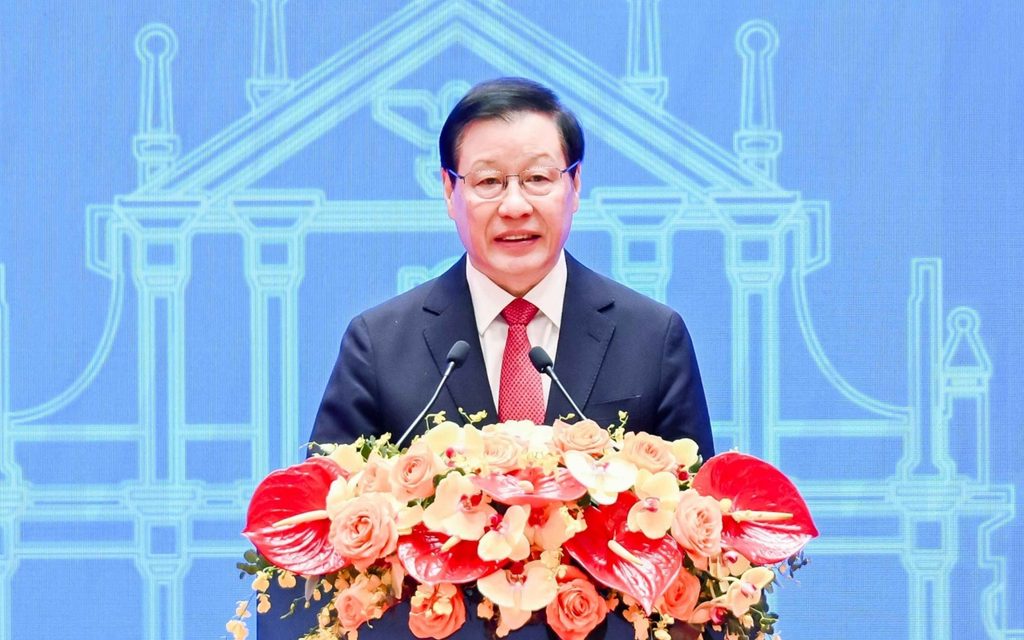
Macao Chief Executive (CE), Sam Hou Fai, has expressed commitment to further enhancing legal cooperation between mainland China, Macao and the Portuguese-speaking world, raising three proposals towards this end at the 23rd Conference of Prosecutors-General of the Community of Portuguese-Speaking Countries and the Prosecutor-General of the Macao SAR, the conference opened at the Forum Macao complex on 10 November 2026.
Sam Hou Fai: Three proposals to enhance Sino-Luso legal cooperation
In his address at the two-day gathering, Sam first called for the study and promotion of legal and judicial assistance agreements between Macao and Portuguese-speaking countries. He noted that such agreements serve as an important foundation for enhancing cooperation between the SAR and other countries in criminal matters, further strengthening their ability to crack down on cross-border crimes.
Sam also pointed to the need for both sides to deepen pragmatic cooperation in prosecutorial work. The CE mentioned that “high-quality prosecutorial work” was key to protecting the legal rights and interests of individuals and businesses in the context of increasing trade, investment and the movement of people between Macao and lusophone countries.
For his third proposal, Macao’s leader recommended strengthening professional exchanges between the various parties, including in areas such as reciprocal visits and professional training.
“We welcome more legal experts, academics, magistrates and law practitioners from Portuguese-speaking countries to come to Macao for exchanges and visits,” Sam said. He added that Macao was currently in the process of revising five legal codes, including its penal code and criminal procedure code, and welcomed experts to share their experience from a comparative law standpoint.
Ying Yong: China backs Macao’s judicial exchanges with lusophone countries
Ying Yong, prosecutor general of the Supreme People’s Procuratorate (SPP), also attended the event, noting in his speech that the SPP would continue to support Macao’s Public Prosecutions Office in its effort to promote cooperation with its Portuguese-speaking counterparts.
“New forms of crime are emerging under various guises, presenting us with major new challenges,” Ying said in comments cited by Lusa. “Strengthening communication and cooperation is not a choice, but a necessity.”
In addition, Macao prosecutor general, Tong Hio Fong, said the conference would help to enhance trust in judicial matters and practical cooperation between China and Portuguese-speaking countries.
Following the opening ceremony, delegates and representatives from the University of Macau’s (UM) Faculty of Law took part in sessions centred on two subtopics – computer scams, online crime and digital evidence, as well as organised crime, drug trafficking, and bilateral or multilateral cooperative operations.
What are the participants discussing at the conference?
On 11 November, the delegates, Macao judges and UM Faculty of Law members are scheduled to attend a meeting on two other subtopics. They include the role that prosecutions offices play in protecting families and minors in the information age, as well as financial investigation and asset recovery.
[See more: Macao lawyer Calvin Tinlop Chui honoured in 40 Under 40 legal list]
Representatives from Macao’s Public Prosecutions Office and the various delegates are also due to visit the Greater Bay Area (GBA) cities of Shenzhen and Zhuhai on 12 and 13 November, in order to enhance Macao’s role as a “precise connector” between China and lusophone countries in prosecutorial matters and facilitate understanding of how China’s procuratorate bodies are adapting to the information age.
How else is Macao enhancing lusophone legal ties?
Apart from hosting the conference, Macao has also been seeking to boost Sino-lusophone legal cooperation through other means. On 22 September 2023, UM and the Supreme People’s Court established the Centre for Judicial and Legal Studies of China and Portuguese-speaking Countries.
In July 2026, the city was also reported to be contemplating the possibility of setting up an arbitration centre to deal with disputes between China and Portuguese- and Spanish-speaking countries.
Macao’s positioning as a platform to strengthen Sino-lusophone legal cooperation reflects the city’s historic ties to Portugal, as seen in its continued implementation of a Portuguese-style legal system.