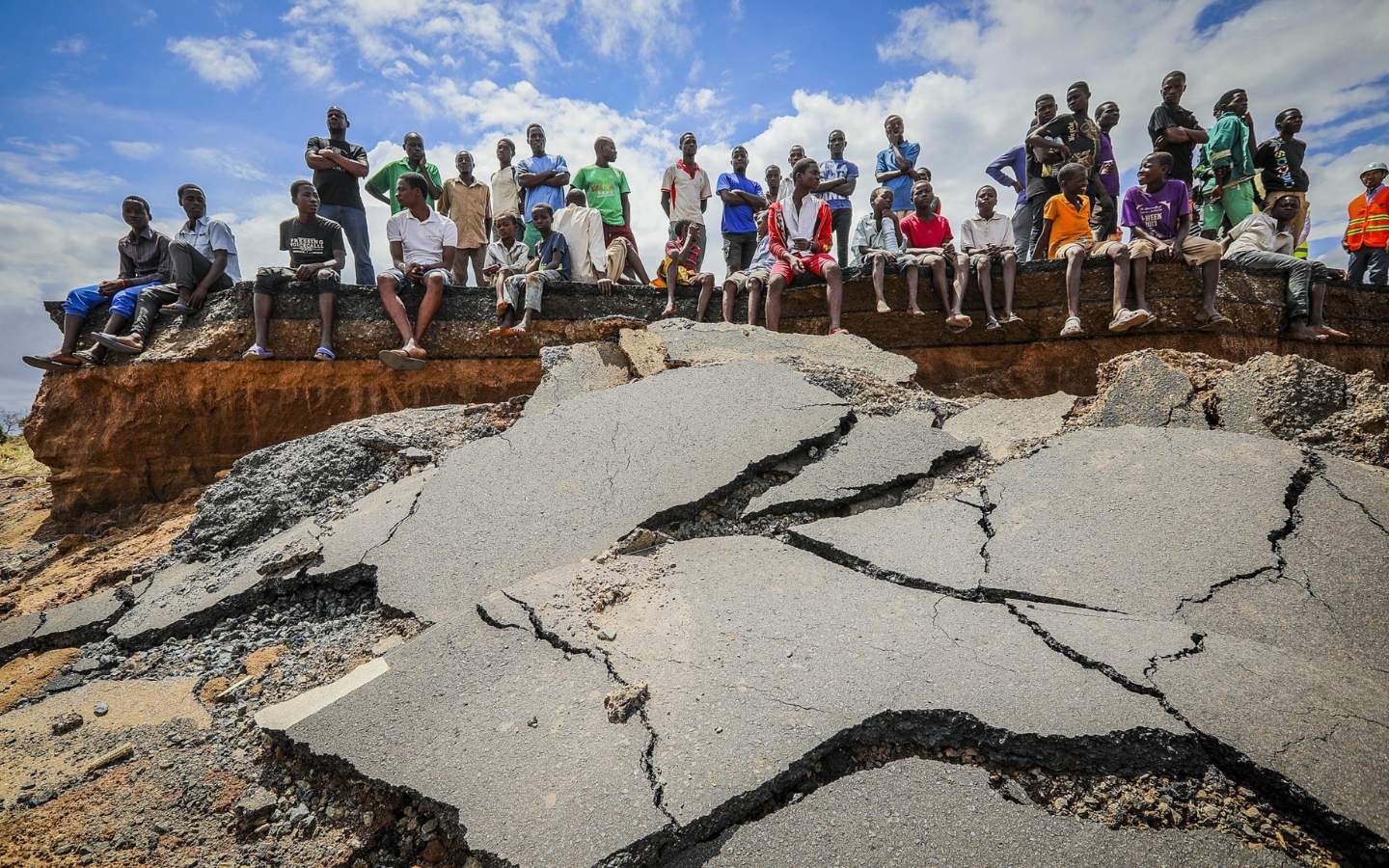
Nearly 2.5 million residents were moved to safety as the storm hit the coast, leading to widespread cancellations of flights and rail services.


Article by:
PUBLISHED:
Typhoon Bavi has swept across eastern China, forcing the evacuation of nearly 2.5 million people and disrupting transport across some of the country’s biggest coastal cities, even as the storm weakens while it moves inland.
Bavi made its first landfall late Saturday in Taizhou, Zhejiang province, before coming ashore again near Wenzhou around midnight, bringing destructive winds and driving rain along a broad swathe of the East China Sea coast. China’s National Meteorological Center said the system quickly weakened from typhoon strength to a severe tropical storm, but warned that the sheer volume of moisture in its rainbands posed a serious flood risk.
[See more: China braces for landfall of Super Typhoon Bavi]
Authorities in Zhejiang evacuated about 2.2 million people from low‑lying and landslide‑prone areas, while roughly 180,000 residents were moved to safety in neighbouring Fujian and more than 290,000 in Shanghai. Schools, outdoor activities and much of the coastal tourism sector were suspended as Typhoon Bavi neared, and hundreds of thousands of fishing boats ordered back to port.
Typhoon Bavi brought cities including Shanghai and Hangzhou to a near standstill on Saturday, with around 653 flights cancelled at Shanghai’s Pudong and Hongqiao airports and thousands more delayed or grounded at other eastern hubs. High‑speed rail services on key north–south corridors connecting Beijing, Shanghai, Nanjing, Hangzhou and further south toward Hong Kong were also suspended or reduced, although operators began a phased resumption on Sunday as winds eased.
In the coastal city of Yueqing, Zhejiang, state broadcaster CCTV reported more than 1,300 trees toppled or uprooted in the wake of Typhoon Bavi, with scattered damage to roofs, power lines and street furniture but no large‑scale structural collapses. Beijing has allocated about US$5.9 million in central disaster‑relief funds to support emergency work in Zhejiang and Fujian, including temporary shelter, drainage, and repair of critical infrastructure.
By Sunday night, the centre of Typhoon Bavi was over Chuzhou in Anhui province and tracking northwest, with national forecasters predicting strong winds and heavy rain across eastern and northeastern cities through Monday. The Ministry of Emergency Management has activated a Level III geological disaster response, warning that saturated slopes in southeastern Zhejiang and northeastern Fujian face a high risk of landslides and mudslides after days of intense rain.
Meteorologists say Bavi will continue to weaken as it crosses Anhui and the Shandong Peninsula before emerging over the northern Yellow Sea and transitioning into an extratropical system, but its remnant rainbands could still dump 300-500 mm of rain in parts of Zhejiang, Fujian, Hubei, Anhui, Henan and Shandong – in some cases more than double normal levels for this time of year.