The region is easier to cross than it has ever been but its kitchens retain remarkable regional identity – and these 11 dishes are the proof
Eleven cities, eleven dishes: the Greater Bay Area on a plate
Article by:
PUBLISHED:
On paper the Greater Bay Area is one unit: eleven cities around a single river mouth, most of them now within a couple of hours of each other. Sit down to eat and the diversity of culinary approaches becomes apparent. Cross the Pearl River from Zhuhai to Shenzhen and a duck pressed into the shape of a lute gives way to oysters farmed on stakes. Carry on upriver to Zhaoqing and lunch is wrapped in leaves and steamed overnight.
[See more: How China’s Greater Bay Area cities fit together: Who does what?]
Almost all of the area’s culinary influences arrived by movement of one kind or another – Hakka families migrating south, Portuguese ships sailing east, boat-dwelling households cooking on the water, and, from Taishan and the villages around it, generations who left for Southeast Asia and the Americas and took the recipes with them back and forth. Here is the dish that defines each of the region’s 11 cities, and the story it carries.
Macao: minchi(免治)
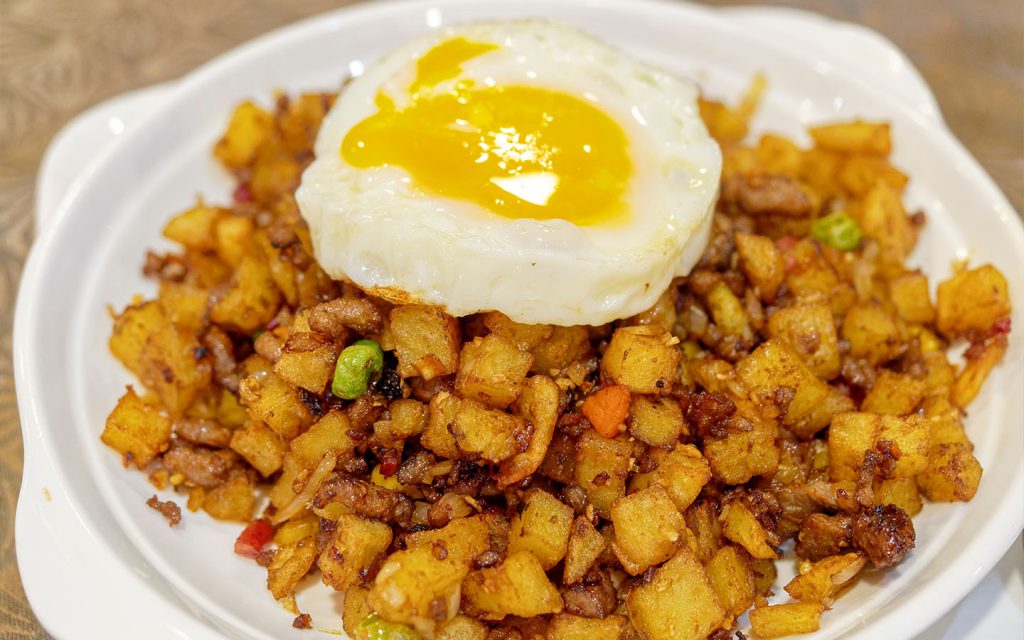
Minced pork browned with onion and garlic, seasoned with soy sauce, Worcestershire sauce and a little molasses, then spooned over rice with fried potato cubes and an egg on top. The ingredients exemplify the East-meets-West nature of Macao, while the name comes from the English “minced”, which replaced kheema, an older word carried over from India, after Macanese families began settling in Hong Kong from the 1840s. Macanese cooking joined China’s national intangible cultural heritage list in 2021; the recipe has never been standardised.
Hong Kong: wonton noodles(雲吞麵)
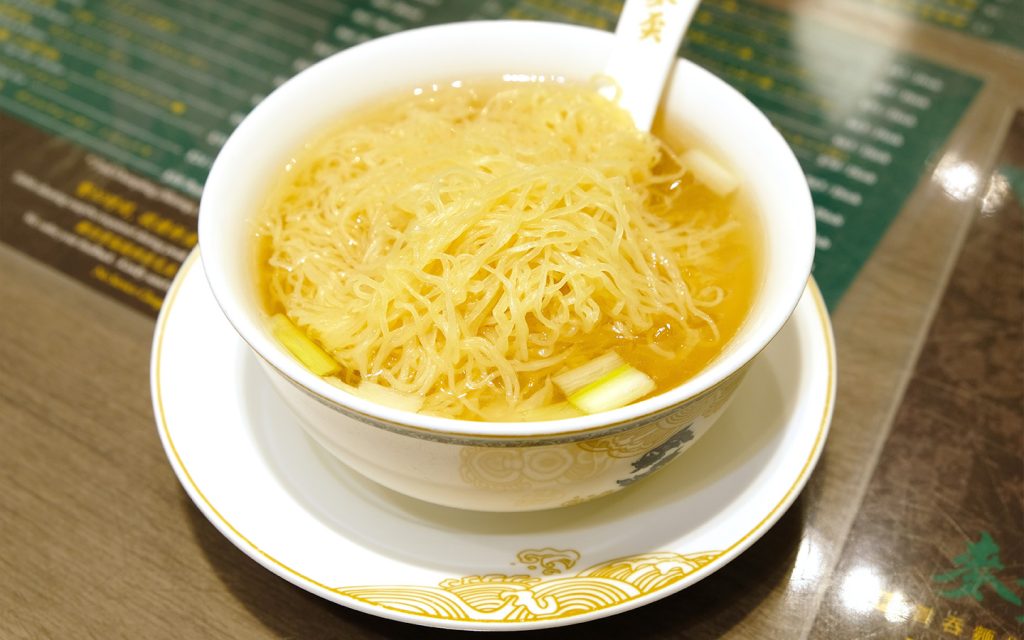
Thin egg noodles, prawn-and-pork wontons, and a broth built on dried flounder and shrimp roe. The dish was refined in Guangdong and carried south by Cantonese migrants, and was well established in Hong Kong by 1930, when a local newspaper described it as entering a new era in the city. The bowl is small on purpose: the wontons go in first so the noodles rest on top, out of the broth, and reach you before they go soft.
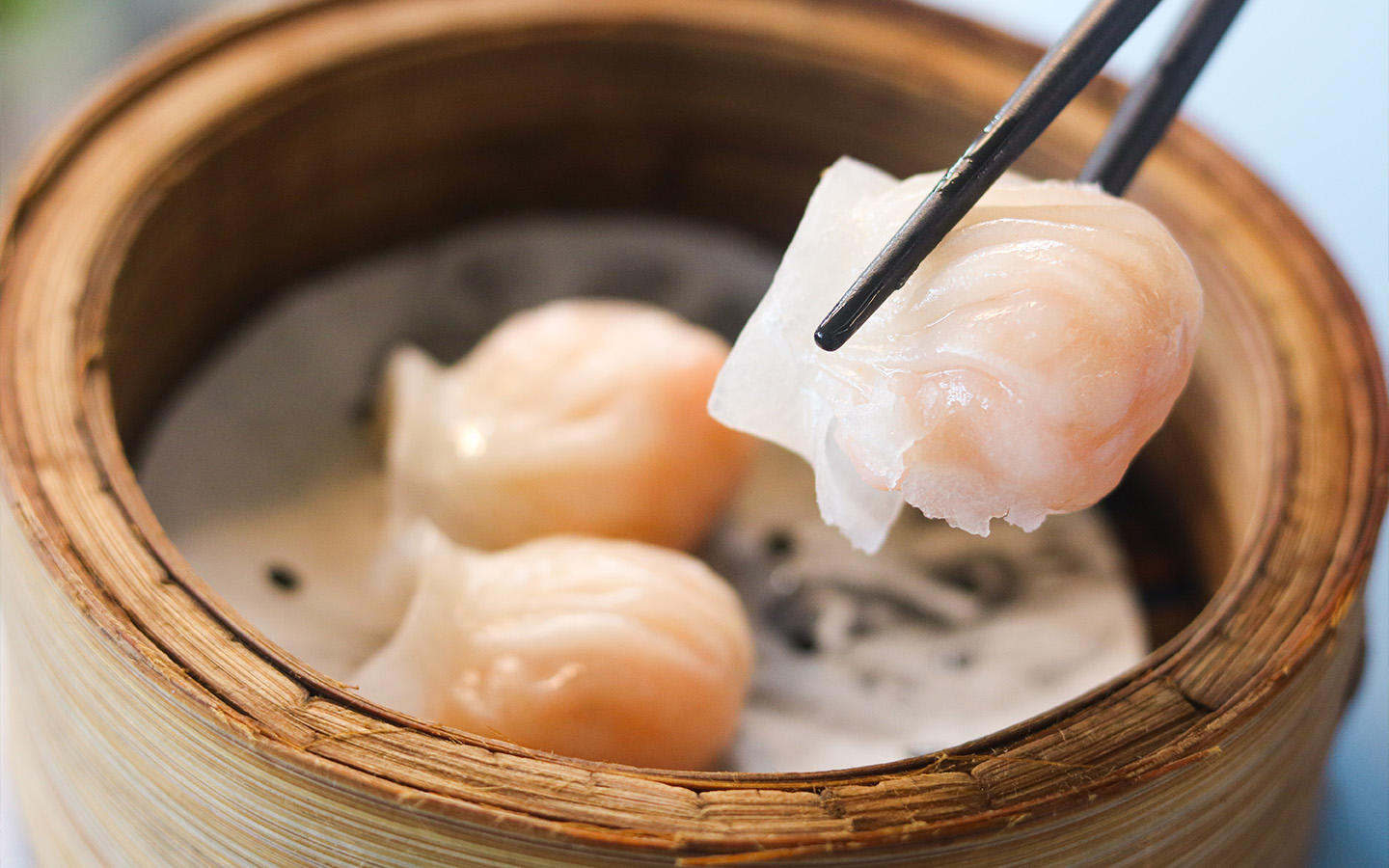
Guangzhou: har gow(蝦餃)
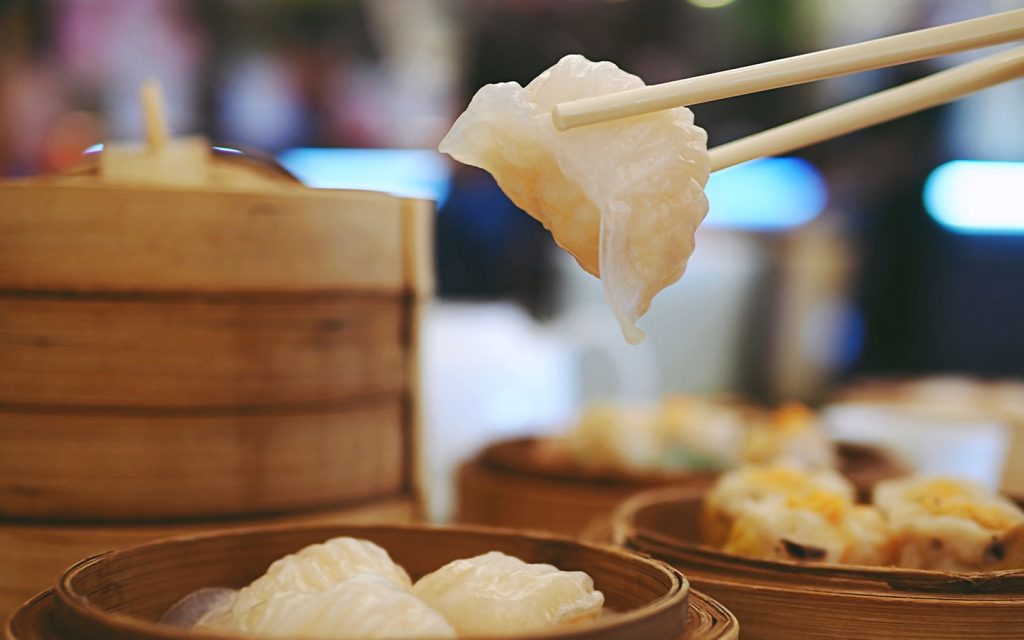
The dumpling credited as the ancestor of modern dim sum. Food historians trace it to a teahouse in Wufeng village on Guangzhou’s outskirts roughly a century ago, where prawn, bamboo shoot and pork fat went into a rice-flour wrapper sold as the “five phoenix dumpling”. Later cooks switched to wheat starch, which becomes translucent when steamed, and the pleated half-moon became a professional benchmark – Cantonese kitchens still judge one another on the pleats. There is no primary record behind the origin story, so the date is best treated as approximate.
Shenzhen: Shajing oyster(沙井蠔)
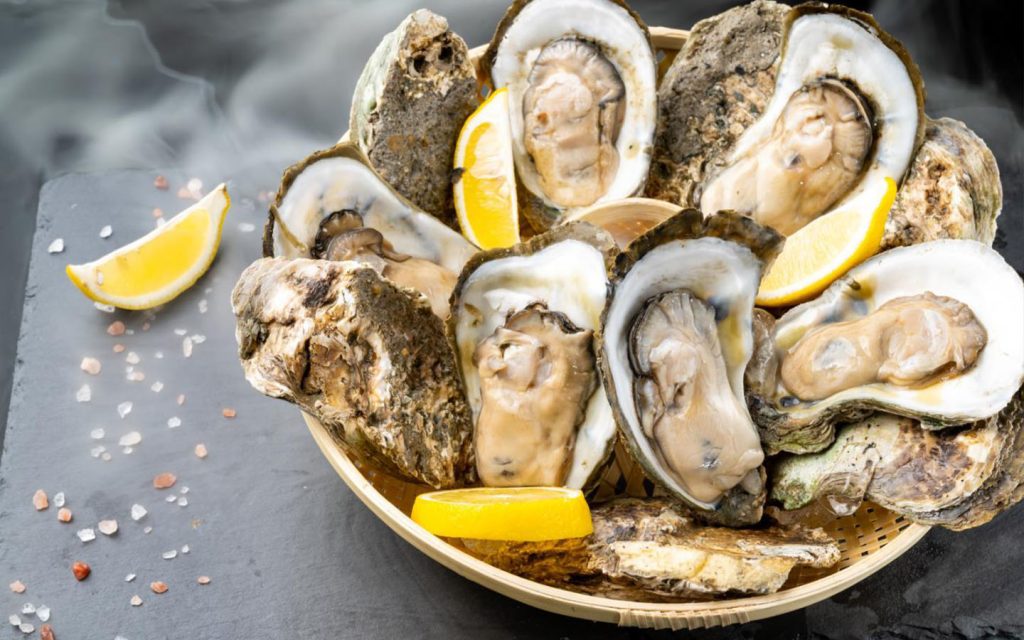
Shenzhen is a city of migrants with few long traditions of its own. Shajing, in today’s Bao’an district, is the exception: oysters have been farmed on stakes in its waters since the Song dynasty, one of the earliest known attempts anywhere to cultivate them rather than simply gather them. The farming customs went onto Guangdong’s provincial intangible cultural heritage list in 2022.
There is a complication worth knowing. Industrial pollution from the 1980s pushed most production west to Taishan, so a Shajing oyster today is usually Shajing by method and name rather than by water – grilled over charcoal, or folded into an egg-and-starch omelette, at the oyster festival the district still holds each December.
Zhuhai: pipa duck(琵琶鴨)
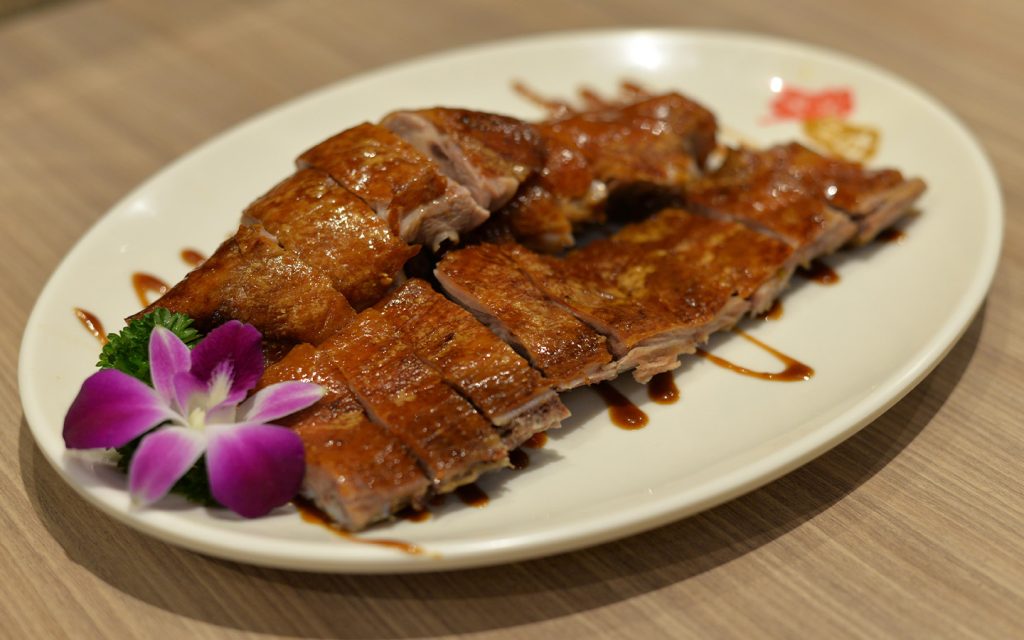
From Qianwu, a town in Zhuhai’s Doumen district, where a whole duck is split, flattened and cured until it takes the pear-shaped silhouette of a pipa – the Chinese lute it is named after – then roasted. It joined Zhuhai’s municipal intangible cultural heritage list in 2016. Doumen’s other autumn specialities include river fish and rice-field worms but the duck is the best known.
Foshan: Daliang double-skin milk(大良雙皮奶)
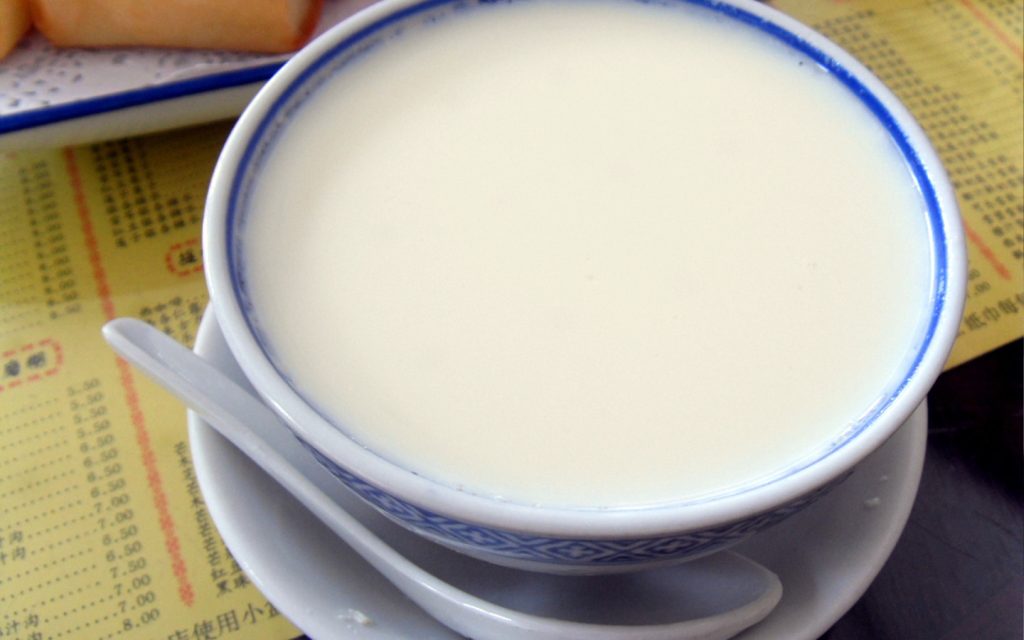
Made in Daliang, the old centre of Shunde, since the late Qing, and named for a small feat of patience. Buffalo milk is steamed until a skin forms; the milk beneath is poured off and mixed with sugar and egg white, then returned under the first skin and steamed again, so a second sets on top. It became provincial intangible cultural heritage in 2018, and it is not remotely a museum piece – Shunde eats it at breakfast, after dinner and in between, and Daliang opened a museum to it in 2020.
Dongguan: houjie sausage(厚街臘腸)
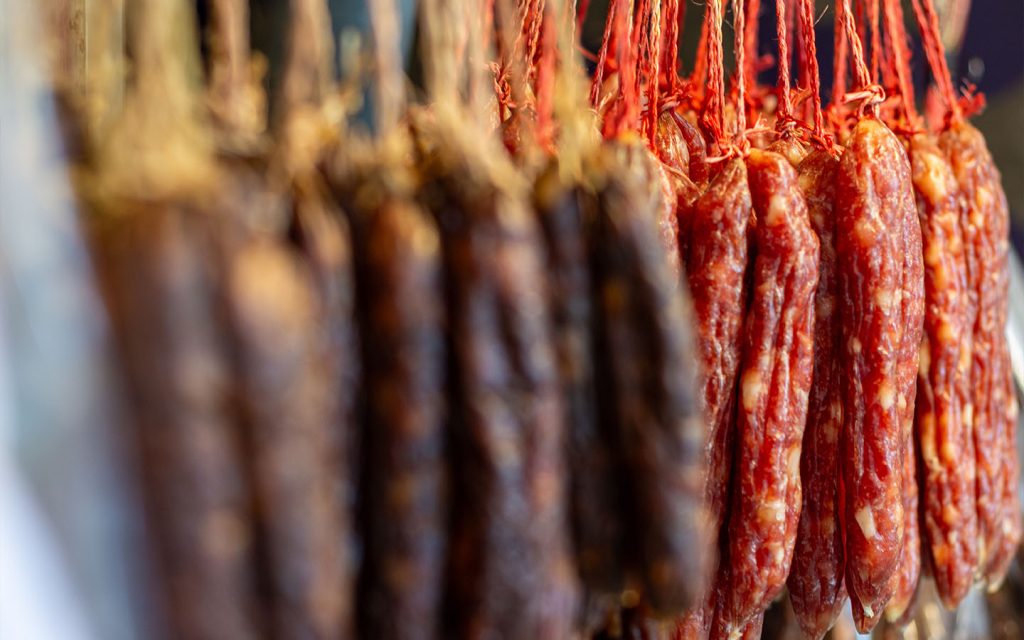
Local accounts date it to the Song–Yuan upheaval, when villagers are said to have packed minced pork and rice into casings to keep it on the move. Whether or not that holds, by the 1930s Houjie’s makers were shipping to Hong Kong and Southeast Asia – which tells you something about a town that has always cooked for people who left. It is cut short and stubby rather than in long links, and is still made in the cool, dry months when the air will do the drying.
Huizhou: Hakka stuffed tofu(客家釀豆腐)
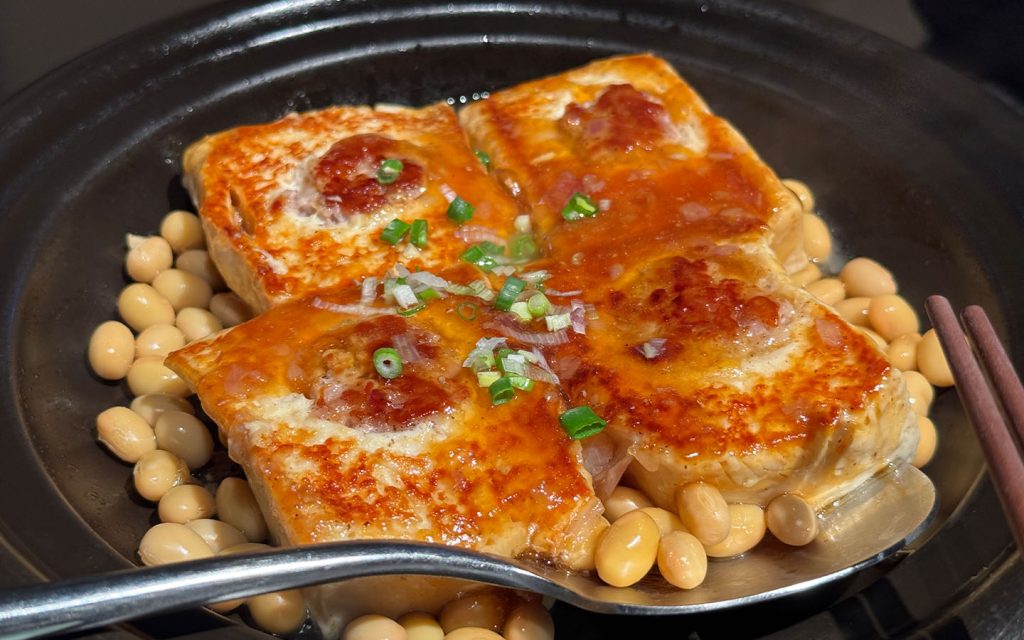
The story the Hakka tell about themselves, in one dish. Migrants moving south from the Central Plains missed their wheat dumplings, and Lingnan was not suited to wheat cultivation, so they stuffed bean curd instead – pork pressed into each piece, browned, then braised. Meizhou claims it too, and the claim is fair; in 2021 it was written into the cross-boundary Bay Area cuisine standards. In Huizhou the saying is that there is no feast without it.
Zhongshan: Shiqi pigeon(石岐乳鴿)
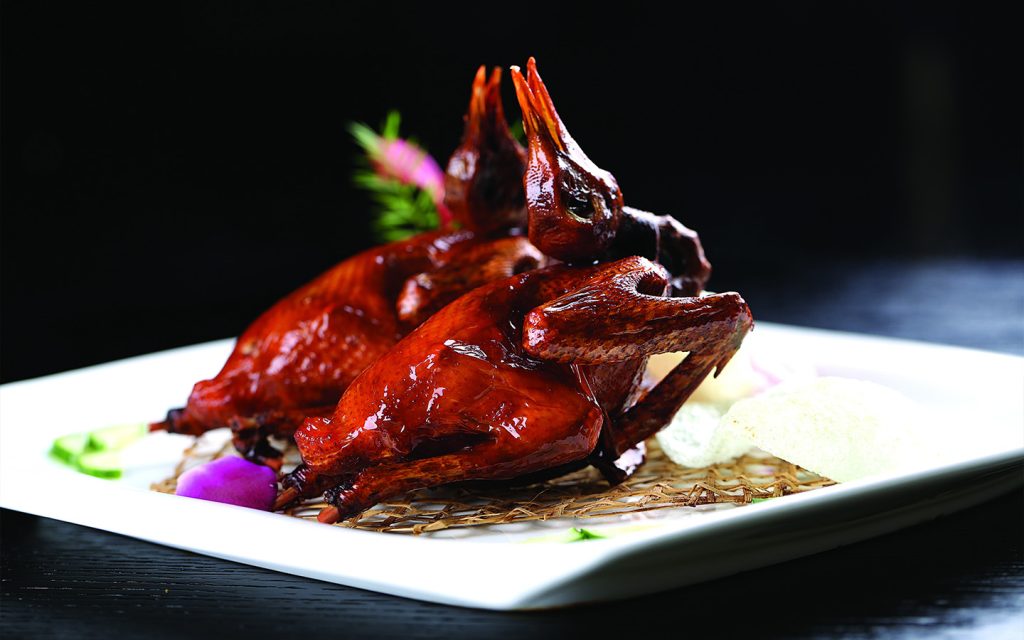
Zhongshan people say you can go without vegetables, but not without pigeons. Squab has been reared around Shiqi for generations, but the version that made the city’s name – brined in a mix of twenty-odd herbs, then deep-fried until the skin crisps – was worked out in 1991 by a local chef who went on to head the city’s culinary association. The technique was listed as municipal intangible cultural heritage in 2022, and Zhongshan now raises some two million birds a year.
Jiangmen: Taishan eel rice(台山黃鱔飯)
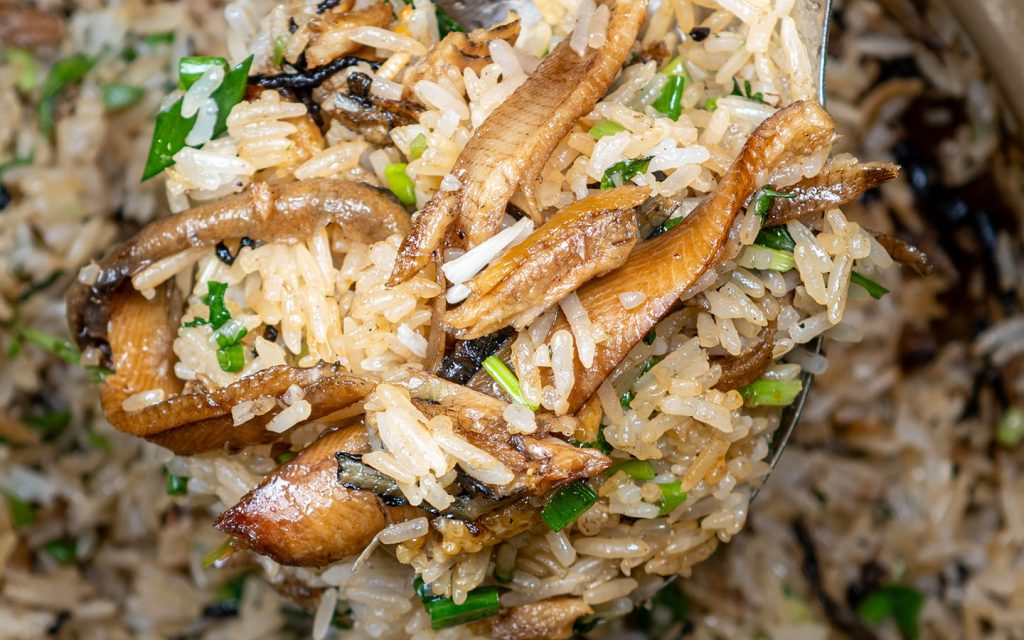
Rice and fresh eel cooked together in one pot until the grains separate, the aroma concentrates and a crust forms against the base. This is home cooking rather than banquet food, most closely associated with Shuibu town in Taishan, and it carries intangible heritage status at both Taishan and Jiangmen level. In October 2025 it became the first dish from Taishan written up as a Greater Bay Area standard. Jiangmen is the ancestral home of a very large share of the world’s overseas Chinese, so this is a pot a great many people abroad would recognise as their grandmother’s.
Zhaoqing: guozheng(肇慶裹蒸)
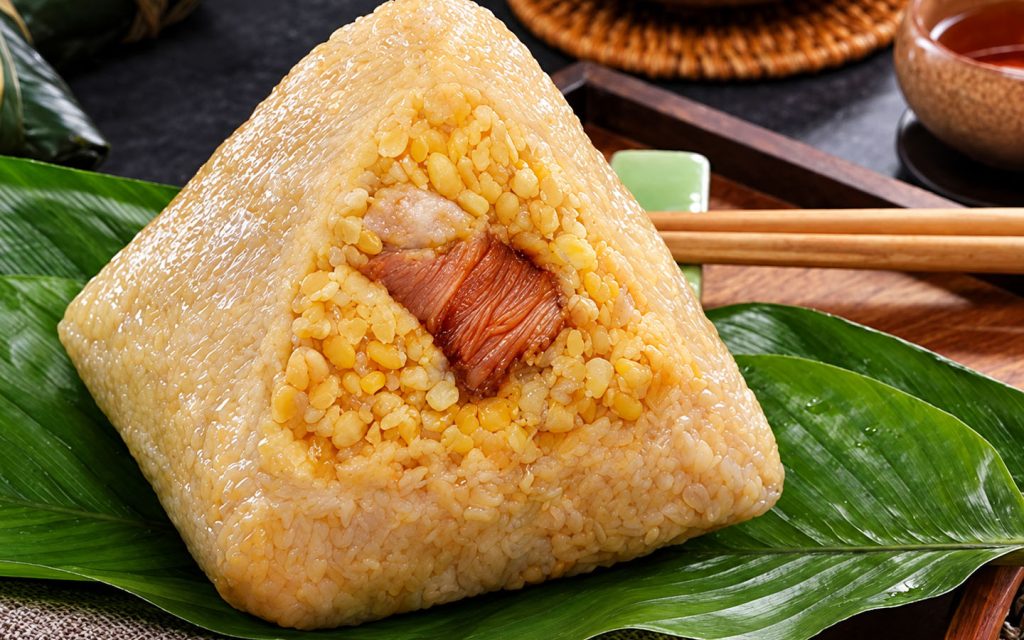
This Zhaoqing dumpling is wrapped in local winter leaves with a five-pointed fold that is tricky to master, and filled with glutinous rice, mung beans and fatty pork, and steamed overnight until the layers give way into one another. Local accounts tie it to Han settlers who came south after the Qin conquest of Lingnan. The delicacy holds provincial intangible cultural heritage status – and, unusually, it is eaten at both Lunar New Year and the Dragon Boat Festival.
UPDATED: 10 Nov 2026, 1:32 pm