The Greater Bay Area now has 69,000 high-tech firms and ten trillion-yuan industrial clusters, as its innovation cluster ranks first globally
GBA innovation hub hits 69,000 high-tech firms and ten trillion-yuan clusters
Article by:
PUBLISHED:
The Greater Bay Area’s (GBA) standing as a global science and technology destination was underscored this week, as new figures revealed the GBA innovation hub is now home to 69,000 high-tech enterprises and ten industrial clusters each worth more than 1 trillion yuan.
The Shenzhen-Hong Kong-Guangzhou science and technology cluster ranked first globally in the 2025 Global Innovation Index, surpassing Tokyo-Yokohama for the first time. Guangdong’s R&D spending meanwhile reached 535 billion yuan in 2025, with the province continuing to lead China in R&D personnel, high-tech enterprises, valid invention patents and international patent filings under the Patent Cooperation Treaty.
Manufacturing remains the backbone of the GBA innovation hub. Guangdong had 76,000 industrial enterprises above a designated size in 2025, the highest in China, with advanced and high-tech manufacturing growing 5.1 percent and 6.2 percent respectively.
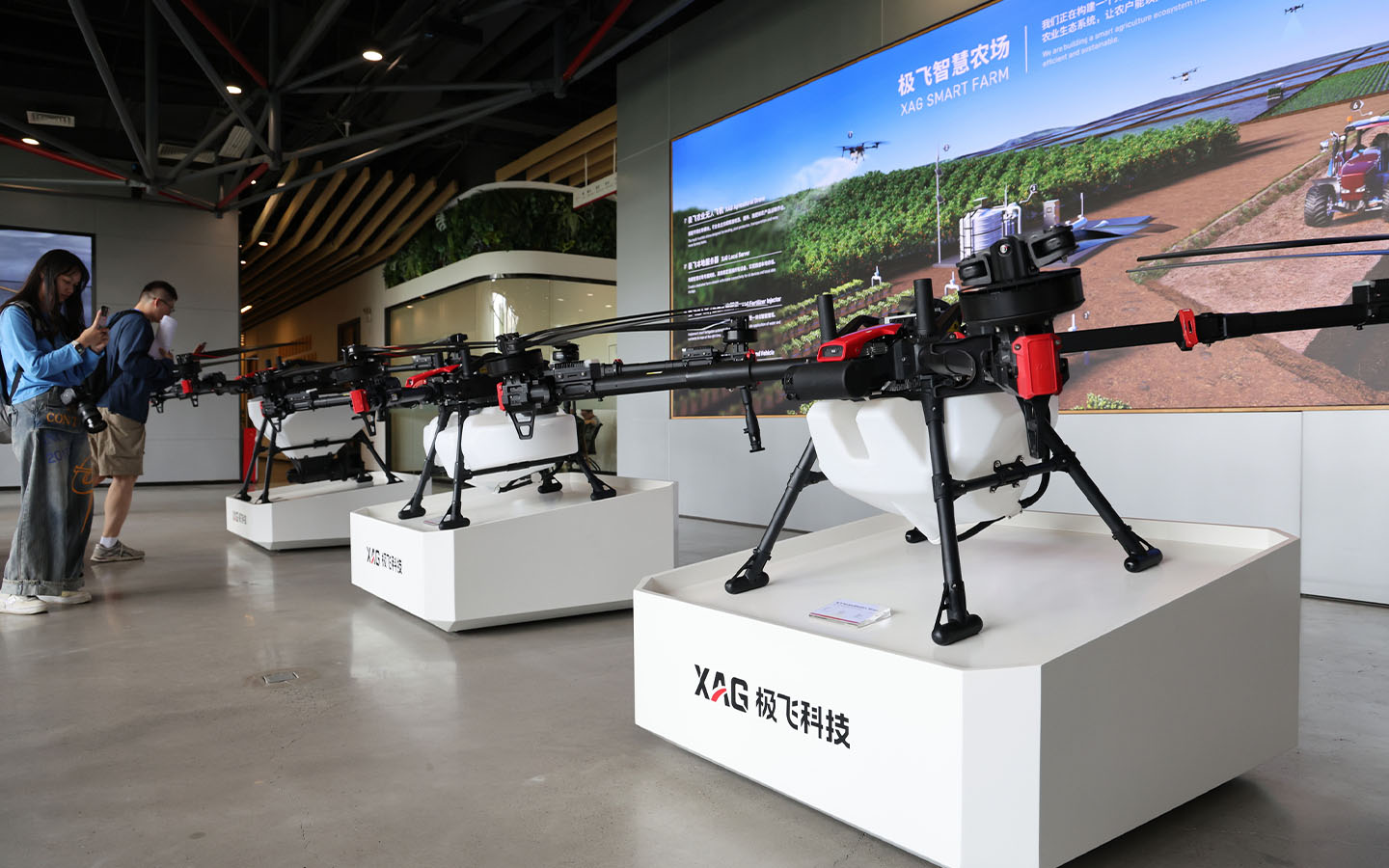
Emerging sectors are expanding fastest of all. Drone production rose 39 percent, with Chinese consumer and industrial drones now holding roughly 70 percent and 40 percent of the global market respectively, led by Shenzhen firms DJI and XAG.
[See more: Shenzhen sixth in world for unicorns as GBA claims half of China’s top ten]
Cross-border collaboration is deepening too. More than 600 million yuan in provincial research funding has been allocated to Hong Kong and Macao, supporting cooperation platforms including the Guangdong-Macao In-Depth Cooperation Zone in Hengqin, the Qianhai Shenzhen-Hong Kong Modern Service Industry Cooperation Zone, Guangzhou’s Nansha district and the Hetao Shenzhen-Hong Kong Science and Technology Innovation Cooperation Zone.
Hong Kong’s role in the GBA innovation hub
Fifteen unicorn companies with Hong Kong backgrounds have now established their headquarters in Guangdong, while more than 260 Guangdong companies are listed in Hong Kong.
The integration push is increasingly viewed in Hong Kong as a strategic necessity rather than a choice. A separate South China Morning Post report this week highlighted how businesses such as Hong Kong materials science firm OKOsix have set up regional headquarters in Shenzhen’s Futian district to access mainland supply chains and the world’s second-largest consumer market. This comes even as executives caution that Hong Kong must retain its distinct strengths – legal independence, global financial connectivity and regulatory credibility – to remain attractive amid rising geopolitical tensions with the West.