The Guangdong FTZ (Free Trade Zone) comprises Qianhai, Hengqin and Nansha, each with different focus sectors and preferential policies
Guangdong FTZ: Should you start your company in Qianhai, Hengqin or Nansha?
Article by:
PUBLISHED:
As one of the largest city clusters in the world, China’s Greater Bay Area (GBA) is brimming with business opportunities that span nine mainland municipalities and the two Special Administrative Regions (SARs) of Hong Kong and Macao. A key pillar to the region’s rapid development is the China (Guangdong) Pilot Free Trade Zone (Guangdong FTZ), which was established by the central government in 2015 to facilitate cooperation between the SARs and mainland China, and to spur trade and innovation.
Covering 116.2 square kilometres, the Guangdong FTZ comprises three different areas – Nansha, Qianhai and Hengqin. For entrepreneurs and founders, choosing between the three can be difficult, as it involves evaluating market alignment, investment opportunities, support measures, infrastructure and accessibility.
To make the task easier, we’ve compiled information on each of the separate areas and gathered insights from professionals familiar with the Guangdong FTZ. It goes without saying that any attempt to comprehensively document all the latest policies and incentives is bound to be futile. As Peter Helis, a GBA expert, points out, “policies come and go” and “keep changing with the objectives of the local governments.”
According to Helis, “The most important thing is, if you’re coming to the GBA or if you’re coming to China [to set up a business], you need to do your proper background check first.”
Read on for our guide to the three areas of the Guangdong FTZ.
Nansha’s role in the Guangdong FTZ
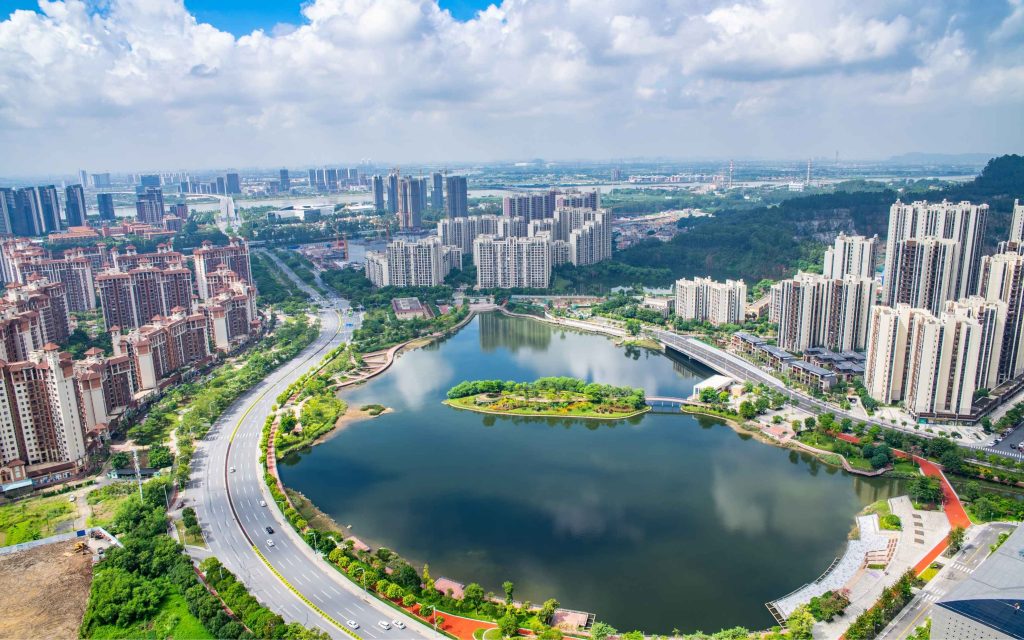
Area: 803 square kilometres
Population (2025): 993,200
GDP (2025): 240.22 billion yuan (US$35.48 billion)
Trade (2025): 295.90 billion yuan (US$43.71 billion)
Background:
Nansha is the southernmost district of the provincial capital’s 11 districts, with its location at the mouth of the Pearl River making it an important gateway for maritime trade and logistics. It is home to the Port of Nansha – the only deep water port in the city.
In 2019, Nansha was named a Demonstration Zone for Comprehensive Cooperation among Guangdong, Hong Kong and Macao, in a bid to foster alignment between the three places in areas such as innovation, technology, and finance.
In 2022, the State Council published the Nansha master plan, which runs until 2035. Five key developmental tasks were listed, including establishing a gateway for international trade, developing a platform for the alignment of regulations and mechanisms, building a cooperation base for the technology, establishing a cooperation platform for youth entrepreneurship and employment, and establishing a benchmark for urban development.
Focus:
According to Nansha’s government, Nansha is home to eight strategic emerging industries – intelligent connected and new energy vehicles; shipbuilding and marine engineering; biopharmaceuticals and health; low-altitude economy and aerospace; semiconductors and integrated circuits; green petrochemicals and new materials, new energy and advanced storage; and intelligent equipment and robotics. Meanwhile, the district also houses two major service industries – finance and logistics.
Comparing Nansha to Qianhai and Hengqin, Rupert Hoogewerf, the chairman of the Hurun Report, tells The Bay that “Nansha has a reputation of being more an industrial base, but for advanced and smart industry.”
Hoogewerf cites the example of Guangzhou Rongjie Energy Technology. Since its formation in 2022, the Nansha new energy firm has invested 20 billion yuan (US$2.95 billion) into the construction of a lithium-ion battery R&D and manufacturing base in the district.
Another major local sector that Hoogewerf highlights is car manufacturing. In 2025, it accounted for almost 40 percent of Nansha’s total industrial output, with an added value totalling 137.31 billion yuan (US$20.28 billion).
Shipbuilding is one other area worth highlighting, as Nansha’s Longxue Island is home to one of China’s largest shipbuilding hubs, producing major vessels such as the Glovis Leader – the biggest car carrier in the world.
Future development:
Nansha is currently working on the development of three future industries – intelligent unmanned systems, cell and gene technologies, as well as industries related to deep sea and deep space exploration.
Progress has already been made across the three sectors. In intelligent unmanned systems, Nansha launched trial operations of south China’s inaugural L4-level autonomous bus demonstration area in 2021. Other major developments include the district’s launch of China’s full-space unmanned demonstration scenario in 2024.
When it comes to cell and gene technologies, Nansha already has over 40 firms in this sector, which make up part of the more than 400 biopharmaceutical companies stationed in the district.
The deep sea and deep space industry has also made headways, as exemplified by Chinese commercial spaceflight firms CAS Space’s manufacturing of rockets in the district, and the area’s construction of the Mengxiang – a deep-ocean drilling vessel able to drill to a depth of 11,000 metres.
Incentives:
Nansha is a business-friendly district, so much so that Hoogewerf says he would recommend it to any founder already in China who is “looking to generate value” in an industry.
“The government is a very market-oriented district government and that provides a lot of value to businesses already set up in China who are looking to develop a particular sector or a particular investment front,” he says.
Policy-wise, the district offers a vast array of incentives across various key industries and eligible firms based in Nansha’s launch areas can pay a reduced corporate income tax of 15 percent.
Similarly, there are various cash incentives in place. High-tech firms settling in the district can receive a one-off payment of 200,000 yuan (US$29,547), while established firms are eligible for development rewards as high as 2 million yuan (US$295,473), depending on their output value, spending on R&D and number of patents.
Hoogewerft says the policies are “very well-designed” at boosting growth among young tech companies. “The government’s obviously got a lot on its plate, just by dint of being a district government, and yet, the impression I’ve had is that they seem to make time for these young businesses,” he notes.
Qianhai’s place in the Guangdong FTZ
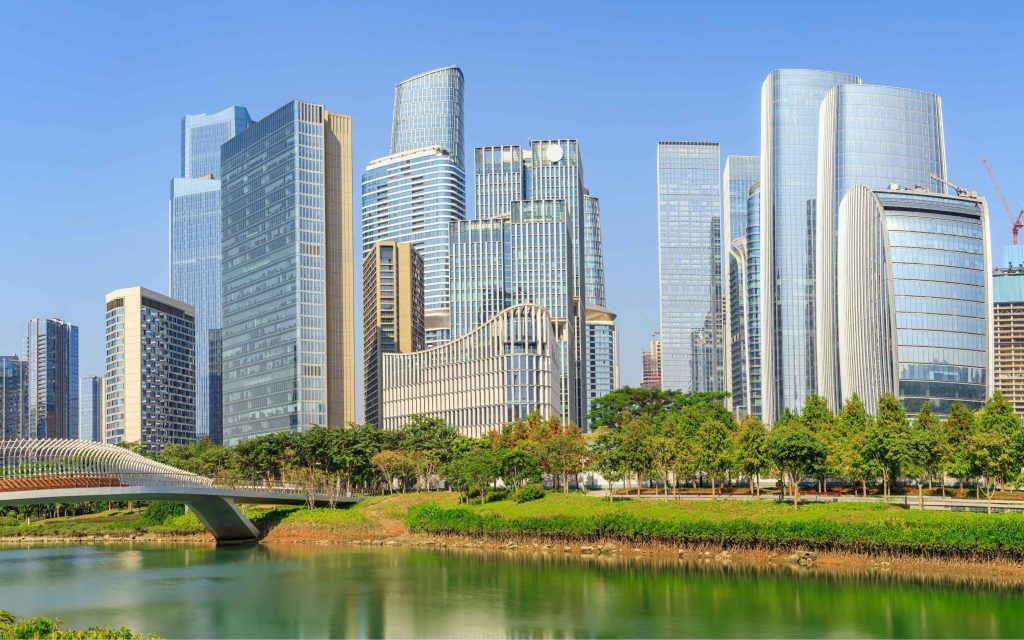
Area: 120.56 square kilometres
Population (2025): Targeted population of 1.3 to 1.4 million people by 2035
GDP (2025): 331.81 billion yuan (US$49.02 billion)
Trade (2025): 757.43 billion yuan (US$111.9 billion)
Background:
Situated on Shenzhen’s west coast, Qianhai is a relatively new creation in comparison to the city’s more established districts. It was built on reclaimed land to serve as an experimental business area aimed at fostering integration between Shenzhen and Hong Kong and boosting the GBA’s financial and service industry.
This positioning was formalised in August 2010 when China approved the formation of the Qianhai Shenzhen-Hong Kong Modern Service Industry Economic Cooperation Zone, to give it its formal name.
When the zone was first established, it was a far cry from the highly urbanised business district that it is today. Angel Ho, the co-founder of Honda Service – a Shenzhen-based consultancy that helps foreign companies settle in China – remembers that Qianhai was very much a vacant land plot in its early years.
John Dorris of Sino-Associates Global Limited – a cross-cultural consulting company in Qianhai – has similar memories upon moving to the zone around 2010.
“Where I work now used to just be shipping containers,” he says. “Now, I’m downstairs from SF Express headquarters here [from my office], and that element of convenience has followed around.”
In the years since its formation, Qianhai has undergone rapid development. Originally, the area only comprised the Nanshan district, covering an area of just 14.92 square kilometres. In 2021, the central government unveiled a master plan that dramatically increased Qianhai’s area to 120.56 square kilometres through the inclusion of new surrounding districts and sub-areas.
Focus sectors:
Service industries form the backbone of Qianhai’s economy. Government data shows that the local service industry represented 78.1 percent of economic output last year, with the modern service industry accounting for 84.2 percent of this growth.
The Qianhai government is focused on encouraging the development of five broad sectors – logistics, information services, technology services, business services, and cultural and creative industries. Other areas have been earmarked for the development of finance, specialised services, technology, emerging international trade, MICE and trade logistics.
Meanwhile, the government is pushing for industries such as air logistics, flight services, marine industries and advanced manufacturing, as well as conventions and exhibitions.
Future development:
Qianhai will play an important role in fostering Shenzhen’s economic development, especially in terms of the Shenzhen government’s plan to establish 20 strategic emerging industrial clusters and 8 key future industries (the so-called “20+8 strategy”).
Based on the 20+8 blueprint, the Qianhai cooperation zone, along with Shenzhen’s other districts, will work towards building various strategic industry clusters across sectors such as fashion, intelligent robots, lasers and additive manufacturing.
Incentives:
Qianhai offers plenty of incentives and preferential policies for prospective firms. Ho points to the cooperation zone’s reduced corporate tax rate as one measure that is worth highlighting.
“Outside of Qianhai, the corporate tax rate is 25 percent,” she says. “In Qianhai, if you belong to one of the five business sectors encouraged by the government, you can have your corporate tax cut to 15 percent.”
Ho also mentions that foreign talent in Qianhai, employed in one of the five key industries, can have their income tax rate capped at 15 percent and apply for a rebate during their second year in the zone. This is in contrast to the rest of China, where income tax is taxed according to a tiered system capped at a rate of 45 percent.
As well, the expert mentions “talent apartments” with discounted rent that are open to young Hong Kong and Macao professionals, along with government subsidies that vary depending on the industry.
On top of business incentives, Dorris praises Qianhai and Shenzhen in general for their transparency, especially towards Chinese companies.
“I think Shenzhen policy has always been one where transparent rule of law is critical for establishing a special economic zone, and I think that root culture is really carried into Qianhai,” he says.
Dorris highlights other advantages such as the cooperation zone’s globalised mindset. He cites the example of Sino Associates’ office at Qianhai’s Xiangjiang Financial Building, which is part of a larger co-working office space shared with other outward-looking companies.
Hengqin’s position in the Guangdong FTZ
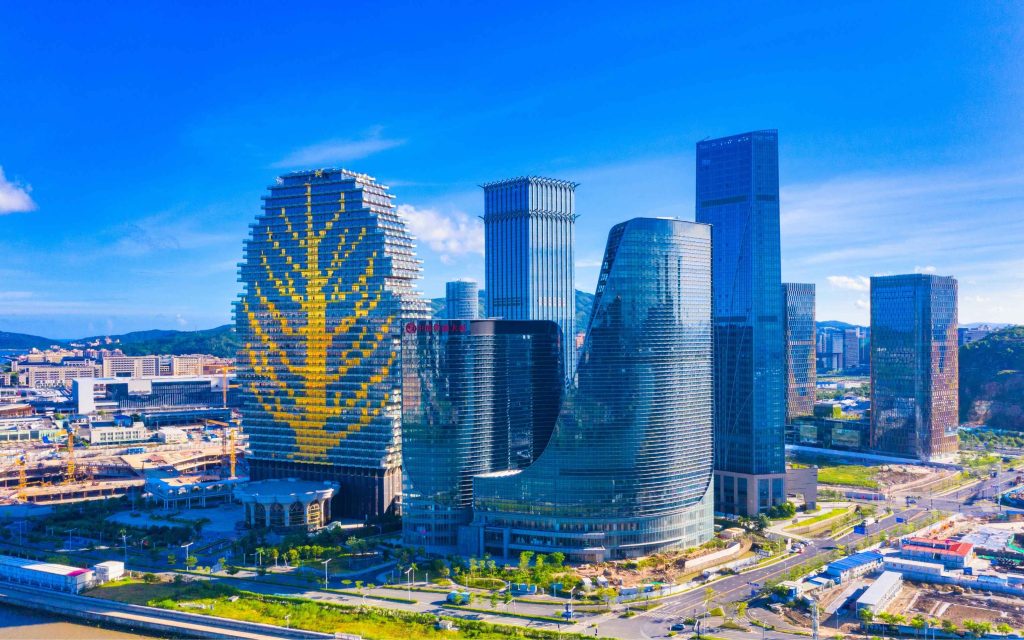
Area: Approximately 106 square kilometres
Population (November, 2025): 49,117
GDP (2025): 54.7 billion yuan (US$8.08 billion)
Trade volume (2025): 43.87 billion yuan (US$6.48 billion)
Background:
Wedged between the mainland city of Zhuhai and the Macao SAR, Hengqin was formerly an undeveloped island district of Zhuhai. In 2009, it kicked off its phenomenal transformation when China’s central government designated it as a special economic zone of Zhuhai.
The rationale behind developing Hengqin was to help the land-scarce Macao to reduce its overreliance on the casino industry by offering resources and space for economic diversification into other industries.
In 2019, the central authorities backed plans to turn Hengqin from a Zhuhai district into an in-depth cooperation zone jointly managed by the governments of Macao and Guangdong – a status that was finally enshrined in September 2021.
Focus:
According to the 2021 master plan for the development of Hengqin, the island is tasked with supporting Macao’s economic diversification across its four emerging industries – technology R&D and high-end manufacturing; the cultural tourism, convention and exhibition, and commercial trade; traditional Chinese medicine (TCM) and other Macao-branded industries; as well as finance.
The first two contributed to around 70 percent of the value of the four emerging sectors in the first quarter. The former was valued at approximately 3.8 billion yuan (US$561.39 million), while the latter was worth 3.4 billion yuan (US$502.3 million).
Future development:
Alfred Wong Seng Fat, the executive vice president of the Macau Youth Greater Bay Area Development Association, highlights TCM as one potential area that Hengqin could further develop alongside the SAR, For instance, he notes that Hengqin’s Traditional Chinese Medicine Science and Technology Industrial Park of Co-operation between Guangdong and Macao could help Macao to turn its medical research into actual products.
Similarly, Wong sees Hengqin’s green, as well as environmental, social and governance (ESG) sectors as ripe for further development due to the island’s green spaces and significant amount of land.
“In Macao, the space is limited, so in case we want to do the green industry product, it can be quite difficult, but Hengqin has very good conditions [for this],” Wong says.
In addition, the expert mentions that there is room for Macao and Hengqin to collaborate in data centres, AI, as well as the low-altitude economy, as Macao has neither the space nor the conditions to support these facilities.
Incentives:
According to Wong, Hengqin and Nansha have “the best” policies for businesses when compared to other cities in the GBA, offering incentives such as subsidies for enterprises and housing support for those who choose to live locally.
While Hengqin’s preferential policies are generally open to an array of firms and individuals, they tend to offer more favourable terms to Macao entrepreneurs and residents due to its strategic positioning as a platform for supporting Macao’s socio-economic development.
Some notable measures include Hengqin’s “double 15 percent” preferential tax policy, which caps the corporate tax rate at 15 percent for eligible Hengqin businesses and income tax rate at 15 percent for sought-after professionals.
Meanwhile, there are a large number of cash grants in place for eligible enterprises, as well as firms in key industries like TCM and modern finance.
For example, eligible financial institutions settling in Hengqin can receive a subsidy of up to 20 million yuan (US$2.95 million). The terms are especially favourable for Macao-based financial institutes, which can receive funding that is 1.2 times more than the standard figure.
Likewise, there are measures to attract high quality talents, as well as Macao entrepreneurs to Hengqin, including rent relief of up to 36 months for Macao youth start-ups.
UPDATED: 09 Sep 2026, 12:28 pm