Regulated low-altitude flights are now permitted across 75 percent of Shenzhen – including the central districts of Futian, Nanshan and Luohu – removing the fragmented-airspace bottleneck that had held back China's drone-economy leader
Shenzhen fully opens low-altitude airspace below 120 metres in boost to drone economy
Article by:
PUBLISHED:
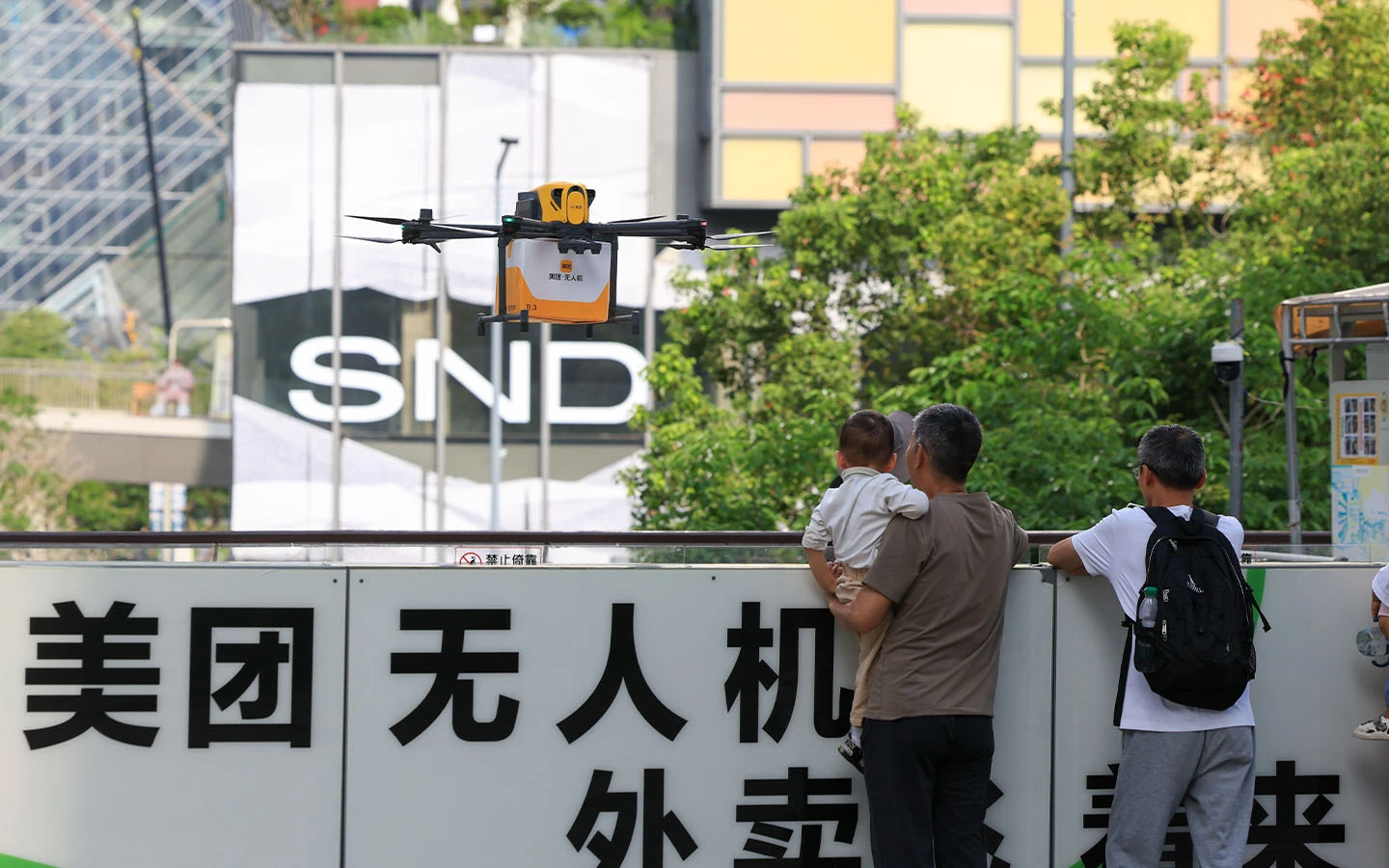
Shenzhen has completely opened its airspace below 120 metres to low-altitude flights in a move that is expected to greatly boost the development of the local drone economy and related services.
Citing information from the Shenzhen Low Altitude Economy Industry Association (SAIA), Shenzhen media reports that the recently implemented measure covers around 75 percent of Shenzhen’s territory, with regulated low-altitude flights now able to take place across the entirety of key districts such as Futian, Nanshan and Luohu.
The opening up of Shenzhen’s low-altitude airspace means the city has now moved from fragmentary low-altitude pilot schemes to regular and widespread operations. It signals a new period of development for the sector, greatly boosting flight freedom, coverage and the frequency of operations.
“Airspace resources are the core factor of production in the low-altitude economy,” SAIA’s secretary-general, Cheng Tao said.
He added that the biggest bottleneck in the industry had been the fragmentary nature of the usable airspace and the limited number of suitable flight settings, which Shenzhen has addressed through legislative efforts.
[See more: Shenzhen leads China in three high tech sectors: 3D printers, robots and batteries]
Shenzhen has emerged as one of the major low-altitude centres in China, with Shenzhen Special Zone Daily noting that the city has already built 1,284 standardised takeoff and landing points.
On average, the tech hub carries out over 2,700 low-altitude flights across the city each day, relying on a regulatory system powered by around 10,000 5G-A integrated sensing and communication (ISAC) base stations.
Last year, Shenzhen’s low-altitude and aerospace industry clusters generated an added value of around 35.06 billion yuan, up 31 percent year-on-year.
Commercially, drones are being used in Shenzhen for various services, including patrols, emergency rescue operations and logistics.
A representative of the Shenzhen Municipal Transport Bureau told Shenzhen Special Zone Daily that logistics was currently the most mature and developed segment of the low-altitude industry. Fengyi Technology and Shenzhen Meituan have already established 310 low-altitude shipping routes across the city, as well as eight intercity routes.
Meanwhile, low-altitude logistic services such as the transfer of emergency hospital medicine and equipment, the delivery of fresh produce to residential areas and the delivery of meals to office buildings and science parks are now being carried out on a regular basis.
“Shenzhen’s rise as a low-altitude economy hub is no accident,” the president of the Shenzhen UAV Industry Association, Yang Jincai, said in a local media interview. “It grew out of more than four decades of industrial accumulation, as the city moved from basic manufacturing to innovation-driven, smart manufacturing.”