Officials in Zhuhai have urged residents to avoid contact with giant African snails, a persistent invasive species known to carry dangerous pathogens and parasites
Zhuhai authorities issue public warning as invasive snail numbers rise
Article by:
PUBLISHED:
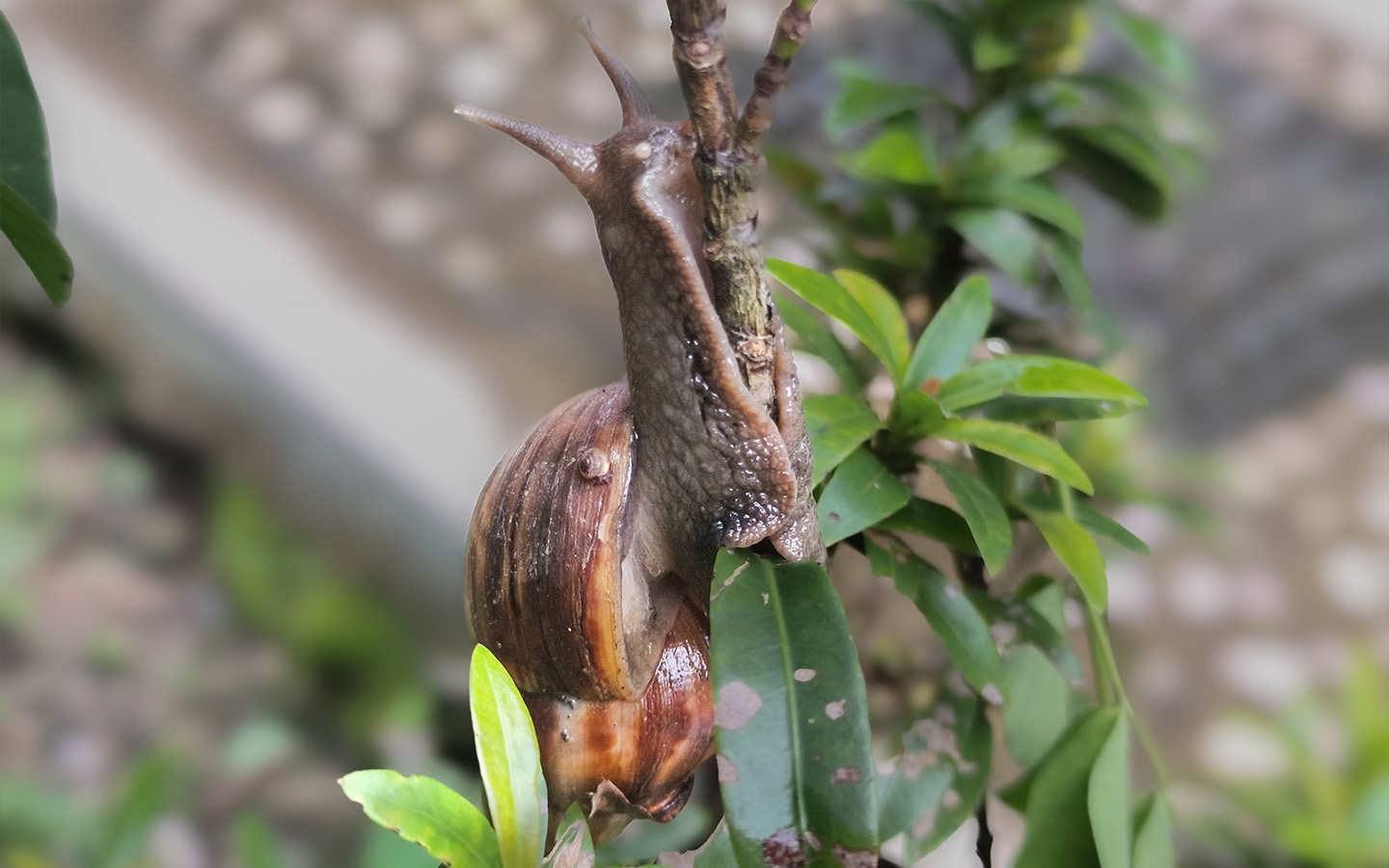
Heavy rainfall in Guangdong has driven a surge of giant African snails onto pavements and vegetation across Zhuhai, prompting authorities to issue a firm warning to the public: do not touch or consume these molluscs.
The species, Lissachatina fulica, is one of China’s first designated invasive alien species. While they typically remain hidden, the humid, wet conditions that have recently affected the city have forced them into the open, the provincial news outlet South reports.
Although they may appear harmless, these snails represent a genuine health hazard. They serve as carriers for parasites, including the rat lungworm, Angiostrongylus cantonensis. If these larvae enter the central nervous system, they can cause eosinophilic meningitis – a condition that triggers persistent fever and headaches, and can, in severe cases, prove fatal.
Furthermore, bacteria on their shells and bodies can trigger itching, dermatitis, and swelling upon skin contact. Infected snails contaminate their surroundings, leaving behind trails of mucus and faeces that may carry pathogens onto surfaces that come into contact with humans.
[See more: Over 13,000 evacuated as heavy rain sweeps Guangdong]
Chinese entomologist Zhao Li has explicitly advised against keeping these creatures as pets or attempting to eat them, regardless of how they are prepared.
The authorities have laid out specific guidance for residents, South says. If contact occurs, hands must be washed thoroughly with soap and running water for at least 20 seconds, followed by disinfection with 75 percent alcohol. When handling vegetables, items should be rinsed for 30 seconds and then soaked in a produce sanitiser for 10 minutes, with particular care given to the underside of leafy greens.
Parents are strongly cautioned against allowing children to play with the snails, citing the reported case of a 10-year-old boy who contracted meningitis through such contact. Additionally, cooking is insufficient to destroy internal parasites.
If a large infestation occurs in a residential area, residents are advised to contact professional pest control services rather than using domestic pesticides, which could risk contaminating water sources.