From the rugby pitch to the basketball court, TEDxTinHau Women 2026 speakers Sofie Fella, Angela Wong and William Lo are teaching women and girls to be stronger, louder and more ambitious.
Taking up space: how sport is expanding what women can become, in Hong Kong and beyond
Article by:
PUBLISHED:
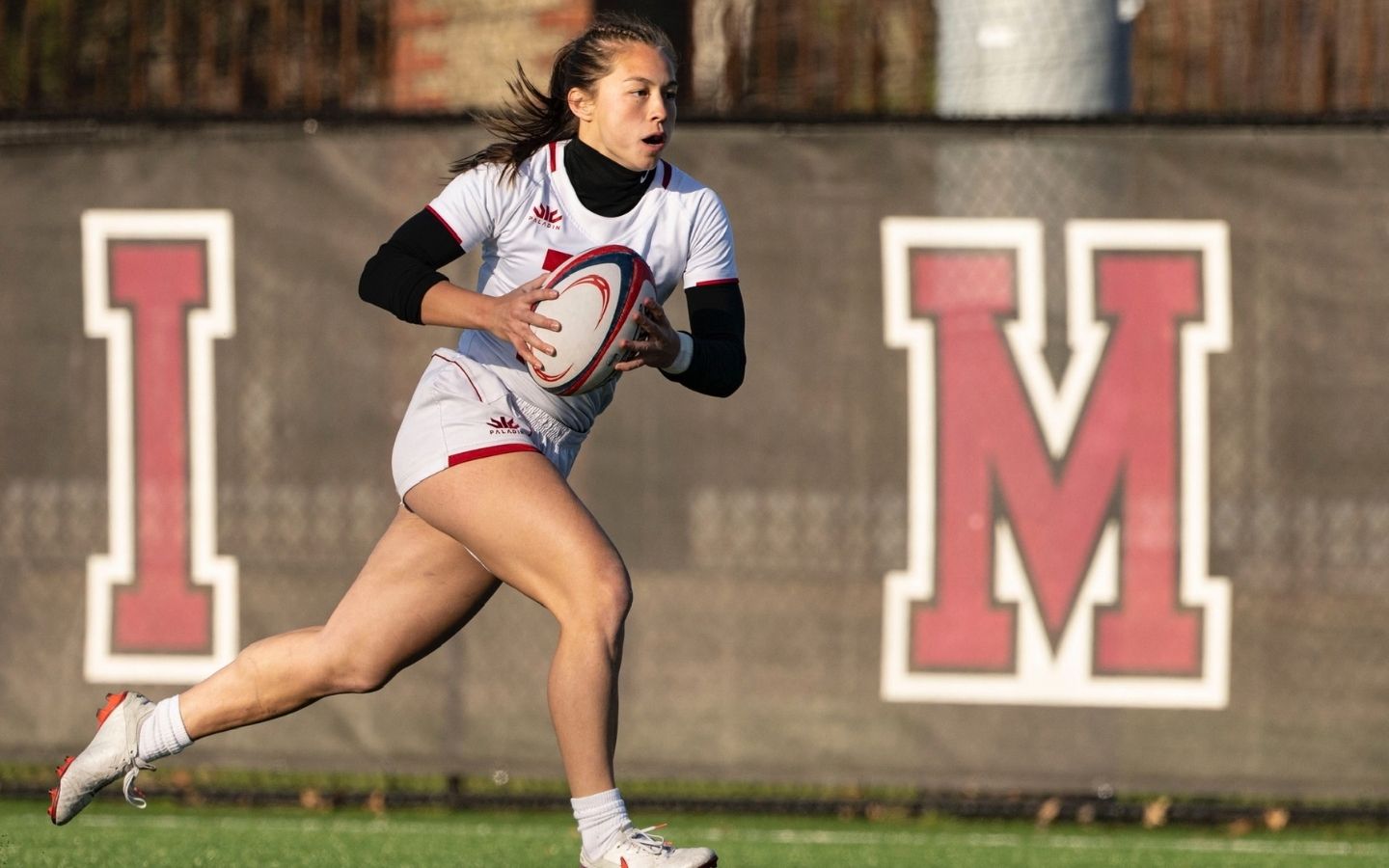
Sofie Fella grew up in Shanghai, the daughter of a Shanghainese mother and a German father. She was a dancer first, training in ballet and contemporary dance, and was always told her arms, legs and muscles were too big, too masculine. At fifteen, a coach at her school, Shanghai American School, suggested she try rugby, and the very things that had made her wrong for dance turned out to make her good at it: she ran faster, pushed harder, and stood her ground more surely than most.
“The things I always felt insecure about in my body became my superpower,” Fella tells The Bay. “They made me faster, stronger, better at tackling.” Those same qualities now see her turn out for Germany’s national side, in both fifteens and sevens.
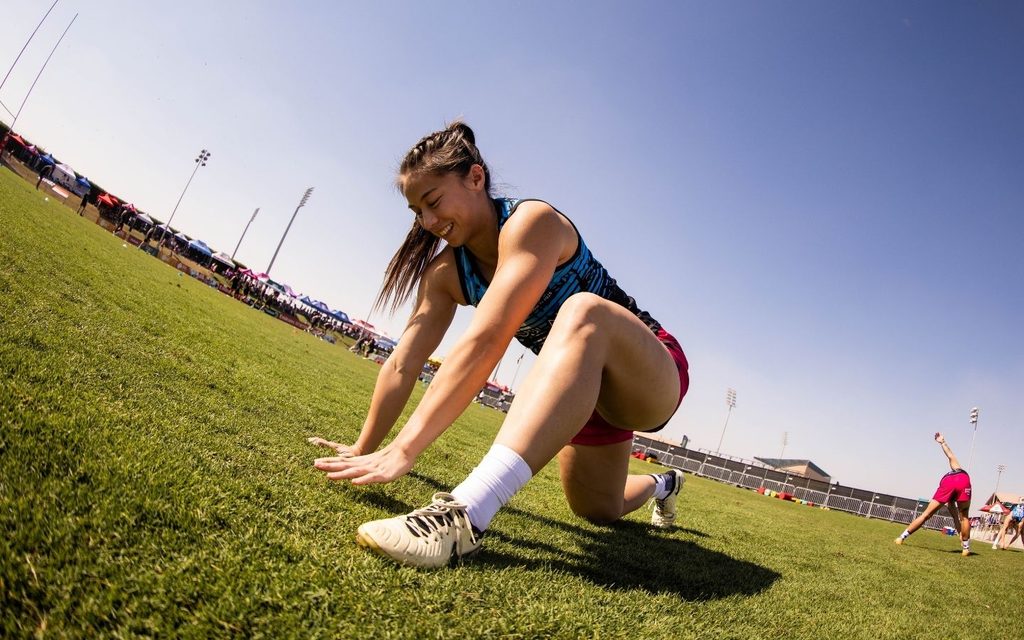
In the context of Asian culture, the female body has long been built up as something to be looked at and judged: slenderness, softness and quiet are held up as beautiful, while strength and size are treated as a transgression against that order, as if being strong itself were an affront to femininity. In such a culture, the first lesson many girls learn growing up is how to make themselves smaller.
This is what makes Fella’s own reversal so quietly subversive: in Hong Kong and beyond, that same narrative is being rewritten by a group of female athletes, coaches and community builders. From Fella’s rugby pitches to Strive Foundation’s basketball court in Hong Kong, these spaces are being used to redefine what a woman can become: not simply a stronger body, but a bigger sense of self, the belief that she is entitled to take up more space, in body and in voice alike.
All three will be on stage at TEDxTinHauWomen on Friday 2 October 2026, when the Hong Kong event marks its tenth edition at the Xiqu Centre in West Kowloon under the theme “Uncharted“. Fella gives a solo talk, “Dare to be Big”, while Wong and Lo speak together in “Live for the Assist”. Tickets are available through Cityline.
Strength and femininity were never a choice
Rugby carried Fella all the way to Harvard, and from there to Hong Kong, Dubai, France and Germany. Rugby union has long been considered a male-dominated sport, yet Fella navigated it with ease, calling the sport her “passport to the world”: wherever she has landed, it has handed her an instant community, and through it she met her partner.
What changed her most, though, was how she came to see her own body. “I used to be so focused on what my body looked like,” Fella says. “Now I see it as more than something to be looked at, it’s a tool. I want to keep it healthy and strong, and eat enough to be strong rather than under-eating to look skinny. That’s also given me more confidence in myself, and in what I’m capable of.”
That shift became concrete action. She co-founded Girls Lift Girls in Dubai with her friend Gemma Ashworth, a community built around making women’s strength feel ordinary, because in the Shanghai and Hong Kong she grew up in, advertising everywhere held up the slender, petite body as the template, while strong bodies were rarely shown. The community has since spread to Hong Kong, Australia and, most recently, Shanghai, where 60 or 70 women recently turned out for a boxing session and a panel discussion on body image and nutrition.
“The whole point of Girls Lift Girls is to bring women together and celebrate what our bodies can do,” Fella says.
Her brand, the “Da” (大, “big”) collection, exemplifies that belief. “Big” was the label she was given as a child: legs too big, shoulders too big, everything too big. She wanted to turn the word on its head: if being big means having muscle, being healthy, being strong, what exactly is wrong with that? On the back of the T-shirt is a dragon intertwined with flowers, the dragon for strength, the flowers for a traditional idea of beauty and femininity. “You don’t have to choose between the two,” she says.
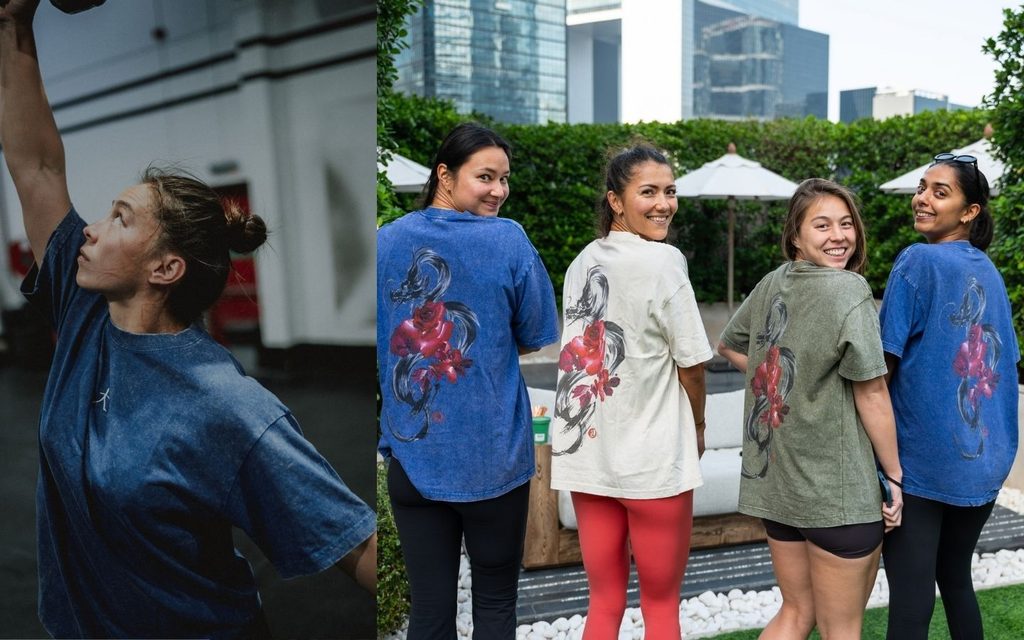
For Fella, being “big” is about more than the body; it’s about voice, too. She points out that Chinese women are so often taught not to speak too loudly, not to talk too much, not to take too much pride in what they’ve achieved.
“The mission of this brand is to celebrate our bodies and take up more space,” she says, “not just physical space, but our voices as well.” There is a personal story behind it too: she gave one of the T-shirts to her mother, the person who most often called her “too big.” Her mother now wears it often, and has sent it to friends on WeChat. “If I can change my mum’s mind,” Fella tells The Bay, “I can change any Chinese woman’s mind.”
Strive Foundation: opening more doors through basketball
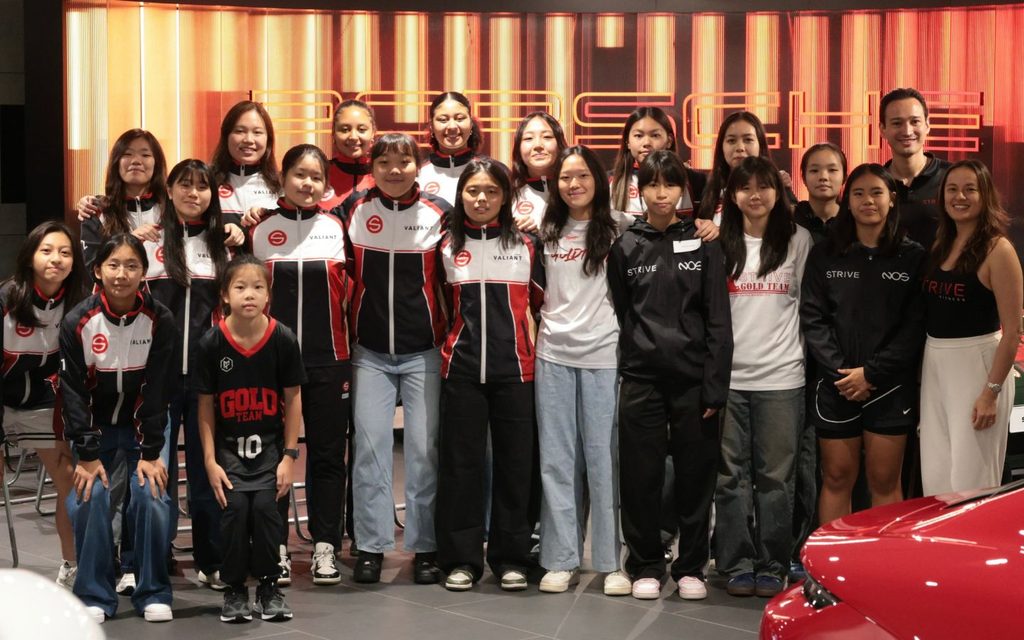
Fella redefined “big” on the rugby pitch. In Hong Kong, Angela Wong and William Lo have used basketball to teach a group of girls to express themselves with far more confidence, and find their way to the lives they actually want.
When Wong and Lo founded Strive Foundation in 2019, there was almost no pathway for Hong Kong girls to reach a higher level of basketball. They spent two years training their first student for free, including through the pandemic, over Zoom, and got her into the NCAA; two years later, she became the first Hong Kong girl to win a Division One scholarship. But basketball was never meant to be the endpoint.
“Basketball is a wonderful thing, but it depends heavily on your body,” Lo tells The Bay. “One day, that ball is going to stop bouncing. We don’t want them to feel, when that happens, that their best days are behind them.” Thus, Strive Foundation’s tagline is “Beyond the Court” – using basketball to open more doors in life, not just on the court.
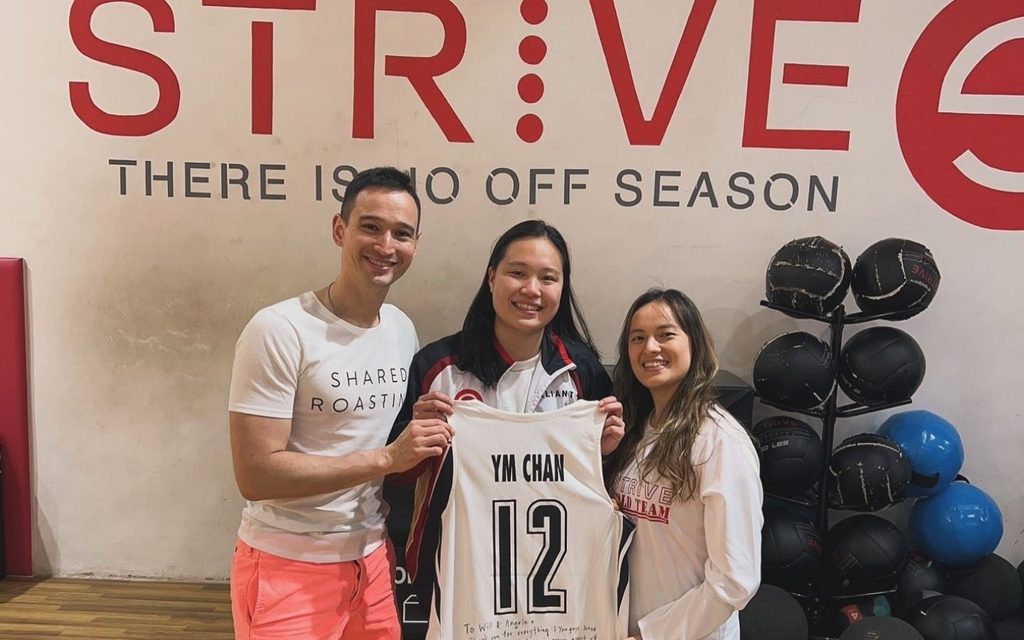
The division of labour between them is clear. On the court, Lo has to retrain girls raised on Hong Kong’s more traditional style of play into athletes suited to the international, American game. Off it, Wong oversees the grades, interview skills and media training that matter just as much to whether American colleges will look at them at all. The NCAA sets a hard floor on GPA: fall below it, and a team is not even permitted to let a player practise, so, for Wong and Lo, good grades were never just a slogan.
However, the two of them soon found there was far more to teach than skills and grades. Wong points out that Hong Kong girls are raised to be quiet, to be “good,” to make sure their marks never slip, to speak only once it’s their turn, and to treat failure as a kind of disaster. Raised this way, many girls arrive at Strive barely able to open their mouths. Basketball, though, depends on constant communication, and Lo works hard to get them shouting to one another on court.
“We teach them that on the court, it’s fine to be aggressive,” Wong tells The Bay. “Off the court, our culture isn’t loud, but on the court it’s a different story, and learning when it’s the right time to be loud is part of the lesson.”
The two of them also deliberately train the girls to be allowed to fail. “You will lose games, you will throw up an air ball,” Wong says. “The first time it happens, they look devastated, as if to say, I’ve failed. What we want to change is exactly that mindset: you’re supposed to try, fail a few times, and only then will you start winning. We give them the space to fail and feel safe doing it.”
That redefinition of failure mirrors Fella’s own reconciliation with her “big” body: moving the standard by which you judge yourself from an external, watched-and-judged perfectionism to an internal one you control yourself, one that allows for trial, error and growth.
These shifts also became tangible life paths. Wong and Lo’s very first student is now 24, back in Hong Kong with a 4.0 GPA from her MBA, interning in investor relations and AI-related work at a listed company, none of it basketball but all of it opened up by basketball. Each time the older girls leave for the US, the younger players left behind have no choice but to take up the captaincy: performance usually dips at first, because they are used to being directed, not to leading, before they grow into the role. Not every girl is a natural-born leader, but the cycle of being forced to step up means every player, at some point, ends up carrying that responsibility.
From Fella rewriting the femininity of “big” on the rugby pitch, to Wong and Lo teaching girls to express themselves with far more confidence, these stories share a single throughline: sport has given women a practice ground for believing they are entitled to take up more space, in body and in voice.
That confidence eventually spills beyond sport itself, into their working lives, their families, the generation after them. It is there in the word once treated as a flaw, “big,” now worn proudly as a kind of strength, and in the expression and leadership learnt on Strive’s court, which lets more girls widen what’s possible for their own lives.
The paths they have walked are visible proof to the next generation that these paths are possible – and open to them too. And that throughline will keep extending, to more names not yet told.