

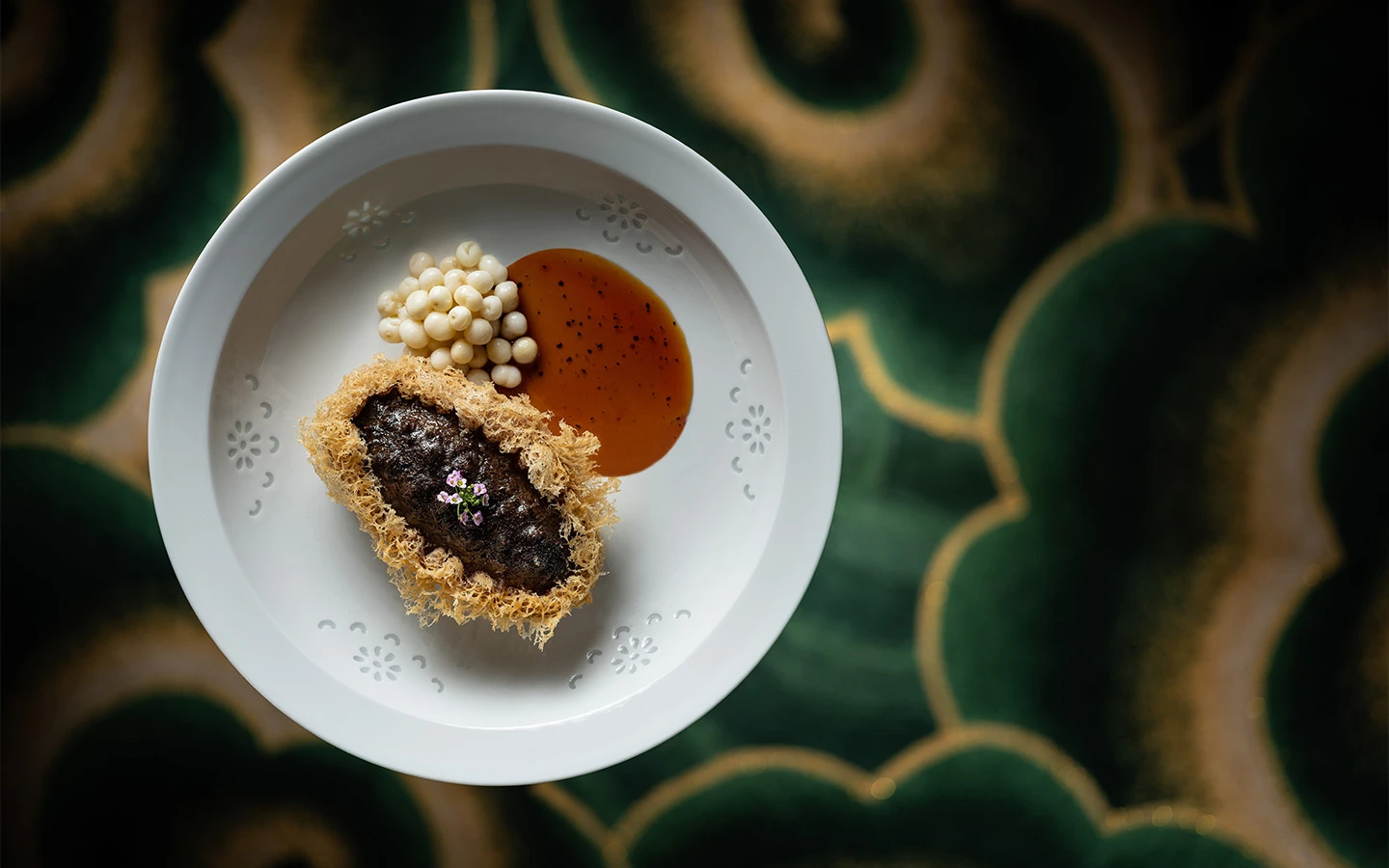
Kanto sea cucumber filled with goose and shrimp, wrapped with deep-fried taro purée, Zhu’s reworking of a classic Nanjing dish that he added in Cantonese element and spent more than half a year perfecting
Most chefs build a career inside one tradition. Kevin Zhu has spent his weaving two of them together.
This June, Lakeview Palace, the contemporary Jiangnan restaurant overlooking Performance Lake at Wynn Palace, introduces a new menu from Zhu, its executive chef. It runs from delicate lunchtimedim sum to a handful of show-stopping main courses, and every plate carries the idea Zhu has been refining for the better part of a decade: a philosophy he calls “Huaiyang–Cantonese Confluence.”
At 34, Zhu is young to be running a kitchen of this stature, yet he already has more than 16 years behind the wok. He came up through Cantonese kitchens in Guangdong before Jiangnan drew him north and today both traditions run through his cooking.
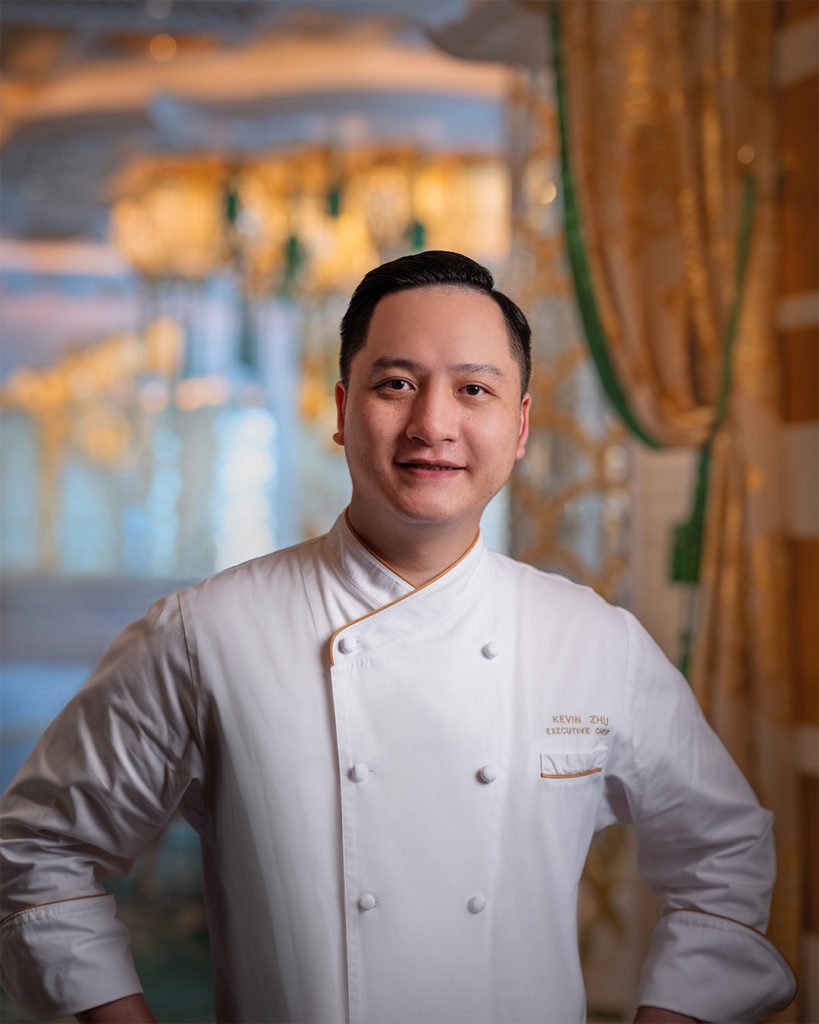
Zhu grew up in rural Qingyuan, Guangdong, in a family that loved to cook. His father, skilled in traditional Hakka dishes, would help cater village banquets, and it was he who enrolled his son in culinary school after junior high. “My grades were average,” Zhu says. “I started thinking about a more skill-based path.”
That path began in Cantonese kitchens, including Guangzhou’s Lei Garden, the legendary restaurant that has trained a generation of China’s top chefs. “What I really gained there wasn’t only technique,” he recalls. “It was the discipline – be a good person first, then do the job well.”
In 2017 he moved to Shanghai as head chef of Cantonese cuisine at the Michelin-starred Xin Rong Ji, his first deep study of Shanghainese and Taizhou cooking. A few years later he joined the pre-opening team at Shangri-La Qiantan, becoming the youngest Chinese executive chef in the hotel group’s history in China, and was taken on as a mentee by Huaiyang master Hou Xinqing. To trace the cuisine to its roots, he spent his time off travelling through Yangzhou, Huai’an, Nanjing and beyond, eating his way through century-old establishments. “I needed to go back to the source,” he says.
The phrase sounds grand, but Zhu is quick to say it isn’t about stacking two cuisines on one menu. He tried that early in his career, and diners didn’t bite – the food felt like two kitchens sharing a table rather than a single point of view.
“There has to be a source,” he says. “Every dish needs a narrative connection and a technical one, where the two cuisines reinforce each other.” His approach draws on three things from each tradition: the ingredients, the classic dishes, and the culture behind them. Born in Lingnan and trained in Cantonese cooking before rooting himself in Jiangnan, he is unusually well placed to find where the two meet – aiming, as he puts it, for a balance “where each is reflected in the other.”
A handful of dishes on the new menu show the idea best – and a few are worth planning a visit around.
The one Zhu laboured over longest is the braised Kanto sea cucumber stuffed with shrimp, goose and taro purée. It reimagines Wenwu duck, a Nanjing classic that pairs fresh and roasted duck, as Wenwu goose made with Magang goose, one of Guangdong’s four celebrated breeds. Zhu pounds the goose meat until springy – the same technique behind Huaiyang’s lion’s-head meatballs – folds in fresh bamboo shrimp, roasted goose and water chestnut, wraps the lot in velvety taro purée and fries it until golden, then finishes it with a house-made black pepper sauce. “It took more than half a year to get the balance right,” he says.
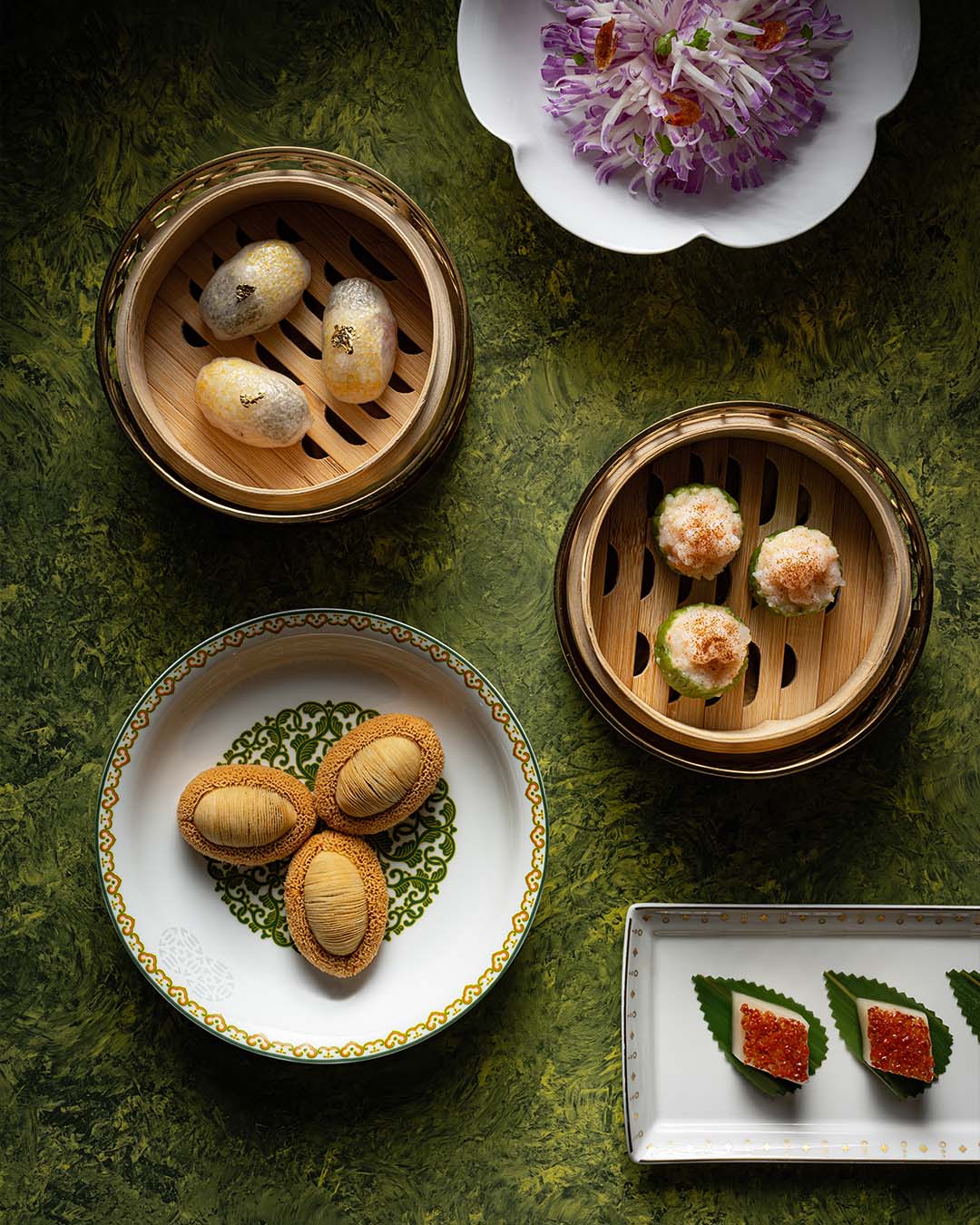
For dim sum, the river shrimp siu mai with lava egg yolk is a small feat of timing. The river shrimp are hand-peeled every morning and topped with shrimp roe; inside sits a quail egg cooked in two stages to reach a molten centre, the final steam timed to exactly four minutes and fifteen seconds.
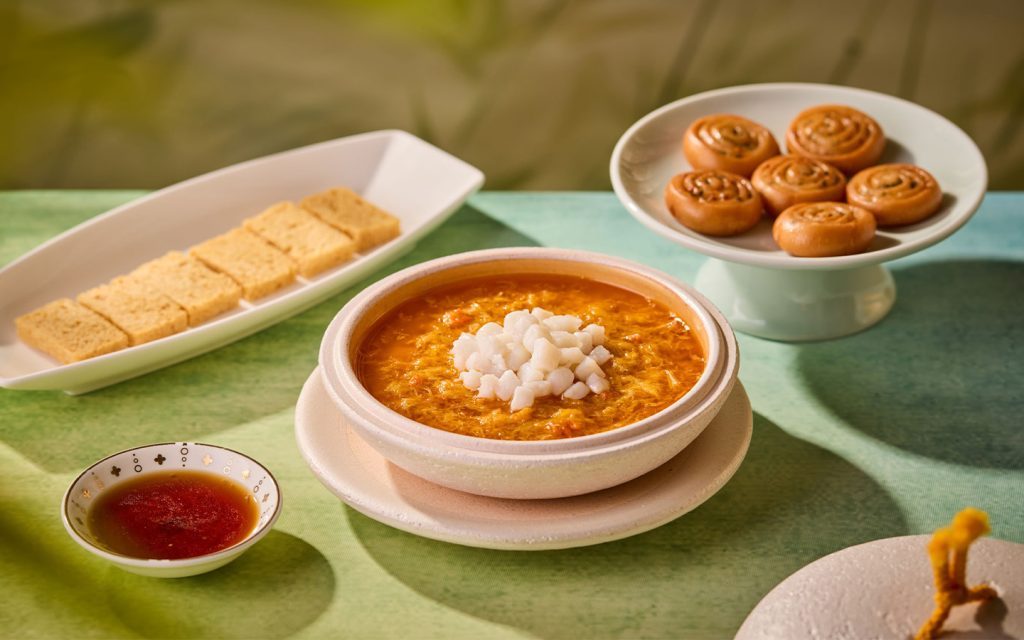
The Jiangnan style sautéed crab roe is the most traditional of the group, a homage to the region long known as the “land of fish and rice.” Rather than the usual hairy crab, Zhu uses fresh flower crab, hand-picking the roe and folding in diced marble goby cut into tiny “rice” grains, elevated with 20-year-old Huadiao wine. It arrives with toasted bread and sesame scallion pancakes for contrast.
Then there is the dish that best sums up his thinking, even though it predates this menu: the double-boiled triple-layer duck soup with Lingnan three treasures. A domestic duck is deboned and stuffed with a wild duck, which is stuffed in turn with a pigeon, then sealed and steamed for six hours with dried tangerine peel, olive and rice straw – the “Lingnan three treasures” of Cantonese soup-making. Drink the clear broth first, Zhu suggests, then cut into the layers to release the meat and taste it again, deeper the second time.
“A purely Huaiyang chef might master the duck but skip the Cantonese elements,” he says. “A Cantonese chef would never think to combine them. That cross-understanding is the whole point.”
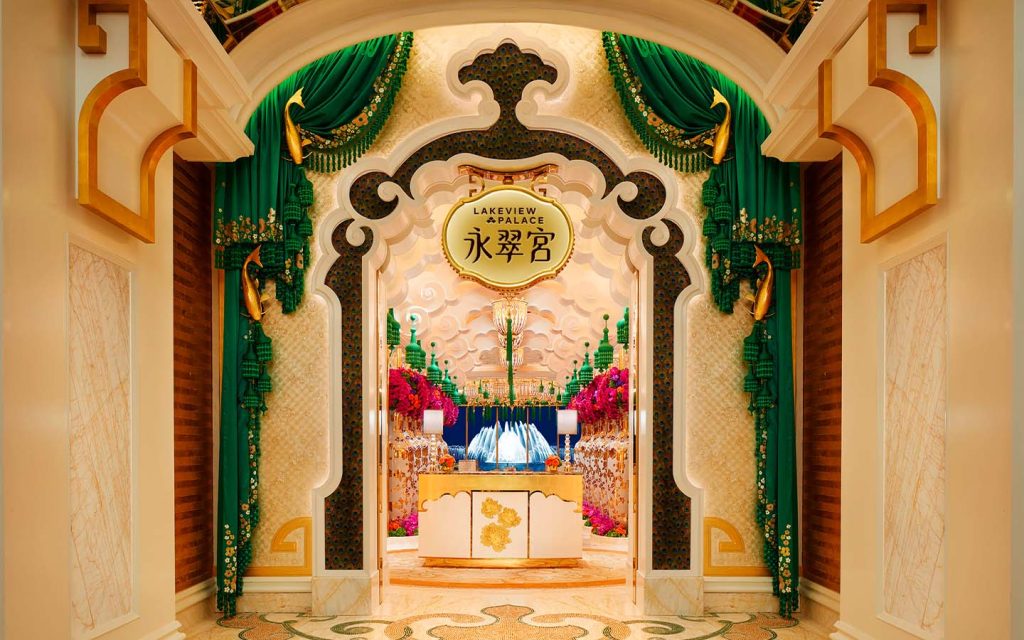
The setting matches the cooking. Finished in gold and jade-green and set over three levels, Lakeview Palace looks out through floor-to-ceiling windows onto the Performance Lake’s nightly water-and-light show, and four of its eight private rooms open onto lakeside terraces. The wine list runs to more than 100 award-winning labels from the Wynn Signature Chinese Wine Awards.
What does Zhu hope you take away? Something familiar and unfamiliar at once. “Within each dish you might find a flavour you recognise,” he says, “and something you’ve never tasted before.”
Where: Lakeview Palace, West Esplanade, G/F, Wynn Palace, Avenida da Nave Desportiva, Cotai, Macao
Hours: Lunch 12 – 3 pm daily; Dinner 5:30 – 11 pm daily
Reservations: (853) 8889 3663
Website: wynnresortsmacau.com