We compare all seven Hong Kong to Shenzhen crossings, including their hours, buses, metro links and which one to use
Hong Kong to Shenzhen: every border crossing compared, including the new Huanggang Port
Article by:
PUBLISHED:
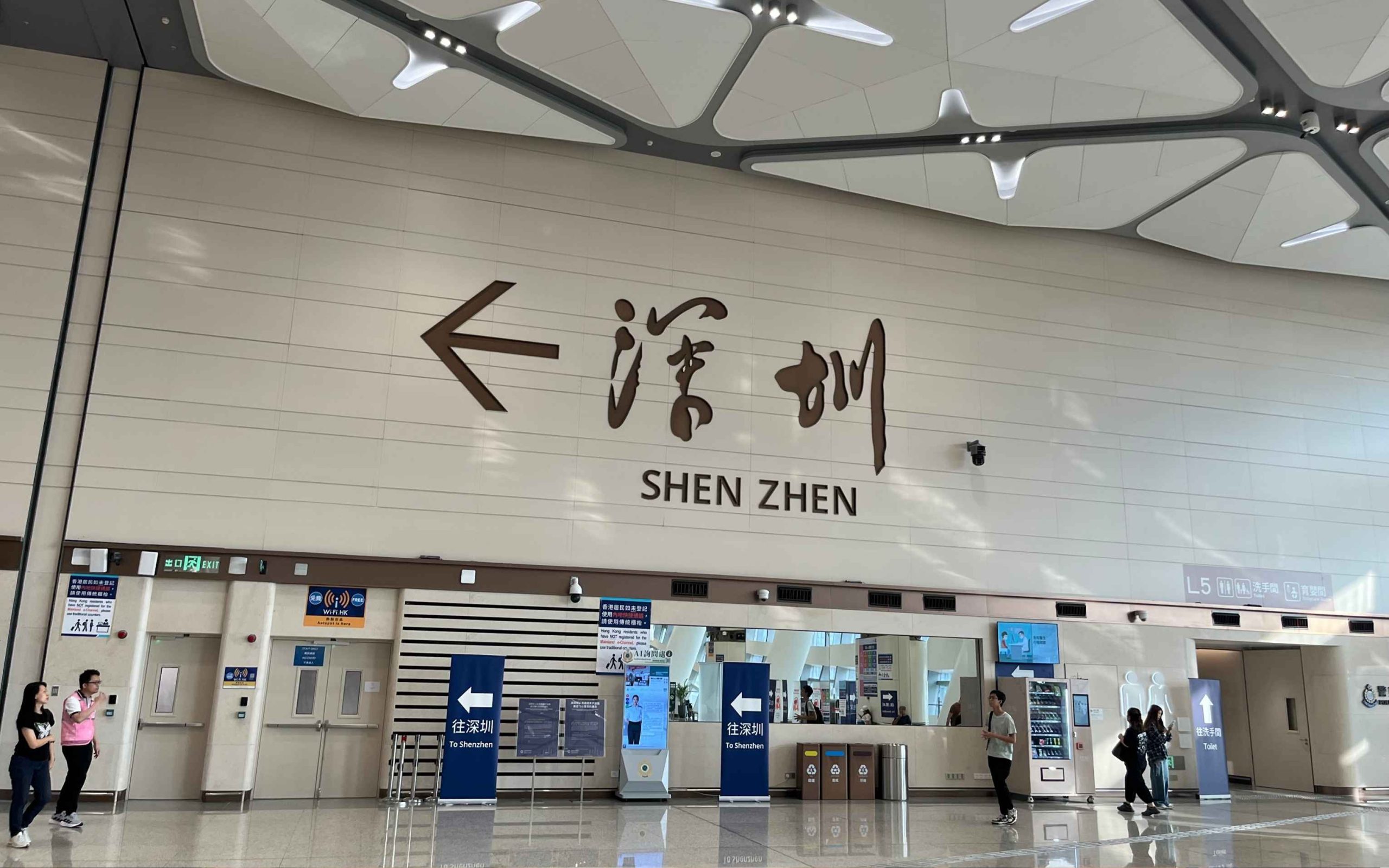
Crossborder travel from Hong Kong to Shenzhen has been growing rapidly in recent years, thanks to deepening integration within the Greater Bay Area (GBA) and the increasing number of Hong Kong residents choosing mainland China for tourism, shopping, study, dining and business.
Facilitating these trips are seven major land and rail checkpoints, as well as a variety of transport options. The latest border crossing to connect Hong Kong and Shenzhen is the redeveloped Huanggang Port, which opened on 12 October 2026.
As the only 24-hour passenger land crossing between the two GBA cities, the Huanggang Port is positioned to further streamline crossborder travel through its capacity to handle up to 200,000 passenger trips per day and implementation of a joint clearance system, which only requires eligible travellers to line up once for document inspection.
While the Huanggang Port greatly enhances the clearance experience, the other Hong Kong-Shenzhen checkpoints are also good options for border crossing depending on your travel needs and destination. To help you decide which checkpoint is best for your next Hong Kong to Shenzhen trip, The Bay has provided a table summarising the seven major ports, followed by a detailed description of each one.
Note that Sha Tau Kok Control Point linking Hong Kong’s North District to Shenzhen’s Yantian District has been excluded from the list, as the authorities have suspended passenger and cargo clearance in the facility in order to redevelop it into a passenger-only port. Read on to find out more about the other seven checkpoints.
Quick breakdown of Hong Kong-Shenzhen border crossings
| Port | Best for | Opening hours | How to get there directly from Hong Kong | Which Shenzhen Metro line to catch |
| Huanggang Port | *Early morning or late night passage *Entry to Shenzhen’s CBD – Futian District | 24 hours | No MTR connection, road transport only Direct buses: *From Kwai Tsui Estate Public Transport Interchange (B10) *From Tin Fu Bus Terminus (B11) *From Siu Sai Wan (Island Resort) (B13 bus) *From Kai Tak (Olympic Avenue) (B14 bus – rush hour only) *Crossborder bus from Hong Kong Island, Lantau, Kowloon and New Territories | Metro Line 7 (Huanggang Checkpoint Station) |
| Shenzhen Bay Port | *Entry to Shenzhen’s tech and innovation hub – Nanshan District *Entry to Shenzhen’s industrial centre and airport hub – Bao’an District | 6:30 am to midnight | No MTR connection, road transport only Direct buses: *From New Territories via Tuen Mun Town Centre (B3X) *From New Territories via Tuen Mun San Hui (B3) *Crossborder bus from Hong Kong Island, Kowloon, Lantau and New Territories | Metro Line 13 (Shenzhen Bay Checkpoint Station) |
| Lo Wu Control Point (HK) Luohu Port (SZ) | *Entry to the central part of Shenzhen’s historic city centre – Luohu District *Direct access to Hong Kong MTR East Rail Line *One of Hong Kong’s busiest ports | 6:30 am to midnight | *Connected to Hong Kong MTR East Rail Line via Lo Wu station *No direct public or crossborder buses *No taxis or private vehicles allowed | Metro Line 1 (Luohu Station) |
| Lok Ma Chau Spur Line Control Point (HK) Futian Port (SZ) | *Entry to Shenzhen’s CBD – Futian District *Direct access to Hong Kong MTR East Rail Line *One of Hong Kong’s busiest ports | 6:30 am to 10:30 pm | *Connected to Hong Kong MTR East Rail Line via Lok Ma Chau Station *Direct buses: From New Territories (B1 and green minibus no. 75) | Metro lines 4 and 10 (Futian Checkpoint Station) |
| West Kowloon | *Quick and seamless railway journey from downtown Hong Kong to Shenzhen *Entry to Shenzhen’s Futian, Longhua and Guangming districts *Direct access to select GBA cities such as Dongguan, Huizhou, Guangzhou, Foshan and Jiangmen *Indirect access to other GBA cities such as Zhuhai and Zhongshan *Direct access to over 100 destinations across mainland China, including Beijing, Shanghai, Hangzhou and Xiamen | 6:30 am to 11:30 pm (Immigration clearance hours) 6 am to midnight (station operating hours) | *Connected to Hong Kong MTR via Austin Station (Tuen Ma Line) and Kowloon Station (Tung Chung Line and Airport Express) Direct buses: *W2 (Kowloon East) *W3 (New Territories East) | From Futian Station (Metro lines 2, 3 and 11) From Shenzhen North Railway (Lines 4, 5 and 6) From Guangmingcheng Railway (Metro lines 6 and 13) |
| Heung Yuen Wai Control Point (HK) Liantang Port (SZ) | *Entry to Liantang Subdistrict on the eastern edge of Shenzhen’s original city centre – Luohu District | 7 am to 10 pm | *No MTR connections, road transport only Direct buses: *From Sheung Shui (Po Wan Road) (B7), *From Tai Wai Public Transport Interchange (B8) *From Tuen Mun Station (B9) *From Yuen Long (West) (B9A – weekends and public holidays only) Crossborder buses from designated pick-up stops in Hong Kong | Metro Line 2 and 8 (Liantang Checkpoint Station) |
| Man Kam To Control Point (HK) Wenjindu Port (SZ) | *Entry to Huangbei Subdistrict in Luohu District – Shenzhen’s original city centre *Avoiding crowds | 7 am to 10 pm | *No MTR connection or public bus connections *Crossborder buses from designated pick-up stops in Hong Kong | Metro Line 9 (Wenjin Station) |
Road crossings
Huanggang Port
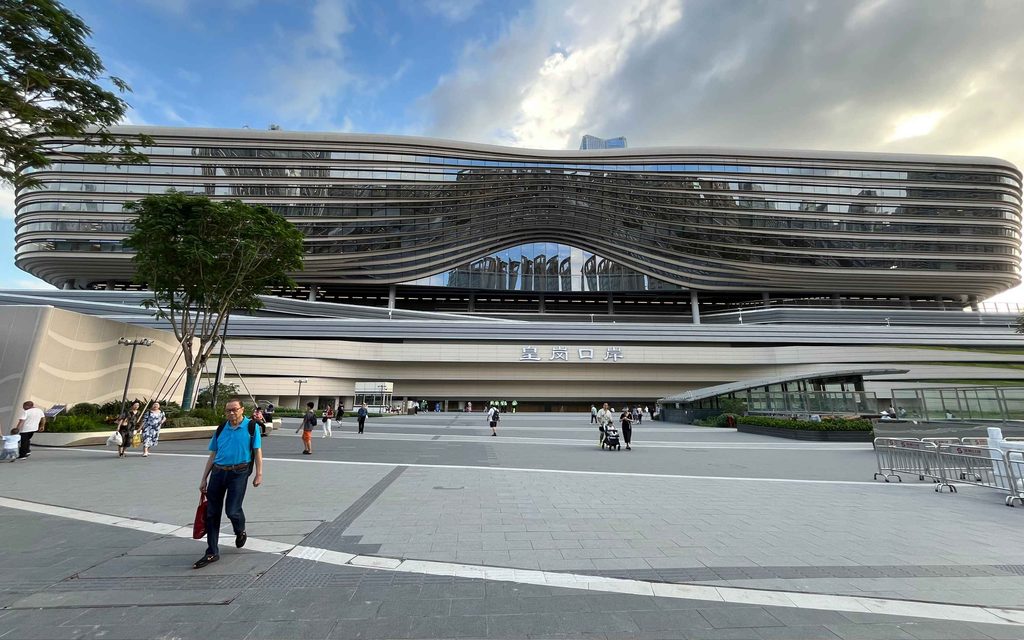
The newly redeveloped Huanggang Port is currently the largest single-building land port between Hong Kong and Shenzhen, with clearance time taking only 5 or so minutes, according to government reports. The port is also the only one to handle passenger land crossings 24/7, making it the ideal choice for people who need to cross the border early in the morning or late at night, as the other ports close between 10 pm and midnight.
The Huanggang Port is suitable for visitors requiring direct passage to Shenzhen’s central business district of Futian. Access to Futian is possible via the nearby Futian Port, although that crossing is linked to Shenzhen Metro Lines 4 and 10, unlike Huanggang, which is integrated with Shenzhen Metro Line 7.
In contrast to Futian Port, Huanggang is not directly connected to Hong Kong’s MTR East Rail Line. As a result, passengers requiring direct access to Huanggang will need to take a public bus, taxi or other road-based transport services.
Major public buses that run between Hong Kong’s key districts and the port include the B-series of buses that pass through the San Tin Public Transport Interchange. A full list of the transport options available can be found on the Transport Department’s Huanggang access page.
Those riding a public bus or taxi will be taken to the Hong Kong public transport interchange on the second floor of the Huanggang Port building. To depart from Hong Kong to Shenzhen on foot, make your way up to the fifth level. Vehicles can cross the border from the first floor. Note that there is no public car park available, meaning it is not possible to park your vehicle and cross the border.
For more information about the Huanggang Port, visit the Security Bureau’s website.
Address: Huanggang Control Point, Huanggang Port Hong Kong Port Area, New Territories, Hong Kong
Opening hours: 24 hours
Telephone: 3865 6561
Shenzhen Metro connection: Metro Line 7 (Huanggang Checkpoint Station)
Shenzhen Bay Port
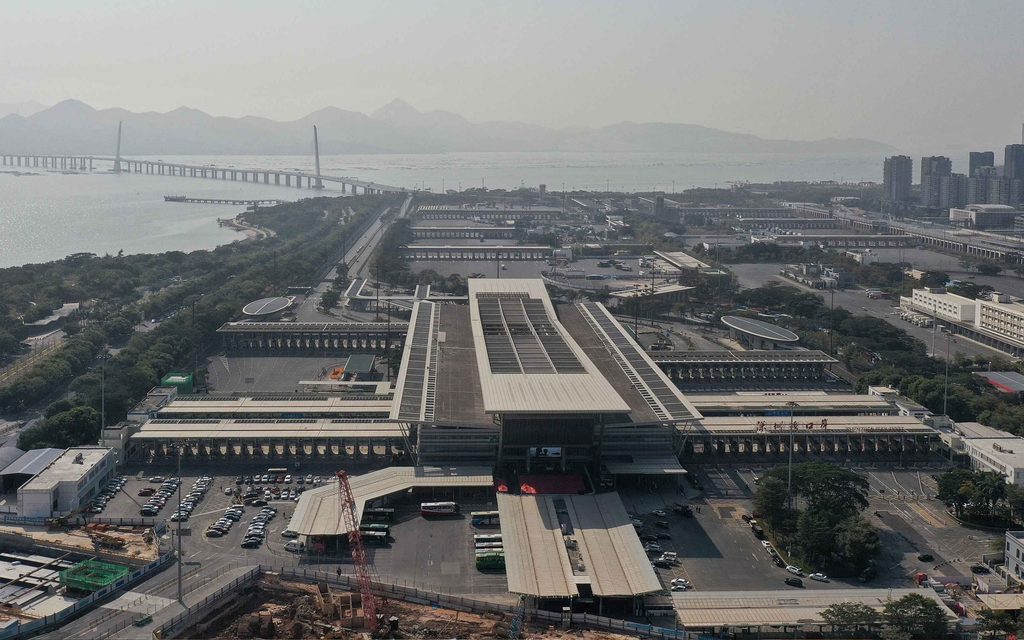
Shenzhen Bay Port is situated in Shenzhen’s Nanshan District, making it the checkpoint of choice for travellers who need direct access to the area or adjacent districts such as Bao’an, which houses Shenzhen Bao’an International Airport.
Keep in mind there are no train connections on the Hong Kong side of the Shenzhen Bay Port. Consequently, the only way to the port is through road transport such as public or crossborder buses, as well as private vehicles and taxis.
Public buses that will directly ferry you to the Shenzhen Bay Port include the B3, B3X, and B3A, which run from Tuen Mun in the New Territories. Visit the Transport Department’s webpage for a full list of the public buses to the port.
Alternatively, you can head to the Hong Kong side of the Shenzhen Bay Port by boarding a crossborder bus from a variety of pick-up locations in Hong Kong. Crossborder bus providers offering this service include GoByBus, TIL ChinaLink and China Travel Bus (CTG).
Upon arrival, depart for Shenzhen via the ground floor. The clearance process is efficient for eligible residents, as a co-location arrangement similar to West Kowloon is implemented, allowing document inspection to take place in the same building. Take note that the Shenzhen Bay Port only allows for passenger clearance between 6:30 am and midnight.
Despite this, the port remains popular among Hong Kong crossboundary private vehicles entering Shenzhen under the Shenzhen Bay Ad Hoc Quotas scheme.
For more information about the Shenzhen Bay Port, visit the Hong Kong Tourism Board website.
Address: Shenzhen Bay Control Point, Shenzhen Bay Port Hong Kong Port Area
Opening hours: 6:30 am to midnight
Telephone: 3154 6551 or 3154 6567
Shenzhen Metro connection: Metro Line 13 (Shenzhen Bay Checkpoint Station)
Man Kam To Control Point (HK)/Wenjindu Port (SZ)
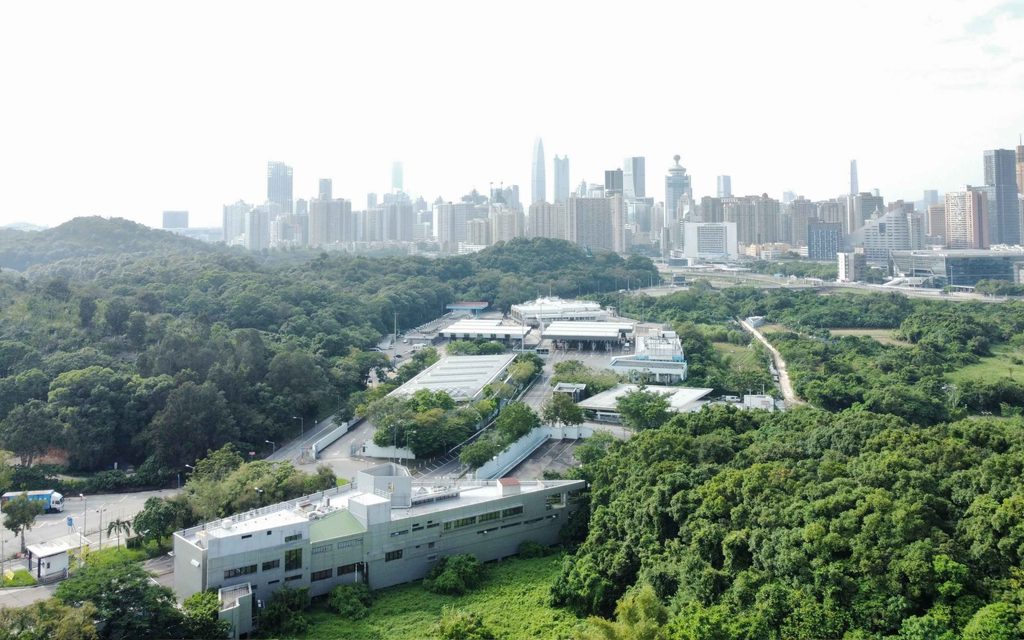
Connected to Huangbei Subdistrict in Shenzhen’s Luohu District, Man Kam To Control Point is sometimes referred to as Hong Kong’s “green lifeline.” It’s easy to see why – the port is one of the main arteries through which mainland fresh food products enter Hong Kong, with Shenzhen Customs reporting in September 2025 that over 80 percent of fresh vegetables in the SAR passed through the checkpoint.
Although Man Kam To is primarily used for fresh produce transportation, it is open to foot traffic travelling via crossborder buses and hire car services. However, the presence of larger and better connected ports nearby such as Lo Wu Control Point for central Luohu District and Heung Yuen Wai Control Point for the eastern side of Luohu District means Man Kam To is not typically the checkpoint of choice for ordinary travellers.
The main way to access Man Kam To is to take a crossborder bus from a designated location in Hong Kong. Operators such as GDHK (粤港直通巴) and ZGHT (华通巴士) have departure points around Hong Kong. For instance, GDHK offers a bus that departs from Sheung Shui’s Landmark North, while ZGHT has services operating from Sheung Shui’s Landmark North, as well as Tsuen Wan’s Luk Yeung Galleria and Tak Wah. For more information, refer to the service provider’s booking platform on WeChat.
Be mindful that there are no public buses in Hong Kong that will directly transport you to Man Kam To. Public buses such as 73K, 59K or 59S stop around the district, but there are no pedestrian walkways for you to access the port on foot.
For more information about the cross-boundary coaches and hire car services available for the Man Kam To Control Point, visit the Hong Kong Transport Department’s webpage.
Address: Man Kam To Terminal, New Territories, Hong Kong
Opening hours: 7 am to 10 pm
Telephone: 2670 4497
Shenzhen Metro connection: Metro Line 9 (Wenjin Station)
Heung Yuen Wai Control Point (HK)/Liantang Port (SZ)
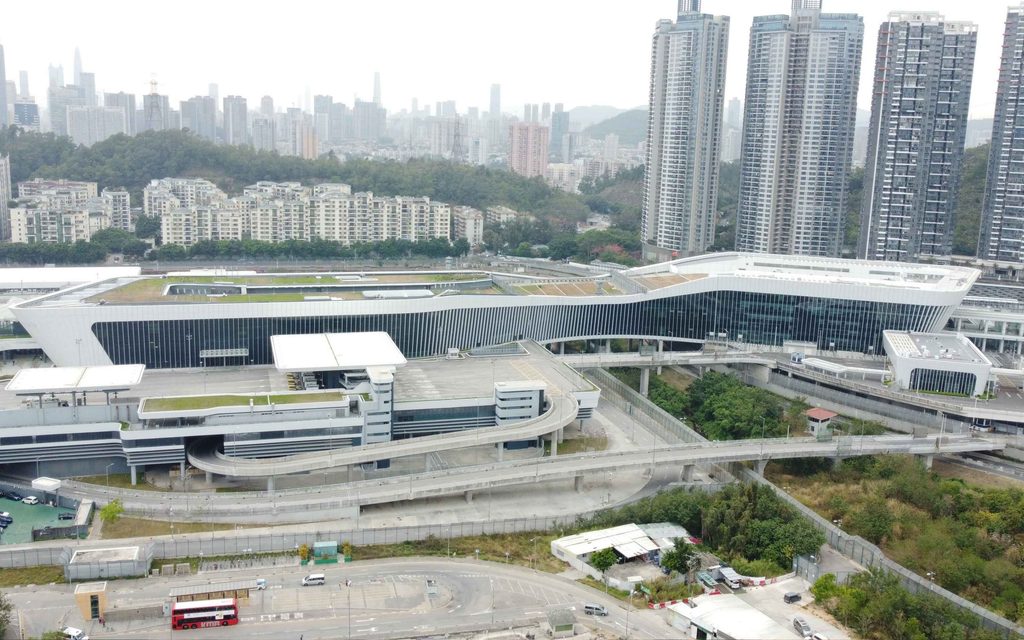
The Heung Yuen Wai Control Point is an important crossing for passengers and vehicles travelling between Hong Kong and Liantang Subdistrict on the eastern side of Shenzhen’s Luohu District.
A range of public transport options are available for the Heung Yuen Wai Control Point. Direct public buses to the border crossing include B7 from Sheung Shui (Po Wan Road), B8 from Tai Wai Public Transport Interchange, B9 from Tuen Mun Station and B9A from Yuen Long (West), which is only available on the weekends and public holidays.
[See more: A 24-hour travel guide to Shenzhen, the Greater Bay Area’s design city]
It is also possible to head over to the port via a crossborder bus. Eternal East (永東直通巴士) runs buses from a range of locations in Hong Kong including Mong Kok/Yau Ma Tei, Tsim Sha Tsui (China Hong Kong City) and Kwai Fong Metroplaza. Similarly, Trans-Island Chinalink (環島中港通) offers services from a variety of pickup points in Kowloon, the New Territories, the Hong Kong International Airport and Lantau Island.
For more information on transport servicing the Heung Yuen Wai Control Point, visit the Hong Kong Transport Department’s website.
Address: Heung Yuen Wai Control Point, New Territories, Hong Kong
Opening hours: 7 am to 10 pm
Telephone: 3552 0632
Shenzhen Metro connection: Metro Line 2 and 8 (Liantang Checkpoint Station)
Rail crossings
Hong Kong West Kowloon Station
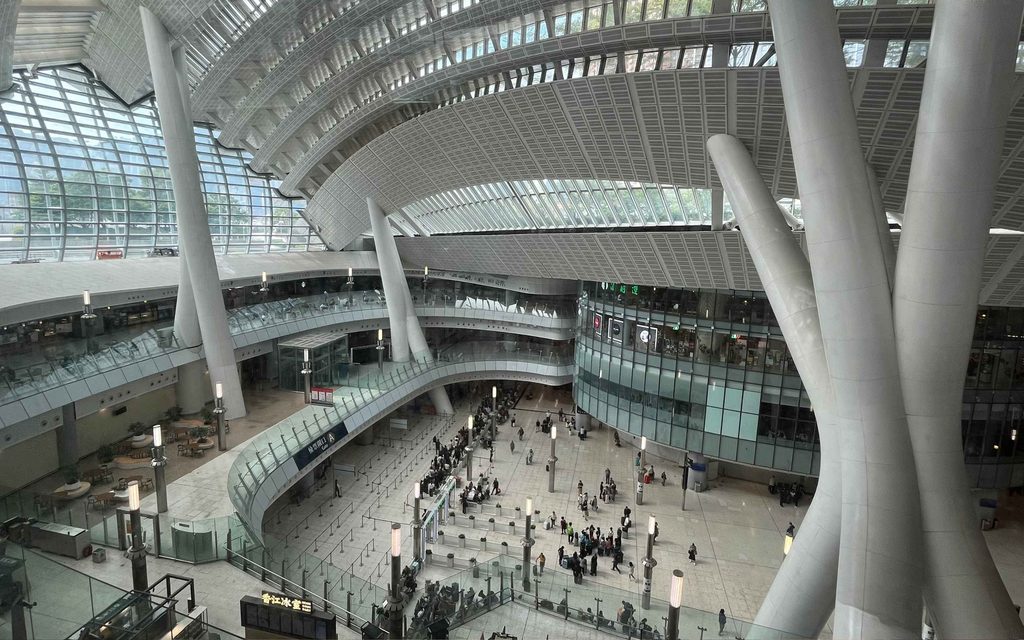
Located in Yau Tsim Mong district in Kowloon, West Kowloon Station is currently Hong Kong’s only high-speed rail station, transporting passengers from downtown Hong Kong to Shenzhen and the rest of mainland China.
A direct rail trip to Futian Railway Station in Shenzhen’s CBD takes only 14 minutes or so. Unlike Futian Port, West Kowloon Station allows passengers to complete both their Hong Kong and mainland clearance at the station via the co-location arrangement. In other words, passengers do not need to go through mainland immigration again once their train reaches the mainland border.
Other Shenzhen destinations along the express rail link include Shenzhen North Railway Station in Longhua District (from about 18 minutes) and Guangmingcheng Railway Station in Guangming District (from about 34 minutes).
Apart from Shenzhen, the Guangzhou-Shenzhen-Hong Kong Express Rail Link from West Kowloon Station also serves other major short-haul GBA destinations such as Guangzhou South Railway Station, which takes about an hour to arrive at, with some trains stopping at Humen in Dongguan along the way.
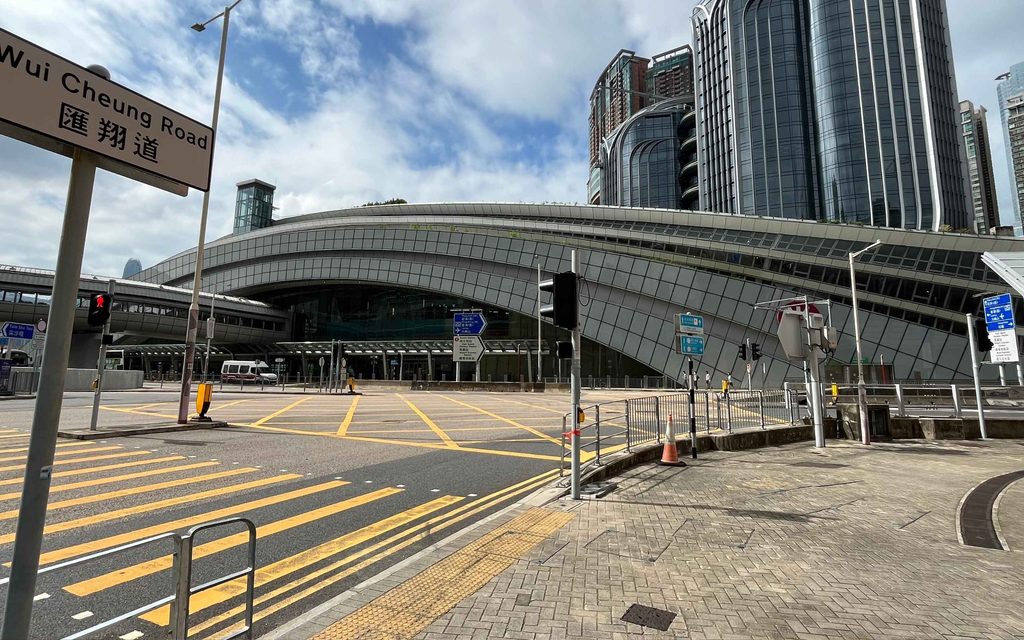
Direct long-haul trips to over 100 destinations in mainland China are also possible via the network’s connections with other railways. Some of these destinations include Beijing, Shanghai, Hangzhou and Xiamen. For more information about the West Kowloon Station’s fares and schedules, visit the MTR website.
Getting to West Kowloon Station is a relatively simple process, as the railway hub is well connected to Hong Kong’s MTR network via the Tuen Ma Line’s Austin Station, as well as the Tung Chung Line and Airport Express’s Kowloon Station, which are within walking distance from West Kowloon.
Another option is to take the public buses. The W2, which serves Kowloon East, and the W3, which operates around New Territories East, will directly take you to West Kowloon Station.
For more information on how to travel to the high-speed rail hub, visit the Hong Kong Transport Department’s dedicated webpage.
Address: 3 Austin Road West, Tsim Sha Tsui, Kowloon, Hong Kong
Opening hours: 6:30 am to 11:30 pm (Immigration clearance hours), 6 am to midnight (station operating hours)
Telephone: 3894 7122 or 3894 7132
Shenzhen Metro connection: Futian Station (Metro lines 2, 3 and 11), Shenzhen North Railway (Lines 4, 5 and 6), Guangmingcheng Railway (Metro lines 6 and 13)
Lo Wu Control Point (HK)/Luohu Port (SZ)
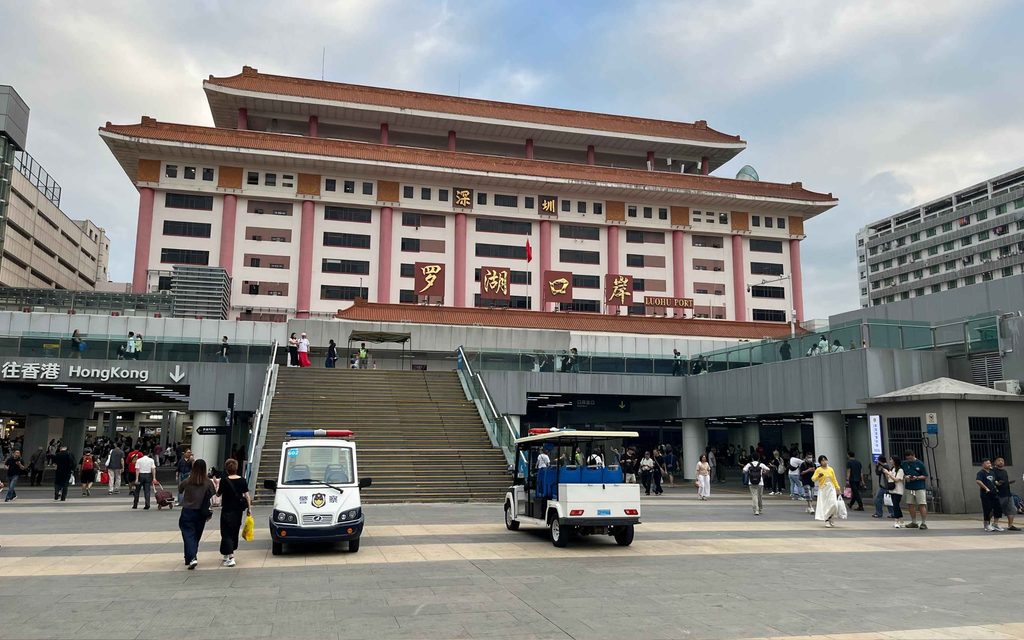
Lo Wu Control Point is Hong Kong’s busiest border checkpoint, with the Luohu government reporting in May 2026 that the port had handled over 70 million passenger trips in 2025. The facility’s enduring popularity is not without reason, as it links the SAR to Shenzhen’s traditional commercial centre – Luohu District. There are plenty of places of interest across the border, including Dongmen Pedestrian Street and shopping malls such as Luohu Commercial City, Kingglory Plaza and Shenzhen MixC.
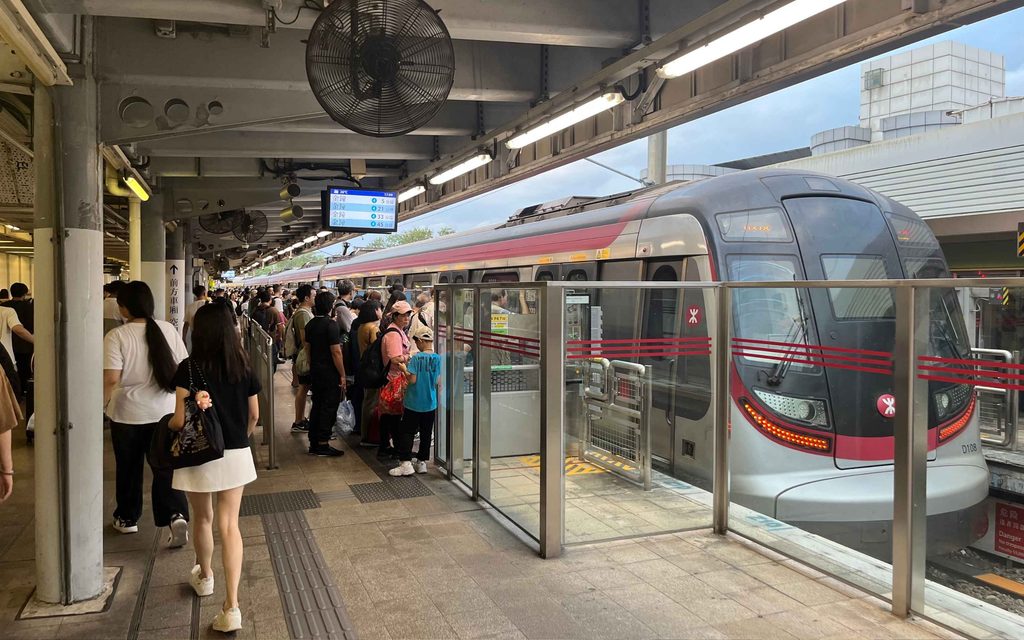
Unlike other nearby ports such as Heung Yuen Wai and Man Kam To, Lo Wu is purpose-built to handle a large volume of foot traffic, which is supplied via the port’s only public transport connection – the Hong Kong MTR’s East Rail Line. All in all, it takes around 45 minutes to travel from Admiralty Station on the East Rail Line to Lo Wu Station.
Due to Lo Wu’s popularity, it is not unusual to have to wait in line to cross, particularly on weekends, public holidays and travel rush periods. Keep in mind that the checkpoint does not adopt the co-location arrangement for clearance, meaning you will have to clear mainland and Hong Kong immigration in separate buildings.
Find out more about access to Lo Wu Control Point via the Hong Kong Transport Department website.
Address: Lo Wu Terminal, New Territories, Hong Kong
Opening hours: 6:30 am to midnight
Telephone: 2679 1105 or 2679 1128
Shenzhen Metro connection: Metro Line 1 (Luohu Station)
Lok Ma Chau Spur Line Control Point (HK)/Futian Port (SZ)
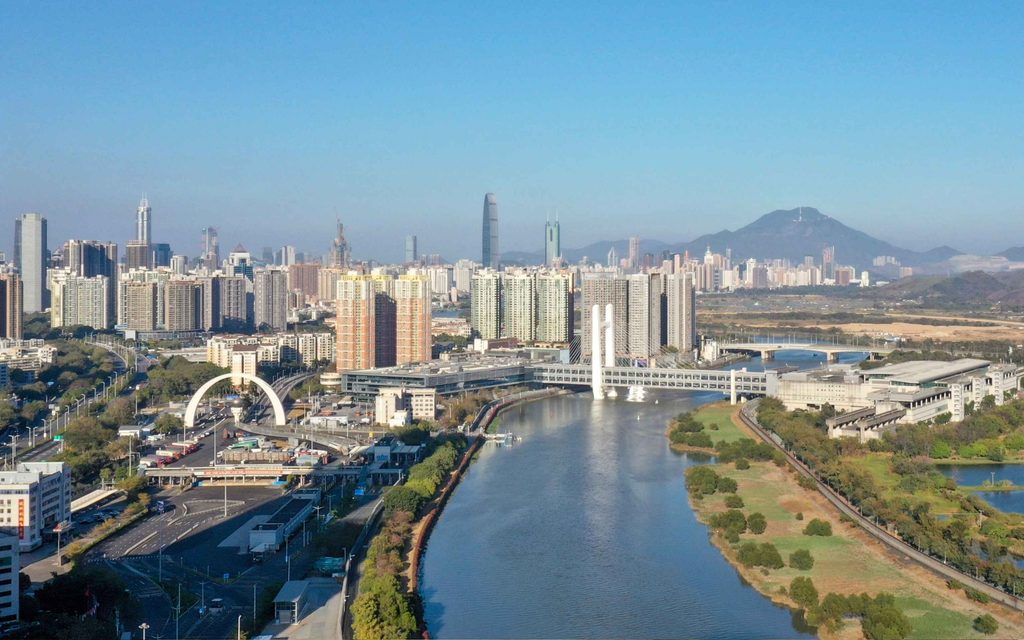
Lok Ma Chau Spur Line Control Point is the only other Hong Kong-Shenzhen border crossing aside from Lo Wu Control Point to be directly integrated with the Hong Kong MTR’s East Rail Line. Unlike Lo Wu, which is connected to Luohu District, Lok Ma Chau serves as a gateway into Shenzhen’s Futian CBD via the MTR’s Lok Ma Chau Station.
Given Lok Ma Chau’s convenient railway link and positioning in Futian District, it is hardly surprising the port has become one of the most popular border crossings in Hong Kong. According to Hong Kong Customs, the Spur Line handled around 59.03 million passenger trips in 2025, second only to Lo Wu Control Point.
Access to Futian’s various offerings such as shopping malls, parks and pedestrian streets is relatively easy after crossing over to the Shenzhen side of the port, as the facility is connected to the city’s sprawling metro system through Line 4 and Line 10 of Futian Checkpoint Station.
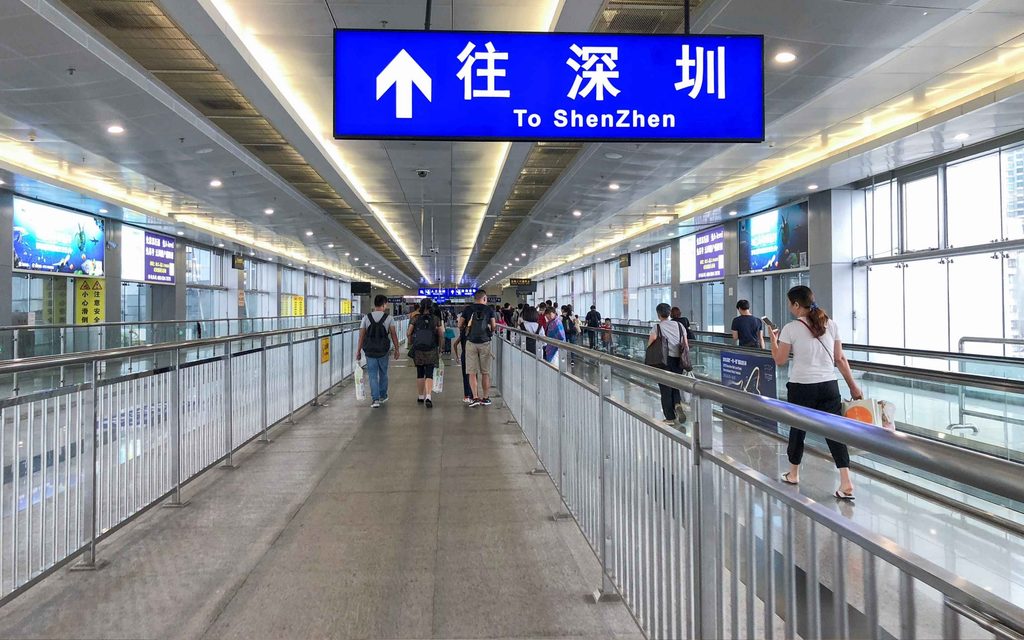
Entry into Futian District is also possible via the nearby Huanggang Port, although that checkpoint is connected to Shenzhen Metro’s Line 7 via the Huanggang Checkpoint Station.
While the MTR East Rail Line is the preferred method for accessing Lok Ma Chau, it is also possible to take a direct bus to the crossing. Services include the B1 and No. 75 green minibus, which both operate out of the New Territories’ Yuen Long District.
More information about the Lok Ma Chau Spur Line Control Point and its transport access can be found through the Hong Kong Transport Department webpage.
Address: MTR Lok Ma Chau Station, New Territories, Hong Kong
Opening hours: 6:30 am to 10:30 pm
Telephone: 2486 0301 or 2486 0313
Shenzhen Metro connection: Metro lines 4 and 10 (Futian Checkpoint Station)
Before you go: documents, payments and peak hours
Documents:
Before heading off to any of the Hong Kong-Shenzhen border ports, make sure you are carrying the correct travel documents or else you will be denied passage.
Chinese residents of Hong Kong and Macao will need to have a valid Macao or Hong Kong resident ID card, as well as a valid Mainland Travel Permit for Hong Kong and Macao Residents (colloquially known as the Home Return Permit). Although some of the major ports have implemented biometric cardless clearance channels, SAR travellers are still required by law to be in possession of the relevant documents for inspection purposes.
Non-Chinese Hong Kong and Macao residents can also access the ports using the Mainland Travel Permit for Hong Kong and Macao Residents (Non-Chinese Citizens) and their resident ID card.
[See more: How do I get home from Shenzhen to Macao after midnight?]
A different set of document requirements exist for mainland Chinese travellers. They will need their mainland Chinese resident ID card, along with a valid Exit-Entry Permit for Travelling to and from Hong Kong and Macao that has a valid endorsement. For more information on the different types of endorsements for the Exit-Entry Permits, click here.
The documents required for foreign visitors wishing to enter Shenzhen via Hong Kong will vary depending on the visa rules the Chinese government has set for their nationality. In some cases, a visa will be required. In other instances, passport holders from certain countries are eligible for visa-free access or 240-hour visa-free transit. For more information, visit the Chinese Visa Application Service Centre webpage.
Payments:
The Octopus Card is one of the most convenient ways to pay for the Hong Kong public buses and MTR trains that will take you to the main border ports. You can also make fare payments through eligible e-wallet apps, credit cards and cash.
Crossborder bus booking and payments are generally carried out via WeChat or Alipay.
[See more: A guide to Futian, Shenzhen’s district of grand designs]
For the West Kowloon high-speed rail, tickets can be purchased via the China Railway 12306 online ticketing platform, the corresponding mobile app and designated ticket agent. Otherwise, use the ticket machines or counters at West Kowloon and the high-speed rail stations in China.
When visiting Shenzhen, e-payment apps such as WeChat Pay and Alipay are the preferred mode of payment across all areas, including the subway, public buses, shops and restaurants. It is advisable to have some cash handy in case your mobile data fails or you have difficulty accessing the relevant e-payment apps.
Peak hours:
Expect the border ports, especially major ones such as Lo Wu and Lok Ma Chau, to be especially busy during weekday mornings and evenings, as people commute between Hong Kong and Shenzhen for work and school.
Ports can also become congested on Friday nights, weekends, public holidays and travel rush periods during Chinese New Year, Labour Day and National Day.
The Hong Kong Security Bureau has a useful page that gives users an estimate of the average waiting time across seven border ports connecting Shenzhen and Hong Kong.