Southern China’s largest natural history museum opens to the public on 28 July in Pingshan, with eight halls tracing 4.6 billion years from the cosmos to Shenzhen's own mountains and seas
Article by:
PUBLISHED:
The Shenzhen Natural History Museum is scheduled to start trial operations on 30 June, followed by an official public launch on 28 July.
Set in Pingshan District with a gross floor area of around 105,300 square metres, it will be the largest natural history museum in southern China – billed as the Greater Bay Area’s first large-scale comprehensive facility of its kind. Its eight themed halls trace 4.6 billion years across the cosmos, Earth, evolution, dinosaurs, humanity, biology, ecology and “homeland”, the last returning visitors to Shenzhen’s own subtropical wildlife.
Exhibits include dinosaur fossils and taxidermy of rare species such as African elephants and polar bears – part of a collection of more than 200 specimens donated since 2009 by the late US philanthropist Kenneth E. Behring, previously displayed at the Shenzhen Museum in Futian.
[See more: FIFA Museum opens in Hong Kong just in time for the World Cup]
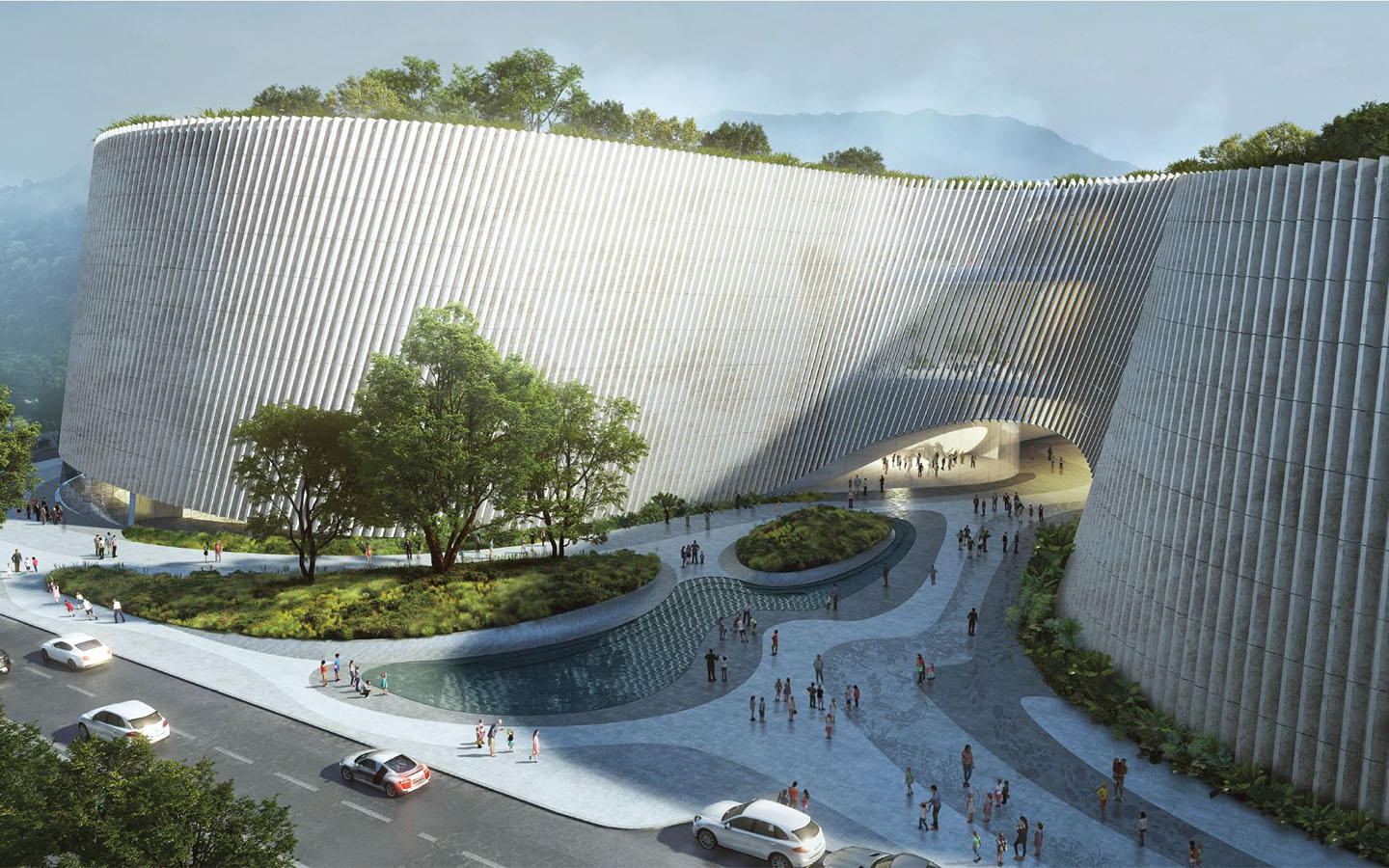
Beyond this, the facility has a unique exterior design that pays homage to the water flow of the Pingshan River.
According to B+H, one of the architectural firms behind the museum’s design, the facility’s design scheme “captures the distinct atmosphere of a riverfront site and highlights the timeless property of water as a concept.” A botanical rooftop park, formed “around a sinuous green spine”, doubles as a walkway.
Visitors can reach the museum via the Shenzhen Metro’s Line 16 to Shabo Station, or the Shenzhen SkyShuttle (Line 1) to Natural History Museum West Station.
The museum is one of 10 major cultural facilities being developed across Shenzhen, alongside the Shenzhen Opera House, the Reform and Opening-up Exhibition Hall, the Shenzhen Bay Cultural Park and the Shenzhen Science and Technology Museum.
UPDATED: 23 Jun 2026, 5:43 pm