The mutual yacht recognition between the SARs and nine mainland cities of the Greater Bay Area coincides as Hong Kong looks to prioritise niche, high-value industries and services
GBA maiden voyages disembark with SAR yachts anchoring at mainland ports
Article by:
PUBLISHED:
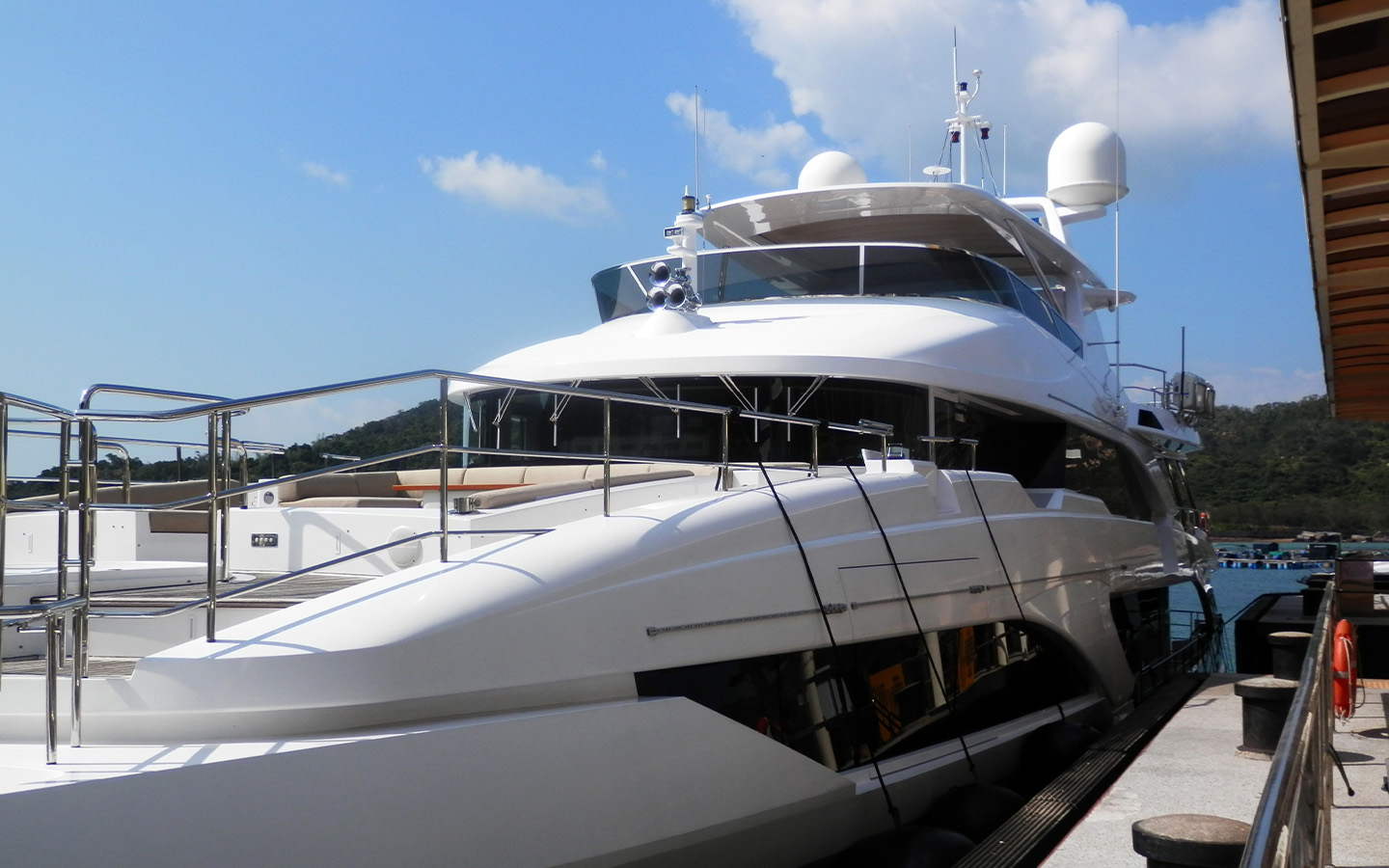
The first cohort of almost two dozen SAR-registered yachts have successfully docked at the GBA ports of Guangzhou, Shenzhen, Zhuhai, and Zhongshan after clearing revised entry procedures under a reciprocal maritime travel scheme.
Within the updated framework, boats registered in Hong Kong and Macao are permitted to sail through the waterways of nine mainland cities in the GBA for up to 180 days in a move that industry experts say reduces the financial burden for vessel owners while also streamlining custom requirements for more convenient passage, particularly among high-end travellers.
[See more: The Greater Bay Area is opening up to Hong Kong and Macao yachts]
With the north-bound route taking shape, policy makers anticipate a southern equivalent for mainland yachts entering the two SARs to follow. Those developments come as Hong Kong’s Five-Year Plan looks to outline a strategic economic blueprint to prioritise niche, high-value industries and services, such as regional yacht and luxury vessel servicing.
The new arrangement does away with temporary registration requirements and customs deposits and comes less than a year after Hong Kong’s chief executive introduced a “Tourism Everywhere” campaign back in his October 2025 policy address. The seafaring initiatives aim to capture a share of an expanding global yacht market expected to generate $45 billion by 2032, driven in part by strong demand emerging from the Asia-Pacific region.
GBA implications
The concept of private cross-boundary transport is not a novel one. Since 2023, registered vehicles have been able to travel between the SARs and nearby mainland Chinese cities under a northbound travel scheme first introduced in Hong Kong, and then a year later in Macao. A reciprocal southbound quota scheme commenced back in 2025.
The cross-border car policy serves as a good learning opportunity and precedent for the maritime movement, Eduardo Buisson Loureiro, an international arbitrator who specialises in manufacturing and yacht registration, told The Bay.
Like cars, boats follow strict activity guidelines and display relevant license plates. A similar “dual flag” system for yachts has been suggested, allowing owners to register in Hong Kong for legal and tax benefits while displaying a secondary flag to expand operational flexibility.
However, the Macao-based lawyer also cautions over systemic weak points, noting that the shortcomings of the car policy apply equally to reciprocal yacht recognition, such as administrative bottlenecks that extend application backlogs, could hinder the programme’s full potential.
UPDATED: 24 Jun 2026, 11:16 am