With landfall expected this weekend, authorities across the eastern seaboard have grounded flights and restricted maritime traffic.

Article by:
PUBLISHED:
Super Typhoon Bavi, one of the strongest storms of this year’s western Pacific season, is bearing down on China’s eastern seaboard, according to multiple media reports, prompting mass flight cancellations, coastal shutdowns and warnings of potentially “catastrophic” damage from winds and rain.
China’s National Meteorological Center says Bavi is forecast to make landfall on Saturday evening between Fuqing in Fujian province and Wenling in Zhejiang, with maximum sustained winds in the range of 137 to 162 km/h near the centre. Earlier this week, the storm reached super typhoon strength over the western Pacific with winds reported up to 290 km/h, making it the third Category 5‑equivalent system globally in 2026.
Media reports citing Chinese forecasters say that Super Typhoon Bavi is more than 1,000 km across – roughly equivalent to the distance from Guangzhou to Shanghai – and is expected to skirt northern Taiwan before curving towards Fujian. Meteorologists warn that while some weakening is expected from today, the system will remain “dangerous” as it impacts Taiwan and eastern China. Scientists quoted by the UK’s Independent news outlet say unusually warm sea‑surface temperatures, 2-3°C above average across parts of the western Pacific, have helped fuel the intensity of Super Typhoon Bavi.
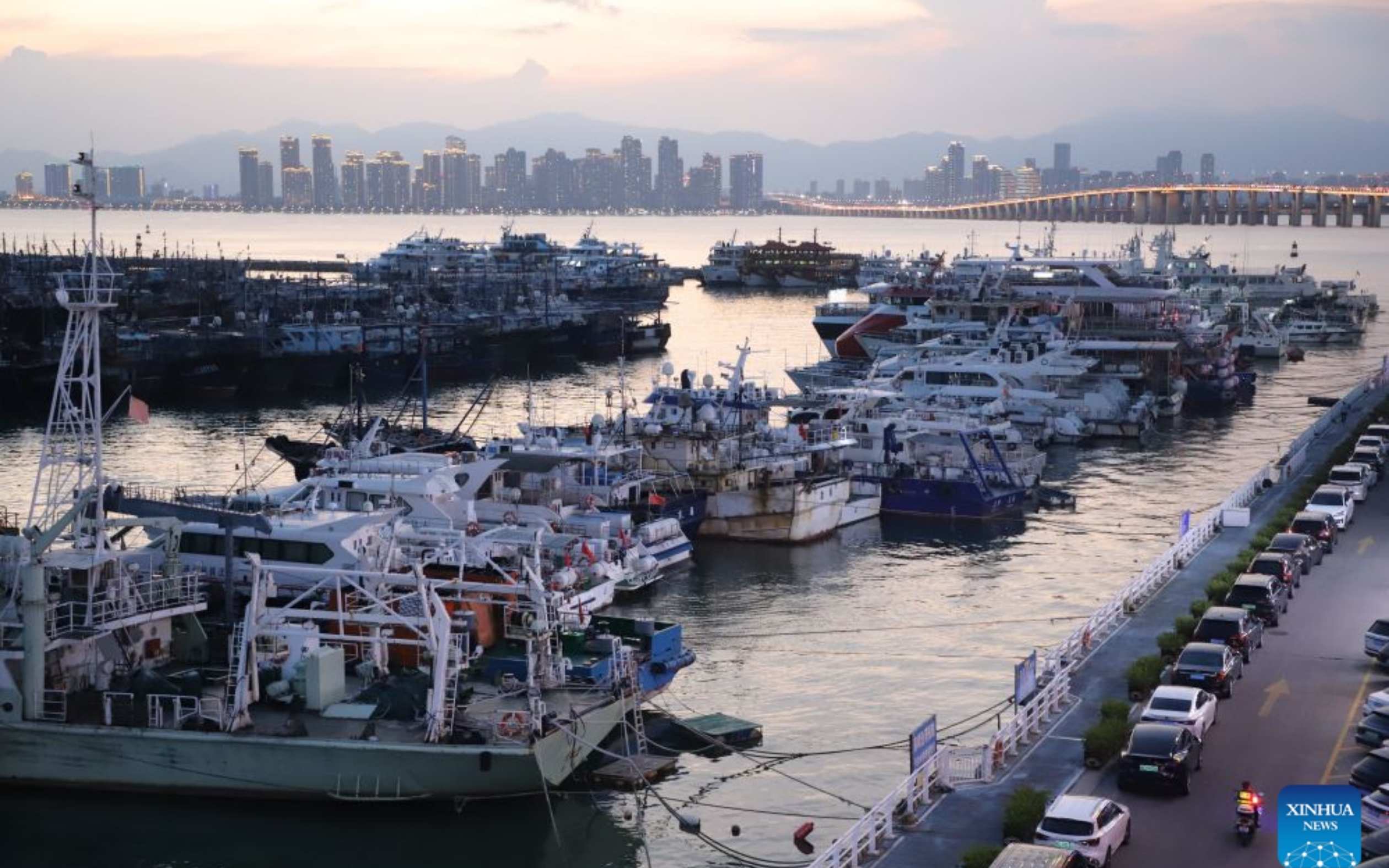
Provinces along the East China Sea have begun tightening emergency measures. Zhejiang has activated an offshore typhoon response and ordered the sheltering or securing of fishing vessels, suspension of maritime routes and closure of marine tourism sites. In Fujian, strong winds and rough seas have already led authorities to suspend passenger ferry routes and stop all marine construction projects along the coast.
Air travel is also being hit. The South China Morning Post reports that airlines have cancelled flights and are offering refunds at 10 or more airports ahead of Bavi’s arrival. Japan Airlines and All Nippon Airways have scrapped dozens of flights around Okinawa’s outlying islands as the typhoon passes nearby, affecting thousands of passengers.
[See more: Guangxi flood relief efforts continue as death toll reaches 39]
China’s Ministry of Water Resources warns that Super Typhoon Bavi could affect six major river basins for around a week, raising risks of flooding as heavy rain overlaps with already elevated water levels from earlier storms. Other forecasts suggest very heavy rain for Fuzhou from today until Monday and Nanjing around in the middle of next week as the system moves inland and weakens.
The National Meteorological Center has issued multiple alerts for torrential rain, thunderstorms, hail and severe convective weather, including the possibility of tornadoes and thunderstorm winds above 117 km/h in parts of north and northeast China, even before landfall. Bavi’s outer rainbands and onshore winds could also bring unsettled weather and possible flight or shipping knock‑ons to the Greater Bay Area.