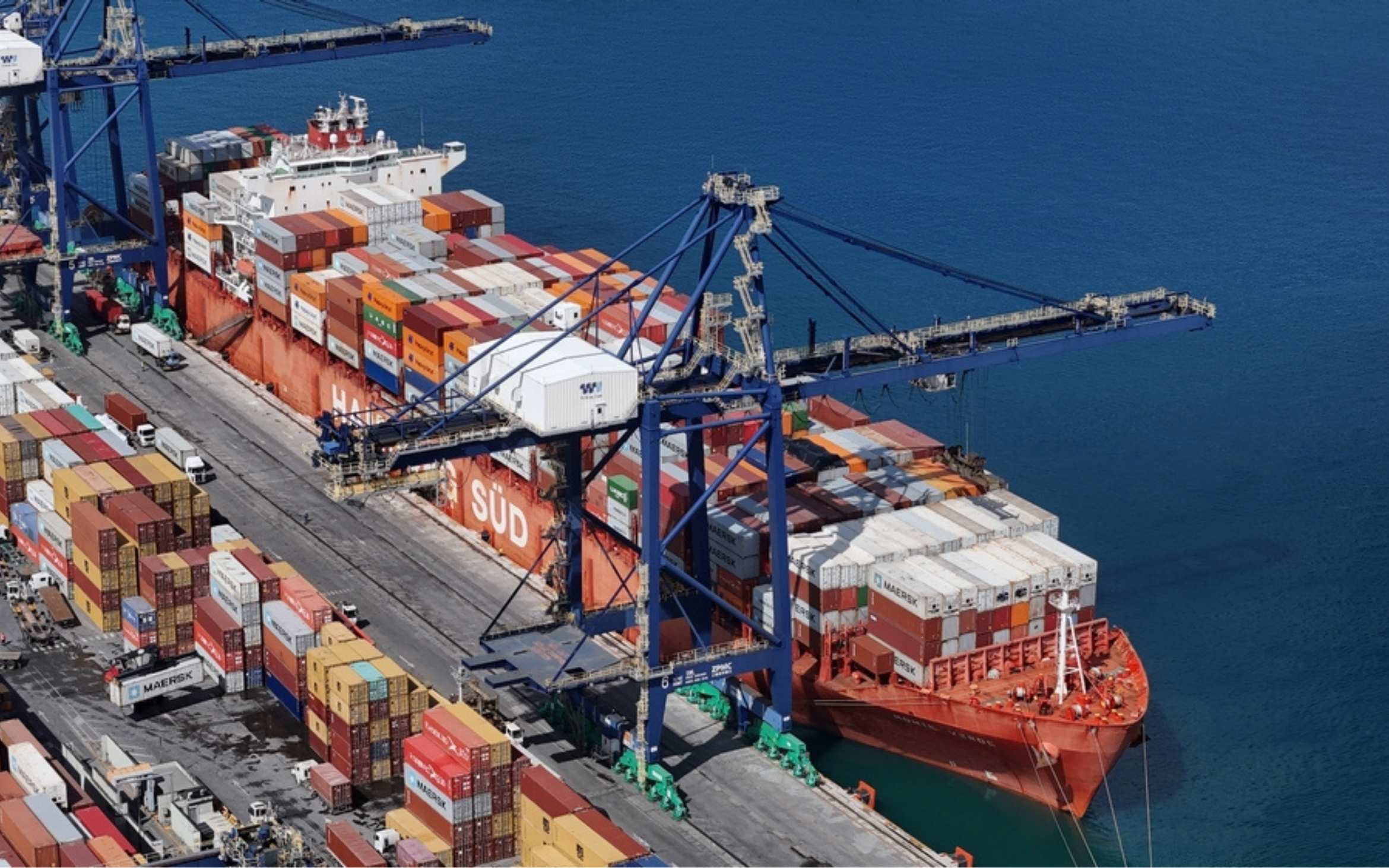
Driven by robust bilateral activity with Brazil, total trade between China and the lusophone bloc climbed 22.6 percent to over US$100 billion in the first five months of the year.

Article by:
PUBLISHED:
China’s lusophone trade rose sharply in the first five months of 2026, driven overwhelmingly by Brazil, which accounted for more than four-fifths of the total volume, official Chinese customs data showed.
Total trade between China and the Portuguese-speaking bloc reached US$100.68 billion from January to May, up 22.6 percent from the same period a year earlier.
Brazil remained Beijing’s largest partner in China’s lusophone trade by a wide margin according to the data, with bilateral trade climbing 27.2 percent year-on-year to US$84.39 billion. China imported US$50.34 billion worth of goods from Brazil, while exports totalled US$34.05 billion, officials said.
[See more: Macao-linked deals worth US$150 million signed in Mozambique]
Angola ranked a distant second among Portuguese-speaking countries, with total trade of US$8.53 billion, down 7.6 percent from a year earlier. Chinese imports from Angola reached US$6.72 billion, while exports stood at US$1.81 billion, according to the figures.
Portugal came third in China’s lusophone trade, with trade rising 23.5 percent to US$4.77 billion year on year, driven largely by Chinese exports of US$3.47 billion, while imports from Portugal totalled US$1.30 billion.
Mozambique recorded total trade of US$2.48 billion, up 21.4 percent year-on-year.
Among smaller lusophone economies, Equatorial Guinea posted trade of US$279 million, down 37 percent year on year. Timor-Leste reached US$119 million, up 7.7 percent. Cabo Verde recorded US$43 million, down 21.2 percent, while São Tomé and Príncipe totalled US$39 million, surging 95.2 percent from a low base. Guinea-Bissau registered US$35 million, up 56.8 percent compared to the same period a year ago.
Overall, China’s exports to Portuguese-speaking countries rose 20.3 percent, while imports increased 24.2 percent, underscoring sustained demand in China for the lusophone bloc’s commodities and agricultural products.
The figures highlight Brazil’s dominant role in China’s lusophone trade, with Angola and Portugal remaining secondary but significant partners.
UPDATED: 28 Jul 2026, 8:24 am