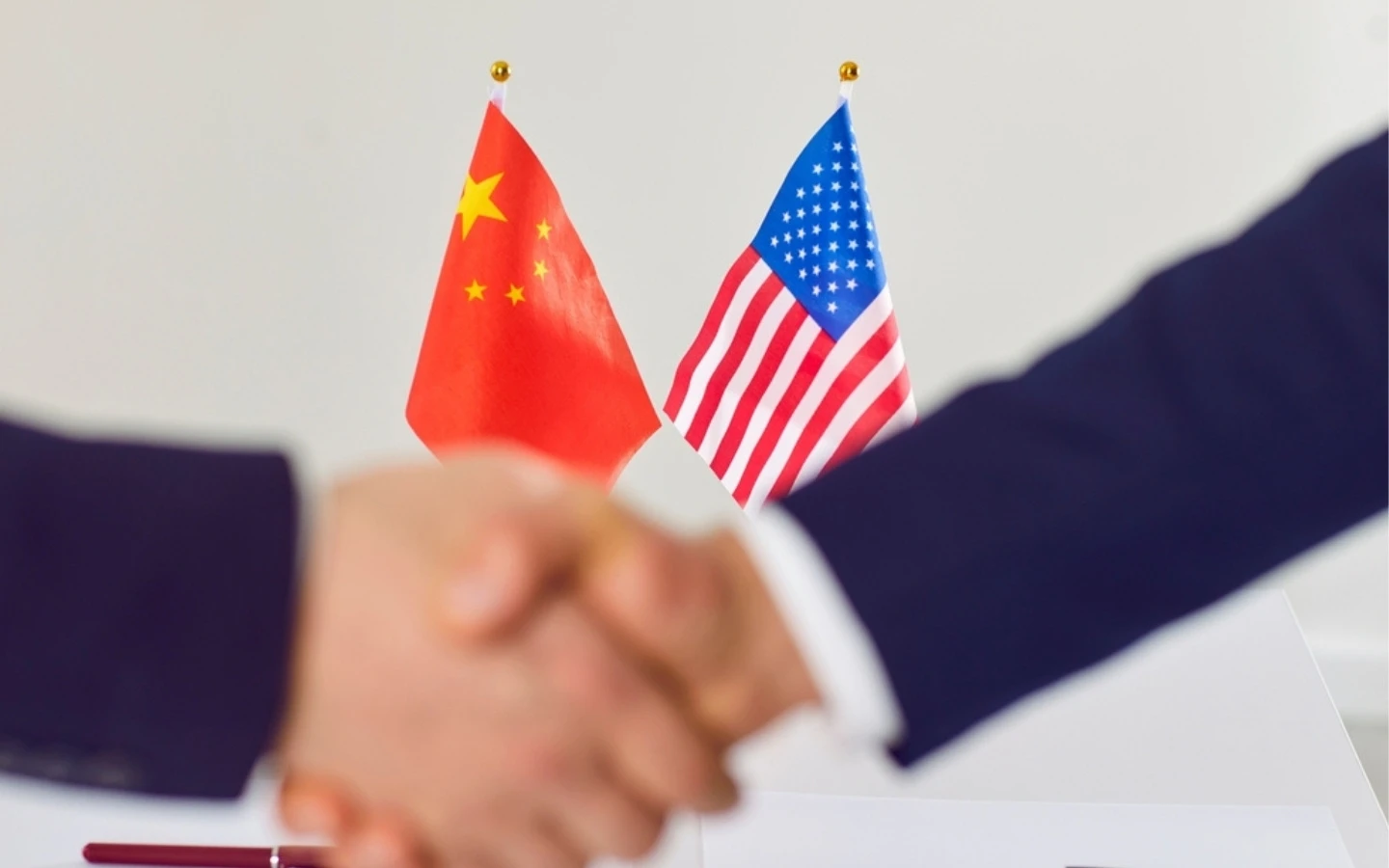
Industry representatives in Washington have pushed back against decoupling narratives, highlighting a continued commitment to Sino-US trade ties.
Article by:
PUBLISHED:
Business leaders from the United States and China gathered in Washington DC last week, signalling a push for deepened Sino-US trade ties despite ongoing geopolitical friction.
The engagement, organised by the China Council for the Promotion of International Trade (CCPIT) and the US-China Business Council (USCBC), took place following high-level discussions between senior officials from both nations.
[See more: China scraps tariffs for 63 countries, while US doubles down on levies]
Sean Stein, president of the USCBC – which represents roughly 270 US companies, including giants such as Apple and Boeing – moved to dismiss speculation that American firms are turning away from the Chinese market.
“American companies are committed to being in China,” Stein told China Daily. “They’re committed to partnering with Chinese companies.”
Improving sentiment on Sino-US trade ties is backed by recent data; a June survey from the USCBC revealed that 92 percent of American companies operating in China were profitable last year, while 95 percent indicated that the Chinese market helps them maintain global competitiveness.
For businesses within the Greater Bay Area, where integrated supply chains rely heavily on cross-border efficiency, the meeting offers a positive signal. Ren Hongbin, chairman of the CCPIT, emphasised that the delegation’s visit was intended to create additional space for collaboration, China Daily reported.
Looking ahead, industry focus is shifting toward the upcoming Asia-Pacific Economic Cooperation (APEC) CEO Summit, which China is set to host later this year. Stein described the APEC summit as an “unparalleled opportunity” for regional engagement, providing a platform for firms to thrive within an environment supported by multilateral diplomacy.