The Macao LRT’s new gates have begun installation at Union Hospital and Lotus stations, but trial operations won’t begin until the end of 2026
Macao LRT gates to begin accepting Alipay, WeChat and UnionPay
Article by:
PUBLISHED:
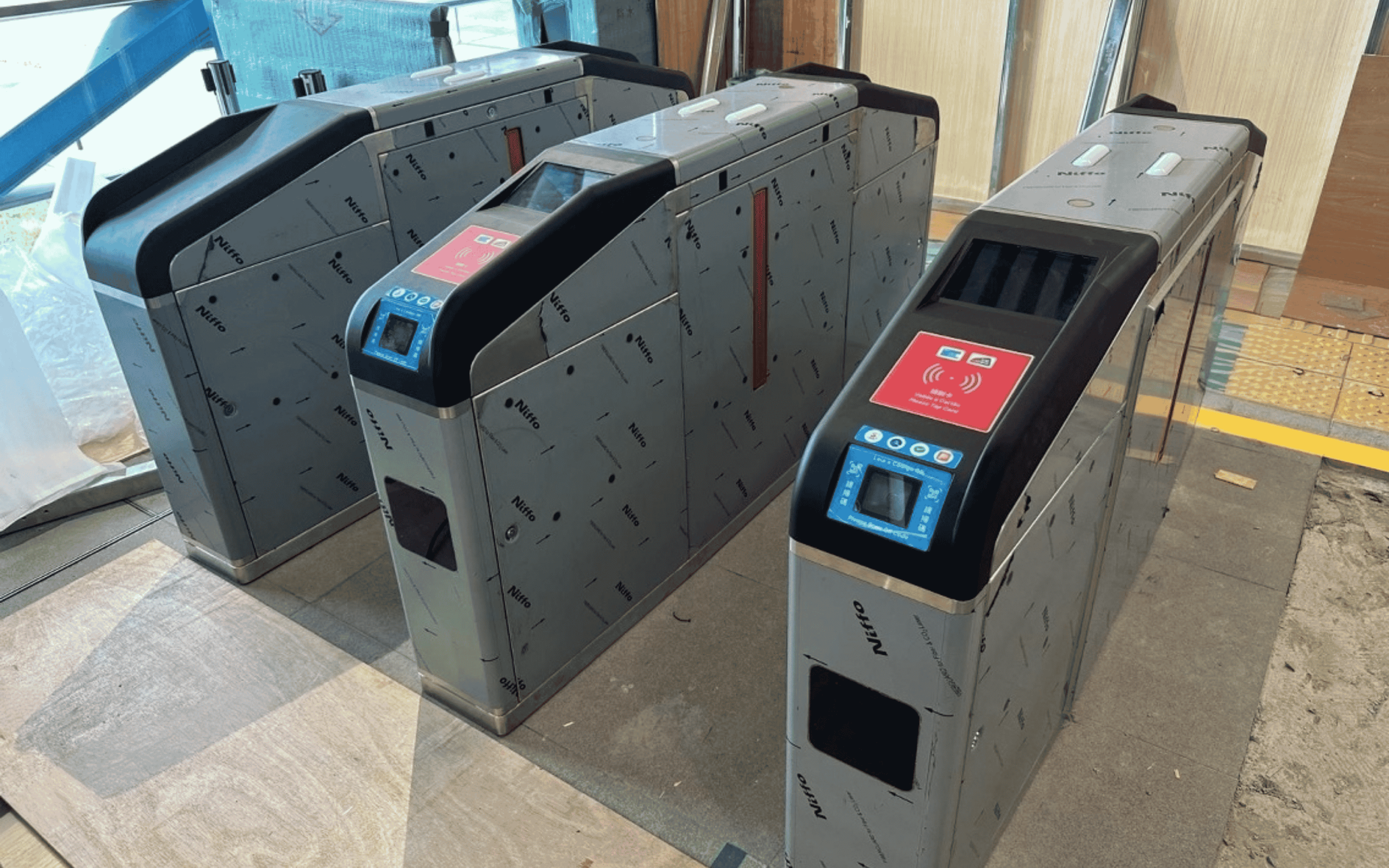
The Macao Light Rapid Transit (LRT) has begun installing new fare gates capable of accepting a variety of e-payment options. These include Macau Pass cards, Macao-based e-wallets affiliated with Simple Pay+, UnionPay QR, as well as Alipay and WeChat transport codes, and the China T-Union card.
Union Hospital Station on the Taipa Line and Lotus Station on the Hengqin Line are the first to benefit from phase one of the replacement project, which began in September 2026.
The gates are not yet accepting payment, with trial operations scheduled to begin once the new facilities are installed across the network by the end of 2026.
“In the future, all LRT stations will operate with both new and old access gates simultaneously,” the Macao LRT, the Transport Bureau and the Public Works Bureau said in a statement on 6 September 2026.
What has the reaction to the LRT’s new gates been like?
Macao LRT passengers who spoke to local broadcaster TDM said that the introduction of the e-payment gates would greatly enhance convenience.
Passengers told the broadcaster they hoped the new gates would be introduced as soon as possible, with one comparing Macao’s payment method to mainland China, where passengers can seamlessly scan various QR codes to board public transport. By contrast, the Macao LRT – where fares cost between 3 patacas and 6 patacas depending on the journey – requires passengers to obtain access via a Macau Pass or LRT card, or by purchasing tickets at the counter or through ticket vending machines.
[See more: Rail will be ‘backbone’ of Macao-Hengqin transport network, says transport head]
The contactless card payment option can be especially inconvenient for short-term visitors who may not see the value in purchasing a card. Meanwhile, purchasing tickets at the customer service centres can be a cumbersome process, even though a variety of payment options such as cash, credit cards, Alipay and WeChat Pay are available. Similarly, the ticket vending machines only accept cash payment or LRT cards.
“Sometimes you might forget to bring one type of payment method, so you could use another [with the new fare gates],” a male interviewee told TDM. “It would definitely be more convenient.”
How else will the Macao LRT develop in the future?
The installation of the new e-payment fare gates is part of a wider effort on the part of the authorities to further improve the Macao LRT system. Work is currently underway on the 7.7 km East Line, which will run through Zone E1 and Urban Zone A, as well as the Border Gate.
The new route – made up of six stations – is expected to complete construction by 2028, with an expansion project to bring the track to Qingmao Port scheduled to begin construction as soon as possible.
As well, the government is considering further expansion of the LRT to other parts of the Macao Peninsula. A West Line that links Qingmao to Barra, and a South Line that connects Barra to the Hong Kong-Zhuhai-Macao Bridge by way of Nam Van and NAPE, are currently under consideration.
Similarly, the government is looking to connect the LRT to Hengqin Port seamlessly, with Macao’s secretary of transport and public works, Raymond Tam, announcing on 24 August 2026 that rail would form the “backbone” of cross-border links with Hengqin.
Outside of network expansions, the Public Works Bureau said in a written reply on 30 July 2026 to legislator Leong Hong Sai’s query that it is planning to integrate commercial elements into the new LRT lines and reserve business spaces. The aim is to create the conditions for investment and the entry of different types of businesses into the stations.