Transport secretary Raymond Tam says land transport will be the main focus, while water transport will play a supplementary role
Rail will be ‘backbone’ of Macao-Hengqin transport network, says transport head
Article by:
PUBLISHED:
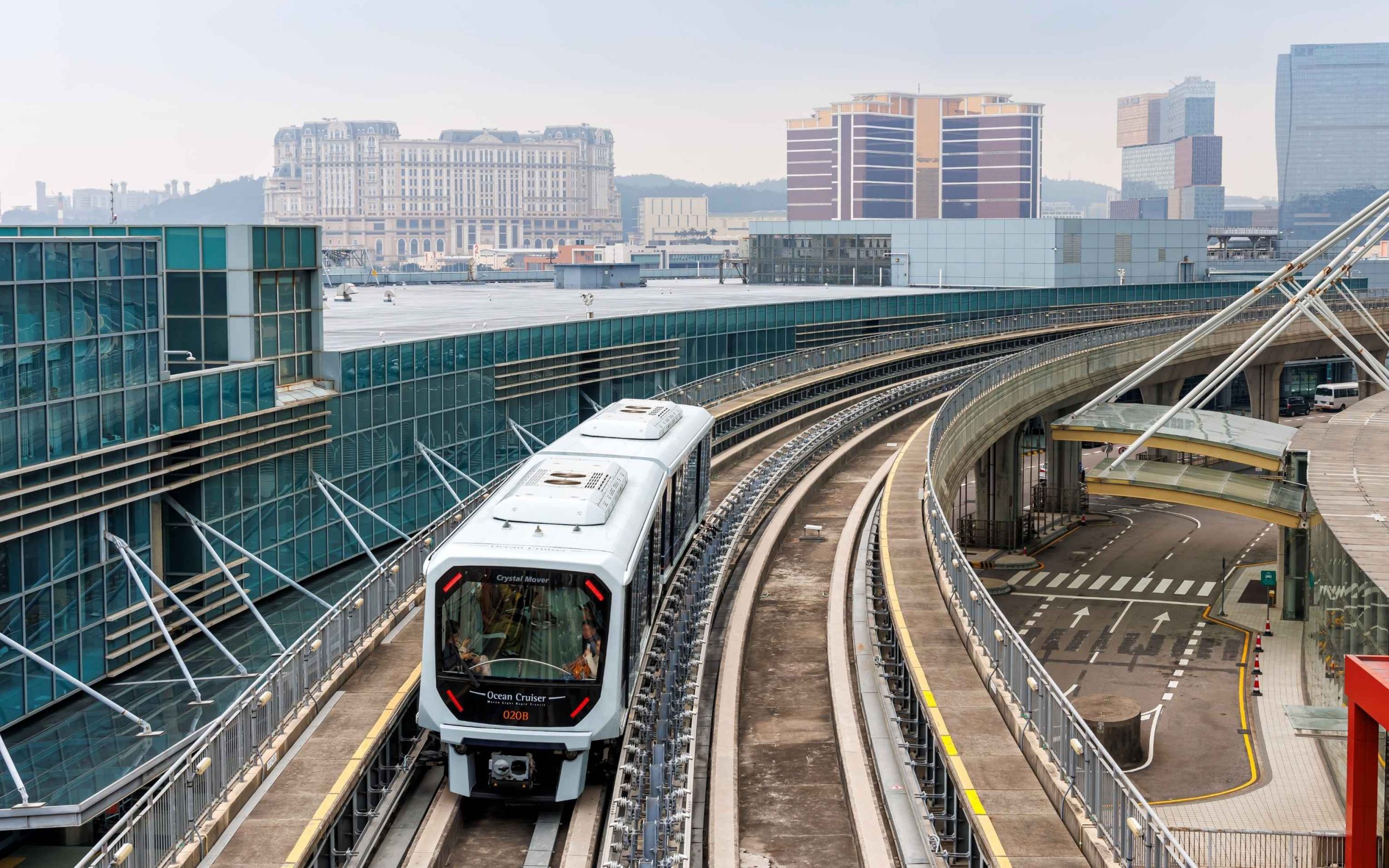
Macao will make rail the “backbone” of its cross-border links with neighbouring Hengqin over the next five years, seamlessly connecting the Macao Light Rapid Transit (LRT) to Hengqin Port, completing the East Line by 2029 and studying two more lines. That’s according to Macao’s secretary of transport and public works, Raymond Tam, who discussed the city’s new third five-year plan in a CCTV report aired on 24 August 2026.
Tam noted that land transport will serve as the main focus of the cross-border network, with water transport in a supplementary position. Together with rail, these transport channels will create what the secretary described as a “multi-layered cross-border transport network” that supports greater connectivity between Macao and Hengqin, further expediting their integrated development.
How will Macao’s LRT system expand?
Although the Macao LRT has been connected to the Hengqin Port since 2 December 2024, passengers are still required to transfer at the border. According to Tam, the government intends to address this gap by creating a seamless link between the Macao LRT and the Hengqin Port to align with the planned Guangzhou-Zhuhai (Macao) high-speed rail project. As well, the authorities are studying connectivity between the Macao LRT and Hengqin’s railway network.
A key component to Macao’s railway network is the future East Line, a 7.7 km track that runs through the reclaimed islands of Urban Zone E and Urban Zone A before terminating at the Border Gate.
[See more: Macao’s transport secretary shares plans to link LRT with Hengqin]
Tam said the East Line is slated for completion by 2029, after which an extension project will take place to expand the line to Qingmao Port. At the same time, the government will conduct a study on the West Line and South Line. The former is intended to connect the area between Qingmao and Barra, while the latter is meant to ferry passengers between Barra and the Hong Kong-Zhuhai-Macao Bridge by traversing areas such as Nam Van and NAPE.
Which Macao-Hengqin road links will be upgraded?
In terms of land transport, the secretary mentioned plans to boost the capacity of the Lotus Bridge and the underwater tunnel linking the University of Macau to Taipa.
Plans are also underway to select a suitable site for a cross-border passage linking Macao to Hengqin’s Financial Island.
The secretary also spoke about urban renewal, noting that “perfecting Macao’s urban planning is an important cornerstone of building a beautiful and smart Macao under the third five-year plan.”
To that end, Tam noted that the SAR government had launched the first draft amendment to Macao’s Urban Master Plan (2020-2040), which is running its 60-day public consultation between 29 June and 27 August 2026.
Over the next five years, the authorities intend to carry out maintenance and refurbishment of ageing buildings in the city, beautify old districts, as well as reconstruct certain districts or individual buildings.
Meanwhile, the SAR administrators are planning to adopt a “planned utilisation and temporary usage” model that responds to the needs of residents, while also promoting urban development and large-scale construction.
How does infrastructure figure in Macao’s third five-year plan?
Published on 18 August 2026, Macao’s third five-year plan outlines Macao’s economic and social goals from 2026 to 2030. The document features eight key development goals – economic diversification; Macao-Hengqin development; governance; people’s well-being; smart city construction; alignment with China’s national development; national security, and education development, technology and talent.
A number of key infrastructure projects will play a crucial role in fostering economic diversification and Macao-Hengqin development. They include the Macao-Hengqin International Education (University) Town, which will serve as an important engine in terms of transforming Macao and Hengqin into a hub for Greater Bay Area talents, tech innovation and industry upgrade, according to Macao’s secretary for social affairs and culture, O Lam, in a CCTV report aired on 23 August 2026.
UPDATED: 09 Sep 2026, 12:29 pm