The 2026 policy address comes as John Lee’s current term ends in 2027 and the city showcases its inaugural five-year plan, which he says will not change the city’s capitalist system
Hong Kong policy address 2026 and first five-year plan: what to expect
Article by:
PUBLISHED:
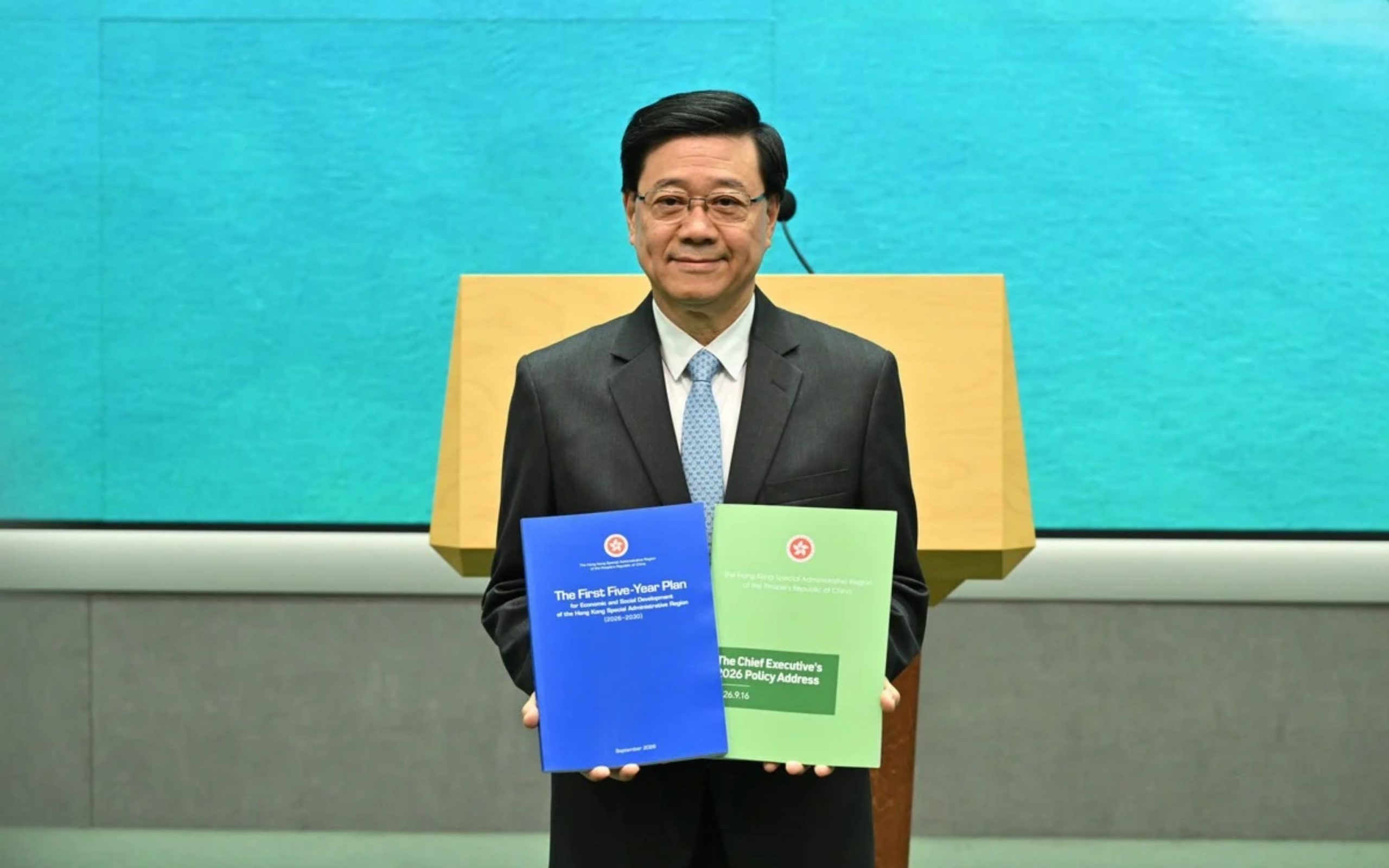
Hong Kong Chief Executive (CE) John Lee Ka-chiu is scheduled to deliver the city’s inaugural five-year plan and annual policy address at the Legislative Council on 16 September 2026 beginning at 11 am.
The five-year plan will set the SAR’s economic and social agenda between 2026 and 2030, while the policy address serves as an outline of the Hong Kong government’s goals and priorities for the upcoming year.
According to the South China Morning Post, Lee’s impending speech will be evenly divided between the five-year plan and policy address. The CE will follow his speech with a press conference scheduled on the same day at 3:30 pm, as well as a forum set to take place at 7 pm.
Why is Hong Kong’s inaugural five-year plan important?
The delivery of Hong Kong’s first five-year plan is significant, as it represents the city’s bid to form a greater alignment with China’s broader national development, as outlined in the national 15th five-year plan (2026-2030) published in March 2026.
In a Post opinion piece published on 14 September 2026, Lee noted that he and his team sought reference from the five-year plans of Macao and mainland cities. Hong Kong’s neighbouring SAR published its third five-year plan in August 2026, outlining aims to have non-gambling industries make up 60 percent of economic output by 2030.
[See more: Macao unveils five-year plan, targeting non-gambling GDP share of 60 percent by 2030]
Lee acknowledged in the article that he had been asked whether or not devising a five-year plan would change Hong Kong’s original system. “The answer is no,” he wrote.
“The plan will uphold Hong Kong’s rule of law and capitalist system, implement the Basic Law and adhere to ‘one country, two systems’ without distorting Hong Kong,” the CE wrote. He added that the plan would “uphold” the city’s international city status and leverage “the flexibility and advantages of the capitalist market.”
What will the blueprint cover?
While specific details of the first five-year plan remain under wraps, Lee noted in his article that the blueprint would focus on various economic goals that are ultimately aimed at improving the livelihoods of Hong Kong residents, providing them “with better employment opportunities.”
To that end, the plan will build upon Hong Kong’s current strengths, develop emerging and future sectors, speed up the development of the 30,000-hectare Northern Metropolis megaproject, foster international collaboration and boost development in the Greater Bay Area.
What will be in Hong Kong’s 2026 policy address?
Concrete information regarding the 2026 policy address has also not been revealed yet, although government sources reported by the Post said the speech would roll out initiatives that make it easier for businesses to take root in the Northern Metropolis and strengthen Hong Kong’s positioning in terms of innovation, research and tech.
One unnamed insider told the media outlet that Lee’s administration was looking to “unlock market vitality” by introducing fewer restrictions “in various commercial and operational sectors.”
Meanwhile, another unidentified source said that government departments would be reducing the approval process time during construction, helping firms to save on costs.
A third unnamed interviewee mentioned that the policy address would touch on the schedules of infrastructure projects, including new rail routes and a university town project that is intended to boost economic diversification by leveraging technology.
Sources cited by TVB also report that the government will likely extend pre-existing measures to boost Hong Kong’s low birth rate, and boost others. These include a one-off payment of HK$20,000 for each newborn child that a parent has, which will expire on 24 October 2026.