The New Huanggang Port’s launch date has not been confirmed, although officials have said it will open in the fourth quarter of 2026
New Huanggang Port reportedly opening in October
Article by:
PUBLISHED:
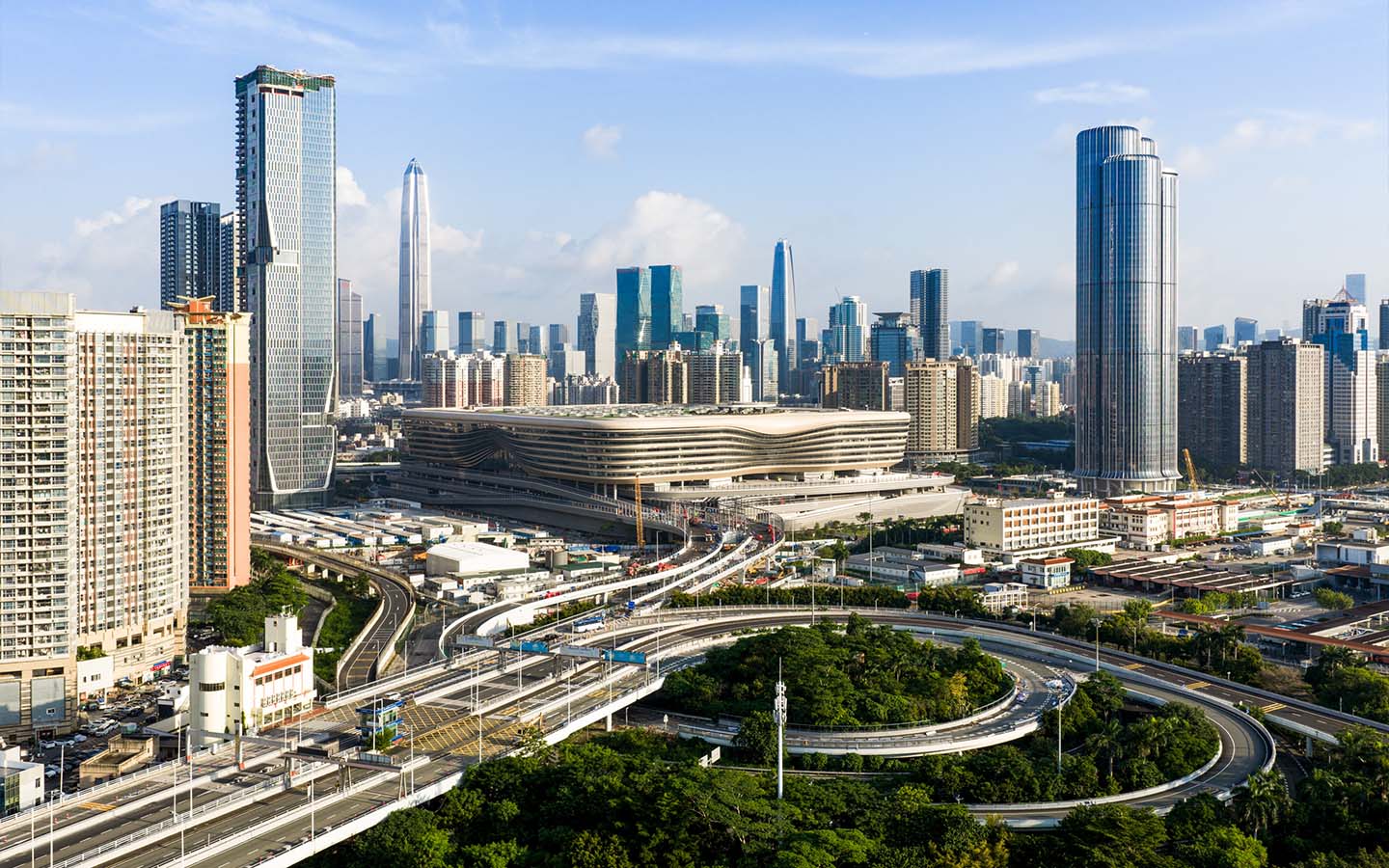
The New Huanggang Port between Shenzhen and Hong Kong could launch operations as early as 12 October 2026, according to unnamed sources reported by major Hong Kong media outlets such as Sing Tao and the South China Morning Post.
The Post noted that the meeting of this target launch date would be contingent on the “operational readiness” of the redeveloped land checkpoint.
The Hong Kong government has not officially confirmed this inauguration date. However, the schedule aligns with official plans to open the crossing in the fourth quarter of 2026, as mentioned by Chief Executive John Lee during his 2026 policy address on 16 September and Secretary for Security, Chris Tang, at a press conference on 17 September.
Why does Hong Kong need a new port?
The New Huanggang Port is intended to replace the original Huanggang Port, which is currently the first and only 24-hour passenger land crossing between Hong Kong and Shenzhen.
Inaugurated in the 1980s, the former Huanggang Port’s ageing infrastructure was failing to keep up with the rise in cross-border traffic, resulting in the Hong Kong and Shenzhen governments working together to redevelop the site to boost capacity and efficiency.
[See more: How do I get home from Shenzhen to Macao after midnight?]
Tang stated at the press event that the New Huanggang Port is expected to handle around 200,000 crossings per day, up from the original checkpoint’s daily total of 50,000 crossings. With the planned opening of Hong Kong’s Northern Link Spur Line by 2034, the soon-to-open 24-hour land crossing is projected to eventually handle some 300,000 people per day.
How will the new crossing be more efficient?
Unlike the old Huanggang Port, the new facility will adopt the faster co-location clearance arrangement for border crossings. Using this system, passengers will be able to complete Hong Kong and mainland China departure and entry inspection procedures in one location, reducing the clearance time to around 5 minutes.
Vehicular crossings will be similarly streamlined, with the government implementing a five-party inspection arrangement at joint one-stop vehicle lanes, allowing motorists to complete border inspections for five Hong Kong and Shenzhen departments in one go.
What facilities does the New Huanggang Port have?
Covering a floor area of roughly 690,000 square metres, the New Huanggang Port is an eight-storey facility that features three underground levels and five above-ground floors.
Basement floors 1 to 3 are reserved for Shenzhen transport facilities, with Hong Kong transport services situated on Level 2. Level 1 is meant for vehicles travelling from Hong Kong to Shenzhen, while Level 3 is intended for vehicles driving from Shenzhen to Hong Kong.
Meanwhile, passengers cross the Hong Kong-Shenzhen borders on Level 4 (Shenzhen to Hong Kong) and Level 5 (Hong Kong to Shenzhen).
What have the authorities been doing to prepare for the checkpoint’s opening?
To prepare for the New Huanggang Port’s opening, the Hong Kong and Shenzhen governments have been carrying out various passenger and vehicular stress tests.
Hong Kong carried out its first stress test in collaboration with Shenzhen on 22 August 2026, with more than 10,000 civil servants participating and roughly 1,000 vehicle trips being simulated.
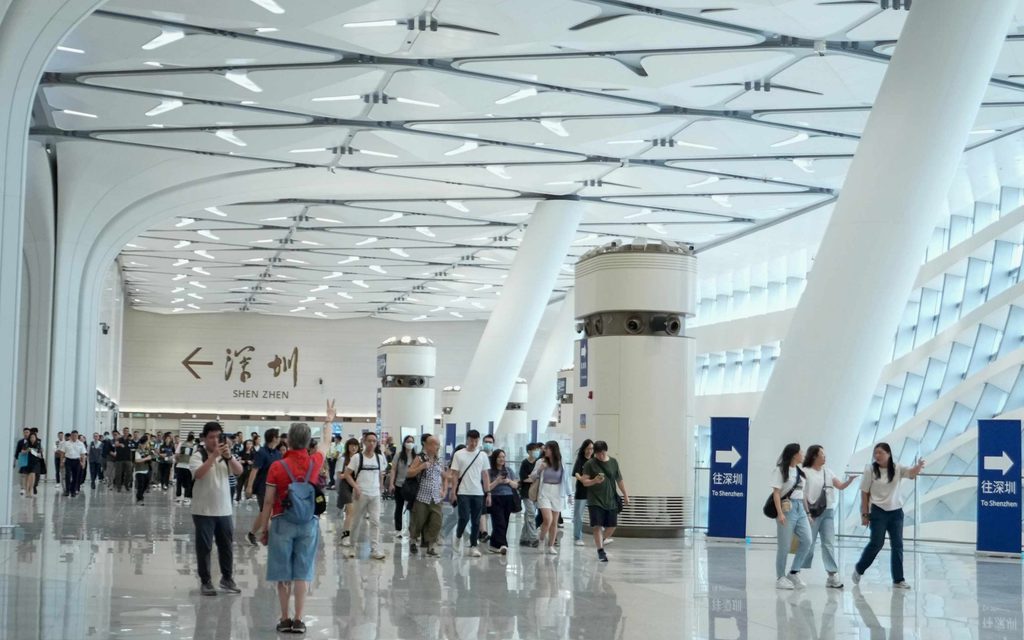
According to Tang, the authorities successfully completed the stress tests, although adjustments still need to be made to the port’s computer system in order to enable it to operate more smoothly.
What are Hong Kong’s other major land ports?
Hong Kong is currently home to six road-based land crossings, excluding the New Huanggang Port. They include the Shenzhen Bay Port, Lok Ma Chau, Man Kam To, Sha Tau Kok (passenger clearance currently suspended), the Hong Kong-Zhuhai-Macao Bridge and Heung Yuen Wai.
There are also three rail-based land crossings – Lo Wu, the Lok Ma Chau Spur Line and Hong Kong West Kowloon High Speed Rail Station.
UPDATED: 18 Sep 2026, 2:52 pm