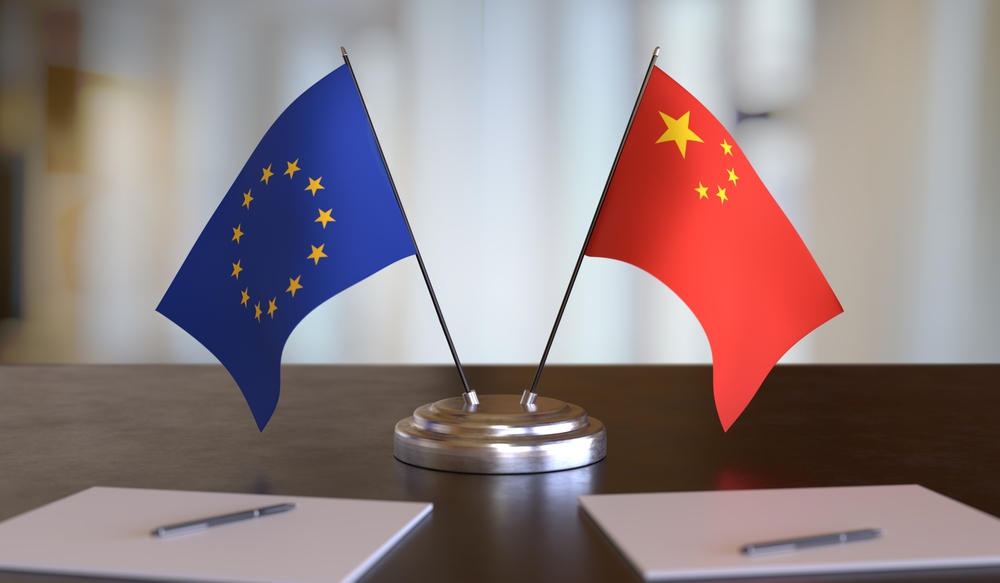
Chinese and European officials have gathered in Beijing for high-level consultations to address trade disputes and promote economic cooperation.

Article by:
PUBLISHED:
Chinese Commerce Minister Wang Wentao met with the European Commissioner for Trade and Economic Security Maros Sefcovic in Beijing on Thursday. The high-level engagement followed preliminary discussions between Chinese Vice Minister of Commerce Ling Ji and Ditte Juul Jørgensen, director-general of the European Commission’s Trade and Economic Security, in preparation for the second meeting of the China-EU trade and investment consultation mechanism.
Experts told Global Times that the China-EU trade talks highlighted a shared willingness to resolve disputes through consultation rather than resorting to a trade war and appealed for differences to be addressed through dialogue under the WTO framework rather than unilateral measures. Together, China and the EU account for more than one-third of global gross domestic product, with bilateral trade representing nearly one-quarter of global trade.
Foreign Ministry spokesperson Mao Ning said on Thursday “We hope that Europe will work with China in the same direction, resolve respective concerns through dialogue and consultation, and promote the sound and steady development of China-Europe economic and trade relations. We believe this serves the common interests of both sides.”
Despite the positive momentum surrounding the ongoing China-EU trade talks, protectionist pressures have intensified within the European Union, the Global Times reports.
[See more: China’s robust trade growth bolstered by global AI demand in August]
Recently, the European Parliament adopted a recommendation demanding a stronger policy approach, following proposals from France and Germany to introduce rapid-action measures against alleged market-distorting practices.
Chinese officials cautioned that the EU should refrain from unilateral threats or pressure tactics, reiterating that China is a partner in addressing economic challenges rather than the source of Europe’s problems. High energy costs, inflation, and borrowing costs continue to squeeze Europe’s economic recovery, and analysts told the Global Times that closer cooperation can help alleviate these burdens.