Shenzhen Metro transported an average of 15,800 people per kilometre per day in August 2026, with a first-time lead in monthly passengers
Shenzhen Metro ridership per kilometre leads China overall
Article by:
PUBLISHED:
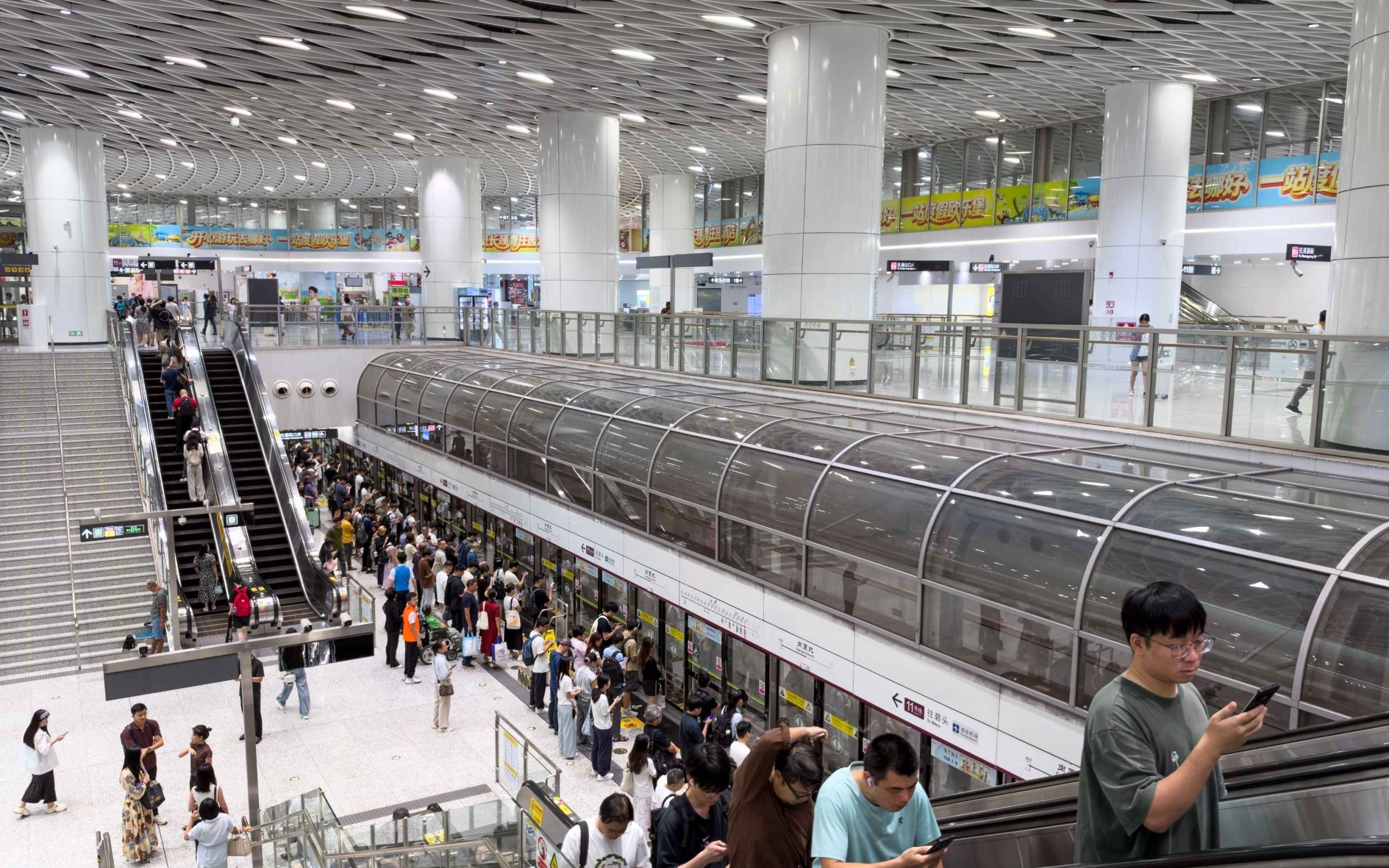
The Shenzhen Metro’s passenger usage per kilometre led mainland Chinese cities for a 33rd consecutive month in August 2026, latest figures show.
The network also logged an approximate 2.47 billion rides from the start of the year to 21 September. This total represents a 5.2 percent increase year-on-year, according to a statement published by Shenzhen’s Transport Bureau on 2 November 2026.
How many passengers did the Shenzhen Metro carry in August 2026?
Data released by China’s Ministry of Transport on 15 September 2026 indicates that the Shenzhen subway’s passenger usage for August 2026 reached an average of around 15,800 people per kilometre per day, exceeding that of other major cities such as Beijing (11,000), Shanghai (11,400), Guangzhou (12,300) and Chengdu (8,900).
In total, the network recorded some 319.23 million rides in August 2026, putting it ahead of other systems in Beijing (308.8 million), Shanghai (310.83 million), Guangzhou (294.34 million) and Chengdu (196.06 million) for the first time.
How many passengers did the Shenzhen handle in summer 2026?
In terms of the ridership during the 2026 summer break, the Shenzhen Metro handled a daily average of around 10.09 million people, breaking the 10-million mark for the first time.
Over the course of the two-month summer holiday between July and August, the railway system handled approximately 626 million rides, setting a new record for the period.
As of 21 September, the Shenzhen Metro’s single-day passenger rate had surpassed the 10 million threshold 86 times this year. Notably, this total includes 18 counts of the 11-million mark being broken – a new high for the metro system.
How does the Shenzhen Metro compare to the systems of other major Chinese cities overall?
Although the Shenzhen Metro leads the nation in ridership density, it still lags behind other first-tier Chinese cities in metrics such as the annual ride volume. In 2025, Shenzhen logged around 3.28 billion trips, in contrast to Beijing’s 3.57 billion, Shanghai’s 3.7 billion and Guangzhou’s 3.32 billion.
[See more: Second Guangzhou-Shenzhen high-speed railway weighs Hong Kong options]
Similarly, Shenzhen has a smaller number of railway lines and tracks in service compared to other major cities. The 2025 data shows that Shenzhen had 18 lines (634.5 km) in operation, falling short of the 30 lines (909 km) in Beijing, as well as the 22 lines operating in Shanghai (881.5 km) and Guangzhou (772.6 km).
The number of subway stations in Shenzhen is also lower, with the tech hub recording 364 stations in 2025, behind Beijing (423), Shanghai (461) and Chengdu (387), according to data from China’s Ministry of Transport.

What future developments are in store for the Shenzhen Metro?
With ridership growing, the Shenzhen Metro is expanding its network to meet the increased demand. On 28 June 2026, the system’s roughly 19 km Line 13 northern extension opened, adding 11 stations to the network and expanding its operational length to 653.7 km.
Moving ahead, the Shenzhen Metro Group Company is planning two railway lines, four inter-city railway lines and 11 additional subway line segments.
UPDATED: 03 Nov 2026, 3:42 pm