A study found nearly a third of 11,220 Greater Bay Area heritage sites exposed to a possible 100-year storm surge, with unclassified relics most at risk
Rare storm surge could hit over 3,500 Greater Bay Area heritage sites
Article by:
PUBLISHED:
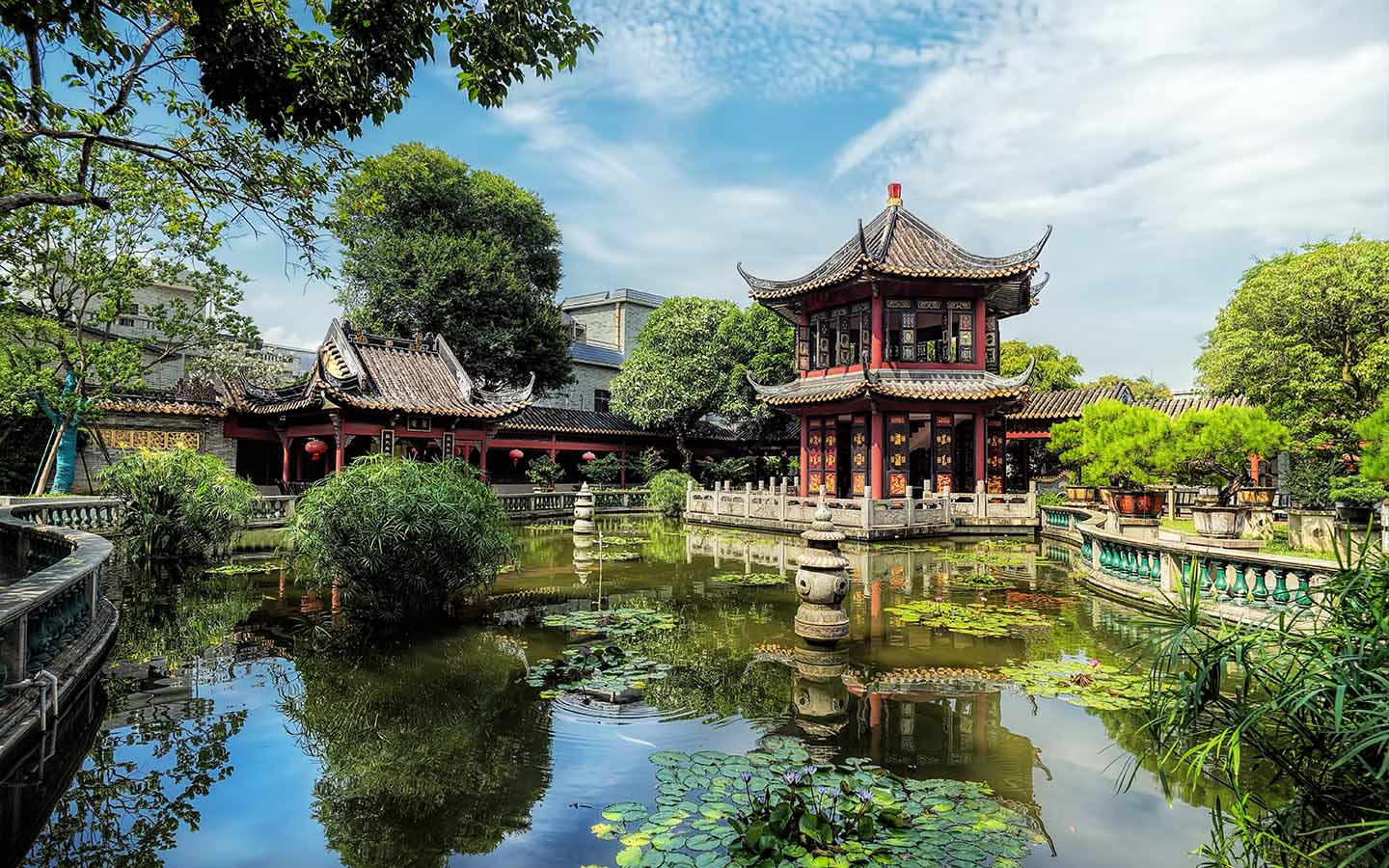
A storm surge of the scale expected once in 100 years would affect 3,587 heritage sites across the Greater Bay Area, nearly a third of the sites assessed, according to a new study by researchers at South China University of Technology.
Juanyu Wu and colleagues assessed 11,220 registered immovable heritage sites in the study, published on 14 October in the International Journal of Disaster Risk Science. It modelled two scenarios, a 100-year surge and a more frequent 20-year surge. Under the 20-year scenario, 2,413 sites, or 21.51 percent, would be affected.
Unclassified heritage sites face the greatest storm surge risk
Under the 100-year scenario, 895 of the affected sites, or 24.95 percent, face the most severe hazard level. Of the 1,185 sites at the highest overall risk level, 921 are unclassified heritage units, while national-level units are most often in the lowest risk tier. The authors say this points to a mismatch between protection grades and actual exposure to storm surges.
[See more: The ultimate Macao typhoon survival guide]
They recommend zoned disaster prevention in priority areas, with resources directed first to high-risk unclassified units.
Guangzhou and Foshan most exposed to a 100-year storm surge
Guangzhou shows the highest exposure in both scenarios, and Foshan also stands out. In the 100-year case, high risk is concentrated in those two cities. In the 20-year case, the authors say the hotspots shift to Shenzhen and Dongguan.
The 100-year scenario inundates 18.66 percent of the region’s land. Zhongshan, Foshan and Zhuhai have the largest shares underwater, at 71.04, 68.16 and 55.50 percent. Surge heights reach 6 metres at the Guangzhou and Huangpu tide stations.
[See more: Shenzhen and Guangzhou housing markets see pickup during National Day holiday]
Both scenarios use the track of Typhoon Mangkhut, which hit the region in 2018, with the intensity of Typhoon Rammasun for the 100-year case and Typhoon Usagi for the 20-year case. The authors describe the 100-year case as a worst case projection rather than a repeat of a past event. They note that the simulation lacks vertical dike data and urban flooding processes, and that the 30 metre elevation data is less precise than the storm surge data.
How Macao features in the study
The study also covers Macao’s World Heritage sites, 32 components of the Historic Centre of Macao, and Hong Kong’s declared monuments. It finds 26.67 percent of Macao’s land inundated in the 100-year scenario and 16.67 percent in the 20-year scenario.