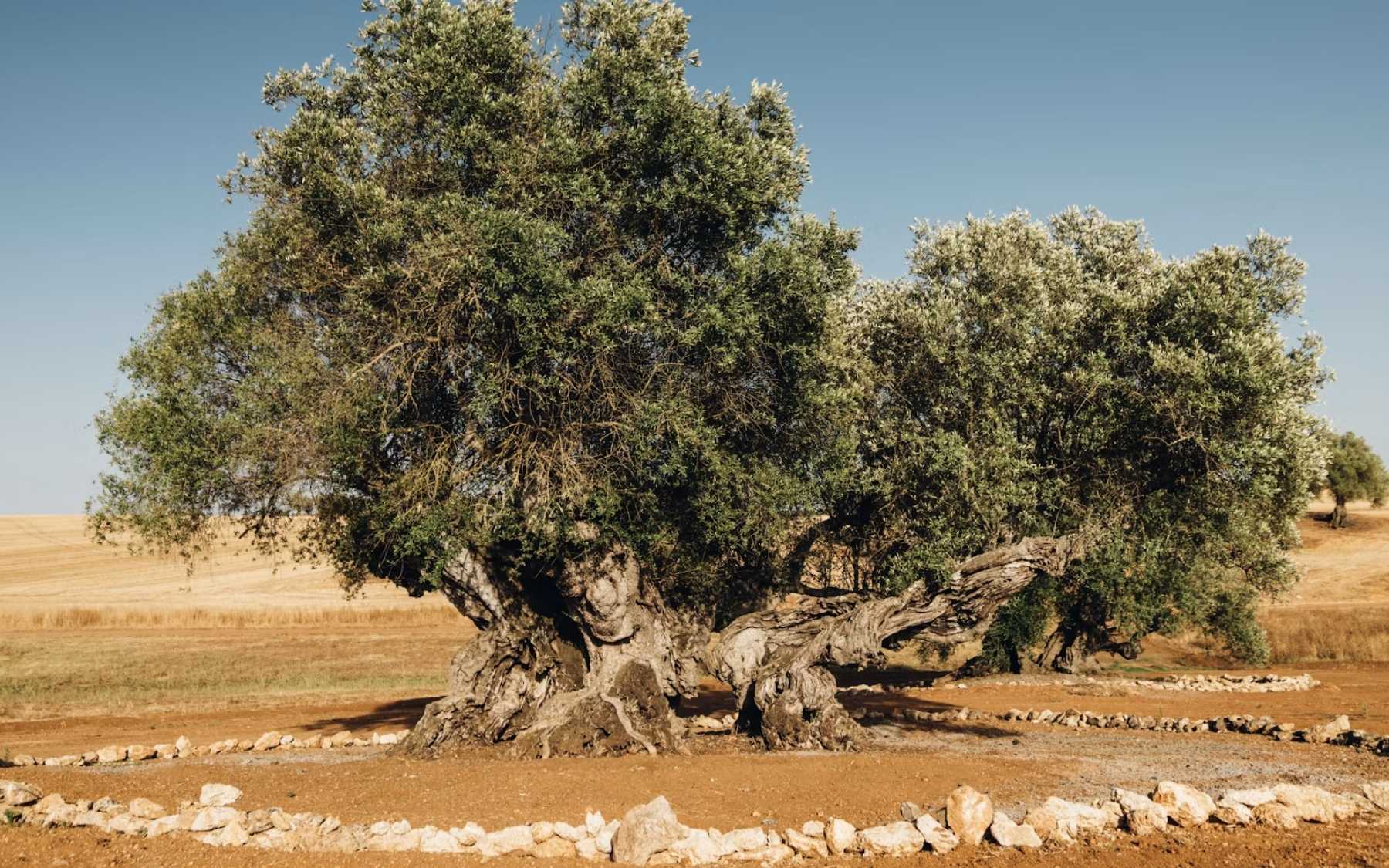
A remarkable olive tree in Portugal's Alentejo region, dated to the Bronze Age, highlights the extraordinary longevity and regenerative capabilities of these historic specimens.

Article by:
PUBLISHED:
In the sun-drenched landscape of southern Portugal, an extraordinary living relic is defying the passage of time. Known as the Oliveira do Peso, this remarkable specimen stands at Herdade do Peso, in Vidigueira, within Portugal’s Alentejo region. According to a media report, researchers estimate the tree to be roughly 3,700 years old, with one specific study placing its age at 3,712 years.
This calculation makes this tree – one Portugal’s ancient olive trees – the oldest dated in the country so far, tracing its origins back to approximately 1700 BCE, or centuries before the rise of ancient Rome and more than 1,300 years before the birth of Alexander the Great.
[See more: New work begins at Portugal’s Outeiro do Circo archaeological site]
Standing at about six metres tall with a trunk circumference of nearly 10 metres, the tree is far from a decaying remnant of antiquity. Remarkably, it remains productive, continuing to yield olives despite its immense age. Scientists suggest that the secret behind this longevity lies in the species’ unique ability to regenerate. Unlike many other tree varieties, an ancient olive tree can lose significant sections of its trunk while other living parts continue to send out fresh shoots, effectively allowing the organism to rebuild itself over centuries.
“A piece of trunk, however old it may be, has the ability to sprout again,” José Luís Louzada, a researcher at the University of Trás-os-Montes and Alto Douro, told media.
This resilience is bolstered by the species’ adaptation to Mediterranean conditions, allowing the trees to withstand intense heat, drought, and nutrient-poor soils. During periods of environmental stress, they simply slow their growth, resuming activity once conditions improve. This cycle of resilience, regeneration, and slow growth is why Portugal’s ancient olive trees can persist for such astonishing spans of time.
While the Oliveira do Peso is the oldest recorded, Portugal’s ancient olive trees are relatively common. The Oliveira do Mouchão, near Abrantes, is estimated to be approximately 3,350 years old, while specimens in Santa Iria de Azóia and Monsaraz are estimated at 2,850 and 2,450 years respectively. Through ongoing research, academics have dated hundreds of specimens believed to be over 2,000 years old. Though determining the precise age of Portugal’s ancient olive trees is difficult, the data confirms these survivors have witnessed the rise and fall of empires, all while continuing to flourish.
UPDATED: 27 Aug 2026, 8:17 am