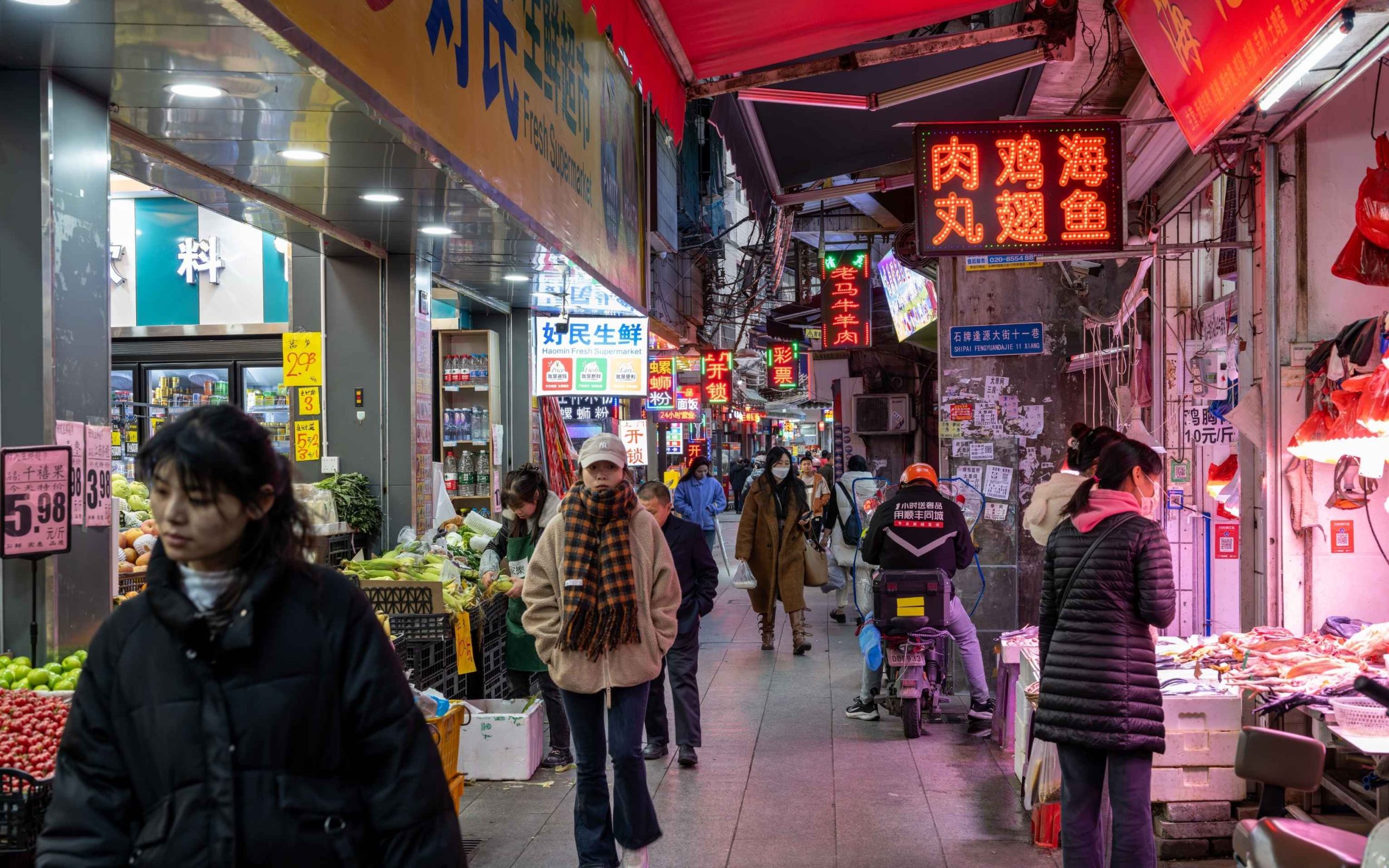
The Lancet Countdown China report says the SARs were among the most sleep deprived regions in China due to hot nights caused by climate change
Macao, Hong Kong and Hainan lose the most sleep from climate change
Article by:
PUBLISHED:

Residents in Macao, Hong Kong and Hainan province lose the most sleep in China from climate change-induced hot nights, according to the 2026 China report of the Lancet Countdown on health and climate, published on 28 October 2026.
The annual paper, which reports on findings from an international team of 80 researchers, found that people in Macao, Hong Kong and Hainan province lost an average of over 43 hours of sleep per person annually – the highest in the country.
Hainan was ranked first, with each resident losing an average of 44 hours 14 minutes 30 seconds of sleep a year. This was followed by Macao (43 hours 30 minutes) and Hong Kong (43 hours 54 seconds).
“The current burden [of sleep loss] is greatest in southern regions,” the Lancet Countdown 2026 noted. It added that the loss of sleep in high latitude regions was particularly fast, as illustrated by Tibet (Xizang), Gansu and Heilongjiang, which recorded increases of 173.6 percent, 48.4 percent and 32.5 percent against the benchmark number.
Lancet Countdown: How much sleep have people in China been losing to hot nights?
Based on a nationwide database of 1.3 million sleep records in China, the researchers estimated that each person in the country lost 22.6 hours of annual sleep to rising nighttime temperatures between 2015 and 2025, a rise of 10.2 percent in comparison to the base figure from 1986 to 2005.
For deep sleep, the sleep loss grew by 14.3 percent between the two periods, while for light sleep, the increase was 8.5 percent.
What are the health impacts of sleep deprivation?
While the report did not directly address the health impact of heat-induced sleep deprivation, the risks are already well reported. According to Harvard Health, inadequate sleep can lead to a range of health issues, including diabetes, high blood pressure, heart disease, dementia and mental illness.
How else is heat impacting people in China?
According to the Lancet Countdown, the extreme heat brought about by climate change was also reducing Chinese residents’ opportunity to engage in safe physical activities.
As a result of the high heat index, people in China lost a daily average of 2.6 hours in potential safe physical activity hours in 2025, up 87.1 percent when compared to the baseline spanning 1986 and 2005.
[See more: GBA Climate Bulletin: Extreme weather plagued China’s Greater Bay Area in 2025]
The paper mentioned that the potential physical activity hours lost was particularly pronounced in the eastern and central-southern parts of China, where the hours amounted to 6.5 hours in Beihai, Guangxi Zhuang Autonomous Region; 6.4 hours in Yingtan, Jiangxi province, and 6.3 hours in Wenchang, Hainan province.
Meanwhile, northeastern China’s lost hours of physical activities grew by 209 percent relative to the 1986 to 2005 baseline period, surpassing the growth rate of all other regions in China.
What policy measures does the Lancet Countdown suggest for China?
In terms of reducing the impact that climate change is having on China, the researchers recommended the government make health a direct component of policy formulation.
It also suggested implementing standardised assessment measures on the health impact of China’s climate policy, boosting assessment of areas whose populations are disproportionately impacted by climate change, prioritising investment in technology to protect people’s health against the impact of climate change and speeding up the shift away from fossil fuels.