A report highlights the GBA's relatively poor climate in 2025, including the many hot days, high frequency of typhoons and heavy rainfall
GBA Climate Bulletin: Extreme weather plagued China’s Greater Bay Area in 2025
Article by:
PUBLISHED:
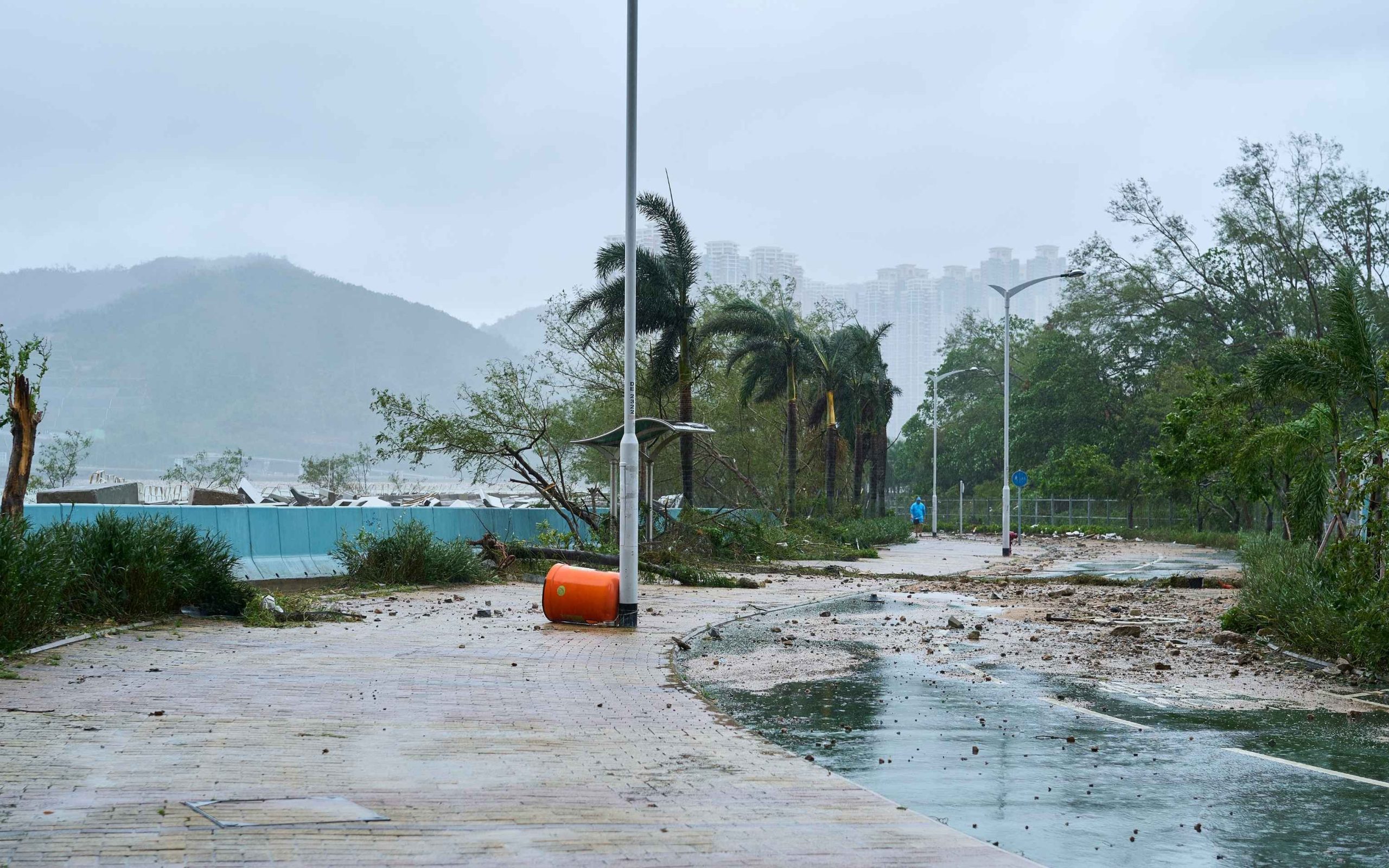
China’s Greater Bay Area (GBA) experienced relatively poor climate in 2025, with the latest GBA Climate Bulletin noting that the region suffered from various extreme weather events that year, including a large number of hot days, extreme precipitation, the relatively early onset of typhoons, as well as a large number of tropical cyclones that either made landfall or had an impact on the region.
What were the GBA’s temperatures like in 2025?
According to the 2025 edition of the annual report – jointly published by the meteorological bureaus of Guangdong, Hong Kong and Macao on 19 October 2026, the GBA registered an average temperature of 23.1°C – higher than the historic annual average by 0.6°C.
The individual GBA cities had an average annual reading that fell between 21.6°C (Longmen County, Huizhou) and 24.3°C (Hong Kong). Average temperatures in most parts of Zhaoqing, the northeastern parts of Guangzhou and the north-central parts of Huizhou varied from 21.6°C to 23°C, while other parts of the GBA registered temperatures between 23°C and 24.3°C.

Looking at the highest average temperature, the region as a whole logged a reading of 36.9°C. The maximum temperatures for each city varied from 35.3°C (Macao) to 38°C (Guangzhou and Nanhai district, Foshan), with the hot days tending to appear in July 2025.
Overall, the average number of hot days in 2025 totalled 26.5 days – 7.1 days more than the historic benchmark.
On the flip side, the lowest temperatures among the GBA cities ranged between -1.4°C (Longmen County, Huizhou) and 10.6°C (Hong Kong), with cold days concentrated in January 2025.
What impact did Super Typhoon Ragasa and other tropical cyclones have?
The GBA’s weather in 2025 was also characterised by the occurrence of tropical cyclones, with a total of 14 weather systems affecting the region.
Major typhoons that impacted the GBA included Wutip, which the GBA Climate Bulletin said made landfall in Guangdong’s Zhanjiang on 14 June 2025, 10 days earlier than the historic average date of 24 June.
A total of around 40,100 people in Guangzhou, Jiangmen, Zhaoqing and Huizhou were impacted by Typhoon Wutip, which resulted in economic damages amounting to 64.54 million yuan (US$9.66 million).
Other notable typhoon systems that ravaged the GBA included Danas, Wipha, Podul, Kajiki, Nongfa, Tapah, Mitag, Ragasa, Matmo, Fengshen and Fung-wong.
[See more: The ultimate Macao typhoon survival guide]
Super Typhoon Ragasa was by far the strongest tropical cyclone to have hit the GBA that year, forming in the northwest Pacific Ocean on 18 September 2025. The weather system resulted in torrential rain hitting the GBA, which recorded an average precipitation level of 100.9 millimetres.
Ragasa also resulted in Macao issuing a no. 10 typhoon alert for the second time in one year – a first for the city since the start of records in 1968. The tropical cyclone also broke the SAR’s record for the longest lasting no. 10 typhoon alert, with the signal remaining in place for 10.5 hours.
Overall, Ragasa impacted some 1.31 million people in the GBA, leading to the evacuation of around 556,000 individuals. Economic losses totalled approximately 8.42 billion yuan (US$1.26 billion).
How much rainfall did the GBA experience in 2025?
In terms of average precipitation, the GBA had an average reading of 2,056.9 millimetres in 2025, up by 7 percent in comparison to the annual average.
During the GBA’s flood season, the city cluster recorded an average rainfall level of 1,917.8 millimetres, an increase of around 22 percent in comparison to the historic benchmark of 1,568.0 millimetres.
[See more: Rare storm surge could hit over 3,500 Greater Bay Area heritage sites]
Other major features of the GBA’s weather mentioned in the 2025 GBA Climate Bulletin included the phased development of a dry climate, a high frequency of lightning activity and very few hazy days. In total, weather-related disasters resulted in the deaths of two people in the GBA in 2025 and a direct economic loss of at least 16.39 billion yuan (US$2.45 billion).