China launched Shenzhou-24 on 25 November 2026, sending Pakistan’s Muhammad Zeeshan Ali to Tiangong as the first foreign astronaut
Article by:
PUBLISHED:
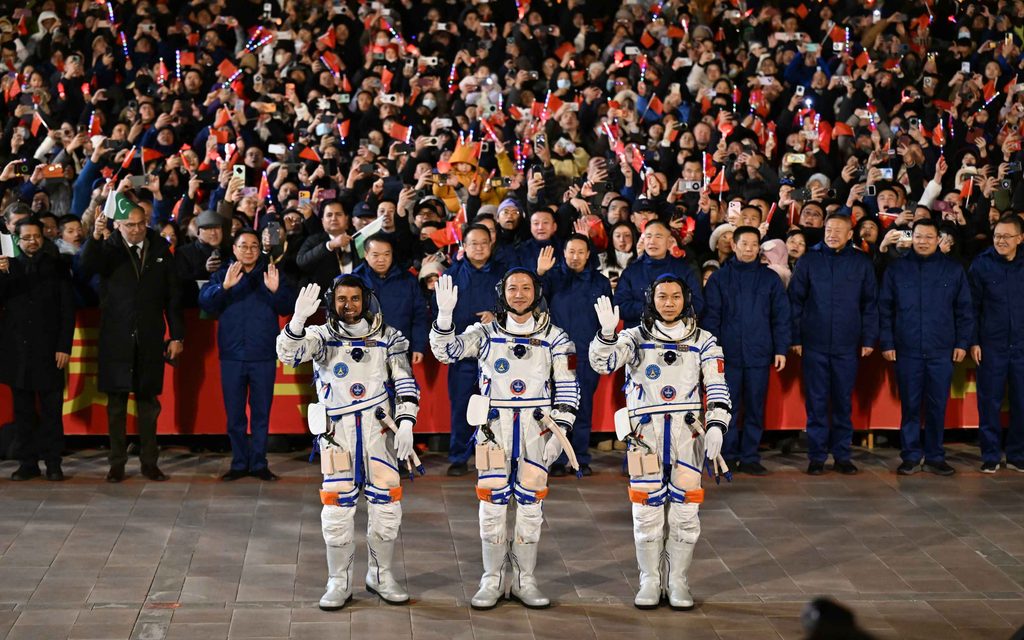
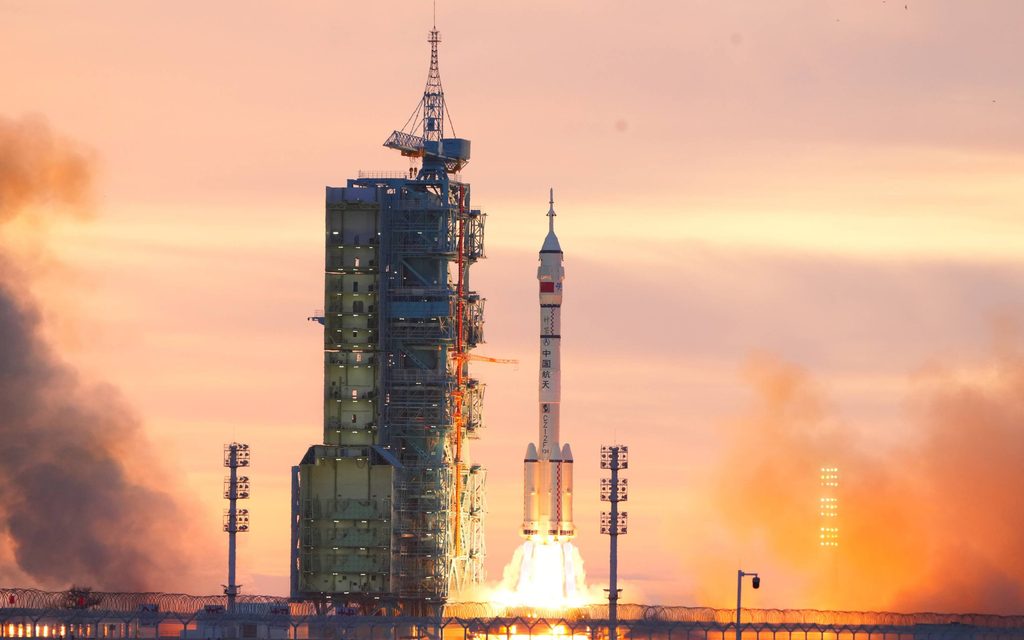
China successfully launched three astronauts into space on 25 November 2026 (8:18 am), as part of its Shenzhou-24 manned mission to the Tiangong space station.
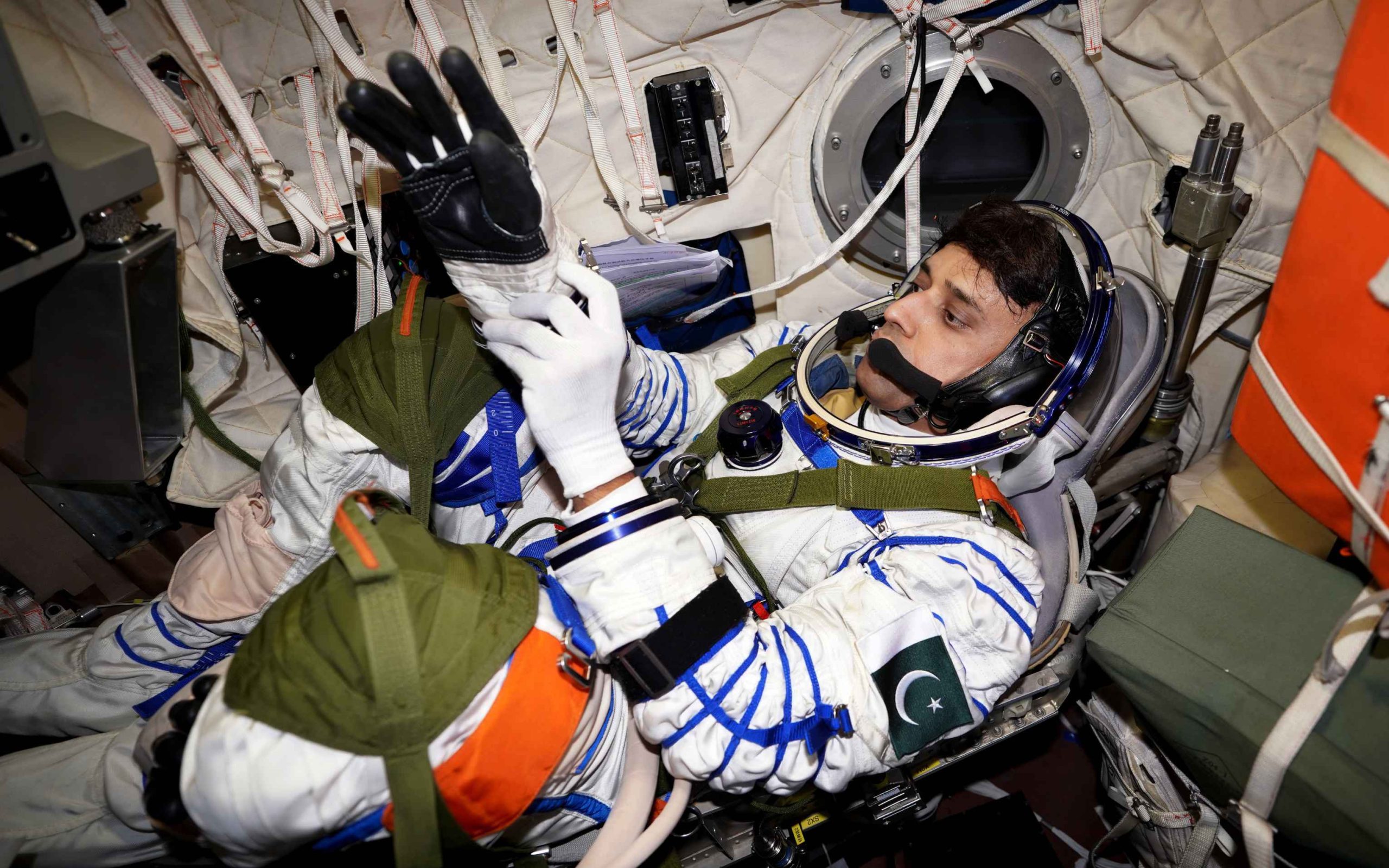
According to the China Manned Space Agency (CMSA), crew members include the country’s first foreign astronaut, 40-year-old Pakistani payload specialist, Muhammad Zeeshan Ali, as well as two Chinese astronauts – 51-year-old mission commander Tang Hongbo and 39-year-old flight engineer Wu Yi.
Of the three crew members, Tang was the only one who had been to space before, having carried out two spaceflights previously.
The launch took place at the Jiuquan Satellite Launch Centre in northwest China, with the Shenzhou-24 spaceship docking with Tiangong the same day at 11:56 am.
The historic milestone of the Shenzhou-24 was not lost on Ali, who said in English during a press conference on 24 November 2026, “I carry the name of Pakistan on my shoulder, the hopes of 250 million Pakistanis.”
The Pakistan Air Force pilot and Air Force lieutenant colonel added, “to every child who is watching while I’m in orbit, just look up at the sky and remember that I am up there with your dreams.”
He also noted that China and Pakistan were able to transform him from a pilot into an astronaut in a “remarkably short span of time.” Ali’s official biography indicates that he was selected as one of China’s first batch of foreign astronauts for its manned space programme in April 2026.
According to media reports, the Pakistani astronaut will spend roughly one week on board the Tiangong space station, where he will be joined by his two Shenzhou-24 crew members, in addition to the Shenzhou-23 astronauts already stationed in the facility.
During the Shenzhou-24 mission, the crew will carry out 90 scientific experiments and technology tests.
CMSA spokesman Zhang Jingbo said at a press conference on 24 November 2026 that main objectives of the mission included carrying out rotation with the Shenzhou-23 crew, maintaining regular operation of the space station, conducting maintenance on the facility, organising public outreach activities, as well as space experiments.
Zhang mentioned that the experiments and tests would cover areas such as space life science, space materials science, microgravity fluid physics and combustion science, aerospace medicine and new aerospace technology.
The CMSA spokesman pointed out that space offers scientists conditions that are difficult to replicate on Earth, opening the door to new breakthroughs and discoveries.
“China will continue to use the space station as a national space laboratory to steadily advance space science, space applications and space technology, better serving sci-tech progress and economic and social development,” Zhang said.
At the same briefing, CMSA said China was targeting a crewed lunar landing by 2030.
Ali alluded to such future development during his press conference, telling reporters that his hope was the mission would serve as “a launch pad” for further Sino-Pakistan space cooperation involving “multiple joint flights to [the] moon, Mars and beyond.”
With the Shenzhou-24 mission underway, Hong Kong’s first astronaut and the first female payload specialist selected from Hong Kong and Macao, Lai Ka-ying, is set to return to Earth together with her fellow Shenzhou-23 crew member Zhang Zhiyuan and Shenzhou-24’s Ali.
For Lai, the return home will conclude a space mission that has lasted 184 days as of 24 November 2026 – setting a new record in China for the longest time in orbit by a female astronaut.
[See more: Hong Kong’s first astronaut Lai Ka-ying greets students from space station]
Zhang Jingbo praised the Hong Konger for successfully completing all her delegated tasks diligently and in a practical manner.
Meanwhile, media reports note that Shenzhou-24’s Tang and Wu will remain in Tiangong for roughly six months. They will be accompanied by Shenzhou-23 astronaut Zhu Yangzhu, who will spend another six months in space, as part of a one-year stay experiment.
The Chinese and Pakistani governments have reacted positively to the space mission. Speaking to reporters on 24 November 2026, Chinese Foreign Ministry spokesman Guo Jiakun noted that it was “the first of its kind in the history of China’s manned space program,” with Ali being “the first visiting foreign astronaut to China’s space station.”
Similarly, Pakistani Prime Minister Shehbaz Sharif wrote on social media on 24 November 2026 that the mission was a “historic first” and “a moment that belongs to every Pakistani.”