Hong Kong’s first astronaut Lai Ka-ying spent 90 minutes on 9 September answering questions from students on AI, animals in orbit and her rigorous training
Hong Kong’s first astronaut Lai Ka-ying greets students from space station
Article by:
PUBLISHED:
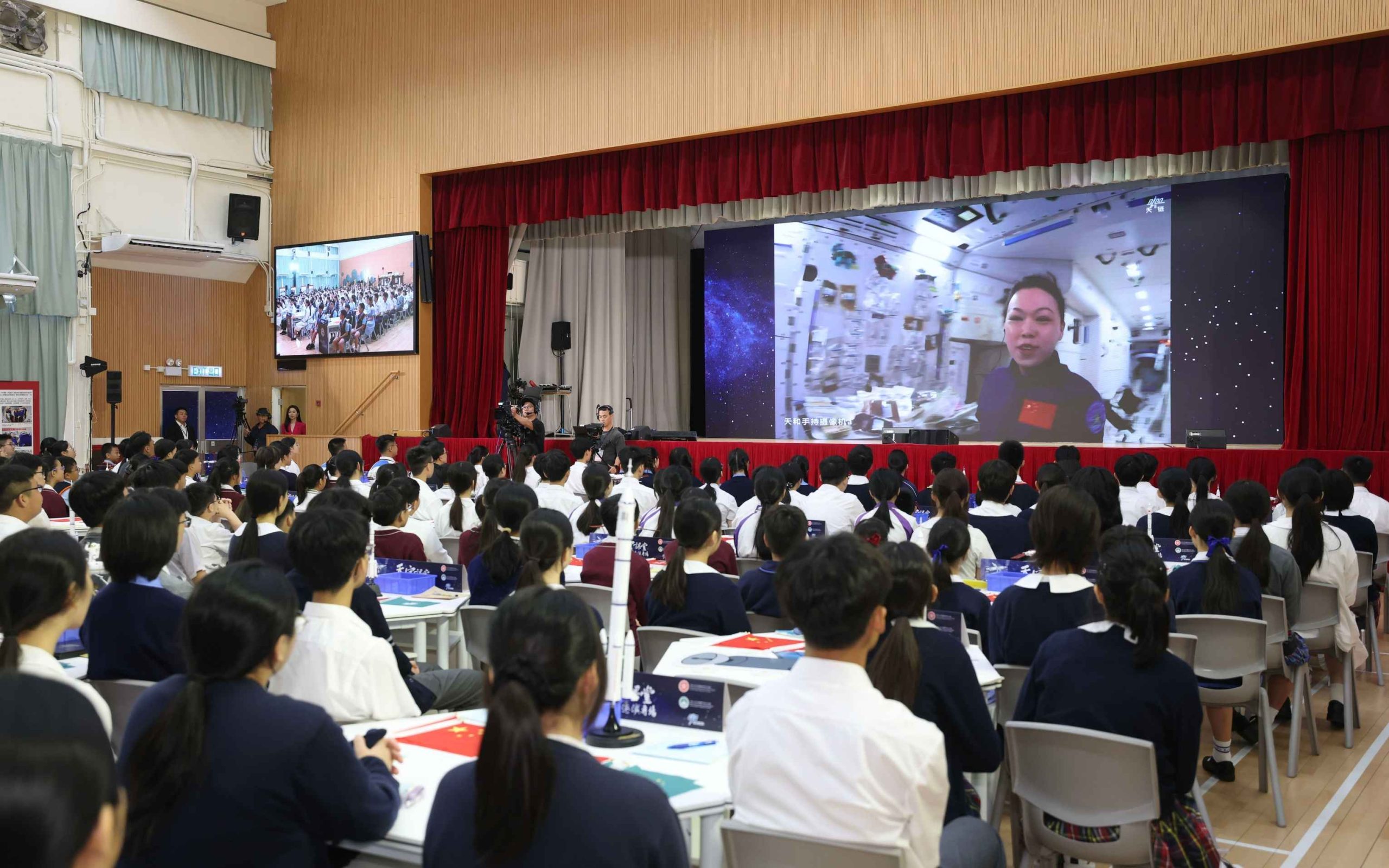
The crew of China’s Shenzhou-23 space mission, including Hong Kong’s first astronaut Lai Ka-ying, delivered a live science lesson for Hong Kong and Macao students from space on the morning of 9 September 2026.
Lai was joined by her two crew members – mission commander Zhu Yangzhu and astronaut Zhang Zhiyuan – in a 90-minute session that was beamed to her alma mater (Tsuen Wan Public Ho Chuen Yiu Memorial College) and broadcast live on television, as well as across schools in both SARs.
According to Chinese state media, around 160 Hong Kong students and 50 Macao students participated in the main Hong Kong lecture, which was officially referred to as the “Tiangong Class” – a reference to the Tiangong Space Station where the three astronauts are currently based.
What did Lai Ka-ying do during the lesson?
During the session, the Shenzhou-23 crew discussed the Tiangong Space Station’s instruments and experimental facilities, as well as other areas of interest. This included the station’s space vegetable garden, space kitchen and space food such as red braised pork, black pepper beef and cake.
On the latter, Lai, who delivered large parts of her lecture in Cantonese, said it reminded her of her favourite snack, Hong Kong’s popular egg waffles.
Experiments were also conducted for the students, with Lai wringing a wet towel in a weightless environment and using a running machine.
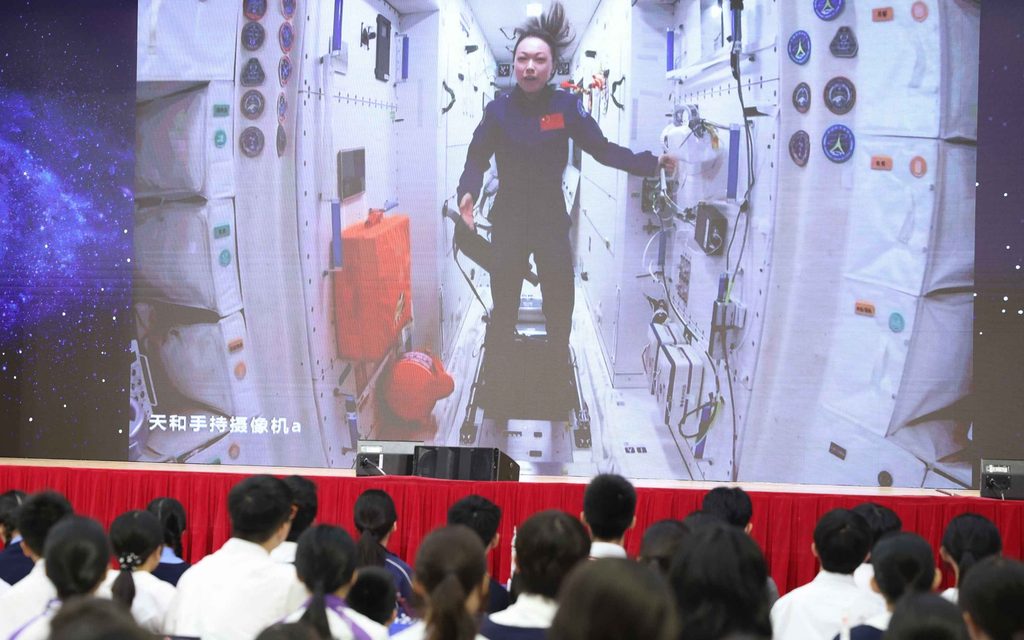
After the demonstrations, China’s first female payload specialist presented her bed, which was decorated with pictures of her family and a doll of Little Grape, the anti-scam mascot of the Hong Kong Police Force, where she served.
Directing the students’ attention to the window next to her bed, Lai said the Earth appeared particularly big and beautiful from that vantage point.
“When we pass over China, I always look for the Greater Bay Area,” the astronaut said. “Although Hong Kong is very small in size, when we fly past her at night, she appears as a very bright light.”
What questions did students ask Lai Ka-ying and the other Shenzhou-23 astronauts?
A Q&A session was held during the Tiangong Class, giving six Hong Kong students and two Macao students the rare chance to ask the astronauts questions.
When asked by Hong Kong’s Erudite Government Primary School student Lam Hoi-yi about the use of AI in their missions, Lai said AI and robots were being trialled and studied in the space station, with more powerful AI systems expected to be employed in the future.
[See more: Shenzhou-23 crew completes mission’s first spacewalk]
Meanwhile, Hung U Hei of Macao’s Hou Kong Middle School asked the astronauts whether they kept any animals in space. Zhang replied that the space station had conducted experiments with species such as mice, zebrafish and roundworms.
Cheong Wing Man, a Macao student from Sacred Heart Canossian College (English Section), also posed a question, asking the astronauts about their most memorable challenge during their space training. Lai said that hers was training in the desert for 48 hours, 72-hours of sleep deprivation and living in a cave for six days and five nights.
How did the class end?
Before the Tiangong Class concluded at around 11:30 am, Lai spoke with Hong Kong Chief Executive John Lee and responded to letters from students of the two SARs.
“My presence in space has demonstrated how the nation supports and attaches importance to Hong Kong,” Lai said. “We are very lucky to experience an era of a strong and thriving nation.”
She added that a person’s family background, age and identity should never limit how far they go in life, telling the students that all achievements come from a willingness to strive, learn and persist.
What is Lai Ka-ying doing in space?
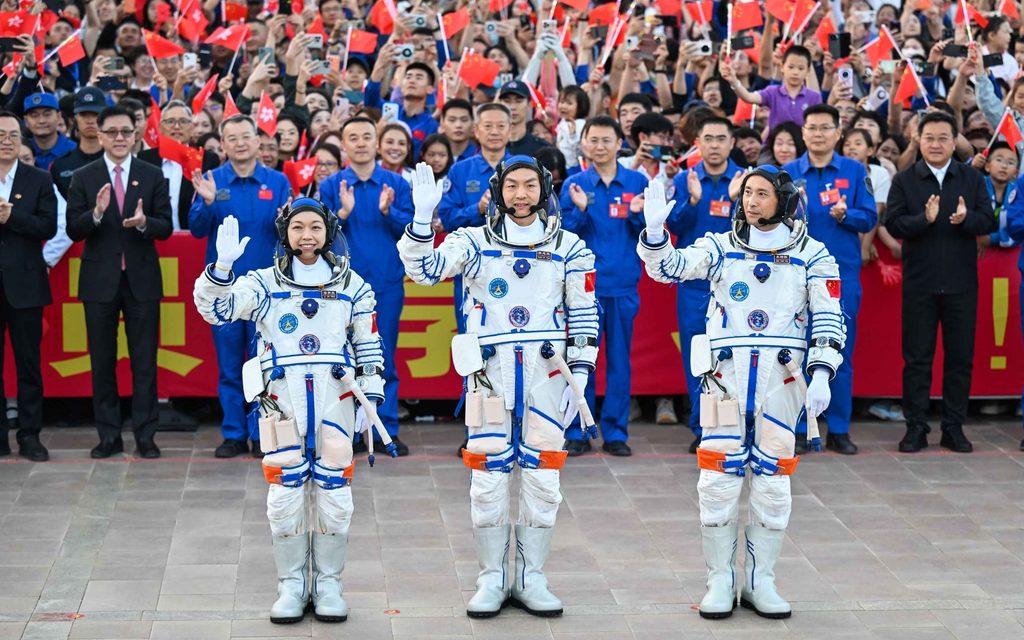
Over 100 experiments relating to areas such as life sciences, medicine, materials science and fluid physics are set to be carried out during the mission, which is part of China’s broader ambitions to land its first astronauts on the moon by 2030.
The mission is notable for featuring Hong Kong’s first astronaut, Lai. The former Hong Kong police superintendent, who holds a PhD in forensics, was chosen from roughly 120 Hong Kong applicants during China’s fourth batch of astronaut recruitment in 2022 before being selected for the space programme in 2024.