The same robot went on to break the 400m world record too, as the Beijing Games expanded to 51 events this year
Shenzhen-backed robot breaks Usain Bolt’s 100m record
Article by:
PUBLISHED:
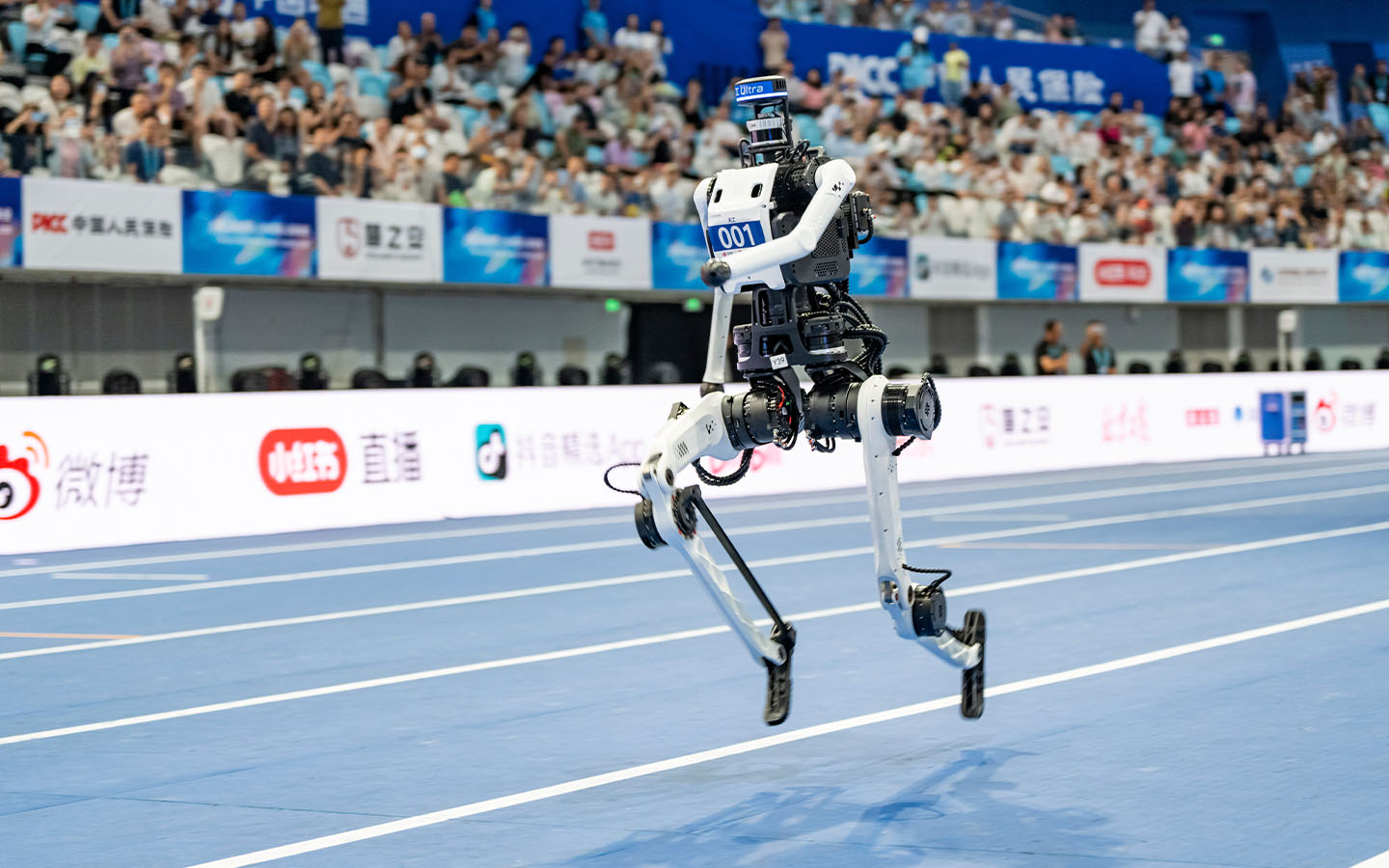
A Shenzhen-backed humanoid robot broke Usain Bolt’s 100m world record on Saturday. Tiangong Ultra, developed by a Beijing research centre backed by Shenzhen based UBTECH Robotics, ran 100 metres in 9.39 seconds during a preliminary heat at the second World Humanoid Robot Games in Beijing, beating Bolt’s 9.58 second record set in 2009.
What is Tiangong Ultra’s Shenzhen connection?
Tiangong Ultra was developed by the Beijing Humanoid Robot Innovation Centre, of which Shenzhen-based UBTECH is a founding and primary shareholder. The result marks a dramatic improvement from last year’s inaugural Games, when the same robot won the 100 metre event in 21.50 seconds, more than twice as slow.
What happened after the 100m race?
Honor’s Lightning robot also beat Bolt’s mark in the same heat, finishing in 9.47 seconds, though it fell behind Tiangong Ultra late in the race. Both robots struggled to stop afterward, slamming into padded barriers at the finish line, with Lightning collapsing and being carried off on a stretcher.
[See more: The 2026 Hengqin Marathon is set for December with a bigger purse]
Did Tiangong Ultra break any other records?
The following day, Tiangong Ultra broke a second human record, winning the large group 400 metre final in 38.15 seconds, faster than South African sprinter Wayde van Niekerk’s 43.03 second world record set at the 2016 Rio Olympics, a mark that had stood for a decade.
[See more: Robots are already part of the GBA. What happens next?]
Van Niekerk reportedly sent a congratulatory video message after the result, and Elon Musk shared footage of the win on X, according to social media posts.
How big are the Games now?
Now in its second edition, the World Humanoid Robot Games features 51 events this year, including 30 sports competitions and 21 scenario-based contests such as simulated factory and office tasks. Organisers say more than 40 percent of these tasks require robots to operate fully autonomously.