We explain the cooperation zones, policies and other key terms that frequently appear in official Greater Bay Area documents
Greater Bay Area jargon: 30 key GBA terms explained
Article by:
PUBLISHED:
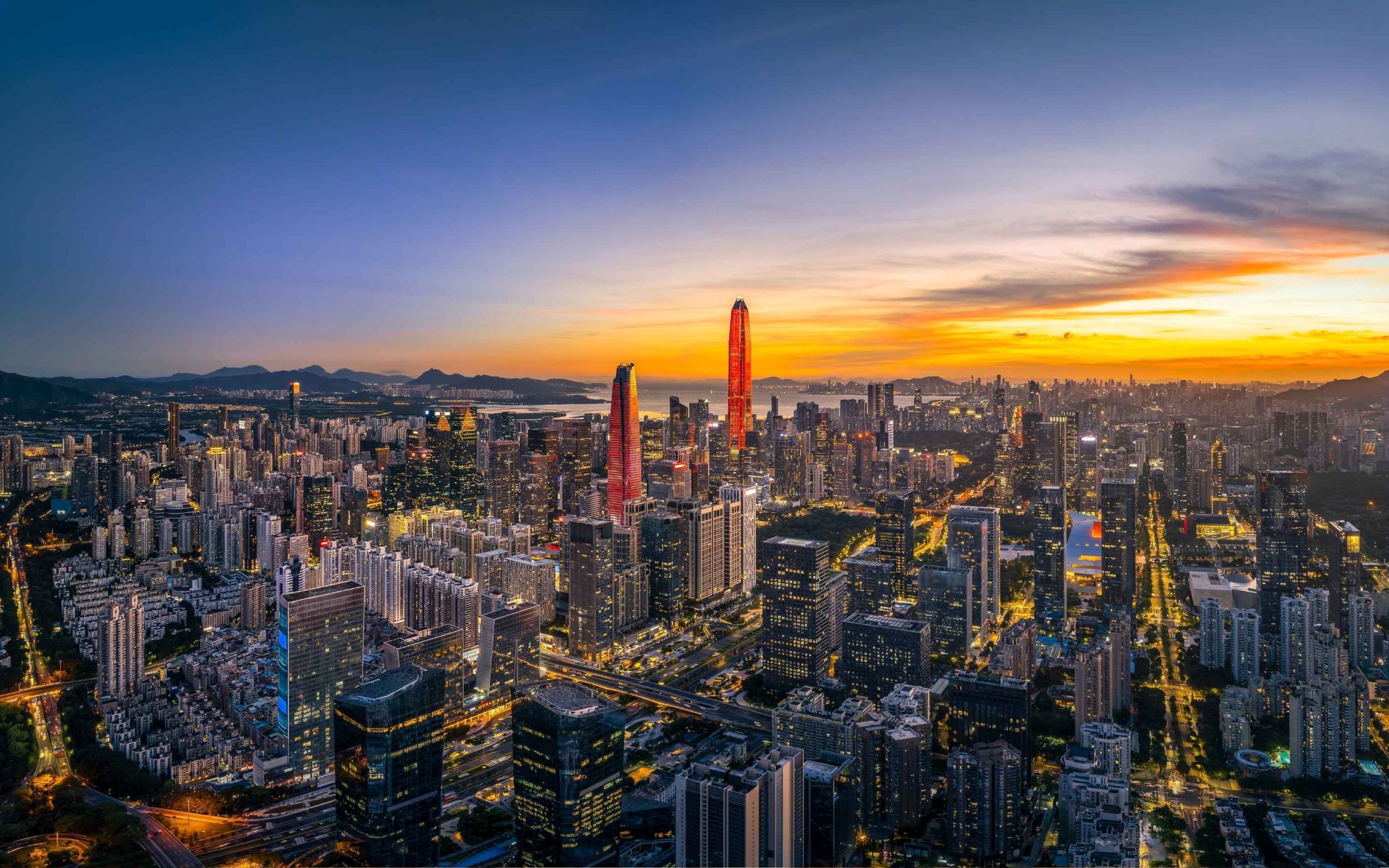
Reading official documents about China’s Greater Bay Area (GBA) can be challenging for many people due to a large number of unfamiliar and at times vague expressions. This guide helps you out by defining 30 key terms of the GBA, grouped by theme.
If you would like to know more about the GBA in general, check out this article, which answers all the key questions about the region.
The GBA at a glance:
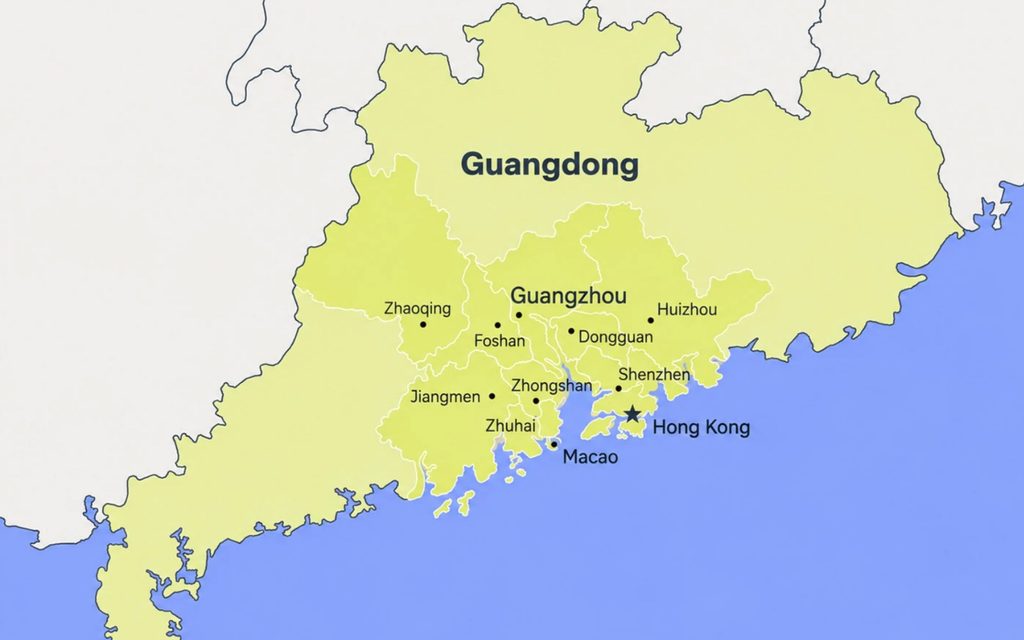
- 11 cities: Guangzhou, Shenzhen, Zhuhai, Foshan, Huizhou, Dongguan, Zhongshan, Jiangmen, Zhaoqing, Hong Kong and Macao.
- Population: Over 88 million people
- GDP (estimated): Over 15 trillion yuan (US$2.23 trillion) in 2025
- Area: Around 56,000 square kilometres
Source: Hong Kong Government’s GBA Portal, current as of September 2026
1. General terminology about the Greater Bay Area
Guangdong-Hong Kong-Macao Greater Bay Area (GBA): A Chinese government policy initiative that links 11 cities in south China’s Guangdong province into one integrated mega city region. The region is not a single jurisdiction, but is rather a strategic economic zone with various municipalities operating under three different political, legal and economic systems. The three administrative areas covered by the GBA include nine cities in Guangdong Province and the Special Administrative Regions (SARs) of Hong Kong and Macao.
Pearl River Delta: Often confused with the GBA, the Pearl River Delta refers to a geographic region surrounding the Pearl River Estuary in Guangdong Province. It traditionally refers to an area covering the nine mainland cities that are now part of the GBA. The mix-up with the GBA arises from the authorities’ earlier use of terms such as “Greater Pearl River Delta” (GPRD) and “Pearl River Delta Urban Agglomeration” to refer to ideas of a megalopolis that also encompasses Hong Kong and Macao.
[See more: What is China’s Greater Bay Area (GBA)? A simple guide]
Outline Development Plan (18 February 2019): Arguably the most important policy document relating to the GBA, the Outline Development Plan of February 2019 consists of 11 chapters that set out the goals and directions for the region’s development. It lists the strategic positioning of the various cities, outlining long-term goals that carry through to 2035. Among the various aims, the Chinese government is hoping to turn the GBA into “a vibrant world-class city cluster” and “a globally influential international innovation and technology hub.”
2. The GBA’s development plans
15th Five-Year Plan (2026-2030): A national government policy document that guides China’s overall economic and social development goals between 2026 and 2030. The indicators and targets outlined in the national plan inform the blueprints of regional and local government plans. The Guangdong provincial government published its own 15th Five-Year Plan on 28 April 2026, putting the GBA at the forefront of its economic and social goals.
Macao’s Third Five-Year Plan: Released by the Macao government on 18 August 2026, Macao’s Third Five-Year Plan is a 150-page document outlining the city’s various development goals between 2026 and 2030. Notably, the plan doubles down on economic diversification, with a target of non-gambling GDP of 60 percent by 2030. It is aiming to achieve this through four major infrastructure projects, as well as deeper cooperation between Macao and Hengqin.
Hong Kong’s First Five-Year Plan: Hong Kong’s first-ever five-year plan debuted on 16 September 2026 and is particularly significant, as it marks the city’s further alignment with China’s national development. At 132 pages, the document defines Hong Kong’s economic and social agenda between 2026 and 2030, focusing on areas such as the ongoing construction of the Northern Metropolis development in the New Territories and the city’s status as an international financial centre.
3. The GBA’s four cooperation zones
Hengqin: Hengqin is a 106-square-kilometre island district of Zhuhai designated as one of the GBA’s four cooperation zones – areas set up by the Chinese government with the express purpose of facilitating integration between mainland China, Hong Kong and Macao, and promoting trade and innovation.
Hengqin became the Guangdong-Macao In-Depth Cooperation Zone in Hengqin on 17 September 2021, shortly after its general master plan was promulgated on 5 September 2021. Under the master plan, the island is jointly managed by the Guangdong and Macao governments and is strategically positioned to serve Macao, helping the city to diversify its economy, alongside providing residents with more living space. Despite its close ties to Macao, Hengqin remains part of mainland China and does not operate under Macao law. As a result, there are still hard borders between the two areas.
Qianhai: Qianhai is a district in Shenzhen that was officially designated as the Qianhai Shenzhen-Hong Kong Modern Service Industry Cooperation Zone in August 2010. As the name suggests, Qianhai is positioned to strengthen ties between mainland China and Hong Kong across various service industries. The cooperation zone has grown significantly in size since it was first established, expanding from an initial area of 14.92 square kilometres to 120.56 square kilometres in 2021.
[See more: What languages are spoken in China’s Greater Bay Area?]
Nansha: Located in Guangzhou, Nansha is the largest of the four cooperation zones, with an area of 803 square kilometres. Unlike its counterparts, Nansha is not tied down to one specific SAR, but has a broader agenda of fostering development between Guangdong, Hong Kong and Macao across industries such as technology, finance and innovation.
Hetao: The smallest of the cooperation zones, Hetao is part of Shenzhen and has an area of around 3.89 square kilometres. Officially, it is known as the Hetao Shenzhen-Hong Kong Science and Technology Innovation Cooperation Zone and is focused on spurring collaboration between Shenzhen and Hong Kong in the field of tech and science innovation. To that end, the zone operates a 3.02 square kilometre science park known as Shenzhen Park, which is closely tied to the Hong Kong Park on the Hong Kong side. Under the “one zone, two parks” framework, both venues house companies that engage in cross-border collaboration and development.
4. Common cross-border terms used in the GBA
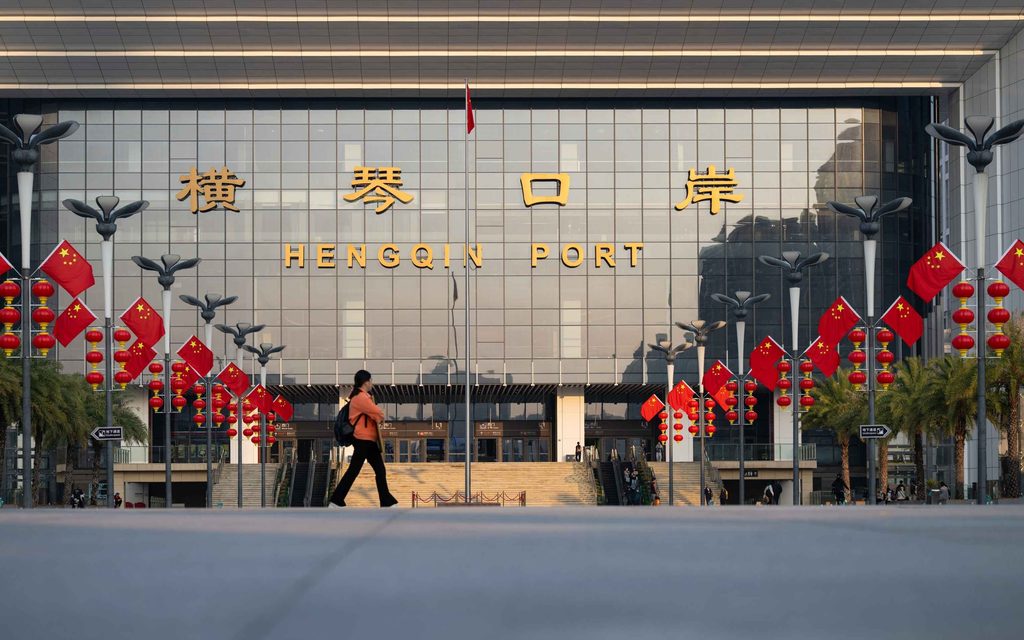
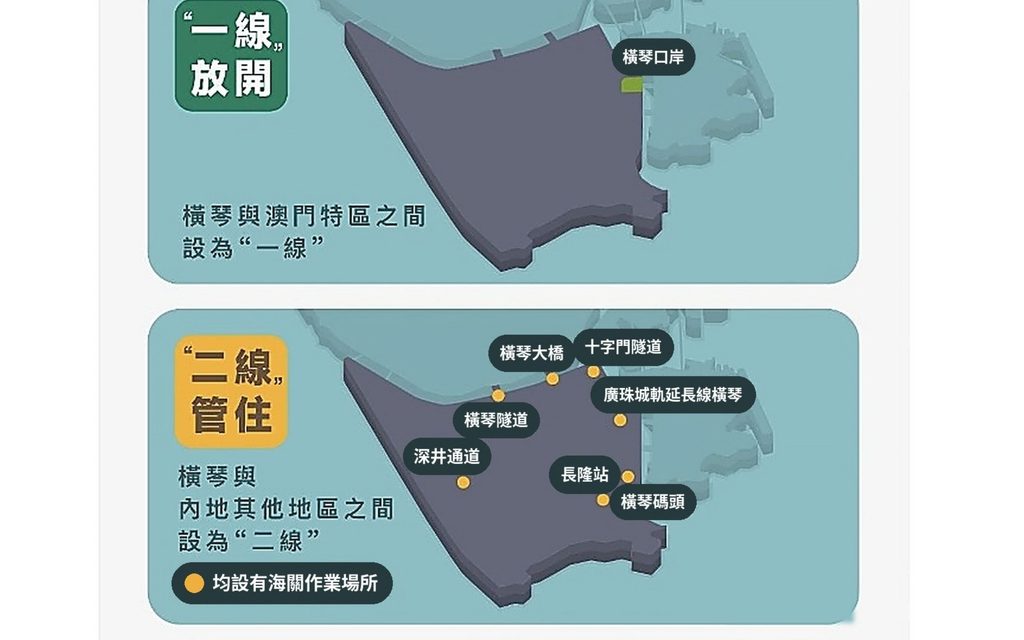
First-line/Second-line: These two terms are used to refer to the customs boundaries that separate Hengqin, Macao and mainland China. First-line refers to the checkpoints and other customs areas that exist between Hengqin and Macao, namely Hengqin Port. Meanwhile, Second-line represents the customs areas separating Hengqin with the rest of mainland. Examples of this channel include the Hengqin Bridge, Hengqin Tunnel, Hengqin Ferry Terminal and Guangzhou-Zhuhai Intercity MRT Extension Line stations such as Hengqin North and Hengqin.
The idea of first- and second-line was introduced on 1 March 2024 to further streamline the flow of people and goods between Hengqin and Macao. For instance, eligible goods entering Hengqin via the first line are exempted from tax, while eligible Macao students passing through the first line can carry out customs clearance without leaving their cross-border buses.
Co-location clearance: A streamlined method of clearing checkpoints between cities such as Macao and Zhuhai or Hong Kong and Shenzhen that enables passengers to carry out document inspection and identity verification for both places in one location. Under the traditional clearance method, border crossers were required to carry out these checks on respective sides of the borders with the SARs and the mainland. Co-location clearance is also referred to by other names such as “collaborative inspection and joint clearance.”
One-hour living circle: A term used to describe the idea of people being able to commute between the major cities of the GBA within one hour. In order to realise this vision, governments in the region have been expanding infrastructure and transport links across the cities and implementing policies that facilitate cross-border travel.
HZMB: The Hong Kong-Zhuhai-Macao Bridge (HZMB) is an approximately 55 km long sea crossing that runs across the Pearl River Estuary, connecting the three separate jurisdictions of Hong Kong, Macao and Zhuhai. Opening to traffic on 24 October 2018, the HZMB is the world’s longest cross-sea bridge, playing a key role in streamlining the flow of people and goods within the GBA.
Northbound and Southbound travel schemes: These travel schemes allow eligible private vehicles to carry out cross-border travel between mainland China and the SARs of Hong Kong and Macao. The Northbound Travel Scheme comes in versions for Hong Kong and Macao vehicles, permitting authorised non-commercial vehicles from either of the SARs to travel to Guangdong via the HZMB. Meanwhile, the corresponding Southbound travel programme allows approved Guangdong vehicles to enter Hong Kong via the HZMB.
5. GBA documentation
Hong Kong and Macao Travel Permit: Also known as the Exit-Entry Permit for Travelling to and from Hong Kong and Macao or the Two-way Permit, this is the main travel document that mainland Chinese residents use to enter the SARs. The card is issued by China’s National Immigration Administration and lists the exit endorsement at the back, which includes tourism, business and visiting relatives.
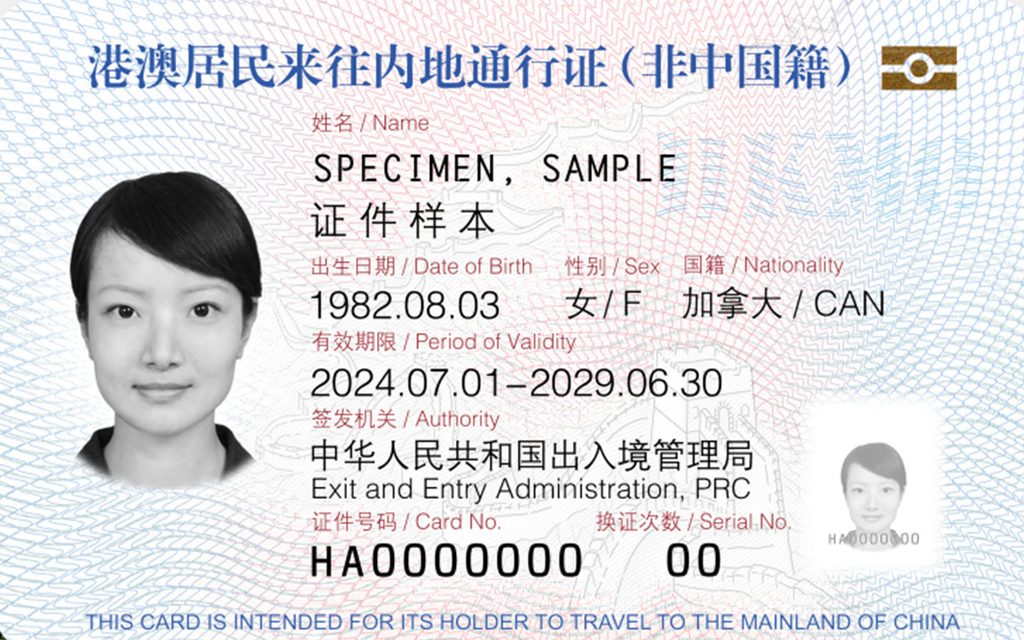
Home Return Permit: Officially known as the Mainland Travel Permit for Hong Kong and Macao Residents, the Home Return Permit is the travel document that Hong Kong and Macao permanent residents of Chinese nationality use to enter and exit mainland China. The mainland China-issued card allows holders to freely travel within the country for tourism and business purposes. A version of the Home Return Permit for Hong Kong and Macao permanent residents who are not Chinese citizens was introduced on 10 July 2024, capping the length of their stay to 90 days.
Residence Permit for Hong Kong, Macao and Taiwan Residents: An identity document issued by China’s National Immigration Administration that is used by Hong Kong, Macao and Taiwan residents who are permanently working, living or studying in mainland China. It grants holders access to public services in mainland China and streamlines their work, study and life.
[See more: How China’s Greater Bay Area cities fit together: Who does what?]
Visa-free entry and 240-hour transit: China began implementing a unilateral visa-free entry policy for nationals of selected countries from 1 December 2023. The initiative grants 30 days of visa-free stay in mainland China for the eligible overseas passport holders, and is currently scheduled to expire on 31 December 2026, with a few nations being exempted. For a full list of the countries on China’s visa-free list, click here.
The Chinese government has also introduced a 240-hour visa-free transit policy that allows citizens from dozens of countries to stay in designated areas in China for up to 10 days when they can present a ticket showing that they are headed for a third country or region. Some of the GBA ports covered by the scheme include Guangzhou Baiyun International Airport, Shenzhen Bao’an International Airport and Hengqin Port.
6. Key GBA terms relating to money, tax and talent
Financial Connect schemes: A series of programmes driven by the Hong Kong and mainland Chinese governments to strengthen financial ties and the flow of capital between Hong Kong and mainland China. The first Connect initiative was Shanghai-Hong Kong Stock Connect, which launched in November 2014 and opened up market access between the stock exchanges in Hong Kong and Shanghai. Subsequent programmes focused on further Hong Kong and mainland China’s financial links in areas such as interest rate swaps, wealth management, bond markets and payment systems.
Talent schemes: There is no one unified GBA talent scheme. Each GBA city has their own separate programmes to attract domestic and overseas professionals, competing for the same people. For example, Hong Kong is home to the Top Talent Pass Scheme (TTPS), which seeks to lure high-income individuals and graduates of prestigious universities, as well as the Quality Migrant Admission Scheme (QMAS), which gives skilled foreign individuals the opportunity to settle in the city. Macao has three similar programmes that are aimed at recruiting high-end professionals, outstanding professionals and advanced professionals.
GBA preferential individual income tax (IIT) subsidy: To incentivise high-end and in-demand overseas professionals to settle in the GBA, the Chinese authorities introduced the GBA preferential individual income tax (IIT) subsidy in 2019, with each of the nine mainland GBA cities implementing their own versions. Due to expire on 31 December 2027, the measure provides eligible professionals with a subsidy for any additional IIT payments made to any of the nine GBA cities, which exceeds 15 percent, with the cap set at 5 million yuan per person.
The GBA IIT subsidy is not the only income tax subsidy programme in the GBA, as Hengqin also offers a similar programme, capping income tax for qualified domestic and overseas professionals and eligible Hengqin-based businesses at 15 percent.
7. GBA terms specific to Macao and Hong Kong
Macao’s 1+4 appropriate economic diversification: A development strategy adopted by the Macao government to diversify the city’s economy away from its core industry of gambling. The 1 represents the central pillar of tourism, while 4 denotes the SAR’s four emerging industries of life sciences, financial services, technology, and event production.
Forum Macao and the Sino-Lusophone platform: Established by China’s central government in October 2003, Forum Macao is a Macao-based intergovernmental platform that is aimed at strengthening economic and trade ties between China and Portuguese-speaking countries. The cooperation mechanism is officially known as the Forum for Economic and Trade Co-operation between China and Portuguese Countries (Macao) and consists of 10 members, including China and 9 lusophone countries.
Forum Macao is just one part of Macao’s ongoing efforts to establish itself as a platform for the strengthening of ties between China and Portuguese-speaking countries. In an effort to become such a Sino-Lusophone platform, Macao has sought to promote cultural and business exchange through events such as the China-Portuguese-Speaking Countries Economic and Trade Expo (C-PLPEX) and the annual Lusofonia Festival.
Northern Metropolis and San Tin Technopole: The Northern Metropolis is an urban development project that the Hong Kong government has been working on since 2021 to boost the city’s living space and economic development opportunities. Covering an area of around 30,000 hectares, it spans the Yuen Long District and North District, sharing a border with Shenzhen.
One of the key elements of the Northern Metropolis is San Tin Technopole, a centrally-located technology hub covering an area of around 626 hectares that is set to house a concentration of technological developments, as well as living spaces.
8. Other GBA phrases
High-quality development: In the GBA, “high-quality development” refers to transforming the region into an internationally competitive and highly integrated bay area that is both innovative and outward-looking. On 4 December 2025, Guangdong unveiled a plan to boost high-quality development across the GBA’s nine mainland cities, which included measures such as strengthening collaboration platforms and establishing a world-class cluster of airports and ports.
New quality productive forces: This term describes an economic development model in which innovation, high-efficiency and high-quality development methods are prioritised over traditional ones that focus on quantity and the intensive use of labour.
Interconnectivity: In the context of the GBA, interconnectivity means linking the region’s 11 cities together, so that they function as one unified region, with the whole greater than the sum of its parts. Interconnectivity in the GBA comes in two types – hard connectivity and soft connectivity.
Hard connectivity refers to the physical infrastructure such as the HZMB or land checkpoints like the Huanggang Port that connect the various GBA cities together. Soft connectivity means the regulatory measures, rules, institutional frameworks and digital systems that help to bind the cities together. Examples include Guangdong allowing Hong Kong and Macao lawyers to practise in the province or Macao and Hong Kong integrating mainland Chinese payment options such as WeChat or AliPay.
[See more: Moving to the mainland cities of China’s Greater Bay Area: An expatriate guide]
Integration into the overall national development: Often used in conjunction with Hong Kong and Macao, this phrase refers to the GBA or any of its cities closely aligning their development plans, targets and strategies with those of China in order to serve the country’s national interests. One example includes Hong Kong’s inaugural five-year plan, which is intended to synchronise with China’s broader targets, as outlined in the country’s 15th five-year plan. Similarly, Macao’s integration into China’s development is well-exemplified by its efforts to integrate with Hengqin, which is in line with the nation’s efforts at promoting innovation and diversified development.
World-class bay area: The GBA’s end-goal of turning into a major internationally-recognised bay area that is as equally competitive as counterparts such as the San Francisco Bay Area in the US and the Tokyo Bay Area. It is a vision rather than a policy measure.
UPDATED: 21 Sep 2026, 5:44 pm