Ahead of the 20th anniversary of Andrew Stow’s passing, Eileen Stow reflects on how a salary dispute, a move to Macao and persistence turned a pastry into an icon.
Lord Stow’s Bakery: how a rejected salary raise led to Macao’s most iconic egg tart
Article by:
PUBLISHED:
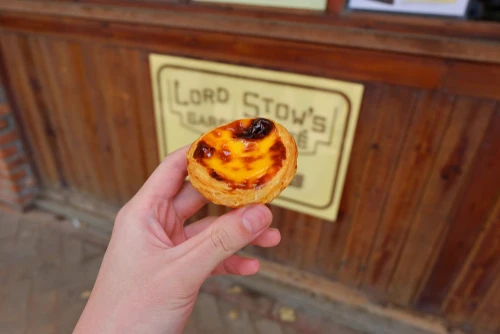
This Sunday marks the 20th anniversary of the sudden passing of Andrew Stow, the man behind the beloved Macao egg tart and the reason why we still argue about the pastry today.
There are few iconic treasures in Macao that are as recognisable as that yellow burnt tart. It has emerged as a must-try for foodies and casual visitor alike. On social media posts, it is branded as a signature gastronomic experience in a city where Portuguese and Chinese cultures coexist. Everyone carries an opinion on who makes the best egg tart, or at least who sells the most authentic Macao pastel de nata. It’s a debate that triggers countless polls, surveys, and endless conversations about food history.
Among the most popular versions are those from Lord Stow’s Bakery, founded by Andrew Stow, an Englishman from Essex. Eileen Stow, Andrew’s younger sister and the chief executive of Lord Stow’s Bakery, shares this simple advice: Just buy the one you like.
[See more: Hong Kong bakery beats Macao in Bloomberg’s Portuguese-style egg tart list]
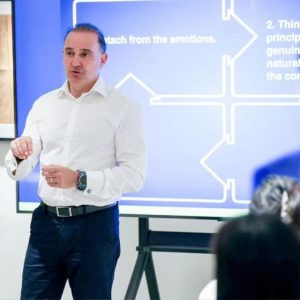
Speaking at a Monday evening gathering at the Artyzen Grand Lapa Macau, the BritCham Macao chair took those in attendance down memory lane, recounting a tale many were already familiar with though always seem to enjoy when narrated by her.
Before the era of edible souvenirs, there was an industrial pharmacist from Nottingham who left a managerial position that paid an inadequate salary. It would be one of the many sliding-door moments that Eileen would reference in her brother’s life, describing them as opportunities that exist because something else became unavailable.
Thanking Andrew’s former boss who refused to budge on his salary request, Eileen recalled the conversation she had with her brother when he accepted a job at Anglo French Laboratories in Macao. For her, only one question stood out from that memory.
“Where the heck is Macao?”
Arriving in 1979, Andrew made Macao home. He soon found an opportunity to sell health supplements, establishing Tropical Health Foods, a name chosen in part because the word “Tropical” is the same in both English and in Portuguese.
To support that venture, the Essex chap needed income. He took a corporate trainee position at the Hyatt Regency Hotel (now the Regency Art Hotel Macau), managing the Green Parrot Disco and Afonso’s, the premier Portuguese restaurant of the time, where he was dubbed “Lord Stow” by the Luso diaspora who required an Englishman to help them secure a table.
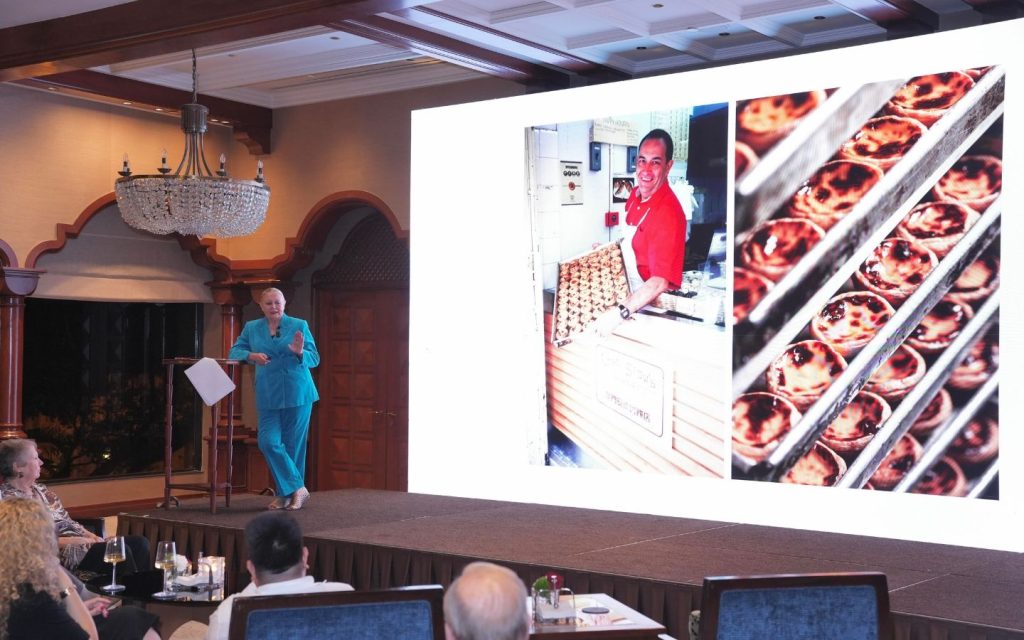
Lord Stow’s Bakery: the Coloane Shop
Lord Stow’s Bakery opened in Coloane in 1989, its name ensuring the local Portuguese community knew who was running the venue. In 1993, Eileen landed in Macao, commissioning new stores and a franchise model to drive the business. But with that success came the imitators.
Soon, yellow takeaway boxes featuring brown lettering and creative storefront names like “Lord Andrew” began sprouting up. “At some point cease and desist orders were not really effective anymore, with Andrew even going to one and asking them not to use his image,” Eileen shared. But after some time, it became an exercise in futility.
“All we could do was hope that those establishments would draw the traffic to us and take the compliment of being copied.”
[See more: BritCham Macao celebrates its 20th Anniversary amid a chaotic UK summer]
Other setbacks came and left, but none quite like the sudden loss of Andrew, who passed away from an asthma attack in October 2006 at the age of 51. It’s a loss that still weighs on the Stow family, but in business, the clock stops for no one. Without its founder whose name runs across the bakery’s sign, Eileen took control of the company, moving the group in the direction Andrew had envisioned.
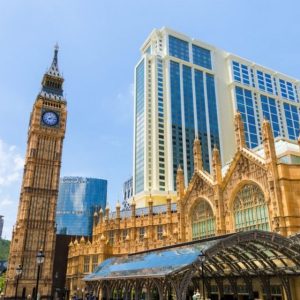
When a space inside the Venetian Macao became available, Eileen opened a Lord Stow’s Bakery & Café right beside the indoor canals, launching the shop in 2010 just a few years after the global financial crisis. More recently, that location went through a major renovation, which itself came on the heels of the pandemic when tourism was at a complete standstill.
“I can still remember tumbleweeds moving across those dry canals,” Eileen reflected. To fund the expansion, she sold her home in England, following in her brother’s footsteps when he sold his to bankroll the Macao business. “This is what you do when you believe in something.”
Celebrating Macao
The BritCham evening concluded with a toast from Andrew. Eileen shared a video from 2004 when her brother was celebrating his 25th anniversary in Macao. He began his speech only to quickly realise he didn’t have a glass to raise.
He remedied this by looking towards the crowd, making a “drinkie drinkie” motion with one hand before a wine glass was passed to him from someone out of frame, a gesture that Eileen employs, perhaps inadvertently learned from her sibling. His toast did not mention pastries or profits, but instead celebrated Macao, an unexpected home for him and a message that resonated with many of those in Monday’s attendance.
Each day more than 22,000 Lord Stow’s egg tarts are baked, feeding long queues that wait patiently for that burnt pastry. And while many await the experience of consuming an edible souvenir to participate in the “which is better debate”, what they are in fact buying is a story, one that has become an institutional pillar of Macao, and kept alive by a younger sister’s devotion.