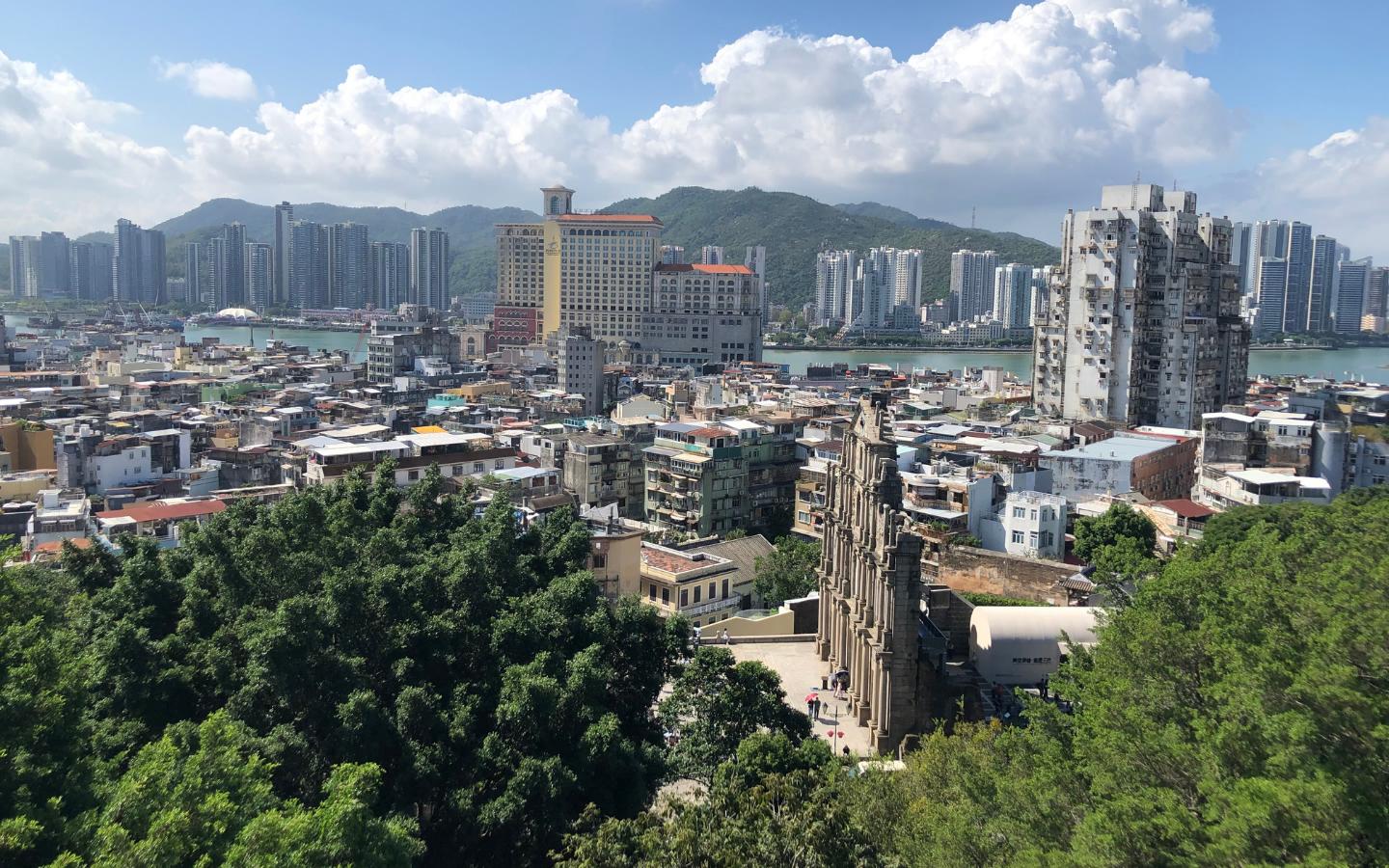
Despite the recovery in total visitors, international arrivals remain below their pre-pandemic levels, underscoring the challenges of becoming a world tourism hub.
Unpacking Macao’s endeavour for more international tourists
Article by:
PUBLISHED:
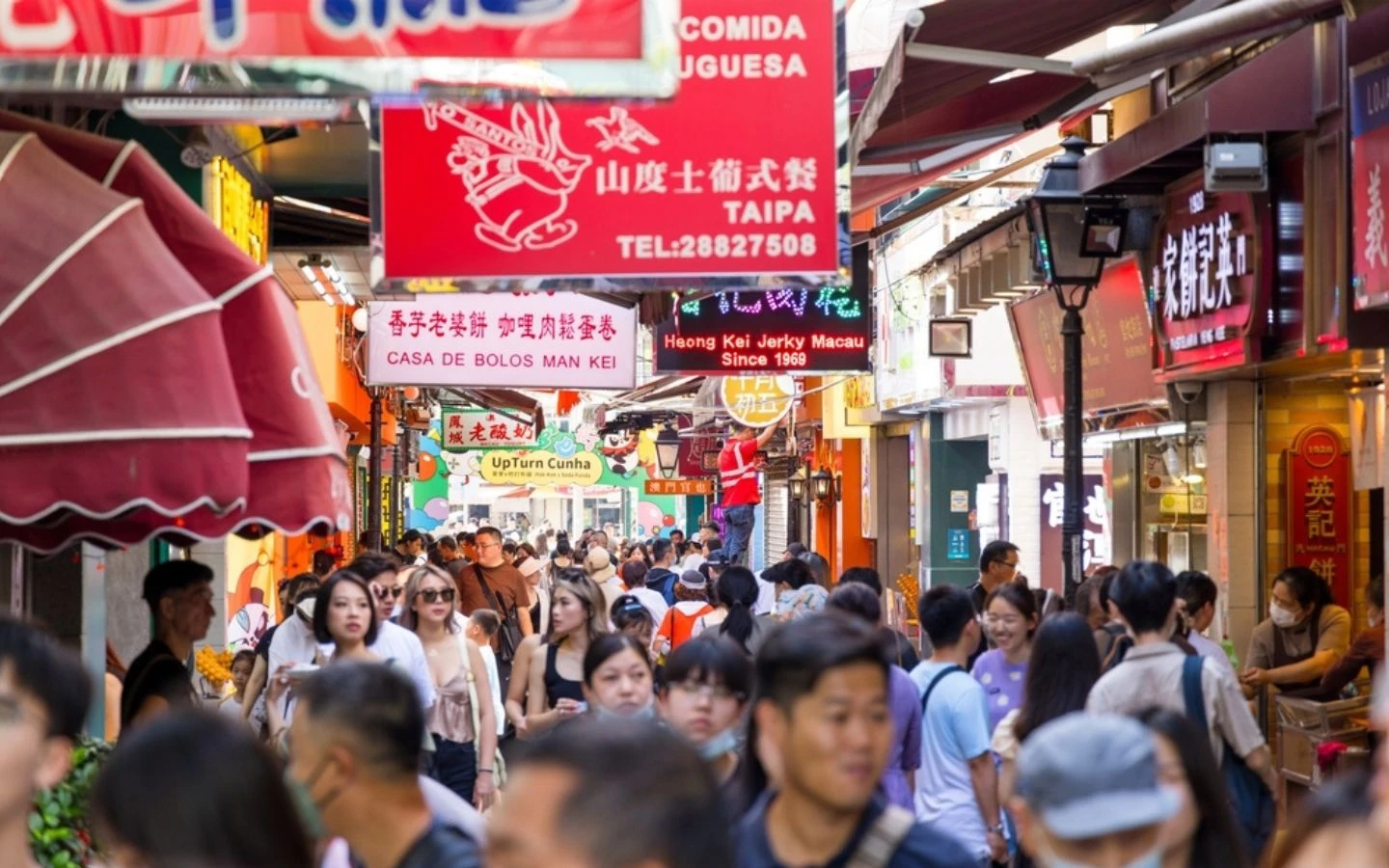
After a record-breaking 40 million tourists entered Macao last year, officials are forecasting at least 41 million for 2026 with current trends suggesting that the final tally could exceed that projection by nearly 10 percent.
Looser restrictions and expanded transportation options are helping. Due to geographic proximity, mainland Chinese day-trippers, particularly those from neighbouring Guangdong province, account for the bulk of the increase. And while fewer are staying the night, Macao is pulling tourists beyond traditional holidays like Chinese New Year or Golden Week, mirroring a larger trend of domestic leisure seekers traveling during off-peak seasons.
The present landscape stands in contrast to a few years ago when inflows stalled during the pandemic, amounting to just 19 million total arrivals during the three years between 2020 and 2022.
“Once travel restrictions were fully removed, an immediate focus was placed on Macao’s bread and butter market, namely Chinese tourists from Mainland China and Hong Kong,” said Macao Government Tourism Office (MGTO) director Maria Helena de Senna Fernandes at this year’s Skål Congress.
[See more: The Greater Bay Area’s unified tourism brand still ‘a work in progress’, experts tell Skål Congress in Macao]
“But with the momentum behind that recovery well underway, the attention is shifting towards international tourism,” she remarked, where officials are targeting 3 million arrivals for 2026 after welcoming 2.8 million last year. Because of their longer stays and higher spending profiles, economic incentives to draw more overseas travellers are compelling.
While international arrival numbers are trending higher, they remain below their 2019 pre-pandemic levels. For the first three quarters, Macao registered 1.9 million overseas visitors, a 3 percent increase from last year. In order to reach the 3 million goal, an additional 1.1 million would need to arrive over the three-month period ended December, representing a 21 percent increase from the fourth quarter of 2025, according to estimates by The Bay.
Getting to Macao
Transport constraints illustrate a primary bottleneck, experts point out. Passenger arrivals at Macao International Airport remain 20 percent below pre-pandemic levels while any meaningful pickup in international numbers will be difficult to obtain unless aviation routes expand beyond mainland China or Taiwan, which command the bulk of direct flights.
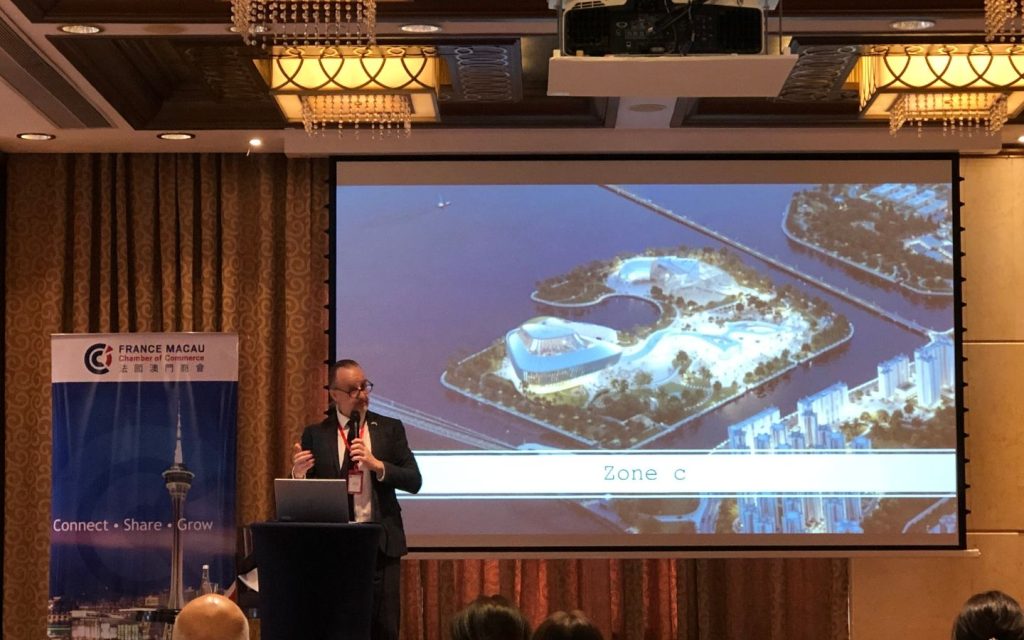
In that regard, Macao relies on airport clusters within the Greater Bay Area, said Glenn McCartney, associate professor of the Faculty of Business Administration at the University of Macao, speaking at France Macau Chamber of Commerce (FMCC) presentation early last week.
To support Macao’s international tourism ambitions, use must be made of regional hubs like Hong Kong, where roughly three-quarters of passengers are international arrivals and where the airport offers direct bus and ferry options into Macao. With an annual run rate of more than 65 million passengers, Hong Kong’s long-term master plan to expand its capacity to 120 million should yield noticeable benefits for neighbouring GBA cities like Macao, due to a growing preference for multi-destination itineraries according to MGTO surveys.
[See more: New Guangzhou-Macao flight set to launch]
Outside the SARs, easing visa restrictions into mainland China could also serve as a powerful catalyst to drive more traffic for Macao. Fewer constraints have already fuelled a surge in inbound tourism. In the first half of the year, nearly 23 million foreigners entered China, representing a 20 percent increase with visa-free arrivals accounting for about 78 percent of them, according to China’s National Immigration Administration.
Nearby airports like Shenzhen Bao’an and Guangzhou Baiyun, which together attract around 130 million passengers annually, each offer either an hour-long ferry or flight to Macao. Yet, like Macao International Airport, these hubs primarily serve mainland routes, with only around a tenth of flights currently dedicated to international long-haul destinations, limiting the immediate uptake.
Macao tourism: push and pull factors
The push to position Macao as a centre of tourism and leisure under its “Go North, Down South, Move West, Navigate East” strategy that promotes multi-cultural exchanges with an emphasis on Chinese heritage is taking place alongside a broader economic diversification campaign anchored by its “1+4” strategy to build out its finance, life sciences, MICE, and technology sectors.
Given the sheer number of policy objectives, the difficulty lies in managing the immediate priorities, McCartney said on the sidelines of his FMCC talk. While some competing cities are encountering similar obstacles, hubs like Hong Kong and Singapore have managed to scale out their visitor offering by leveraging public- and private-sector-led task forces to draw more tourists and address overlapping interests without becoming a major deterrent to others.
“There’s an opportunity to expand the parameters that quantify the ideas being put forward and then measure their impact on both international tourism arrivals and broader diversification goals,” he explained, observing that intelligence gathered would better equip Macao to generate more growth beyond the gambling sector outlined in the government’s recently published five-year plan.
Those policy recalibrations come amid a broad shift in global travel trends. In a few months, the United Nations will inaugurate 2027 as the International Year of Sustainable and Resilient Tourism by introducing a coordinated approach to lay out a socially responsible pathway for the global tourism economy that Macao is looking to tap.
[See more: GTEF tourism conference returns to Macao with focus on sustainability]
Speaking at this year’s Global Tourism Economy Forum, UN Tourism secretary-general Shaikha Al Nuwais discussed the world’s resilient demand for travel, pointing out the 690 million international travellers during the first half of this year was 3 million more than in 2025.
“But the future of tourism should not lie in the numbers alone, but rather in what it brings to the destinations and their communities,” Nuwais remarked. The feature of global tourism is shifting to values these days, and away from volumes and value, underscoring demand for culture and heritage tourism as primary pursuits.
“Macao has an important story to tell, connecting culture, gastronomy, health, and innovation as a world centre of tourism and leisure,” she said, adding that the city must match its unique cultural appeal with the high-quality service travellers expect.
UPDATED: 03 Nov 2026, 8:47 pm