The 55th Skål International Asia Congress concluded this weekend with Macao tourism officials sharing a visitor target of 41 million for 2026, including 3 million international arrivals
The Greater Bay Area’s unified tourism brand still ‘a work in progress’, experts tell Skål Congress in Macao
Article by:
PUBLISHED:
While the Greater Bay Area (GBA) presents itself as a unique travel destination, the region housing more than 87 million people in southern China faces similar issues confronting the $900 billion tourism sector globally, notably overtourism, sustainability, and heritage protection, according to industry experts.
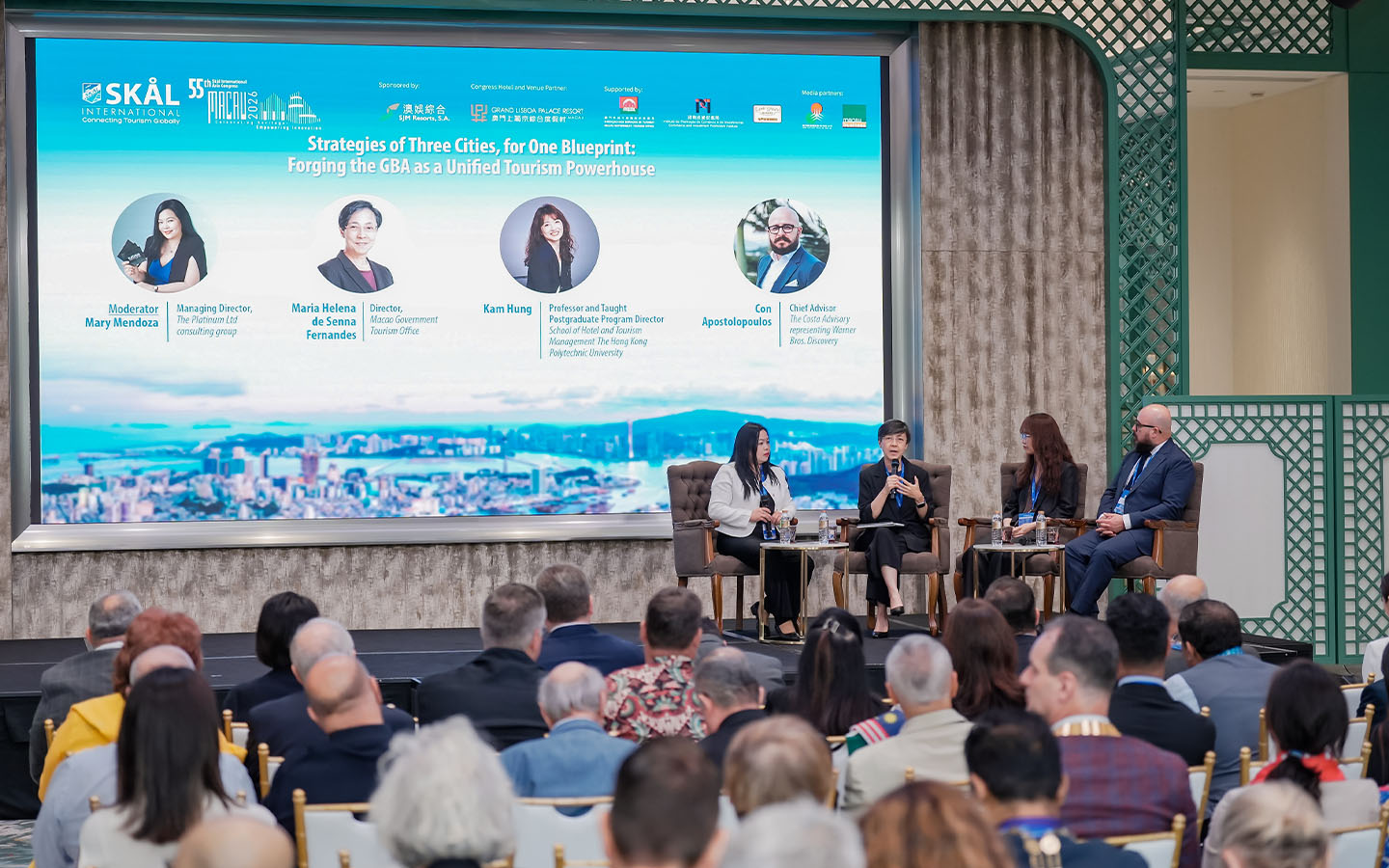
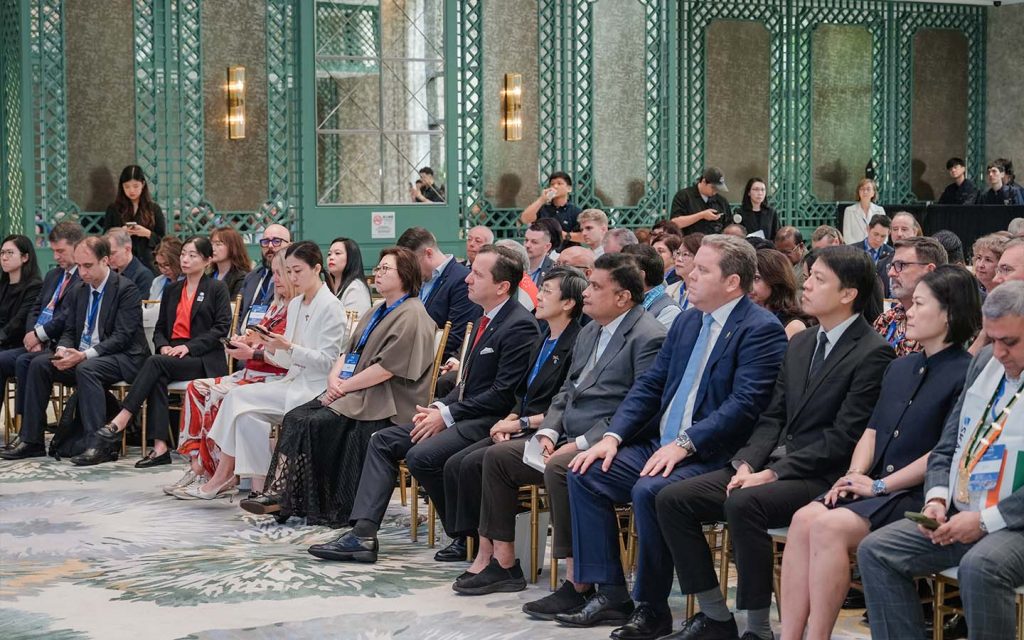
But for the US$2 trillion economy, forging a cohesive collective brand for the GBA remains a work in progress, commented Macao Government Tourism Office (MGTO) director Maria Helena de Senna Fernandes, in a panel moderated by Mary Mendoza, managing director of The Platinum Ltd Strategic Consulting Group along with panellists including professor Kam Hung of The Hong Kong Polytechnic University and Con Apostolopoulos of Costa Advisory representing Warner Bros Discovery at this year’s Skål International Asia Congress held at the Grand Lisboa Palace.
[See more: What is China’s Greater Bay Area (GBA)? A simple guide]
Joint collaborations with regional cities like neighbouring Hong Kong have existed since the early 1990s as part of the Pearl River Delta framework, but the cooperation transformed under the GBA initiative to encompass a larger swathe of industry and cultural diversity, the Macao tourism director said.
The challenges in building a unified identity for the 11-city GBA region coincides with an uneven recovery following the pandemic. Just as Macao tourism numbers exceeded pre-pandemic levels last year, much of this has been driven by same day arrivals from mainland China, while higher-spending overnight guests remain about 10 percent below their 2019 figure.
“After Macao reopened, the focus was on its bread and butter, namely Chinese tourists from the mainland and Hong Kong,” Senna Fernandes shares, noting that her office is forecasting 41 million visitors this year after more than 40 million in 2025. However, the tourism board is hoping to draw 3 million international visitors, up from 2.7 million last year.
Given its limited capacity, Macao will rely more on Hong Kong and nearby mainland China airports to attract overseas traffic. “Nearly 46 percent of Macao’s tourists surveyed make multiple-city trips, demonstrating that the push to drive international tourists stems from multiple entry points,” Senna Fernandes explained, adding that easing visa restrictions in China would also be a contributing catalyst.
The GBA brand
As the GBA looks to build out its brand, some in the audience voiced concerns that such distinct individuality could backfire from an identity perspective.
“Who gets to decide what is truly unique and distinctive on behalf of the group?” asked Alistair Speirs, chairman at PT Phoenix Communication in Indonesia and president of Skål International Jakarta, who later inquired how cultural heritage can withstand modern economic constraints to a later panel.
Kam Hung of The Hong Kong Polytechnic University addressed the question by explaining that a city’s inherent brand emerges the moment an individual hears its name. “Hong Kong is known as an urban metropolis and financial hub, although few are aware that the same city has some of the world’s best hiking trails and pristine beaches,” she described, highlighting the disconnect that often exists.
“The challenge is finding a collective narrative,” shared Con Apostolopoulos, who recently completed filming the competitive cooking series MasterChef Asia in Macao after a ten-year hiatus. Apostolopoulos conceptualised brand building as requiring four distinct pillars: a clear strategy, content creation highlighting distinctive elements, execution to bring those voices to life, and distribution to amplify the message, adding that success of a documentary like Monumental Macao worked because it featured the interconnectivity of people living in the city.
[See more: Macao prepares to host the 55th Skål International Asia Congress]
Macao contribution
“Macao’s distinctive blend of Portuguese and Chinese cultural heritage continues to be one of the city’s greatest strengths,” noted Mary Mendoza in an interview with The Bay. “When visitors walk through neighborhoods such as St. Lazarus or Senado Square, the architectural character immediately evokes Portugal, complemented by the rich flavours of Portuguese and Macanese cuisine. There are very few places globally that are able to provide such an authentic and cohesive cultural experience” she added.
Yet the difficulty lies in balancing these distinct identities. Sharing information can prove difficult, notably for those unfamiliar with Portuguese or the Chinese languages. For instance, when this reporter shared the ‘Junho, Mês de Portugal’ (June, Month of Portugal), programme with visiting Skål delegates about local Portuguese culture, many were amazed by how deeply Lusophone heritage is intertwined and showcased in the city, from fado music to art songs in the Portuguese language inside the Dom Pedro V Theatre.
As for Apostolopoulos who developed a profound appreciation and interest for Portuguese symbolist poet Camilo Pessanha, he was intrigued to learn that an art exhibition featuring the Coimbra-born writer was being held at Casa Garden, the former office of the East India Company.
“This is something that many visitors like me would enjoy,” he said, adding that he plans to make a special trip to see both the installation and the pink-and-white UNESCO House near the Camões Grotto.
[See more: Portuguese gastronomy and Camões Day pilgrimage lead Macao’s ‘Junho, Mês de Portugal’ Week]
While Apostolopoulos observed that Macao already has a strong East meets West cultural brand, he emphasised the importance of his fourth point during the morning panel, underscoring that amplifying that message to the right audience matters, particularly those who appreciate these artifacts beyond their physical appearance.
UPDATED: 14 Jun 2026, 11:30 pm