Sam Hou Fai’s 2027 policy address maintains cash-sharing and increases Macao birth and childcare allowances
Macao 2027 policy address prioritises economic diversification and social welfare
Article by:
PUBLISHED:
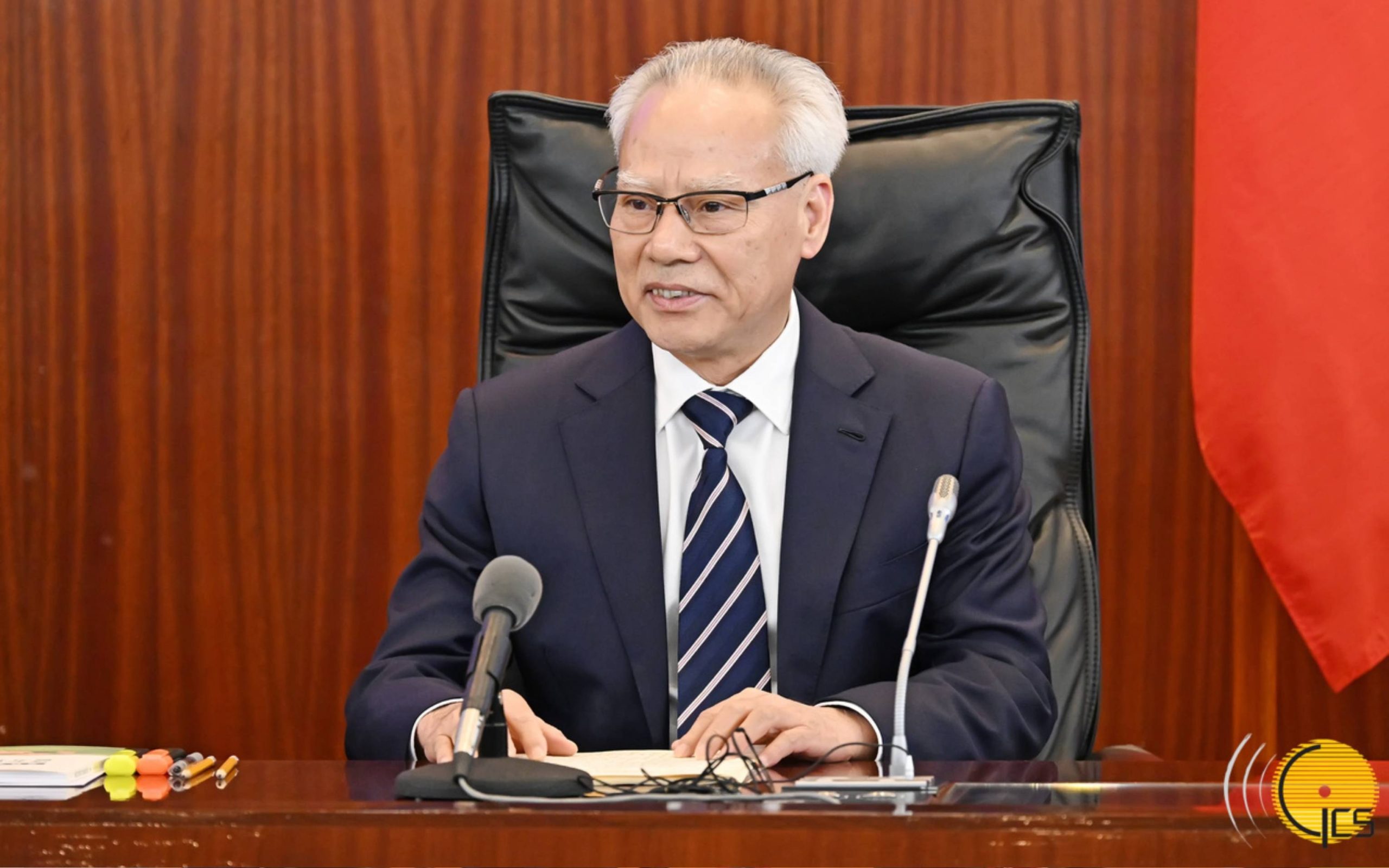
The Macao government outlined its administrative goals for the year ahead in a 2027 policy address delivered by Chief Executive (CE) Sam Hou Fai at the Legislative Assembly on 16 November 2026.
Key policy objectives mentioned include pursuing economic diversification, enhancing public welfare, strengthening efficiency in the public sector and managing internal and external risks.
Wealth Partaking Scheme and childcare benefits to continue
Among the various social welfare measures featured in the annual policy address was the Wealth Partaking Scheme – a yearly government cash-sharing programme that was introduced in 2008 to allow Macao residents to benefit from the city’s massive casino tax earnings.
For 2027, the one-off payment rate will be 10,000 patacas (US$1,240) for permanent residents and 6,000 patacas for non-permanent residents. Both figures have remained unchanged since 2019.
The SAR government is also looking to boost Macao’s declining birth rate by increasing the birth allowance for both eligible parents from the current figure of 6,500 patacas to 8,000 patacas in 2027.
A new tiered system will also be introduced for the childcare subsidy, providing further financial support for eligible parents caring for children aged three or under. Under this mechanism, permanent Macao residents can receive 18,000 patacas per year for their first child, 27,000 patacas per year for the second child and 36,000 patacas per year for the third child.
By contrast, the current childcare subsidy system only entitles local parents to 18,000 patacas per eligible child for up to three years.
Other pre-existing social benefit schemes will continue into 2027 unchanged. These include 700-pataca health vouchers for permanent residents, a 4,000-pataca marriage allowance and a deposit of 7,000 patacas to the non-mandatory central provident funds of eligible locals.
Macao 2027 policy address: enhancing economic diversification
Another key element of the Macao 2027 policy address was Macao’s economic diversification away from its dominant gambling industry. To this end, Sam said his administration would put the 20 billion patacas government Guidance Fund into operation to support non-gambling industries such as health and technology.
[See more: Macao’s Guidance Fund to test shareholder patience]
According to the policy address, Hengqin – an island district of Zhuhai that lies adjacent to Macao – will continue to play a key role in Macao’s economic diversification. To facilitate this, the government intends to continue strengthening ties between Macao and Hengqin, focusing on the four joint principles of discussion, construction, administration and mutual benefits.
Sam also pledged to make changes to the legal mechanisms for the recruitment of talent, so as to attract high-quality individuals from around the world.
Promoting regional integration and overseas ties
The Macao 2027 policy address also prioritises the development of stronger ties with the rest of the Greater Bay Area (GBA) and international partners.
To achieve the former, the Macao government said it would study the possibility of setting up a joint conference mechanism between the heads of government in Guangdong, Hong Kong and Macao. At the same time, the authorities will prepare for the 2027 Guangdong-Macao Cooperation Joint Conference and other important tasks relating to the GBA’s development.
[See more: Macao unveils third five-year plan, targeting non-gambling GDP share of 60 percent by 2030]
On the international front, Macao is planning to continue solidifying its position as a bridge between China and Portuguese and Spanish-speaking countries. Events such as the 7th Forum Macao Ministerial Conference in the first half of 2027 could help in this respect, along with new additions such as a five-year youth exchange scheme that aims to allow 500 youths from Macao, Portugal and Spain to take part in exchange programmes.
Macao’s GDP and tourism numbers in the first three quarters of 2026
In terms of hard numbers, the report noted that Macao’s Gross Domestic Product (GDP) in the first three quarters of 2026 totalled 316.13 billion patacas, up 2.9 percent year-on-year.
Total visitor arrivals over this period amounted to roughly 32.18 million people, an increase of 8.5 percent in comparison to the first three quarters of 2025. Of this total, international travellers accounted for around 1.95 million of the total, rising 3.4 percent year-on-year.
What did the chief executive say at the press conference?
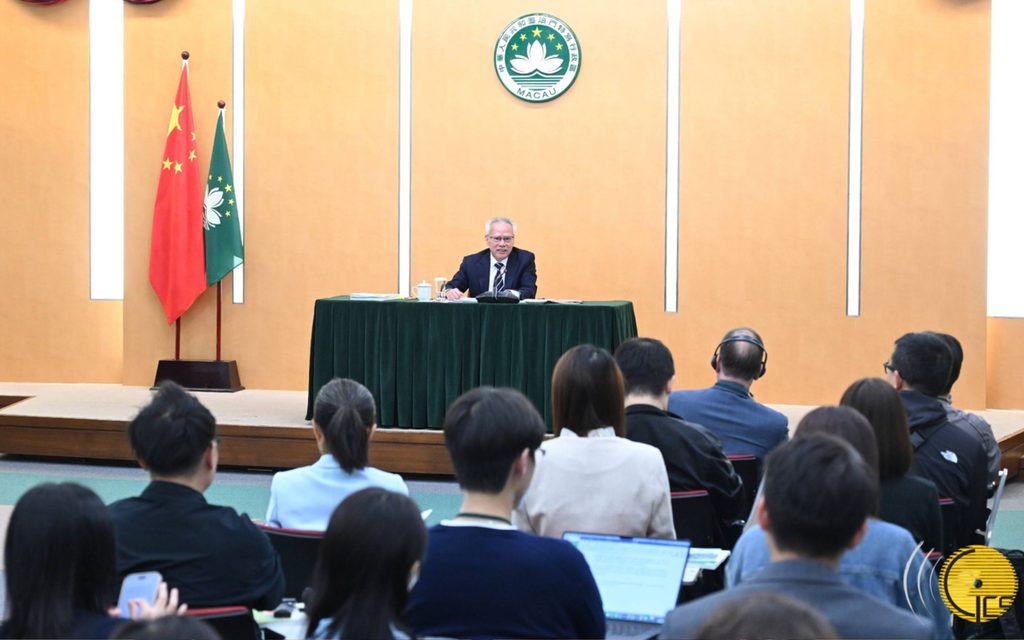
Following his delivery of the Macao 2027 Policy address, Sam took part in a press conference on the same day at 5:30 pm. The CE spoke about various issues, including Macao’s goal of having non-gambling sectors make up around 60 percent of GDP by 2030, as stated in the city’s third five-year plan presented on 18 August 2026.
Regarding the blueprint, Sam stated that of the 118 major projects mentioned in the plan, 116 had already begun or would start in 2027. The authorities are also aiming to carry out 109 out of 112 administrative reform measures in 2027.
What has the reaction to the Macao 2027 policy address been like?
Lawmakers and community representatives interviewed by Macao media have responded to the 2027 address in largely positive terms. Legislators Lei Cheng I and José Maria Pereira Coutinho both praised the plan for boosting social welfare measures, while lawmaker Wong Kit Cheng said she believed the report’s many policies supporting child-rearing and families would help to lift Macao’s birth rate.
Meanwhile, Ip Kuai-peng, the head of the Macao Scholars Association, told TDM that the report was closely integrated with Macao’s third five-year plan, including its focus on boosting government efficiency.