The municipality is mobilising Greater Bay Area bond markets to bankroll its green ambitions, doing so as Macao builds out its modern finance pillars in a complementary push.
Here’s how Shenzhen is leveraging the GBA to decarbonise the economy
Article by:
PUBLISHED:
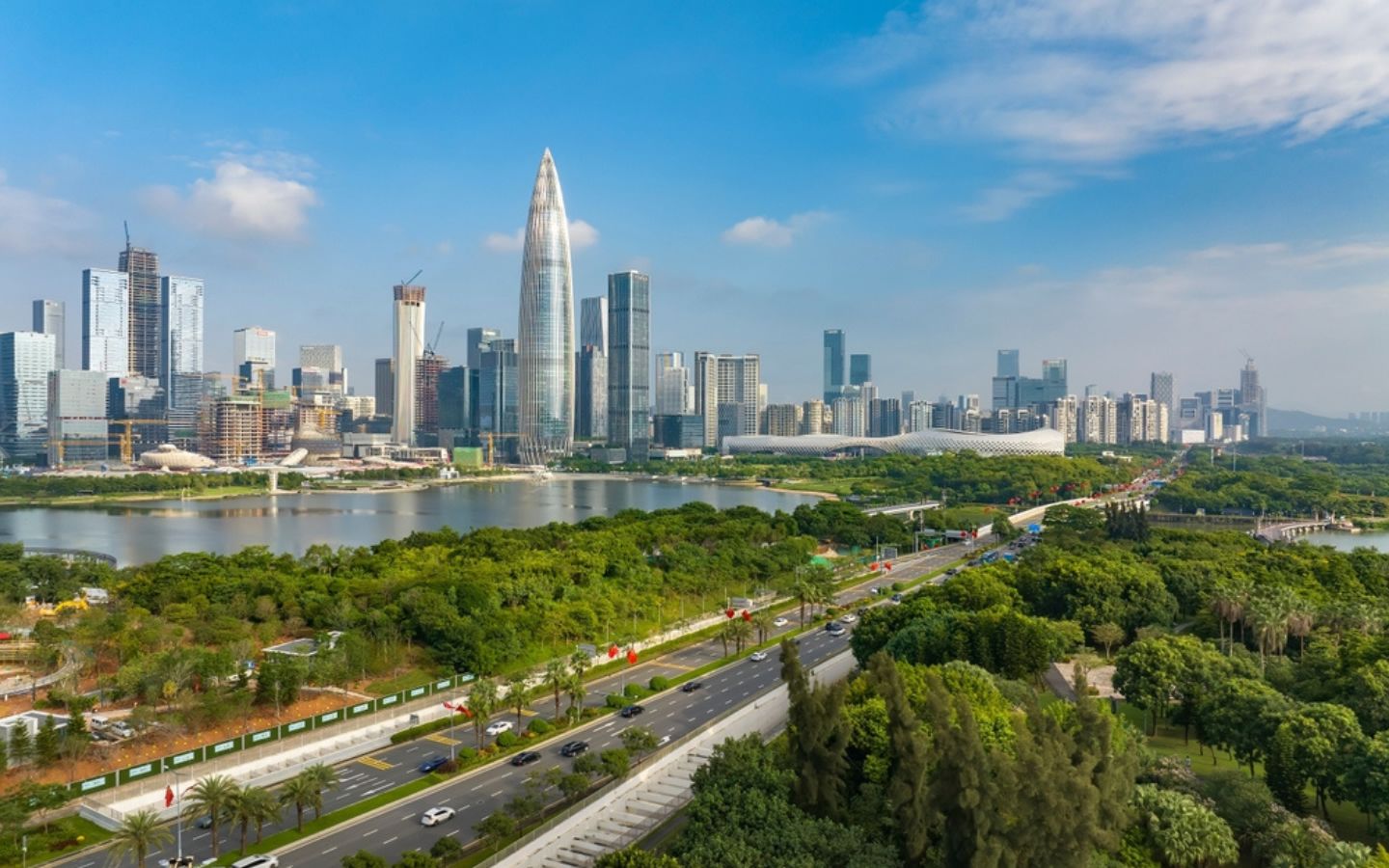
International demand for AI-related tech products continues to benefit Hong Kong and Shenzhen, where both economies reported GDP growth of 5.1 percent and 6.0 percent respectively over the first nine months of the year, outpacing the national average.
The pickup bodes well for the Greater Bay Area (GBA). The two neighbours account for nearly half of the region’s 11-city economy, whose framework of nine mainland cities and two Special Administrative Regions (SARs) was highlighted at the recent APEC summit in Shenzhen, where more than 20 delegations that make up 60 percent of global GDP and 50 percent of world trade attended the three-day conference.
[See more: APEC 2026 Shenzhen: Here’s what you need to know]
Underlining this integration, commerce between the GBA’s mainland cities and APEC reached US$837 billion in the first nine months of this year, a 26 percent increase from last year, noted Hong Kong’s Chief Executive John Lee. But aside from the trade boost to the national and APEC economies, Shenzhen is driving innovation when Beijing is prioritising green infrastructure to power the new industries forward.
For China’s Silicon Valley, developing the technology to move away from fossil fuels requires massive capital, positioning the SARs of Hong Kong and Macao as vital bridges for their funding and expertise. But just as important is the need to create a replicable blueprint for future cross-border initiatives both inside, and beyond, the GBA.
Recent deal flows highlight the current momentum. Back in 2021, Shenzhen raised 5 billion yuan (US$750 million) in a landmark Hong Kong offering that represented the first Chinese municipality to issue government debt outside the mainland. Subsequent tranches followed, driven in part by institutional demand for offshore yuan from foreign investors.
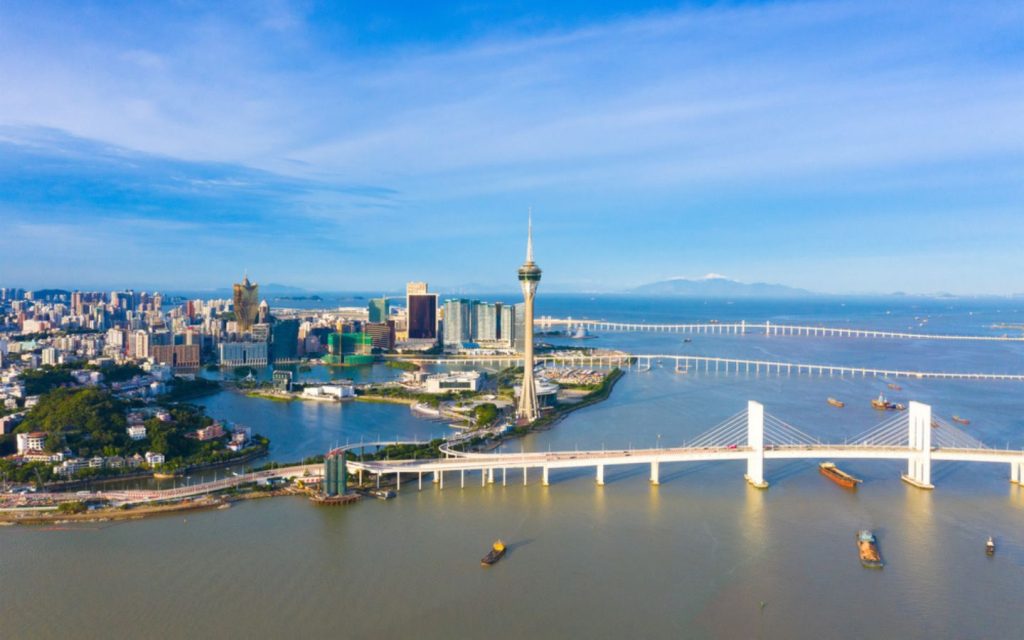
Another milestone was achieved in 2025 when Shenzhen issued 1 billion yuan in green bonds, this time in Macao, a niche finance hub better known for integrated resorts and gambling revenues. This past September, the municipal government returned to the Macao for a subsequent year, again raising a billion yuan in offshore paper for GBA-themed sustainable debt projects, with both deals receiving pre-issuance stage certification from the Hong Kong Quality Assurance Agency (HKQAA).
A green blueprint for the GBA
Though modest in size, the listings open an alternative fund-raising route that was non-existent just a few years ago. Officials are hoping these placements encourage other municipalities to float sustainable debt in Macao, where a fifth of the fixed income raised is classified as green bonds.
In addition to deepening SAR links to the GBA, Macao is also generating synergies from its tighter linkages with Hong Kong’s more established capital market infrastructure to reinforce its own modern finance aspirations.
[See more: Here’s how Macao is supporting the GBA’s environmental initiatives]
Back in 2025, the monetary authorities of Hong Kong (HKMA) and Macao aligned their clearing and settlement systems, allowing professional investors to trade debt instruments in both SARs to ease access for investors and support market liquidity, said Alice Suen, managing director and head of sustainable finance and transition for HSBC Hong Kong and Macau and vice president, Hong Kong Green Finance Association, in comments sent to The Bay.
While sustainability advocates expect both SARs to leverage their debt markets to raise sizable green capital, Hong Kong is expected to do most of the heavy lifting. Total green and sustainable debt arranged in the finance hub exceeded US$76 billion in 2025, with green bonds alone accounting for roughly 40 percent of Asia’s total issuance, according to the HKMA.
Green Shenzhen
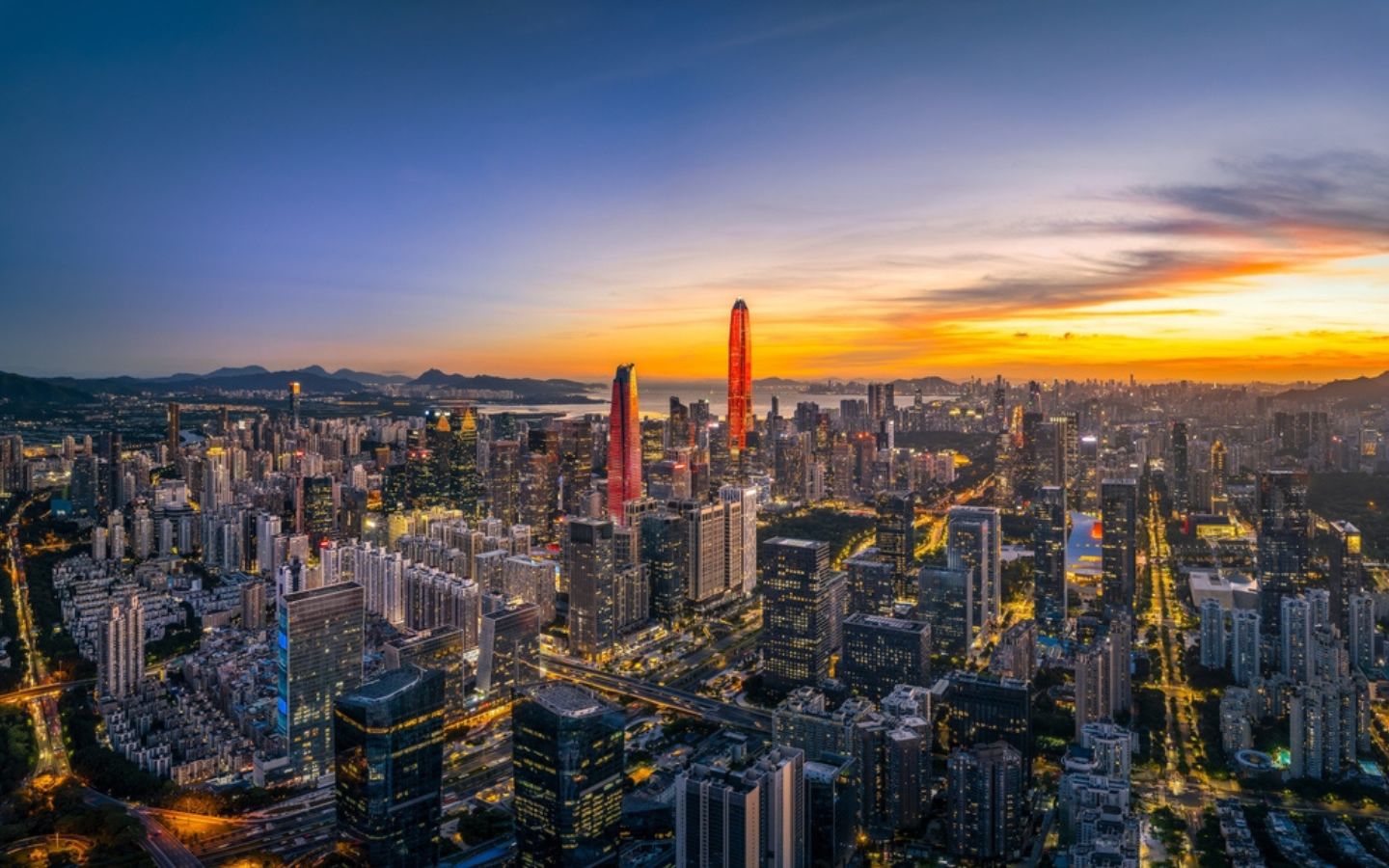
A focus on decarbonisation has emerged as a critical priority alongside GBA market integration. Since 2025, Shenzhen has accelerated the development of its environment, social and governance (ESG) ecosystem and refined its green service framework, enshrining sustainability as a policy priority in its 15th Five-Year Plan for Economic and Social Development.
Onshore green loans and debt offerings have also picked up. Green loans stood at 1.5 trillion yuan in the first half of the year, up 17 percent, while Shenzhen entities listed 33.9 billion yuan in green bond issuances, an increase of 21 percent, according to a presentation delivered at September’s HKGFA and GBA-GFA Annual Forum by Cao Yannan, secretary of the Guangdong-Hong Kong-Macao Greater Bay Area Green Finance Alliance and vice president and secretary of the Shenzhen Green Finance Association.
[See more: Hong Kong reinforces its role in GBA green finance at annual forum]
On the ground, Shenzhen is in the process of implementing over 100 near-zero carbon projects to cut greenhouse gas emissions and reduce energy costs. But besides building a blueprint for a modern green city, Shenzhen is also demonstrating how to fund these endeavours, setting early precedents for other GBA economies and aligning itself with the national goal of achieving carbon neutrality before 2060.
Though bounded by three jurisdictions across the 11-city cluster, the GBA’s efforts to harmonise interoperable standards and green investment frameworks have transcended administrative borders. And while each is matching itself with the national carbon peaking target of 2030, how nine mainland cities and the two SARs set their environmental initiatives becomes an early bellwether for how the GBA tackles common challenges, with Shenzhen remaining in the spotlight well beyond the APEC summit.