Edas Wong is known for his amusing juxtaposition photos, although his repertoire extends much further than this.
Man In a Hurry: Meet Hong Kong street photographer Edas Wong
Article by:
PUBLISHED:
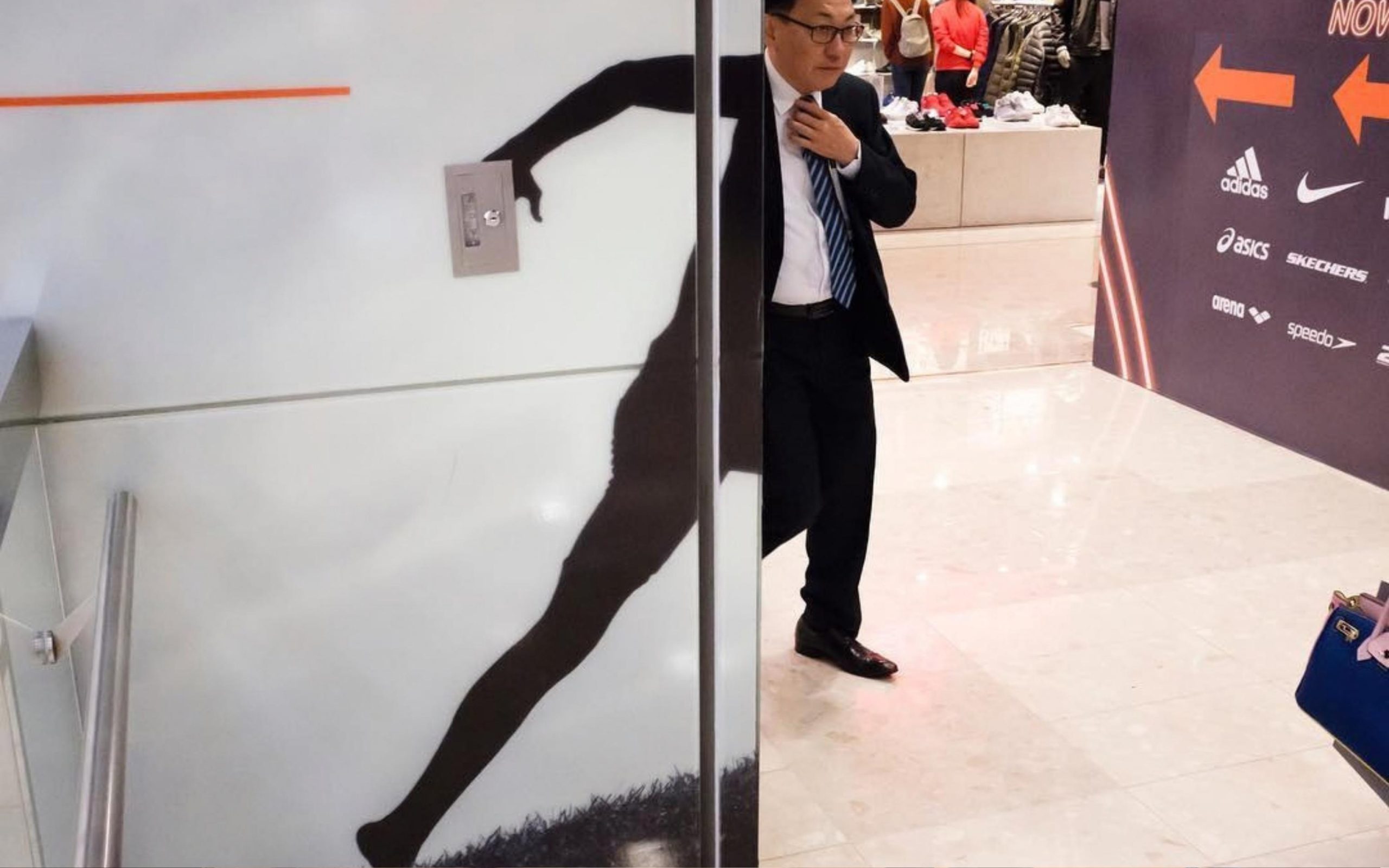
Man In a Hurry is one of the images that Hong Kong street photographer Edas Wong Kin-wing (黃建榮) is proudest of having taken and it’s easy to see why. Depicting a man fixing his tie while aligned next to a silhouette sprinter wall decal, the photograph perfectly encapsulates Wong’s signature style of visually juxtapositioning people with their urban environment in amusing ways. The shot was an instantaneous capture, as Wong too was in a hurry that day, having arranged a lunch meeting with his wife.
“I usually say I don’t wait most of the time. I see something and shoot it straight away,” he explains.
[See more: Gary Ng: The Hong Kong lawyer who became Asia’s first APA Photographer of the Year]
Wong only began to shoot pictures seriously in Sweden in 2012 because he needed a hobby that didn’t require thinking, unlike his R&D job. These days, he still works full-time for the same telecommunications company, Ericsson, although he is now based in Hong Kong. Photography is still a hobby: he says his 2019 photobook “Re-Form” did not make any money.
Wong normally snaps pictures on a Saturday or Sunday afternoon or during his work commute and they are characterised by their sharp observational humour.
“I want to see things as far outside the box as possible – not to stay within a frame,” the Hongkonger says. He talked us through some of his favourite shots.
Note: All quotes were translated from their original Cantonese
Walking (Hong Kong, September 2026)
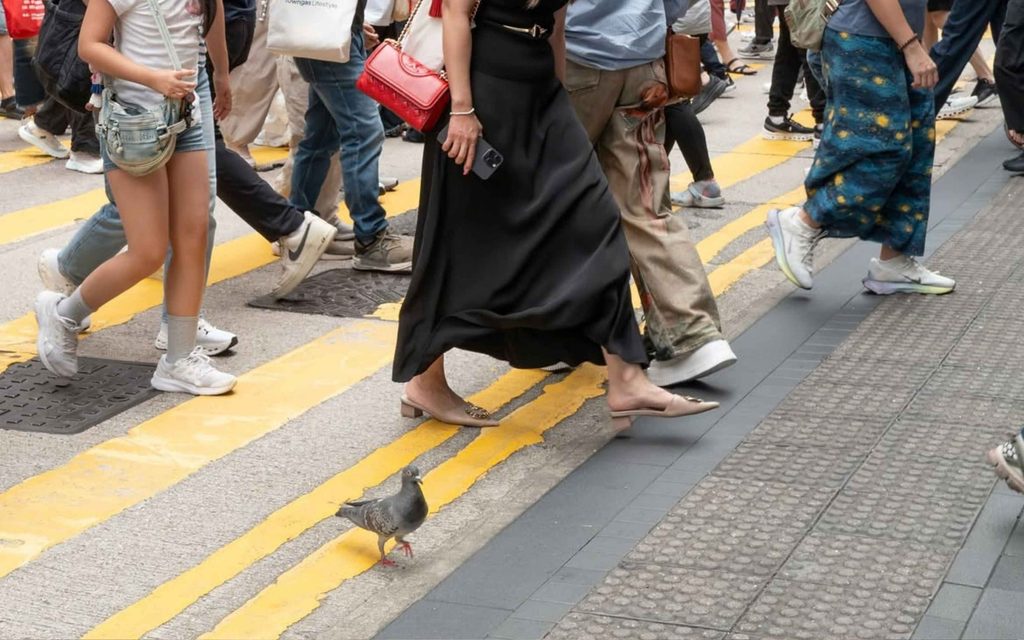
Shot this September, Walking depicts a pigeon crossing in perfect stride with a group of commuters. Impeccable timing such as this inevitably leads to questions of whether or not digital techniques were used. Wong says he only relies on the technology for noise reduction, refusing to use it to add or remove objects, as “that already violates the principle of street photography.”
Small Place (Hong Kong, April 2018)
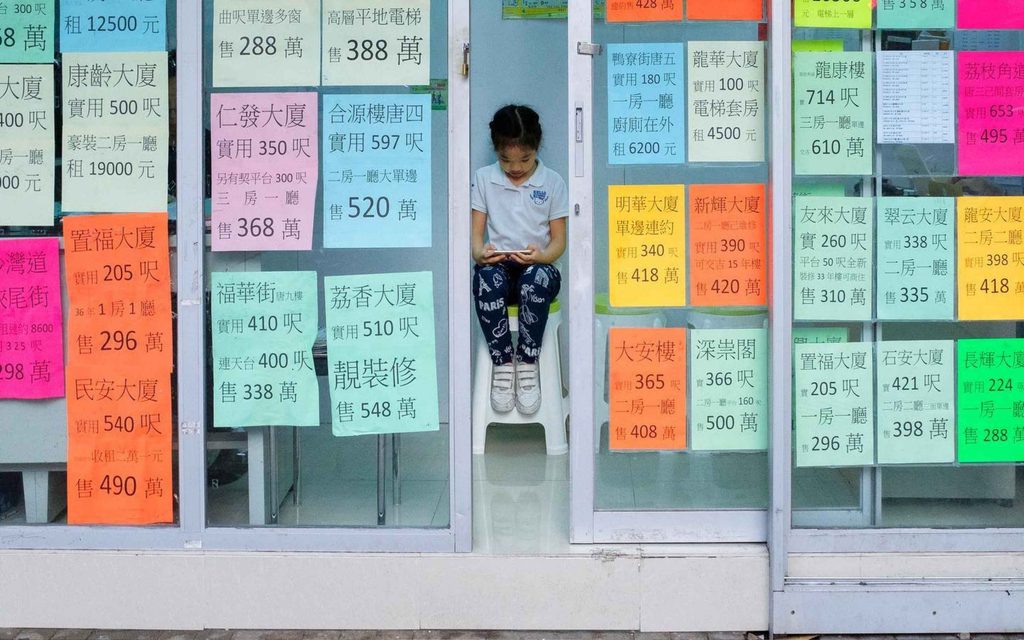
Some of Wong’s photos such as Small Place, taken of a realtor’s window, appear to be making statements about certain social issues such as Hong Kong’s housing crisis, with its unaffordable prices and cramped living quarters. According to the 2026 Demographia International Housing Affordability Survey, Hong Kong has the world’s least affordable market, with the price of a home equivalent to 14.1 years of median household income.
Although Small Place seems to be a critique of this very problem, Wong says that was never his original intention.
At the time, the street photographer simply came across the little girl reading inside a real estate agency in Sham Shui Po, taking the shot because he found the scene to be “rather striking.” However, the photographer admits he may have subconsciously spotted the scene after seeing a news story about housing.
“Photography is funny that way – whatever’s on your mind at the time, your eye naturally starts noticing more of it,” he says. “I joke with people about it – if I’m losing more hair than usual, I start noticing other people’s heads; if my foot hurts, I notice how other people walk and whether they’re in pain.”
Dragon Ball (Hong Kong, October 2017)
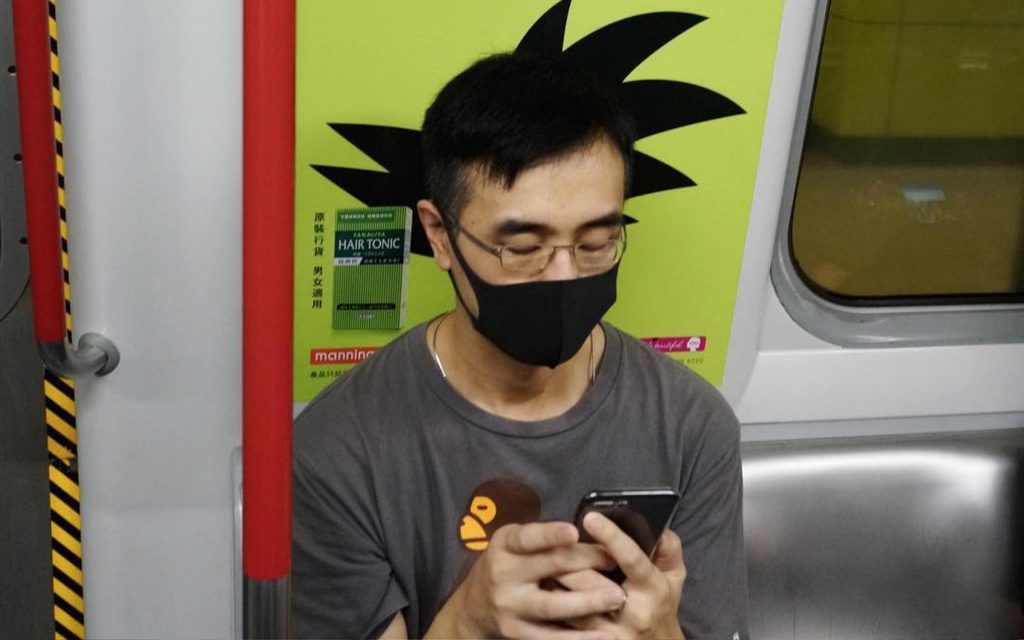
A man on an MTR train in Hong Kong, sitting in front of an anime poster, appears to take on a hairstyle akin to Goku of Dragon Ball fame. Lightning quick reflexes, and the ability to quickly see the humour and incongruity in a seemingly mundane setting, are the hallmarks of Wong’s work.
Shape of Light (Hong Kong, May 2020)
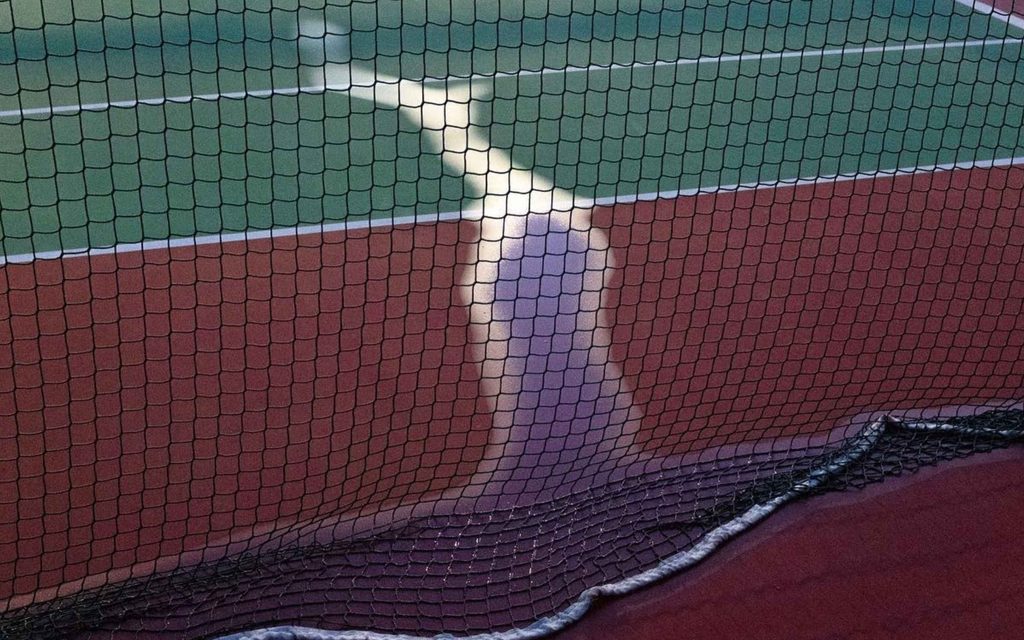
Although Wong’s photos are normally associated with humorous moments, some of his works are more abstract in nature, as illustrated by Shape of Light. The photographer says he never thought about the exact meaning of the photo and simply captured the scene because he found the shape of the puddle on the tennis court to be “rather beautiful” and its reflection to be “unusual.”
Love (Hong Kong, July 2021)
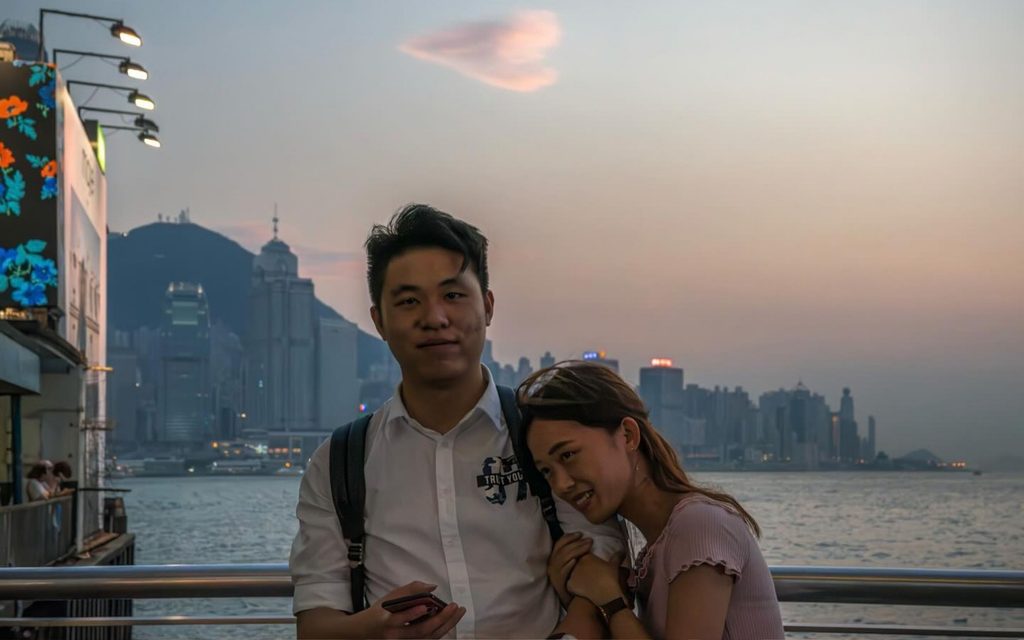
Love is another example of Wong thinking very quickly on his feet. He remembers the shoot happening so quickly that he didn’t speak to the couple at all.
“It was very straightforward – I just saw a heart-shaped cloud behind, or something like a heart-shaped cloud, and a couple in front, and they were the only ones left,” he says. “I thought the moment was rather lovely, and they looked so happy – that’s a good thing.”
“Fall” in Love (Hong Kong, January 2023)
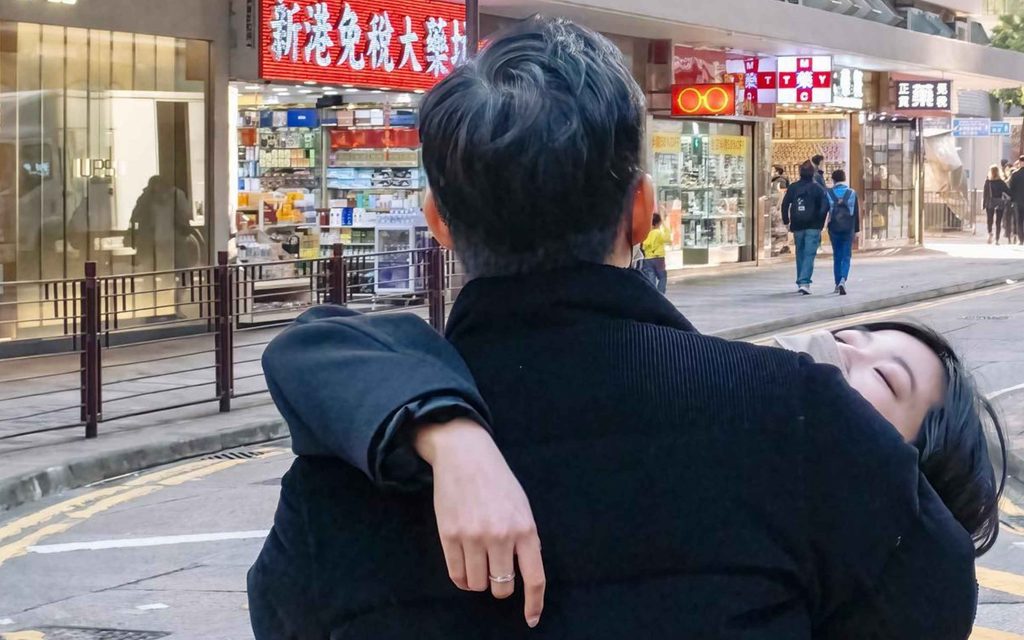
Taken in Hong Kong’s Tsim Sha Tsui district, “Fall” in Love depicts a woman who appears to have fainted into a man’s arms in a way reminiscent of classic romance tropes. Wong says he doesn’t know the reason for the woman’s positioning, leaving it open to the viewer’s interpretation. Is this a public display of affection or has the woman lost consciousness?
OoO (Japan, April 2024)
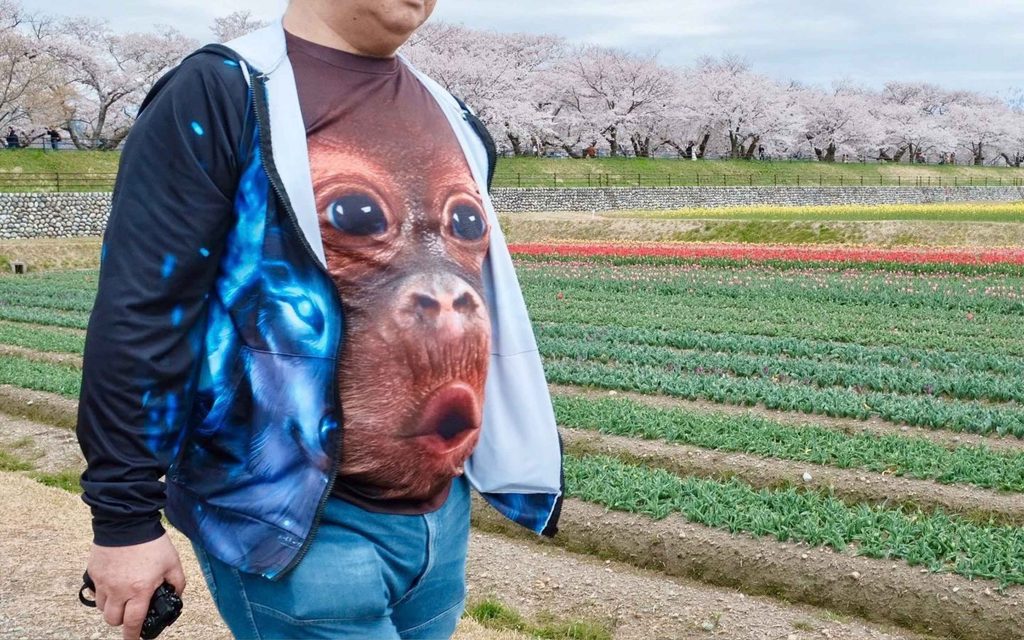
Wong says he shoots everywhere, although in recent years, much of his overseas photography has been in Japan, as taking a trip there requires less planning and preparation. He remembers taking this photo after noticing this unusual blend of an orangutan-face t-shirt in a tranquil setting.
Big … (Hong Kong, October 2025)
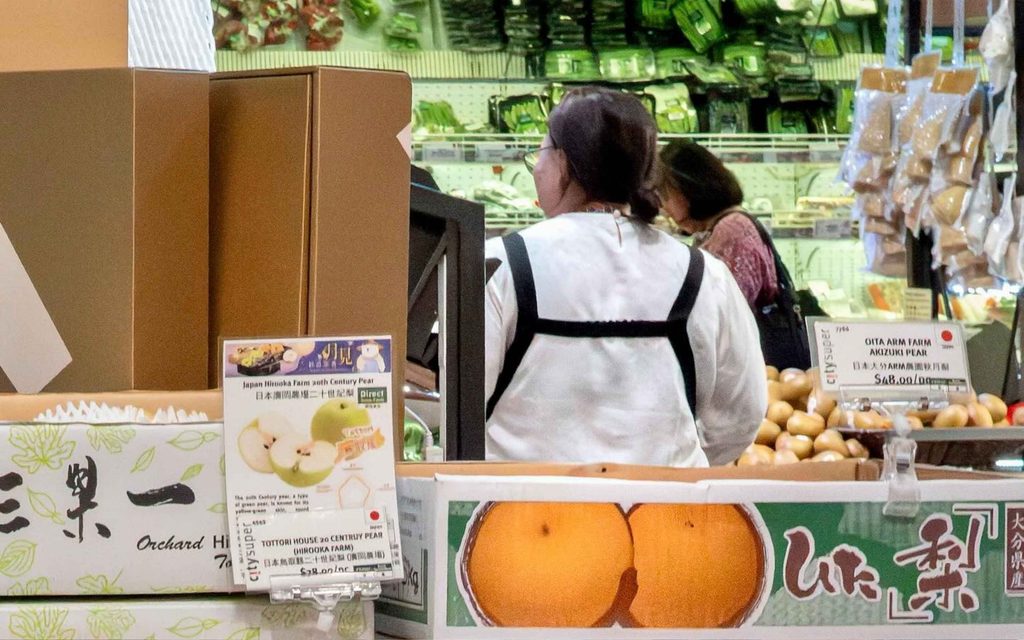
Big … was taken around the Mid-Autumn Festival when various stores were selling gift items. As Wong remembers it, the photo was taken by “pure coincidence,” with the clerk’s body lining up perfectly with the carton right at that very moment.
[See more: Derry Ainsworth named Architecture Photographer of the Year]
While some may decry such street photography as low art, the Hong Konger maintains that “anything that has passed through your eyes, through your thinking, through your observation is already a work of art.”
He encourages those who are keen to try street photography to take the plunge. “It doesn’t have to be what you do forever – you can try different kinds of photography,” he says, adding that “everyone should be willing to try and innovate.”