The 32-year-old Hong Konger has won multiple awards since 2025 for architectural photography shot primarily in his home city
Gary Ng: The Hong Kong lawyer who became Asia’s first APA Photographer of the Year
Article by:
PUBLISHED:
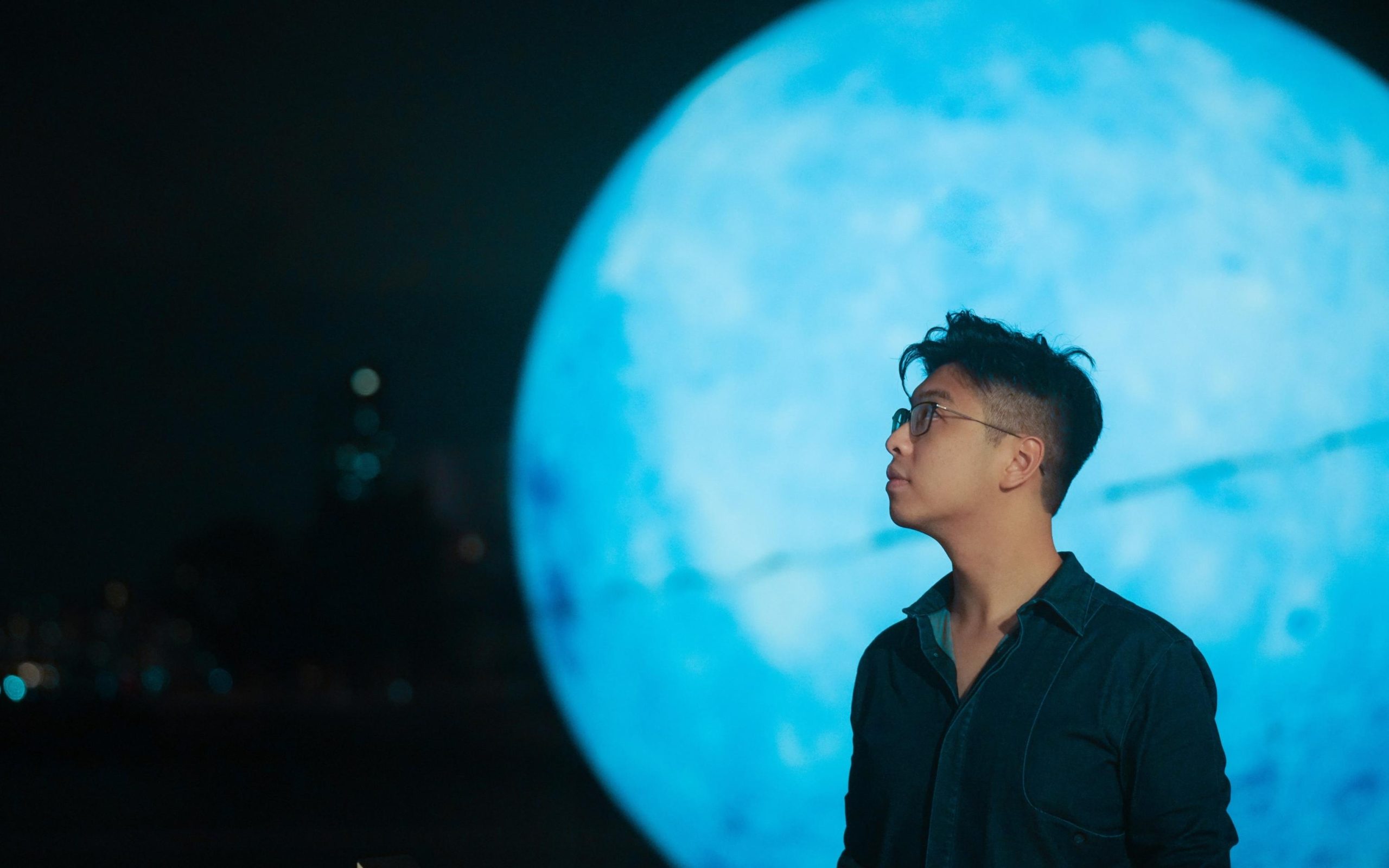
Hong Kong lawyer Gary Ng Chi Ho (伍梓濠) is no stranger to awards. Come November 2026, the 32-year-old will be zipping off to the Guggenheim Museum Bilbao in Spain to collect his latest: he’s the overall winner of the Architecture Photography Master Prize’s (AMP) interior architecture photography category.
As one version of the story goes, the Hong Konger was inspired to become an architectural photographer after standing in front of the Guggenheim Museum, where he was awestruck by Frank Gehry’s sculpture-like design of the contemporary art building. But, in fact, his journey into architectural photography is more complex and layered than that.
The lawyer photographer
Despite a demanding law career, Ng manages to fit in photography, snapping shots around Hong Kong and other locations such as Macao, Uzbekistan, Japan and Thailand whenever he gets the chance.
The 32-year-old’s talent has been recognised by clutch of coveted architecture photography awards over the past two years. On 22 August 2026, he made history by becoming the first person in Hong Kong and Asia to be named the Photographer of the Year at the Architecture Photography Awards (APA).
[See more: 5 futuristic buildings in the Greater Bay Area that don’t look real]
Prior to that, he earned accolades at the 2026 London Photography Awards for the Architecture Photography – Real Estate, and the 2025 New York Photography Awards for the Architecture Photography – Exterior, as well as two first prizes in the 2025 APA – for his image Concrete Memento in the category of Light and Shadow, and Hong Kong in the Veil in Urban Landscape/Cityscapes section.
In April 2026, Ng reached a new milestone when local bank HSBC Hong Kong invited him to shoot a series to mark the 40th anniversary of the HSBC Main Building. The result was An Architectural Icon: Inside-Out, Ng’s photography exhibition, which was attended by the building’s architect Lord Norman Foster on 9 April – making his first visit to Hong Kong in eight years.
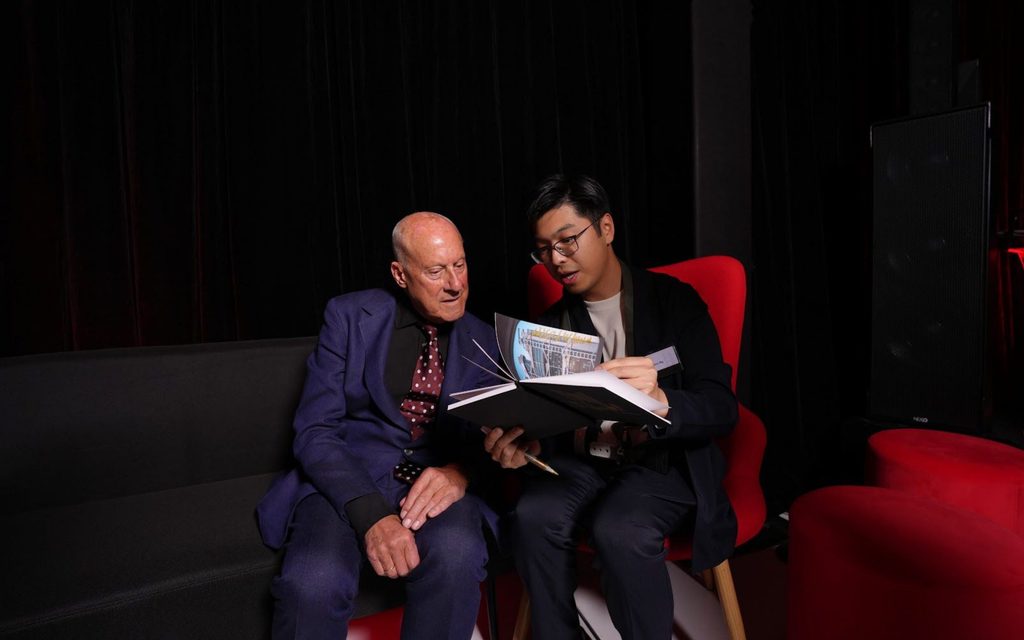
Growing up, Ng says he imagined himself becoming an architect or a comic artist, but he ended up being the only student in his art class at Queen’s College to not pursue a career in art and design.
“I’m the odd one out because even though I like the creative arts, I’m also very interested in the language, social matters and the more philosophical side of things,” he explains. “That’s why I wanted to do law, because I wanted to know more about how the world works.”
The makings of a photographer
Taking on law didn’t signal the end of Ng’s long-standing passion for the arts, which had manifested itself from an early age in the form of drawing, painting and photography. The latter was an area the lawyer was already well familiar with since childhood, thanks to his father who was “very passionate” about photography.
By the time Ng was studying at Queen’s College, he was already taking shots of his neighbourhood. However, the turning point was when he came across the nearby public housing estate of Lai Tak Tsuen (厲德邨).
“When you go inside [Lai Tak Tsuen] and you look up, you can see these very repetitive geometric patterns all the way up and it left an impression on me,” the Hong Konger says. He compares the experience to “having a dialogue with the space inside the architecture,” noting that “it planted the seeds for my further interest in architecture and photography as a whole.”
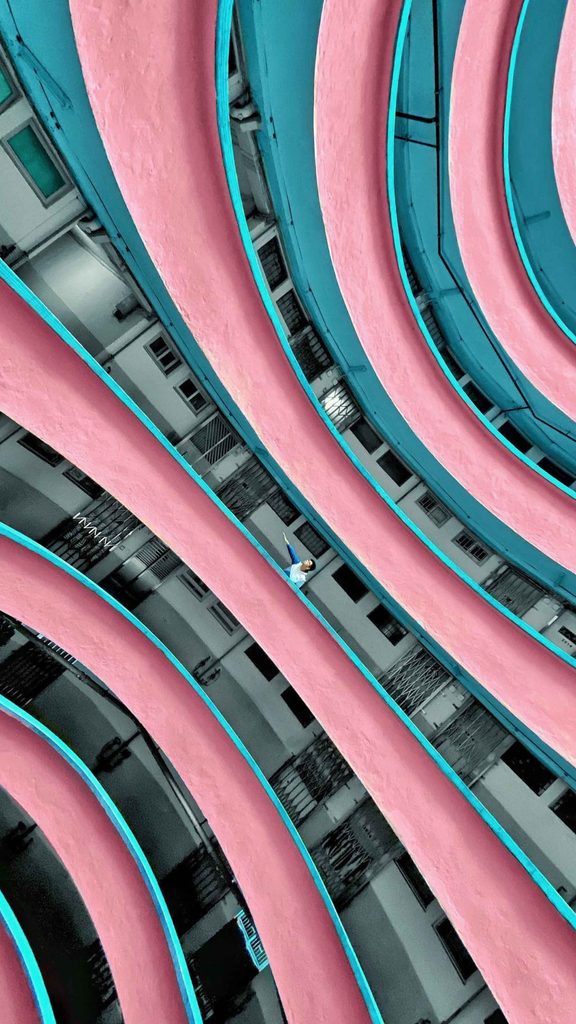
While pursuing a law and business degree at the University of Hong Kong, Ng’s passion for architectural photography persisted. He enrolled in an architectural history elective where his interest in the subject deepened further due to a passionate lecturer who recognised the discipline’s transformational power.
Coincidentally, the textbook that Ng was using at the time featured the Guggenheim Museum on the front cover, with the photographer acknowledging that during the course, “the geometric forms of the very futuristic or deconstructivist style of Frank Gehry really opened my horizons on what architecture could be – not merely as somewhere where ‘form follows function’ like modernist buildings.”
[See more: Here are some of the best art museums in China’s Greater Bay Area]
Photography figured heavily during Ng’s university years as well, serving as a “creative outlet” for him to “destress” from “the strain of reading case precedents or writing legal arguments.”
In 2017, he launched an Instagram account, garyfive, posting his architectural photos of Hong Kong and other cities for his own amusement and to keep a record of his travels, experiences and photographic artwork. In the nine years since, he has amassed 68,000 followers.
How does Ng shoot his architectural photographs?
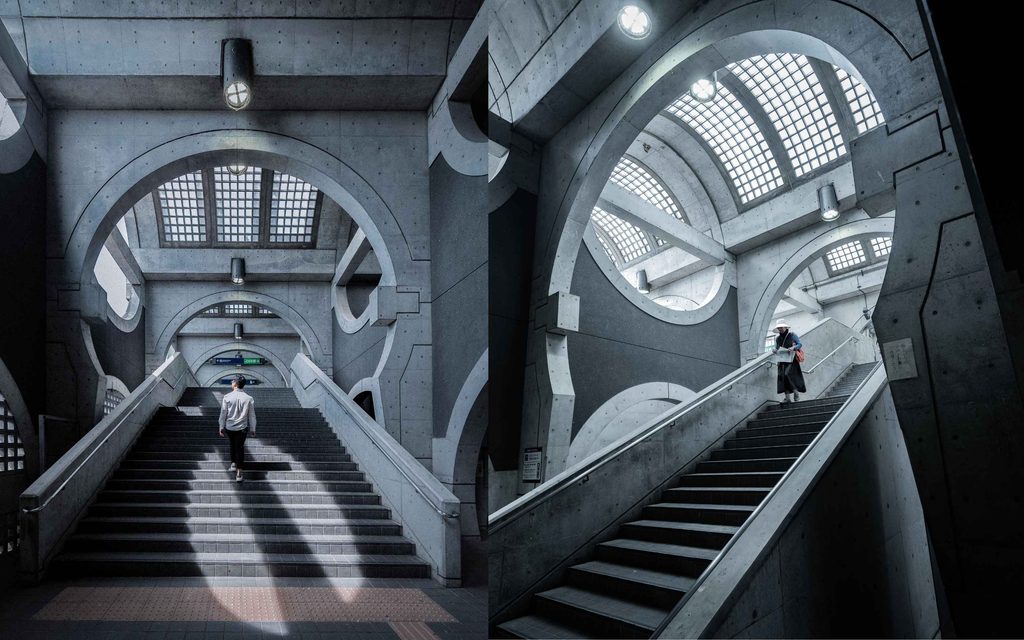
Looking at Ng’s Instagram account, it becomes clear that geometry is a recurring feature of his work. He acknowledges this, summarising his photographic style with three words – lines, light and life.
According to the photographer, lines denote geometry or the order in an image, whereas light is “the choice between what’s illuminated and what’s in the shadows,” which imbues a composition with dramatic effect. Meanwhile, life refers to living beings, primarily humans and their experience in architecture.
For Ng, aligning the camera perfectly is the first step to taking a good photo. On top of this, he employs a wide range of wide lenses and full frame cameras to “capture the most pixels on the picture.”
[See more: Meet Kristopher Ho, the Hong Kong artist behind FC Bayern’s Kai Tak jersey]
Ng adds that he makes use of tele lenses “to ensure that the subjects can be compressed,” allowing viewers to “see as much of the layers and of buildings and its background as possible.”
At the same time, the photographer says he sometimes prefers to minimise the number of people in the frame in order to draw focus on the massive scale of the building, while also imbuing his work with a timeless abstract and artistic quality.
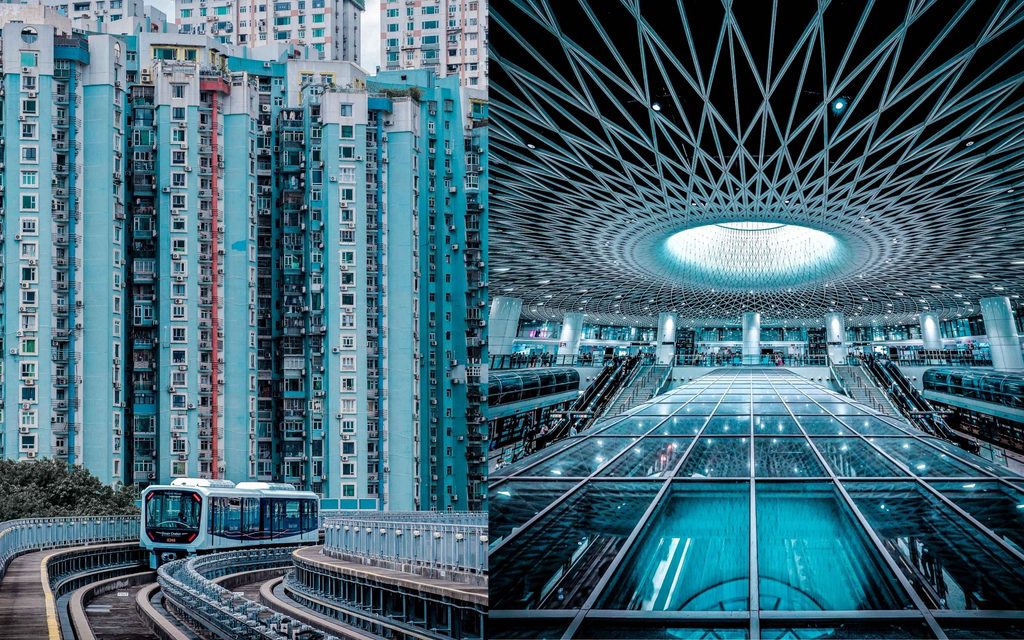
“Even when you look at it many years from now, it could still be relevant in the sense of its timeless aesthetics. It is something that doesn’t age just like Greek or classical architecture. Their idea of beauty builds on perfect scientific or mathematical proportions,” he explains.
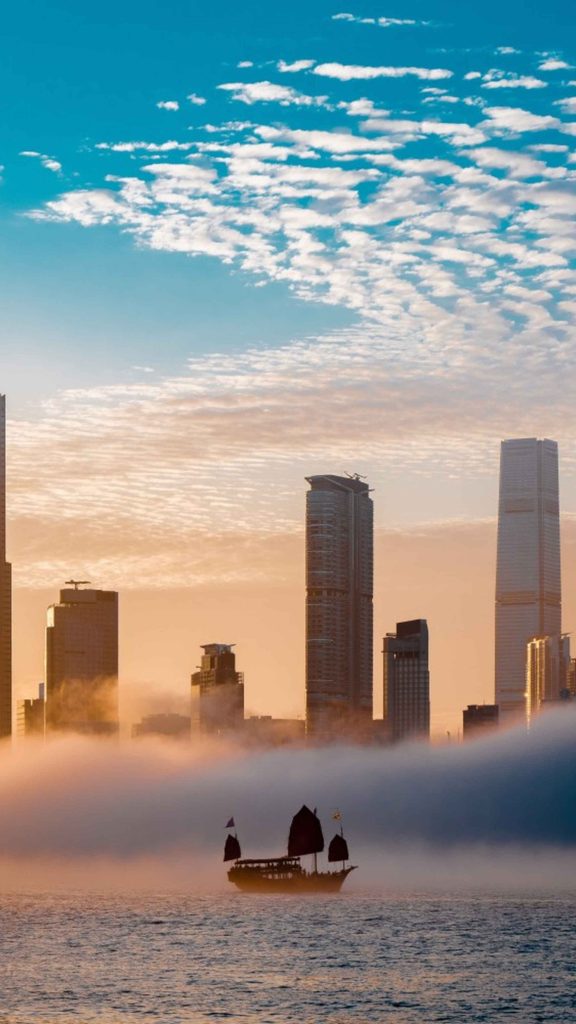
Even with all his planning, Ng still revels in the unexpected nature of photography. One case in point is his award-winning photo Hong Kong in the Veil, which depicts a tourist boat modelled after a Chinese junk, sailing through a layer of fog in Victoria Harbour.
Ng remembers that the shot was entirely unexpected, as that morning had been cloudy and pale. However, by sunset, “everything lined up perfectly” for him to take the frame.
“I don’t always think about having a perfect shot, but the shot that can express what I would like to say at that time, and it changes all the time,” the photographer explains.
Why does Ng photograph buildings before they disappear?
Beyond the artistic value of his photos, Ng is also well aware that they serve a greater social purpose, allowing people to appreciate the historic transformation of a building. Examples include the former Central Police Station and Victoria Prison in Hong Kong, which have been turned into the cultural and arts centre known as Tai Kwun, as well as the Murray, a former government office building that is now a hotel.
[See more: Jobey Hon: The Hong Kong artist who sold out in 72 hours]
“Recording the same building at different times serves this kind of record,” Ng says. “I think that helps people understand the history of where they come from and how they can move forward.”
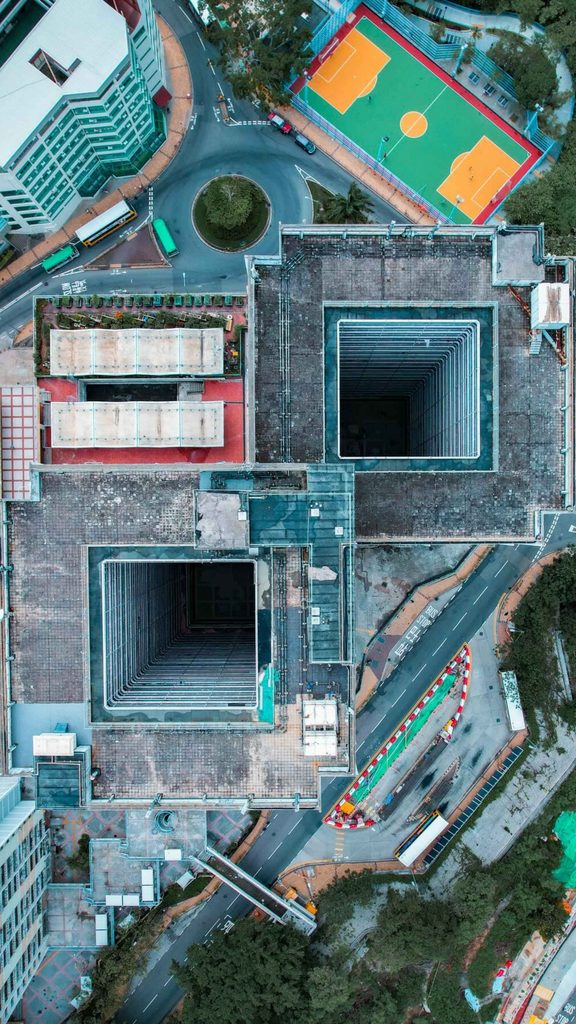
In some cases, photography is a historic witness to culturally significant structures that have either vanished or are on the verge of disappearing. The former is well illustrated by the demolished Kowloon Walled City, whose buildings Ng says he would never have been able to appreciate were it not for historic photos.
Meanwhile, the lawyer notes that photography is helping to keep a record of ageing public housing estates such as Choi Hung Estate (彩虹邨) and Wah Fu Estate (華富邨) – nostalgic reminders of Hong Kong’s tight-knit communities and collective experience, which are gradually making way for redevelopment.
What does Ng think of AI in photography?
Any discussions concerning the value of photography these days cannot escape the impact of artificial intelligence (AI). With the disruptive technology able to generate pictures of real and imagined buildings in a matter of seconds, the question of whether or not there is any value in photographers venturing out to shoot is certainly food for thought.
“AI isn’t stopping me from taking photos” Ng says. “I take photos out of my passion and interest in buildings and photography.”
He makes the case that AI cannot supplant photographers in some cases, as these professionals offer their unique perspectives, taste, preferences or “novel angles” that the technology simply cannot replicate.
Ng says he is content to let the market decide the worth of a photographer, and the value of his work is clear as he prepares for his trip to the Guggenheim Museum later this year. Altogether, he will have been there three times – as a student looking at the building from the cover of his architectural textbook, as a tourist making his first trip in 2025, and as an award-winning photographer walking in to claim his prize.